Sandra Finley

Apr 122017
 
 Julian Assange:    WikiLeaks has the same mission as The Post and the Times

 Julian Assange. (Axel Schmidt/Reuters)

By Julian Assange April 11 at 7:26 PM

Julian Assange is the editor of WikiLeaks.  


On his last night in office, President Dwight D. Eisenhower delivered a powerful farewell speech to the nation — words so important that he’d spent a year and a half preparing them. “Ike” famously warned the nation to “guard against the acquisition of unwarranted influence, whether sought or unsought, by the military-industrial complex. The potential for the disastrous rise of misplaced power exists and will persist.”

Much of Eisenhower’s speech could form part of the mission statement of WikiLeaks today. We publish truths regarding overreaches and abuses conducted in secret by the powerful. 

Our most recent disclosures describe the CIA’s multibillion-dollar cyberwarfare program, in which the agency created dangerous cyberweapons, targeted private companies’ consumer products and then lost control of its cyber-arsenal. Our source(s) said they hoped to initiate a principled public debate about the “security, creation, use, proliferation and democratic control of cyberweapons.”

The truths we publish are inconvenient for those who seek to avoid one of the magnificent hallmarks of American life — public debate. Governments assert that WikiLeaks’ reporting harms security. Some claim that publishing facts about military and national security malfeasance is a greater problem than the malfeasance itself. Yet, as Eisenhower emphasized, “Only an alert and knowledgeable citizenry can compel the proper meshing of the huge industrial and military machinery of defense with our peaceful methods and goals, so that security and liberty may prosper together.”

Quite simply, our motive is identical to that claimed by the New York Times and The Post — to publish newsworthy content. Consistent with the U.S. Constitution, we publish material that we can confirm to be true irrespective of whether sources came by that truth legally or have the right to release it to the media. And we strive to mitigate legitimate concerns, for example by using redaction to protect the identities of at-risk intelligence agents. 

Dean Baquet, executive editor of the New York Times, defended publication of our “stolen” material last year: “I get the argument that the standards should be different if the stuff is stolen and that should influence the decision. But in the end, I think that we have an obligation to report what we can about important people and important events.” David Lauter, Washington bureau chief of the Los Angeles Times, made a similar argument: “My default position is democracy works best when voters have as much information as possible . . . And that information often comes from rival campaigns, from old enemies, from all sorts of people who have motives that you might look at and say, ‘that’s unsavory.’ ”  

The media has a long history of speaking truth to power with purloined or leaked material — Jack Anderson’s reporting on the CIA’s enlistment of the Mafia to kill Fidel Castro; the Providence Journal-Bulletin’s release of President Richard Nixon’s stolen tax returns; the New York Times’ publication of the stolen “Pentagon Papers”; and The Post’s tenacious reporting of Watergate leaks, to name a few. I hope historians place WikiLeaks’ publications in this pantheon. Yet there are widespread calls to prosecute me. 

President Thomas Jefferson had a modest proposal to improve the press: “Perhaps an editor might begin a reformation in some such way as this. Divide his paper into 4 chapters, heading the 1st, ‘Truths.’ 2nd, ‘Probabilities.’ 3rd, ‘Possibilities.’ 4th, ‘Lies.’ The first chapter would be very short, as it would contain little more than authentic papers, and information.” Jefferson’s concept of publishing “truths” using “authentic papers” presaged WikiLeaks. 

People who don’t like the tune often blame the piano player. Large public segments are agitated by the result of the U.S. presidential election, by public dissemination of the CIA’s dangerous incompetence or by evidence of dirty tricks undertaken by senior officials in a political party. But as Jefferson foresaw, “the agitation [a free press] produces must be submitted to. It is necessary, to keep the waters pure.”  

Vested interests deflect from the facts that WikiLeaks publishes by demonizing its brave staff and me. We are mischaracterized as America-hating servants to hostile foreign powers. But in fact I harbor an overwhelming admiration for both America and the idea of America. WikiLeaks’ sole interest is expressing constitutionally protected truths, which I remain convinced is the cornerstone of the United States’ remarkable liberty, success and greatness. 

I have given up years of my own liberty for the risks we have taken at WikiLeaks to bring truth to the public. I take some solace in this: Joseph Pulitzer, namesake of journalism’s award for excellence, was indicted in 1909 for publishing allegedly libelous information about President Theodore Roosevelt and the financier J.P. Morgan in the Panama Canal corruption scandal. It was the truth that set him free.


Apr 112017
 

http://www.monsanto-tribunal.org/

The Monsanto Tribunal is an international civil society initiative to hold Monsanto accountable for human rights violations, for crimes against humanity, and for ecocide. Eminent judges heard testimonies from victims, and will deliver a legal opinion following procedures of the International Court of Justice. A distinct and parallel event, the People’s Assembly, was a gathering of social movements from all over the world that exchanged ideas and planned for the future we want.

The Tribunal and People’s Assembly took place between 14 and 16 October 2016 in The Hague, Netherlands. The legal opinion will be delivered on April 18th 2017 and livestreamed on this page (above URL).

(See also:   2016-12-09 Washington state sues Monsanto over PCB pollution)

The Monsanto Tribunal Report – Live Streaming
by Friends of the Earth Canada  and  CBAN

Share this event

Free

Dear Sandra,

Friends of the Earth Canada and the Canadian Biotechnology Action Network (CBAN) invite you to a live streaming event of the final judgment of  The International Monsanto Tribunal:

April 18th, 2017 9:00am – 10:30am

25OneCommunity (251 Bank Street) Ottawa, Ontario

Reserve your seat here.

Snacks will be provided.

A panel of five esteemed legal experts including Canadian lawyer Steven Shrybman was brought together by civil society  groups to investigate and deliver a legal opinion on the actions of company Monsanto, to determine if the company can be held accountable for human rights violations, for crimes against humanity, and for ecocide.

Monsanto is the largest seed company in the world and a leader in the commercialization of genetically modified (GM) seeds. It has a history as a chemical company and, even now, is one of the world’s top six agrochemical companies.

Learn more: www.cban.ca/Monsanto

“The aim of the Tribunal is to give a legal opinion on the environmental and health damage caused by the multinational Monsanto. This will add to the international debate to include the crime of Ecocide into international criminal law,” says Beatrice Olivastri, CEO, Friends of the Earth Canada.

The Tribunal heard the testimony of more than 20 plaintiffs from around the world during hearings October 15th and 16th 2016 in the Institute of Social Studies (ISS) in the Hague. “The tribunal process has given us an important opportunity to hear testimony from farmers and affected communities around the world ,” says Lucy Sharratt, Coordinator, Canadian Biotechnology Action Network (CBAN).

CBAN also undertook its own investigation of the impacts of GMOs in Canada. Learn more: www.gmoinquiry.ca

The Tribunal employed as its legal guidelines: the UN Guiding Principles on Business and Human Rights, adopted by the Council of the UN Human Rights June 2011; the Rome Statute establishing the International Criminal Court (ICC) giving it jurisdiction to try alleged perpetrators of genocide, crimes against humanity, war crimes and crimes of aggression.

Join us in Ottawa for live streaming and discussion at 251 Bank Street from 9:00am – 10:30am.

Please book your seat due to limited space.

For background on GMOs in Canada, see: www.cban.ca We hope to see you there!


Beatrice Olivastri CEO Friends of the Earth Canada
John Bennett Senior Policy Advisor Friends of the Earth Canada
Apr 112017
 

I was bummed out by the news.

So I created my own good news by watching  – –  Where to Invade Next !    It’s a brilliant film.   Made me feel happy again.

In case you haven’t seen it:

YouTube trailer at  https://www.youtube.com/watch?v=1KeAZho8TKo .   And, if you look to the right hand side of the screen, there’s lots of supporting youtubes to choose from.

For example, this interview – – terrific!    https://www.youtube.com/watch?v=502zLfzUWmc  

Where to Invade Next  is available on Netflix, on DVD.

A few excerpts from some websites:

. . .   To show what the USA can learn from rest of the world, director Michael Moore playfully visits various nations in Europe and Africa as a one-man “invader” to take their ideas and practices for America.

. . .  Filmmaker Michael Moore visits various countries to examine how Europeans view work, education, health care, sex, equality, and other issues. From cafeteria food to sex ed, Moore looks at the benefits of schooling in France, Finland and Slovenia. In Italy, he marvels at how workers enjoy reasonable hours and generous vacation time. In Portugal, Moore notes the effects of the decriminalization of drugs.

. . .   Whether it is Italy with its generous vacation time allotments, France with its gourmet school lunches, Germany with its industrial policy, Norway and its prison system, Tunisia and its strongly progressive women’s policy, or Iceland and its strong female presence in government and business among others,  . . .

Apr 102017


April 10, 2017

TO:   CBC Radio, The Current, Host Anna Maria Tremonti

RE:   (April 10)   Why we think we know everything, a cognitive scientist explains

Note:  in this interview, Tremonti and the interviewee, Steven Sloman, agreed with each other that vaccines is a sacrosanct topic, not open to discussion.

http://www.cbc.ca/radio/thecurrent/the-current-for-april-10-2017-1.4061220/why-we-think-we-know-everything-a-cognitive-scientist-explains-1.4061245 

 I mailed my reaction.

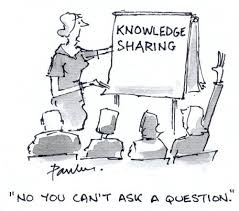
This great cartoon by Paulus is at the top of my letter to Anna Maria Tremonti.

I tried to sign in (toonpool.com) for permission from Paulus to use his cartoon. Sorry, kept getting rejected.

I tried to sign in (toonpool.com) for permission from Paulus to use his cartoon. Sorry, kept getting rejected.


QUESTION: Why did it take 60 years for lead to be banned as an additive to gasoline?

Be careful in your reply.   Because as you read about lead in gasoline you will know it applies equally to the pharmaceutical industry.   Which leads directly to the question “Why can’t you ask a question about vaccines?”. If you know everything, no questions, thank-you.   But maybe your knowledge sharing is out-dated?


ANSWER: if you know the answer (lead in gasoline), skip down to the next QUESTION.

some of America’s leading corporations–General Motors, Du Pont and Standard Oil of New Jersey (known nowadays as Exxon)- got together and put lead, a known poison, into gasoline, for profit. . . .

thimerasol – – mercury, a known poison into vaccines, for profit.

  • the severe health hazards of leaded gasoline were known to its makers and clearly identified by the US public health community more than seventy-five years ago, but were steadfastly denied by the makers, because they couldn’t be immediately quantified;


  • other, safer antiknock additives–used to increase gasoline octane and counter engine “knock”–were known and available to oil companies and the makers of lead antiknocks before the lead additive was discovered, but they were covered up and denied, then fought, suppressed and unfairly maligned for decades to follow;


  • the US government was fully apprised of leaded gasoline’s potentially hazardous effects and was aware of available alternatives, yet was complicit in the cover-up and even actively assisted the profiteers in spreading the use of leaded gasoline to foreign countries;


  • the benefits of lead antiknock additives were wildly and knowingly overstated in the beginning, and continue to be. Lead is not only bad for the planet and all its life forms, it is actually bad for cars and always was;


  • for more than four decades, all scientific research regarding the health implications of leaded gasoline was underwritten and controlled by the original lead cabal–Du Pont, GM and Standard Oil; such research invariably favored the industry’s pro-lead views, but was from the outset fatally flawed; independent scientists who would finally catch up with the earlier work’s infirmities and debunk them were–and continue to be–threatened and defamed by the lead interests and their hired hands;


  • confronted in recent years with declining sales in their biggest Western markets, owing to lead phaseouts imposed in the United States and, more recently, Europe, the current sellers of lead additives have successfully stepped up efforts to market their wares in the less-developed world, efforts that persist and have resulted in some countries today placing more lead in their gasoline, per gallon, than was typically used in the West, extra lead that serves no purpose other than profit;


  • faced with lead’s demise and their inevitable days of reckoning, these firms have used the extraordinary financial returns that lead additive sales afford to hurriedly fund diversification into less risky, more conventional businesses, while taking a page from the tobacco companies’ playbook and simultaneously moving to reorganize their corporate structures to shield ownership and management from liability for blanketing the earth with a deadly heavy metal.

https://www.thenation.com/article/secret-history-lead/

QUESTION: In 2017, what do we know about “For Profit” practices of the leading corporations in the pharmaceutical industry?
  • $3 billion GSK settlement. 2012, GlaxoSmithKline pleaded guilty to criminal charges and agreed to a $3 billion settlement for health-care fraud. . . . illegal promotion of prescription drugs, failure to report safety data,[9] bribing doctors, and promoting medicines for uses for which they were not licensed. The drugs involved were Paxil, . . . Those and others were involved in the kickback scheme.[10][11][12]   . . . The government investigation of GSK was launched largely on the basis of information provided by four whistleblowers who filed two qui tam (whistleblower) lawsuits against the company

What are your views of the whistleblowers on the vaccines front?   Of the credibility of William Thompson from the CDC, on fraud at the CDC in which he was a major participant?


QUESTION:   Why would people NOT ask questions about the vaccines (pharmaceutical industry)?

Apr 102017
 

I have a particular interest in the Rule of Law and the things that undermine it.    My response to the CBC is at the bottom.    I think Canadians have blind spots.   /Sandra

A woman hugs her husband, next to a placard which reads "I'm a pusher", who was shot dead by an unidentified gunman in Manila on July 23, 2016. There has been a surge in killings by anti-drug vigilantes who leave victims' corpses on city streets wrapped in packaging tape with signs accusing them of being drug dealers.


A woman hugs her husband, next to a placard which reads “I’m a pusher”, who was shot dead by an unidentified gunman in Manila on July 23, 2016. There has been a surge in killings by anti-drug vigilantes who leave victims’ corpses on city streets wrapped in packaging tape with signs accusing them of being drug dealers. (NOEL CELIS/AFP/Getty Images)


Listen 19:52

Last June, a foul-mouthed provocateur named Rodrigo Duterte was elected President of the Philippines. 

He came to office with a pledge to stamp drug crime out, by any violent means necessary. He encourages police and civilians alike to kill drug dealers and users.  

Since he took office, several thousand suspected drug dealers and users have been killed by police and vigilantes. Human rights advocates and leaders around the world have expressed their alarm — but in a recent poll, his approval rating remained above 75 per cent.  

[Lynching] is a form of extrajudicial violence, or extralegal violence, that is public … perpetrators want people to see this, as a spectacle of violence. It is particularly cruel. In other words, it involves, always, some form of “over-killing.” It’s not just about causing the death of the victim, but actually dehumanizing the body.


– Gema Santamaria


It’s a reminder that vigilante killings are no mere historical relic of the US South, where African-Americans were terrorized by the regime of lynching for decades in the 19th and 20th Centuries. And it might be said that the Philippines are just catching up with the practice of extrajudicial violence in several Latin American countries. 

Gema Santamaria is a leading expert on vigilantism. She is an assistant professor and the director of the International Relations Undergraduate Program at ITAM, a university in Mexico City. Professor Santamaria recently spoke with Michael Enright from a studio in Austin, Texas.

= = = = = = = = = = = = = = = = = = = = = = = = = =

MY RESPONSE, SUBMITTED ON-LINE TO THE SUNDAY EDITION, CBC

Thank-you for another excellent interview.

If I was a techie I would dub it.   I would insert “Canada” for some of those unfathomable countries.    Then see how it reads.

As I understand things, the role of the state is to protect citizens against violence.   Citizens agree to abandon violence and vigilantism; we pay taxes for policing and the justice system, in exchange for the ability to live in relative security, without fear.

The Justice System is funded – – owned – – by citizens.   It is the responsibility of citizens.
If we are fortunate, in the face of ineffective systems, communities will find their own ways to meet local needs.  Neighbourhood Watch, for instance.   Or programs that focus on the healthy development of the community, all its children and the environment.

If we are ineffective, violence will increase for the simple reason that it’s affordable to hire someone to break the knee-caps of an aggressor.
It is not affordable to use the justice system.

The Police typically will not handle, for example, cyber violence.  Amanda Todd, the UN admonitions for countries to do something about  cyber violence come to mind.

If the Justice and Policing Systems, the Governments in Canada, will not dedicate resources to create access to a Justice System designed to serve every day citizens, violence will increase because people tolerate only so much before they take matters into their own hands.

Violence begets violence in that system – – it is the available means of defence.

The Rule of Law is fundamental to Democracy.  It is undermined through our failures to reform and evolve.   There are too many financial beneficiaries of the status quo, roadblocks to what needs to be done.

Democracy becomes more and more fragile, the more insecure people become.  Especially in environments where educational institutions and the pervading culture are about disempowerment and distraction of the individual.   I am thinking that, amidst the complexities, Vigilantism is a return of the feeling of power, after the social and political contracts have been broken.


Apr 072017
 

http://www.aljazeera.com/indepth/features/2017/03/william-bourdon-plaaf-aims-support-whistle-blowers-170330142827930.html

Whistle-blowers in Africa under threat have little legal protection, says lawyer representing Assange, Snowden and more.

Willian Bourdon Organization for Whistle Blowers

William Bourdon fought human rights abuses for almost 30 years before going after those who steal money from public resources [Vincent Kessler/Reuters]

By  Anealla Safdar

As demand for the truth soars across the world, with confidence in media and governments plummeting, whistle-blowers are having quite a moment from the Global North to South. 

The risk of whistle-blowing in much of Africa is incredibly high. Of 54 African countries, just seven have passed whistle-blower laws.  

William Bourdon, one of the world’s leading advocates of whistle-blowers, has represented WikiLeaks founder Julian Assange, Edward Snowden, Antoine Deltour – the man behind the Luxembourg Leaks, and Herve Falciani, who exposed wrongdoing at HSBC’s Swiss private bank.  

Here, the French lawyer explains why he has founded Plateforme de Protection des Lanceurs d’Alerte en Afrique (PLAAF), a platform to protect whistle-blowers in Africa comprising legal experts, investigative journalists, NGOs and academics.

Al Jazeera: Why did you decide to launch PPLAAF?

Bourdon: Creating PPLAAF was an absolute necessity. The great question of the 21st century appeared to be this great civic anger targeted against those who mix public money with private interests, and against this, impunity enjoyed by big multinationals. 

In Africa, many NGOs and authorities have become more and more professional in their fight against corruption. However, I think one particular tool was missing while large flows of dirty and opaque money are prospering, and the separation between public and private interest is vague at best. 

Regimes are sometimes held in an iron grip by kleptocrats who siphon public money and resources to satisfy their megalomania, and all too often government anti-corruption commitments are merely a front for eradicating political opponents. But many brave people want this to stop. 

And we want to help them to disclose what they witness by offering them a legal protection. That’s why we created PPLAAF. 

Al Jazeera: What do you hope to achieve? 

Bourdon: PPLAAF’s priority is to offer legal protection to whistle-blowers. Too many of them in Africa have faced lethal danger, persecution, threats, only because their identity has been known. PPLAAF wants to protect them, technically and legally. 

PPLAAF can work to iron out the many dangers a whistle-blower can face if she or he wants to disclose sensitive information relevant to the public interest. It can also work as a protective shield between them and the press. 

The whistle-blower at the origin of the Panama Papers, the biggest leak in history, is still anonymous. That’s a success story for the protection of whistle-blower. 

But, of course, PPLAAF wants to achieve a greater objective and be an ally to all the good conscious who are fighting for a greater world. Giving the possibility to a whistle-blower to disclose for the public interest is a strong democratic act and is a step closer to the end of impunity for massive financial crimes. 

Al Jazeera: Do you think, given the changing political climate across the world, there is a rising need for whistle-blowers? 

Bourdon: There is a rising need for whistle-blowers. Worldwide, citizens are becoming aware of the dark and oppressive political, economic and financial powers being exercised over their daily lives.

Thanks to the revelations of whistle-blowers, along with new communication technologies and increased globalisation, we can better discern the surveillance by intelligence services and the financial losses generated by banking policies that favour tax evasion and money laundering over the needs of individual savers. 

The more professional secrecy is used in a way to organise the impunity of shameful behaviours which are contrary to international standards, the more whistle-blowers need to break this secrecy in order to reveal reprehensible activities.

Whistle-blowers are watchdogs of democracy. 

In this civic anger which is rising in the world, from Bucharest to Seoul, whistle-blowers are the top of the pyramid. We need them in order to understand how we can improve the way we live together, the way we are led. That’s why PPLAAF will be duplicated in other parts of the world. 

Al Jazeera: How does whistle-blowing differ between Europe and North America, and Africa? 

Bourdon: Even if they take great risks and face very damaging retaliation, whistle-blowers in Europe or in North America are better-protected thanks to strong democratic institutions and a real rule of law, although this latter always needs to be built stone-by-stone. 

Several countries in the Western world have strong laws protecting whistle-blowers, such as France, the UK or the US. Progressive human rights courts like the European Court of Human Rights can also play a great role in the protection of whistle-blowers.

Former PricewaterhouseCoopers employee Antoine Deltour, centre, and Bourdon, left, as they arrive for the LuxLeaks trial [Yves Herman/Reuters]


As an example, during the trial of Antoine Deltour before a court in Luxembourg, we sought his protection under Article 10 of the European Convention on Human Rights which protects freedom of expression.

But where democratic institutions are weak or inexistent, whistle-blowers are at much greater risk.

Only seven of 54 African countries have passed whistle-blower laws. In countries like these, blowing the whistle can lead to lethal danger.

Moss Phakoe, a former local representative in South Africa, was killed in 2009 after disclosing information about corruption activities in Rustenburg.

Jean-Jacques Lumumba, a former employee in a Congolese bank had to leave the country in 2016 when his superior threatened to kill him after he showed him evidence that the bank was conducting serious illegal activities.

These are examples which show the risks taken by these very brave soldiers of democracy.

Al Jazeera: In the West, many are quick to cast Assange as pro-Russia and pro-Trump. Should whistle-blowers in the West and in Africa, whose leaks are subject to manipulation, now impose their own limits in terms of the information they are prepared to leak?

Bourdon: This is a very relevant question. Nowadays, information is of paramount importance, especially since it can be so quickly spread. It can change an election, it can destroy someone’s life, it can interfere with the future of a nation.

Whistle-blowers have therefore a great responsibility when disclosing information, especially now that they can do it without going through the press, thanks to the new technologies. Whistle-blowers need to properly check the veracity and the credibility of the information they want to disclose.

PPLAAF can help them assessing the information they have at hand and see if it’s something worth disclosing. To that end, PPLAFF will conduct an in-depth investigation to check the credibility. PPLAAF will never put itself in a situation where it only fuels the spread of a rumour.

That said, it is not for PPLAAF nor the whistle-blower to wonder whether the information to disclose will interfere with an election or the conclusion of an international contract.

Al Jazeera: Is there a history of whistle-blowers in Africa?

Bourdon: It depends on the scope of the definition of whistle-blowing.

If civic disobedience is included within the definition, then Africa can only be proud of the noble examples it has, of these women and men who fought for their freedom during the colonisation or oppressive regimes like the Apartheid. Gandhi or Mandela have inspired the world.

The religious leader Cheikh Amadou Bamba who, at the end of the 19th century, decided to pray before a French court to show his opposition to colonial powers has triggered a non-violence conscious still in force today in Senegal.

Except in certain rare circumstances, there is almost no protection for whistle-blowers in African countries. PPLAAF is here to fill in the gaps left by weak states or institutions.

We can also mention Algerian freedom fighters or Haile Selassie when he gave this prominent speech in 1936 before the League of Nations criticising the occupation of his country by the troops of Mussolini.

If you keep a strict definition, the first whistle-blower is probably the British journalist Edmund Dene Morel who, at the beginning of the 20th century, led a campaign in the UK to denounce the exactions committed in Congo by Belgian colonisers on behalf of King Leopold II.

Never before had it been proved that the King was using Congo as a resource for forced labour. Colonisation was still perceived in Europe as a civic act of kindness.

Al Jazeera: What protections exist in Africa for whistle-blowers, and how can your organisation help?

Bourdon: Except in certain rare circumstances, there is almost no protection for whistle-blowers in African countries. PPLAAF is here to fill in the gaps left by weak states or institutions.

Therefore, PPLAAF can offer four kind of services: technical assistance through encrypted channels (web portal to send sensitive documents and a hotline in French and English); legal assistance through a network of lawyers and activists; and mediatic assistance – PPLAAF acts as a shield between the whistle-blowers and the press.

Finally, PPLAAF can also work as a think-tank, advising governments and authorities on how adopting laws which will help to protect in a progressive and efficient way whistle-blowers.

Al Jazeera: How did you decide upon your advisory board? What do they bring?

Bourdon: PPLAAF’s advisory board is a fantastic sample of great heroes and activists who put themselves, at great risks, at the forefront of the fight against injustice. The Ghanaian journalist Anas, a real masked avenger, denouncing numerous corruption scandals, has inspired many journalists in Africa.

WATCH: Whistleblowers ‘should be thanked’

Some others are prominent whistle-blowers such as Andrew Feinstein, who after fighting against the apartheid within the ANC, became a parliamentarian when Mandela won the elections.

Chairing the Public Accounts Committee at the parliament, he investigated a massive arms deal involving several European companies that was tainted by allegations of high-level corruption. Facing serious pressure from people of his own political party, he decided to resign and disclose the results of his investigation.

Al Jazeera: Should whistle-blowers be impartial?

Bourdon: No one is impartial. All of us have motives, political ideas.

But when you’re faced to illicit activities that make you outraged, you need to think about the public interest, not your personal one.

Blowing the whistle can change the world, but it can also change your life.

You need to be disinterested. Blowing the whistle can change the world, but it can also change your life.

If you do it for yourself, out of hate or revenge, or for financial reasons, then you do it at greater risks and it’s much more difficult to legally defend you.

Many laws protecting whistle-blowers require these latter to be disinterested when they blow the whistle.

Anyone who wants to become a whistle-blower, who has sensitive information related to Africa and wants to disclose it, please get in touch with us before on pplaaf.org. We are here to help.

This interview has been edited for clarity and length. 

Source: Al Jazeera

Apr 062017
 

Big Pharma is under serious attack, along with all the corruption they spawn.

The corruption and rot in the Centre for Disease Control (CDC, Atlanta) and some other health agencies has been blown open, as documented in earlier postings.

Citizens’ groups are stepping up to the plate.   March Against Monsanto is the most recent addition to the resistance (or revolution or insurgency or whatever you want to call it).

Interesting times – – Gandhi helped bring down the British Empire;  look what Nelson Mandela and his cohorts accomplished in South Africa;  citizens brought an end to Communist rule in East Germany;  now let’s see what we can do!

So far, Networks that extend around the globe working on the vaccines issue:

And now

  • the March Against Monsanto (MAM), started by young Mothers, has added their considerable network

Vaccines Revealed; the documentary Vaxxed;  the documentary Vaccine Syndrome (not the Gulf War Syndrome) – – all launched before The Truth About Vaccines (below).

They support each other – – are not competing for supporters, thankfully.   I find that their presentations are complimentary;  they don’t all present the same information from the same perspective.

– – – – – – – – – – – – – – – – – – – –

(Scroll down  –  I can’t remove the white spaces (copied).  Sorry)

We all want out kids to be safe. Period.


Email not displaying correctly? View it in your browser.


March Against Monsanto

MAM


Exclusive Sneak Peek


If you’re a parent of young children, you already know…


The mere mention of vaccinations in public sets off a string of heated conversations that hinge more on ideology and “groupthink” than actual truth and scientific fact.


What used to be a private medical decision between you and your doctor is now public information, with vaccine programs now being mandated in a growing number of states.


When it comes to the health of our children and grandchildren, people are passionate with good reason


We all want our kids to be safe.  Period.


To vaccinate or not is one of the most controversial issues facing parents today, and there’s a mountain of misinformation, propaganda, and fear mongering on the subject.


Parents are caught in the middle, and it’s time to set the record straight.


For the first time anywhere, a brand new series is giving parents the complete facts, insights, and education about vaccines so that you can make the right decision for your loved ones.


We would like to share with you an exclusive sneak-peek from the revolutionary new series, The Truth About Vaccines: Please click here for your exclusive first look.


This series includes everything a parent needs to know in order to make the best possible decision for their child.  You need to see it!!


Click Here To Watch The Entire Series For 100% FREE >>


March Against Monsanto

540 South 1305 East

Fruit Heights , UT 84073

Unsubscribe | Update Preferences

Apr 062017
 

Janet M forwarded the article about the cress (a plant) and wifi experiment done by a group of teenagers in Denmark.   The researcher from Sweden, Olle Johansson, commented very favorably on the science done by the girls.

First:  briefly,  who is Olle Johansson?   followed by the cress and wifi experiment (done in 2013).

– – –  – – – – – – – – –

http://ki.se/en/neuro/johansson-laboratory

EXCERPT:

Olle Johansson

Research focus

My group investigates health effects of modern, man-made electromagnetic fields as well as the functional impairment electrohypersensitivity. I introduced the clinical term “screen dermatitis” to explain the cutaneous damages that developed in the late 1970s when office workers, first mostly women, began to be placed in front of computer monitors. I called for action along lines of occupational medicine, biophysics and biochemistry, as well as neuroscience and experimental dermatology. The working hypothesis early became that persons with the impairment electrohypersensitivity react in a cellularly correct way to the electromagnetic radiation, maybe in concert with chemical emissions such as plastic components, flame retardants, etc., in a highly specific way and with a completely correct avoidance reaction—just as you would do if you had been exposed to e.g. sun rays, X-rays, radioactivity or chemical odours.

Nowadays, electrohypersensitivity (EHS) is in Sweden an officially fully recognized functional impairment (i.e., it is not regarded as a disease). Survey studies show that somewhere between 230,000-290,000 Swedish men and women—out of a population of 9,000,000—report a variety of symtoms when being in contact with electromagnetic field sources. To this, one should also add all the current issues regarding the bigger picture: the health effects of electromagnetic fields on the general population.

I and my collaborators have, in addition, worked in great depth in areas such as skin diseases, cancer, child delivery, female urine incontinence, oral mucosa diseases, brain and spinal cord morphology, synaptology and chemical transmission, peripheral nervous system-related issues, cardiac function, skeletal muscle function and disease, and connective tissue ripening phenomena.

– – –  – – – – – – – – –

With thanks to Janet M:

doubtful this will come as a surprise for most of you — but your kids & some of your friends/family members might want/need to hear it!

http://stopsmartmeters.org.uk/9th-grade-student-cress-wifi-experiment-attracts-international-attention/

Foreign researchers are extremely excited for a biology project from five 9th grade girls.

Researchers from England, Holland and Sweden have shown great interest in the five girls’ biology experiments.

Take 400 Cress seeds and place them into 12 trays. Then place six trays in two rooms at the same temperature. Give them the same amount of water and sun over 12 days, and remember to expose half of them to mobile [Wi-Fi] radiation.

It is a recipe for a biology test so brilliant that it has attracted international attention among acknowledged biologists and radiation experts. Behind the experiment are five girls from 9b in Hjallerup School in North Jutland, and it all started because they found it difficult to concentrate during the school day:

“We all think we have experienced difficulty concentrating in school, if we had slept with the phone next to our head, and sometimes also experienced having difficulty sleeping”, explains Lea Nielsen, who is one of the five aspiring researchers.

The school was not equipped to test the effect of mobile phone radiation on them. Therefore, the girls had to find an alternative. And the answer was Cress.

Six trays of seeds were put into a room without radiation, and six trays were put into another room next to two [Wi-Fi] routers. Such routers broadcast the same type of radiation as an ordinary mobile.

Healthy Cress

The “healthy” cress without the influence of the router. Photo: The girls from 9b

Then it was just necessary to wait 12 days, observe, measure, weigh and take pictures along the way. And the result spoke was clear: cress seeds next to the router did not grow, and some of them were even mutated or dead. (emphasis added – Ed.)

“It is truly frightening that there is so much affect, so we were very shocked by the result”, says Lea Nielsen.

Unhealthy Cress

The “sick” cress exposed to the [Wi-Fi] router. Photo: The girls from 9b

Reactions

The experiment secured the girls the finals in the competition “Young Scientists”, but it was only the beginning. Renowned scientists from England, Holland and Sweden have since shown great interest in the girls’ project so far.

From left: Lea Nielsen, Mathilde Nielsen, Signe Nielsen, Sisse Coltau and Rikke Holm. Photo: Kim Horsevad

The renowned professor at the Karolinska Institute in Stockholm, Olle Johansson, is one of the impressed researchers. He will now repeat the experiment with a Belgian research colleague, Professor Marie-Claire Cammaert at the Université libre de Bruxelles, for the trial, according to him, is absolutely brilliant:

“The girls stayed within the scope of their knowledge, skilfully implemented and developed a very elegant experiment. The wealth of detail and accuracy is exemplary, choosing cress was very intelligent, and I could go on”, he says.

He is not slow to send them an invitation to go on the road:

“I sincerely hope that they spend their future professional life in researching, because I definitely think they have a natural aptitude for it. Personally, I would love to see these people in my team!”

No mobile by the bed

The five girls from northern Jutland have not yet decided their future careers. They are still very surprised by all the sudden attention.

“It has been such a rollercoaster ride. I still cannot believe it”, says Lea Nielsen.

And Mathilde Nielsen added:

“It’s totally overwhelming and exciting. It’s just not something you experience every day”.

But there have also been other consequences of the cress trial, which is quite low-tech in nature.

“None of us sleep with the mobile next to the bed anymore. Either the phone is put far away, or it is put in another room. And the computer is always off”, says Lea Nielsen.

http://www.dr.dk/Nyheder/Indland/2013/05/16/131324.htm (in Danish)

Apr 052017
 
Sandra – There’s a new petition taking off on Change.org, and we think you might be interested in signing it.
   (INSERT:  1,141 signatories as of Apr 5, suppertime.  8,931 as of noon Apr 6.  I think that “the 99%” of us would want to sign!)
Petitioning Justin Trudeau, Rona Ambrose, Elizabeth May, Rhéal Fortin, Tom Mulcair

Stop Bombardier and Reckless Big Business Handouts


Petition by Democracy Watch


Governments across Canada give tens of billions of dollars of your money in tax breaks, subsidies, grants and loans to profitable big businesses — and they usually ask for nothing in return!

The federal and Quebec Liberal governments handed Bombardier more than $1 billion — with no conditions.  So Bombardier’s top executives decided to give themselves a $43.5 million pay raise — while firing 14,000 Bombardier workers.

The federal Conservatives did a secret bailout deal with US Steel/Stelco.  The company shut down and tried to stop paying the pensions of former steelworkers.  The federal Conservatives also bailed out Canada’s big banks with a record $114 billion bailout in 2008-2009 (most of it by having CMHC purchase mortgages from the banks) — with no conditions.  Since then, the banks have hiked fees, fired thousands of employees, and outsourced thousands of jobs to people in other countries.

The federal governmment hands billions to oil and gas companies and doesn’t require them to reduce pollution or act responsibly, and has handed billions to Pratt & Whitney in the past in return for creating jobs that were never created (but the company kept the money).

You can help stop these reckless handouts by signing and sharing this petition.  Governments should only give support to big businesses in return for legally enforceable responsibility and accountability guarantees from those businesses to:

  1. create jobs in Canada and reduce outsourcing to other countries;
  2. pay fair wages to all employees and contractors;
  3. pay executives no more than a fair, justifiable salary;
  4. reduce pollution, abuse of employees and customers and all other wrongdoing;
  5. protect whistleblowers and empower customers and shareholders, and;
  6. increase transparency so all their irresponsible actions are disclosed to the public.

Given the Bombardier executive pay hike scandal, the pressure is on the federal government and party leaders to make these changes.  Your time to be heard is now — please sign and share this petition with everyone you think may want to sign it.

See details about reckless handouts by governments to irresponsible big businesses in the following recent news stories:

Globe and Mail (April 3, 2017) — Opposition parties say Bombardier’s pay delay is not enough

Democracy Watch (March 16, 2017) — Will Liberals make key changes to stop gouging and abuse of 30 million bank consumers or continue protecting overpaid big bank executives?

Financial Post (Feb. 16, 2017) — Bombardier Inc’s government loan won’t be fully repaid for 15 years

CBC.ca (Dec. 13, 2016) — Steelworkers to Trudeau: Where are the feds on the Stelco deal?

(Keep going – – the click button is below!)


Sign the petition
Apr 042017
 
A CBC/Radio-Canada investigation has found cellphone trackers at work
near Parliament Hill and embassies

By Catherine Cullen, Brigitte Bureau, CBC News

http://www.cbc.ca/news/politics/imsi-cellphones-spying-ottawa-1.4050049

A CBC News/Radio-Canada investigation has revealed that someone is using devices that track cell phones near the heart of Canadian democracy.

A CBC News/Radio-Canada investigation has revealed that someone is using devices that track cell phones near the heart of Canadian democracy. (Adrian Wyld/Canadian Press)


A months-long CBC News/Radio-Canada investigation has revealed that someone is using devices that track and spy on cellphones in the area around Parliament Hill.

The devices are known as IMSI catchers and have been used by Canadian police and security authorities, foreign intelligence and even organized crime.


The devices, sometimes known by the brand name of one model, StingRay, work by mimicking a cellphone tower to interact with nearby phones and read the unique ID associated with the phone — the International Mobile Subscriber Identity, or IMSI.

That number can then be used to track the phone and by extension the phone’s user. In some instances, IMSI catchers can even be used to gain access to a phone’s text messages and listen in on calls.

At the heart of Canadian government

To do the investigation, our journalists used a device that detects IMSI catchers created by the German company GSMK. While it looks like a regular cellphone, the CryptoPhone emits an alert when a fake cellphone antenna intercepts its signal.

Media in the United States, Norway and Australia have done similar tests, but this is the first time it’s been used by a media outlet in Canada.

During tests in December and January, the CryptoPhone set off alerts at locations around Parliament Hill, including the nearby Byward Market, the Rideau Centre shopping mall and CBC offices in downtown Ottawa.

Cryptophone

ESD America’s CryptoPhone – purchased by CBC and Radio-Canada – can detect when an IMSI catcher is trying to intercept it. (CBC)


Because IMSI catchers have a radius of about half a kilometre in an urban setting, the IMSI catchers CBC detected could reach territory including Parliament Hill, the Prime Minister’s Office in Langevin Block, National Defence headquarters, as well as the U.S. and Israeli embassies.

We then used even more sophisticated equipment called an Overwatch Sensor that confirmed the presence of an IMSI catcher close to Parliament Hill.

Who is behind it?

We wanted to know more about who might be using the IMSI catcher or catchers that we detected, so we asked the U.S. supplier of the CryptoPhone to analyze the alerts we were getting.

ESD America specializes in counterintelligence and its clients include U.S. Homeland Security.

“Consistently you’ve been seeing IMSI catcher activity, definitely,” said CEO and co-founder Les Goldsmith, when we took our results to the company’s Las Vegas office.

Les Goldsmith

Les Goldsmith is CEO of Las Vegas-based ESD America, which specializes in counter-surveillance technologies including the CryptoPhone. (CBC )

We described the part of the city in which we detected the IMSI catchers — full of politicians, political staffers and civil servants.

“Somebody could be listening to calls right now and [the phone owners] have no idea,” he said.


As for who might be behind it, Goldsmith says IMSI catchers are used by law enforcement, federal agencies as well as organized crime and foreign intelligence.

Based on the configurations suggested by CBC’s results, he believes the IMSI catchers detected in Ottawa could be foreign made.

“We’re seeing more IMSI catchers with different configurations and we can build a signature. So we’re seeing IMSI catchers that are more likely Chinese, Russian, Israeli and so forth,” he said.

Foreign spies?

We also showed our results to an expert in Canadian security.

He knows a lot about IMSI catchers and comes from a Canadian security agency. We agreed to conceal his identity in order not to jeopardize that security work.

The expert found the results of our investigation disturbing.

“That an MP or a person who works on Parliament Hill could be exposed, that they could be a victim of this type of attack— it undermines our sovereignty,” he said.

Locations where CBC/Radio-Canada found IMSI catchers

The locations in black are where CBC/Radio-Canada detected IMSI catchers in Ottawa. The circles show the range the IMSI catchers could cover. (CBC)


Based on his experience, he sees two very different potential explanations for the results. One domestic, the other foreign.

He said Russia has used IMSI catchers in Canada before.

“We learned that Russian intelligence was parked near CSIS with equipment on board to do IMSI catching. After X number of days or weeks, they’re capable of identifying the IMSI numbers that belong to intelligence officers because the phones were spending eight hours a day in the same spot.”

He said when the Russians would do their next clandestine operation, they would use an IMSI catcher to see if any of the numbers associated with Canadian intelligence were nearby. If there were, they would call off the operation.

The Russian Embassy rejects any allegation that Russians have used IMSI catchers in Ottawa.

“Any suggestions as to that kind of activities are bogus and baseless,” said an embassy spokesperson.

A representative from the Chinese Embassy told us it was “not only unreasonable but even irresponsible” to suggest that country would be involved in the activity.

Israel said it had no knowledge of the issue, and the United States declined to comment.

Canadian spies?

Our security expert suggested the IMSI catchers we saw might be the work of a domestic agency, like Canada’s electronic spy agency, the Communication Security Establishment.

“One possibility is that the Communications Security Establishment has been mandated to monitor the network for protection purposes, in a defensive way,” he said.

CSE said it’s not allowed to do that.

“To be clear, by law, CSE is not permitted to direct its activities at Canadians anywhere or at anyone in Canada, ” a spokesperson said in a statement, adding that CSE respects the law.


How an IMSI catcher works

IMSI catchers pretend to be a cellphone tower to attract nearby cell signals and intercept the unique ID number associated with your phone, the International Mobile Subscriber Identity or IMSI. (CBC)


Police use of IMSI catchers

Last June it was revealed the RCMP uses IMSI catchers in its work. A Quebec Superior Court lifted a publication ban to reveal police were using the technology as part of an investigation into the 2011 death of Salvatore (Sal the Ironworker) Montagna, a high-ranking member of a New York crime family killed outside Montreal.

Court documents show the RCMP:

  • Purchased its first IMSI catcher in 2005.
  • Has used IMSI catchers in numerous investigations.
  • Keeps information about the cellphones of ordinary Canadians detected in the course of some investigations.
  • Recognizes phones may be affected while an IMSI catcher is in use, including possible delays in reaching 911.

The documents also show the RCMP obtained court authorization to use the IMSI catcher, which the RCMP refer to as a mobile device interceptor, or MDI.

Recent court proceedings may also shed light on the degree to which police are reluctant to discuss their use of the devices. Last month, lawyers for the federal government issued stays of proceedings against three dozen suspects out of the nearly 50 people rounded up in an operation targeting the Montreal Mafia.

A Crown prosecutor told reporters one of the reasons was that evidence gathered by the RCMP raised “unprecedented legal questions,” but declined to say more.

Some privacy experts believe the Crown is concerned about whether their use of IMSI catchers — including debates about how the data is collected — will hold up in court.

Municipal police forces use the technology as well. The Vancouver police have acknowledged they borrowed an RCMP IMSI catcher in 2007 and said they would use the technology again.

CBC News obtained documents showing that in 2016, Winnipeg police, Durham Regional Police, Ontario Provincial Police and the Canadian Security Intelligence Service had also gotten a licence from federal public safety officials to purchase an IMSI catcher.


Who is using IMSI catchers in Ottawa?

We reached out to police, security agencies, embassies and the federal government to ask if they were involved in the IMSI catchers we detected.

The Department of National Defence said it had no knowledge of IMSI catchers being used on the dates we saw activity.

The Department of Public Safety, the Ottawa Police Service, the RCMP and CSIS all gave similar responses: They don’t discuss specific investigative techniques but they do follow the law, respect the Charter of Rights and Freedoms and adhere to the appropriate judicial processes.

The detection of the devices is troubling to Teresa Scassa, Canada Research Chair in Information Law at the University of Ottawa.

Even if the technology is being used by public authorities, Scassa sees reason to be concerned.

She points to a lack of transparency if Canadians are only learning in 2017 that the RCMP has had an IMSI catcher since 2005.

Teresa Scassa

Teresa Scassa, Canada research chair in information law at the University of Ottawa, says the use of IMSI catchers in Ottawa is “hugely concerning.” (CBC )

She also said it’s not clear whether the authorities always get a warrant. Even when they do, there are still questions about what happens to the information of other people caught up in the investigation, Scassa said.

“Is it destroyed? Is it retained? Is it used for other purposes? It’s not always clear that warrants contain conditions that require something specific to be done with the information afterwards.”

Given that many groups may have access to IMSI catchers, Scassa argues there is a lot more the government could be doing to protect Canadians’ privacy.

She believes agencies that use IMSI catchers should be required to get a warrant whenever the devices are used, destroy information that is intercepted but not related to the investigation and to report to the privacy commissioner about some key pieces of information, like how often they are used and in what context.