Sandra Finley

Mar 312017
 

https://worldmercuryproject.org/stream/

Robert F Kennedy Jr is, once again, Excellent – right on the mark.

Compare with what’s written in mainstream media about this event, the launch of the $100K challenge.   What you see, in spades, is a  co-opted press.

Mar 312017
 

Patrick Gentempo and the others at Vaccines Revealed have launched an important initiative.

AND,  they are proceeding in a SMART way.   I watched the March 29th  Live Q & A to the end.   I think the burning light of Vaccines Revealed will keep burning.

Another round of free viewing of the 9 on-line episodes has been arranged.   If you, or parents you know, haven’t seen them:

Scroll down, another organization (The Truth About Vaccines) has joined in the work.  https://go.thetruthaboutvaccines.com?ref=2f2ed19e-e581-4a13-950c-2865465a4c0d

But here’s the first big push:

Vaccines Revealed – FREE

Please let me know if you have any trouble.

UPDATE:   Another organization joined the vaccine cause

Patrick Gentempo takes the view that Vaccines Revealed is not competing with other organizations;  everyone who gets behind the issue is a bonus to the work to be done.

He is open to  The Truth About Vaccines,  a second docu-series, to be broadcast April 12 to 19.   Patrick hasn’t seen any of that series yet, but knows some of the people involved.   He writes:

The folks that created a global success with The Truth About Cancer are now turning their attention to vaccines . . .  

I watched the trailer for The Truth About Vaccines.   It appears that the series will offer some additional, helpful perspectives.  So,  the two series are potentially complimentary.  I signed up, so I can check it out.   A bit of wariness.  I don’t know.

https://go.thetruthaboutvaccines.com?ref=2f2ed19e-e581-4a13-950c-2865465a4c0d

(I don’t particularly like this:  if you click on the link,  I earn a credit for having referred you.  . . .  I don’t need to be, nor do I like being  “incentivized”!   But never mind  – – –  transnational corporations and the corruption they are so good at,  is the issue.)

Cheers!

/Sandra

Mar 292017
 

By Diane Cardwell & Jonathan Soble, New York Times, March 29 2017

                                https://www.nytimes.com/2017/03/29/business/westinghouse-toshiba-nuclear-bankruptcy.html?_r=0

Westinghouse Electric Company, which helped drive the development of nuclear energy and the electric grid itself, filed for bankruptcy protection on Wednesday, casting a shadow over the global nuclear industry.

The filing comes as the company’s corporate parent, Toshiba of Japan, scrambles to stanch huge losses stemming from Westinghouse’s troubled nuclear construction projects in the American South. Now, the future of those projects, which once seemed to be on the leading edge of a renaissance for nuclear energy, is in doubt.

“This is a fairly big and consequential deal,” said Richard Nephew, a senior research scholar at the Center on Global Energy Policy at Columbia University. “You’ve had some power companies and big utilities run into financial trouble, but this kind of thing hasn’t happened.”

Westinghouse, a once-proud name that in years past symbolized America’s supremacy in nuclear power, now illustrates its problems.

Many of the company’s injuries are self-inflicted, such as a disastrous deal for a construction business that was intended to control costs and instead precipitated the events that led to the filing on Wednesday. Over all, Toshiba has been widely criticized for overpaying for Westinghouse.

But some of what went wrong was beyond either company’s control. Slowing demand for electricity and tumbling prices for natural gas have eroded the economic rationale for nuclear power, which is extremely costly and technically challenging to develop. Alternative-energy sources like wind and solar power are rapidly maturing and coming down in price. The 2011 earthquake in Japan that led to the nuclear disaster at the Fukushima Daiichi plant renewed worries about safety.

Westinghouse’s problems are already reducing Japan’s footprint in nuclear power, an industry it has nurtured for decades in the name of energy security. Even before the filing, Toshiba had essentially retired Westinghouse from the business of building nuclear power plants. Executives said they would instead focus on maintaining existing reactors — a more stable and reliably profitable business — and developing reactor designs.

That has made the already small club of companies that take on the giant, expensive and complex task of nuclear-reactor building even smaller. General Electric, a pioneer in the field, has scaled back its nuclear operations, expressing doubt about their economic viability. Areva, the French builder, is mired in losses and undergoing a large-scale restructuring.

Among the winners could be China, which has ambitions to turn its growing nuclear technical abilities into a major export. That has raised security concerns in some countries.

The shrinking field is a challenge for the future of nuclear power, and for Toshiba’s revival plans. Its executives have said they would like to sell all or part of Westinghouse to a competitor, but with a dwindling list of potential buyers — combined with Westinghouse’s history of financial calamity — that has become a difficult task.

Toshiba still faces tough questions. The company is also divesting its profitable semiconductor business and plans to sell a stake to an outside investor to raise capital. Most of the companies seen as possible buyers are from outside Japan. Some Japanese business leaders have expressed fears that the sale will further erode Japan’s place in an industry it once dominated.

After writing down Westinghouse’s value, Toshiba said it expected to book a net loss of $9.9 billion for its current fiscal year, which ends on Friday.

“We have all but completely pulled out of the nuclear business overseas,” Toshiba’s president, Satoshi Tsunakawa, said at a news conference. Of the huge loss, he added, “I feel great responsibility.”

Bankruptcy will make it harder for Westinghouse’s business partners to collect money they are owed by the nuclear-plant maker. That mostly affects the American power companies for whom it is building reactors, analysts say. Now, it is unclear whether the company will be able to complete any of its projects, which in the United States are about three years late and billions over budget.

The power companies — Scana Energy in South Carolina and a consortium in Georgia led by Georgia Power, a unit of Southern Company — would face the possibility of new contract terms, long lawsuits and absorbing losses that Toshiba and Westinghouse could not cover, analysts say. The cost estimates are already running $1 billion to $1.3 billion higher than originally expected, according to a recent report from Morgan Stanley, and could eventually exceed $8 billion over all.

Dennis Pidherny, a managing director at Fitch Ratings who is sector head of the United States public power group, said that it was possible that the company’s bankruptcy filing could terminate the contracts and that it could be difficult for the utilities to find another builder to take them over.

“There’s still quite a bit of work that needs to be completed,” he said. “The biggest challenge there is quite simply finding another suitable contractor who can complete the contract and have it completed at a quote-unquote reasonable cost.”

That is, if they are constructed at all. Stan Wise, chairman of the Georgia Public Service Commission, said the utilities developing the Alvin W. Vogtle generating station in the state would have to evaluate whether it made sense to continue.

“It’s a very serious issue for us and for the companies involved,” Mr. Wise said. “If, in fact, the company comes back to the commission asking for recertification, and at what cost, clearly the commission evaluates that versus natural gas or renewables.”

In a statement on Wednesday, Toshiba said Westinghouse and affiliated companies were “working cooperatively” with the owners to arrange for construction to continue. In recent days, the affected companies issued statements saying they were monitoring the situation and exploring their options, as did the Energy Department, which has authorized $8.3 billion in federal loan guarantees for the Georgia project.

“We are keenly interested in the bankruptcy proceedings and what they mean for taxpayers and the nation,” said Lindsey Geisler, a Department of Energy spokeswoman. “Our position with all parties has been consistent and clear: We expect the parties to honor their commitments and reach an agreement that protects taxpayers, promotes economic growth, and strengthens our energy and national security.”

Toshiba said Westinghouse had total debt of $9.8 billion. The Chapter 11 bankruptcy filing was made in federal bankruptcy court for the Southern District of New York.

A decade ago, Toshiba was dreaming of a big global expansion when it bought Westinghouse for a surprisingly high $5.4 billion and made plans to install 45 new reactors worldwide by 2030.

At the same time, Westinghouse was trying to install a novel reactor design, the AP1000. Using simplified structures and safety equipment, it was intended to be easier and less expensive to install, operate and maintain. Its design also improves the ability to withstand earthquakes and plane crashes and is less vulnerable to a cutoff of electricity, which is what set off the triple meltdown at Fukushima.

Nonetheless, it was inevitable that expansions at the Vogtle generating station in Georgia and the Virgil C. Summer plant in South Carolina would hit some bumps along the road to fruition, nuclear executives say. Not only was the design new, but, because nuclear construction had been dormant for so long, American companies also lacked the equipment and expertise needed to make some of the biggest components and construct the projects.

Indeed, that may ultimately have been at the root of the troubles. The contractor Westinghouse chose to complete the projects struggled to meet the strict demands of nuclear construction and was undergoing its own internal difficulties after a merger. As part of an effort to get the delays and escalating costs under control, Westinghouse acquired part of the construction company, which set off a series of still-unresolved disputes over who should absorb the cost overruns and how Westinghouse accounted for and reported values in the transaction.

In its bankruptcy filing, Westinghouse said that its top 30 unsecured creditors held over $508 million in claims. Among those creditors are big engineering and construction companies like Fluor and CB&I, and Nuclear Fuel Services, a fuel supplier.

To shepherd its case through Chapter 11, Westinghouse has hired a number of advisers, including the investment bank PJT Partners, the law firm Weil, Gotshal & Manges, and the consulting firm AlixPartners.

Westinghouse also said in its bankruptcy filing that it had taken out an $800 million loan from a group led by Citigroup to support itself through the bankruptcy process.

Diane Cardwell reported from New York, and Jonathan Soble from Tokyo. Michael J. de la Merced contributed reporting from New Orleans

Mar 222017
 

RELATED:    2017-03-22   16-minute interview of Almalki   All Canadians should listen.

Alex Neve and Béatrice Vaugrante of Amnesty International Canada.

Alex Neve and Béatrice Vaugrante of Amnesty International Canada

. . . .    The torture, illegal imprisonment and other human-rights violations these men went through took place between 2001 and 2004. A judicial inquiry, headed by former Supreme Court of Canada Justice Frank Iacobucci, examined the cases in 2007 and 2008. His report, documenting numerous examples of “deficient” conduct by Canadian officials that contributed to these many human rights violations, has been public record for more than eight years. UN human rights bodies highlighted concerns about these cases in 2005 and called for resolution in 2012. 

Against that timeline, it is truly a disgrace that rather than receive prompt redress, they were forced into contentious litigation; for many long years under the previous government and an additional year under the Trudeau government. 

That is the past now. But it must also be the beginning of a meaningful commitment to unequivocally standing against torture.

Here are six steps forward: 

First, there are others whose claims for redress for national-security-related human-rights violations, including torture, have been contested by government lawyers for far too long. That includes Omar Khadr, Abousfian Abdelrazik and the men who have been subjected to the Kafkaesque world of immigration security certificates and the threat of being deported to torture. They too deserve justice. 

Second, we must make sure it can’t happen again. Central to what happened to Mr. Almalki, Mr. El Maati and Mr. Nureddin, similarly in the case of Maher Arar, was sharing inflammatory and unverified intelligence, and receiving back intelligence from foreign partners, completely unconcerned about risks of torture. That has been codified now in ministerial directives that allow intelligence to be shared and received, in exceptional circumstances, even if it is tainted by or might lead to torture. That must change. 

Third, Canadian laws are still equivocal when it comes to torture. Most notoriously our immigration laws allow deportation to torture in exceptional circumstances. But there is no exceptional justification for torture in international law. The ban on deportations to torture must be absolute. 

Fourth, these three men went through their nightmare, in part, because there was ineffective review of the agencies involved. The government’s current initiative to establish a parliamentary national security review committee is important, but it is not enough. There is urgent need for comprehensive, expert, integrated and independent review over all of Canada’s national security agencies. 

Fifth, Canada’s voice is needed to lead efforts to end torture worldwide. Steps finally under way to accede to the 2002 torture prevention treaty, the Optional Protocol to the Convention Against Torture, which enables prison inspections to stamp out torture, are encouraging and should be expedited. That will set Canada up to be a more credible global champion for ending torture.

Finally, Canada has to grapple with the fact that concerns about torture seem likely to become a major problem in our relationship with the United States. President Donald Trump is convinced that torture works, though others in his Cabinet reportedly don’t share his enthusiasm. It is confused at best; ominous at worst. At all levels possible, including Prime Minister Justin Trudeau and his ministers of Foreign Affairs and Public Safety, the Trump White House needs to hear that Canada will not countenance any nod to torture in our important intelligence relationship. 

It has taken far too long to remedy the torture these three men endured. There can be no further delay in reinforcing Canada’s stand against torture, at all times and against all people.


Mar 222017
 

http://www.cbc.ca/radio/thecurrent/the-current-for-march-22-2017-1.4034665/canadian-torture-victim-abdullah-almalki-calls-apology-a-victory-for-human-rights-1.4034666

It is important for Canadians to hear this –   Listen 16:18

I would like to drag us all, kicking and screaming, to hear those 16 minutes.

If “the authorities” are able to get away with the extinction of Charter Rights and The Rule of Law, we are indeed doomed to a form of fascism.

I wonder how many of us would fight for 12 years, in a country that is often racist,  to hold the authorities to account?   Is there any other way to shine a light on the rhetoric versus the reality of Charter Rights and the Rule of Law,  in the rhetoric versus reality of Canadian Democracy?   The fact that Mr. Almalki can emerge from his ordeal with his graciousness intact is remarkable.

Among other things,  Abdullah Almalki points out that the Americans control where Canadians fly to,  even if the flight does not land in, or fly over, American airspace.

He does not say (what I say):   Canadians have given over their sovereignty to the U.S. without any public debate.

When time permits, I will post other material on the control that the U.S.A. has over air traffic.

Through the years, I have posted news articles that alerted us to what’s happening.   A  sampling:

“Scroll through the information under the Category (right-hand sidebar) “Peace or violence“, sub-category “Lockheed Martin…”.   Quislings in Government are giving away Canadian sovereignty and have been for many years.

There is increasing militarization.  . . .

The military-industrial corporatocracy is being duplicated in Canada.  See the “Canada First Defence Strategy” and “offset agreements“.  It is financed by citizens (tax dollars), the same as in the U.S.”

2013-10-09 Inside Canada’s top-secret billion-dollar spy palace, CBC News

Etc. Etc.

For more than 15 years, this network has fought alongside other Canadians, Americans and non-North Americans,  against the destructive forces that have gained an upper hand.

You have enabled and supported me;  I hope I have enabled and supported you.

I am extra sensitive to the issues, if only because this network has been effective in creating awareness of the role of the military-industrial-surveillance complex in Canada through one of its vehicles – – Lockheed Martin Corporation.    I also read the news report about the Americans who were driving to Vancouver to attend a presentation by Chris Hedges;  turned back because one of the women had attended an event.  It happens that I attended the same event, but when it was offered at a Canadian location.

That’s why I say:      Listen 16:18 !!

It is important to hear, and to share, what Abdullah Almalki  and others are telling us.

RELATED:  2017-03-20   Six steps Canada must take after embarrassingly long redress for tortured citizens,  Globe & Mail Opinion Piece

I visited Mr. Almalki’s blog, http://www.abdullahalmalki.com/,  and left a message.

I want him to know how much his contribution to Canadian democracy is appreciated.  My words seem vastly inadequate.

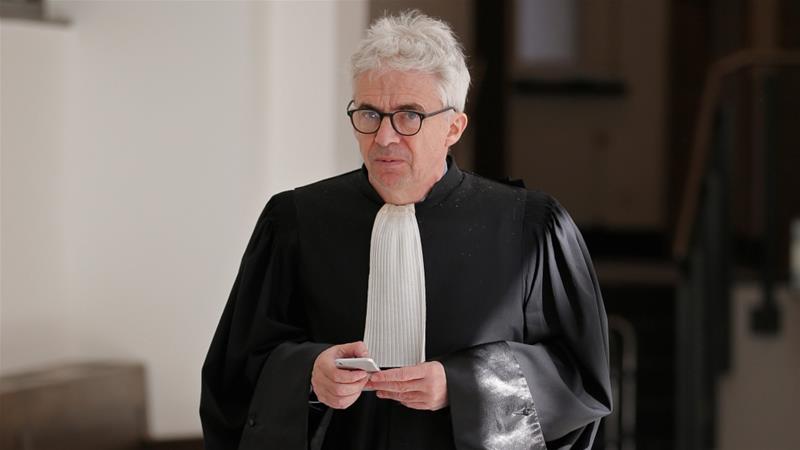
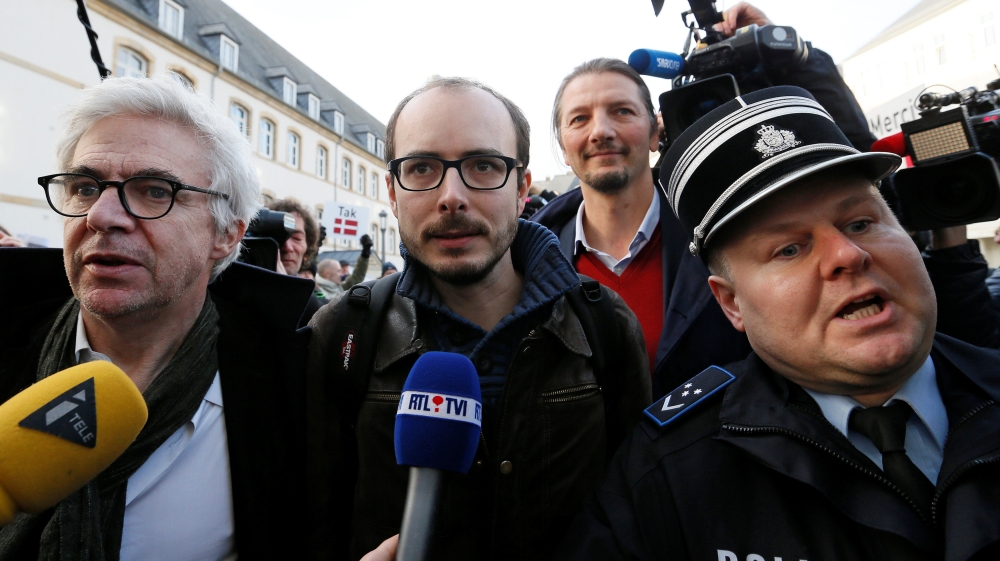
Abdullah Almalki (C), with Muayyed Nureddin (L) and Ahmad Abou-Elmaati, say they were tortured in Syria because of information provided by Canadian authorities and have demanded a secret investigation into their case be opened up to the public.

Abdullah Almalki (C), with Muayyed Nureddin (L) and Ahmad Abou-Elmaati, say they were tortured in Syria because of information provided by Canadian authorities and have demanded a secret investigation into their case be opened up to the public. (Chris Wattie/Reuters)

Listen 16:18

It was one of the darkest chapters in Canada’s so-called war on terror.

Soon after the 9/11 attacks, four Canadian citizens were detained and tortured in Syria and Egypt based on faulty intelligence originating in Canada.

It was over a decade ago that one of those men, Maher Arar, received an apology and settlement from the Canadian government for his ordeal.

But it wasn’t until March 17, for the other three men, Abdullah Almalki, Ahmad Abou-Elmaati and Muayyed Nureddin, to finally receive apologies and settlements of their own.

“To see this apology after more than 12 years fighting for it, I was extremely happy — my family was extremely happy,” Almalki tells The Current’s Anna Maria Tremonti.

“This is a huge win for Canada — a victory for human rights, a victory for every Canadian.”

Almalki, a Syrian-born Carleton University graduate, was jailed and tortured in Syria from 2002 and 2004. It’s been 13 years since he was cleared by a security court in Syria — and nine years since he was cleared by a judicial inquiry in Canada.

Terror Inquiry 20081021 TOPIX

Justice Frank Iacobucci’s federal inquiry concluded the actions of Canadian officials in relation to Abdullah Almalki, Ahmad Abou-Elmaati and Muayyed Nureddin indirectly contributed to the torture of the three Arab-Canadian men in Syria. (Adrian Wyld/Canadian Press)


He feels closure to his ordeal should have happened right after the inquiry and does not know why the government took so long.

Almalki tells Tremonti that almost anything can trigger flashbacks to the torture he endured and says the haunting memories will never go away.

“I accept this and accepting this has made me able to move forward — it has made me able to handle it rather than trying to avoid it, ” he says.

Almalki was tortured by Syrian interrogators but says had it not been for Canadian officials, he would not have been tortured.

“The Syrians were the servants, were the people carrying out the act. Canadian officials from the beginning set up the detention by sending false information to the Syrians,” he explains.

Once Almalki was detained, he says the RCMP with the help of the Canadian ambassador of Syria met with the head of military intelligence to gain interrogation access.

“The Syrians were clear at the end that they were asking me questions that they got from Canada.”

Canadian officials involved in Almalki’s case have never been held personally responsible but he tells Tremonti, “accountability is a must when it comes to the atrocious crime of torture.”

“I do not have hate or feelings of revenge towards anyone, and I thank God that I got to this point. But in order to stop torture, every person who was complicit in my torture and the torture of others … all of them need to be held accountable.”

“That will be for the benefit of the society and the country.”


Listen to the full conversation at the top of this web post.

This segment was produced by The Current’s John Chipman.


Related Stories  – –  go to the CBC URL at the top of this posting.

Mar 212017
 

Click on the  Listen button below.   A truly  inspirational man,  Benjamin Ferencz.

Benjamin Ferencz (L), was the chief prosecutor for the United States Army at the Einsatzgruppen trial — the ninth of 12 trials for war crimes in Nuremberg after the end of the Second World War.

Benjamin Ferencz (L), was the chief prosecutor for the United States Army at the Einsatzgruppen trial — the ninth of 12 trials for war crimes in Nuremberg after the end of the Second World War. (Courtesy of Benjamin Ferencz)

Listen 23:14


At 97-years-old, the last-surviving Nuremberg prosecutor is still furious and fighting for peace.

“I’m boiling with anger all the time,” Benjamin Ferencz tells The Current’s Anna Maria Tremonti.

“I have no rest. I have no vacations. I don’t know what holidays mean, because I’m so sure that what I’m doing is right that I just can’t stop doing it.”

In 1947, the American lawyer prosecuted his first case at Nuremberg, where he tried 22 members of the Einsatzgruppen Nazi death squads. He was only 27-years-old.

Ferencz says he leans on humour to cope.

“If you’re telling jokes, if you’re crying on the inside, you better be laughing on the outside. Or you’ll drown in tears,” he says.

After Ferencz fought in the Second World War, he was assigned to gather evidence from several concentration camps as they were being liberated. Seventy years later, what he saw is still fresh in his mind.

Ferencz 1940

Benjamin Ferencz, 1940. In 1945, Ferencz was honourably discharged from the army with the rank of Sergeant. (Courtesy of Benjamin Ferencz)

“The scenes are really indescribable to a rational human mind.”

“It’s something you don’t forget quickly, or ever. ” he says.

“And it has led to my determination that the real answer to the problem is to end war making. I know how difficult that is.”

Ferencz won his case in Nuremberg because of the overwhelming evidence, but he recalls it was “a grim day,” hearing the judge repeat sentences of death by hanging.

Related: The improbable story of the man who won history’s ‘biggest murder trial’ at Nuremberg

Since then, Ferencz has been advocating for peace, and played an instrumental role in developing the concept of the International Criminal Court. He says the court has not yet reached its full potential.

1947_Ben_Ferencz

Chief Prosecutor Benjamin Ferencz at the podium in the Einsatzgruppen case— his first case. All of the 22 men on trial were convicted. (Courtesy of Benjamin Ferencz )

“I would hardly expect it to live up to the expectations in a relatively short period of time,” says Ferencz.

But, he tells Tremonti, he was pleased when asked by the court to deliver the closing remarks for the prosecution at the end of its first case.

“That was my second case,” he tells Tremonti.

“I was 92-years-old. So it takes a while for you to see progress. But it’s there. It’s slow, it’s heavy, it’s expensive, it’s difficult,” Ferencz remarks.


Benjamin Ferencz

Benjamin Ferencz says he’s concerned about the future but optimistic. (Courtesy of Benjamin Ferencz)

“But there has been, in my judgment, an awakening of the human conscience in the years that I have lived.”

Related: ‘It was as if I had peered into hell’

Ferencz says he’s worried about the waves of populism and nationalism growing around the world today.

“I am unhappy about the things that I think are going in the wrong direction,” he says.

Despite this, the former prosecutor remains optimistic.

“I’m confident that in the long run it will go in the right direction,” he proclaims.

“People can change when they realize the present path is a pathway to doom.”


This segment was produced by The Current’s Karin Marley.

Mar 202017
 

Read more about the Guardian’s response to its adverts being inadvertently placed next to extremist material


Hello
I wanted to let you know that last week the Guardian withdrew all of its advertising from Google and YouTube after it discovered that some of its ads, including for the membership scheme, were being inadvertently placed next to extremist material.

A media agency, acting on the Guardian’s behalf, used Google Display Network, which involves an automated system known as programmatic trading.

David Pemsel, the Guardian’s chief executive, wrote to Google to say it was “completely unacceptable” for its advertising to be misused in this way.

You can read more about the Guardian’s response here.

Google and YouTube promised to make significant changes to its policies to deal with the problem, but other companies, advertising firms and government departments have also since pulled their adverts, or are considering doing so.

It is another worrying example of the challenges we face as a progressive news organisation in a fast-changing digital age.

Kind regards,

Natalie Hanman

Executive editor for membership


What we’ve been reading: this week’s editors’ picks

1. Inside the Guardian: Hella Pick was one of the Guardian’s first female foreign correspondents in the 1960s and she’s still going strong

2. Protest and persist: Rebecca Solnit on why giving up hope is not an option

3. Guardian member Barbara Jennings tells us about a TV review she read 40 years ago that shaped her view on the death penalty

4. ‘London Bridge is down’: the secret plan for the days after the Queen’s death

5. Hot air and intrigue: did Donald Trump leak his own tax return?

6. Afua Hirsch on why it’s right for Britain to reach out to Africa – wrong to send Boris Johnson