Protected: the kid 3
Personal
Enter your password to view comments.
Sep 052016

http://www.truth-out.org/news/item/37484-iraqi-woman-uses-chilcot-report-in-war-crimes-lawsuit-against-george-w-bush
Marjorie Cohn
 President George W. Bush discusses the Iraq war in Washington, May 24, 2007. (Photo: Stephen Crowley / The New York Times)
Sundus Saleh, an Iraqi woman, first filed her lawsuit against George W. Bush, Dick Cheney, Donald Rumsfeld, Condoleezza Rice and Paul Wolfowitz in September 2013. Alleging that the Iraq War constituted an illegal crime of aggression, Saleh filed the suit on behalf of herself and other Iraqis in the US District Court for the Northern District of California.
The district court dismissed Saleh’s lawsuit in December 2014, saying the defendants acted within the scope of their employment when they planned and carried out the Iraq War. Saleh then appealed to the US Court of Appeals for the Ninth Circuit.
In her appeal, Saleh is arguing that the Bush officials were acting from personally held convictions that the US should invade Iraq, regardless of any legitimate policy reasons, and that theyknowingly lied to the public when they fraudulently tied Saddam Hussein to al-Qaeda and the threat of weapons of mass destruction.
Inder Comar, Saleh’s lawyer, explained, “Nuremberg held that domestic immunity was not a defense to allegations of international aggression. Everything the Germans did was legal under the law. We are asking the Ninth Circuit to reject the application of domestic immunity in this case, in line with the holdings of Nuremberg.”
On July 22, Saleh urged the Ninth Circuit to take judicial notice of portions of the Chilcot Report, which makes factual conclusions about the run-up to the Iraq War. A court can take judicial notice of a fact that is not subject to reasonable dispute and can be accurately and readily determined from sources whose accuracy cannot be reasonably questioned. That includes public records, such as reports issued by a commission of inquiry.
The report was published by the Iraq Inquiry Committee, an independent committee established by the British government, on July 6, 2016, after six years of investigation, research and drafting.
Here are four of the excerpts from the report that Saleh has submitted to the court for judicial notice:
24. President Bush decided at the end of 2001 to pursue a policy of regime change in Iraq.
68. On 26 February, 2002, Sir Richard Dearlove, the Chief of the Secret Intelligence Service, advised that the US Administration had concluded that containment would not work, was drawing up plans for a military campaign later in the year, and was considering presenting Saddam Hussein with an ultimatum for the return of inspectors while setting the bar “so high that Saddam Hussein would be unable to comply.”
74 Mr. [UK Foreign Secretary Jack] Straw’s advice of 25 March proposed that the US and UK should seek an ultimatum to Saddam Hussein to re-admit weapons inspectors. That would provide a route for the UK to align itself with the US without adopting the US objective regime change. This reflected advice that regime change would be unlawful.
89. Sir Richard Dearlove reported that he had been told that the US had already taken a decision on action – “the question was only how and when;” and that he had been told it intended to set the threshold on weapons inspections so high that Iraq would not be able to hold up US policy.
The report includes copies of notes between Bush and former British Prime Minister Tony Blair, in which they discussed the invasion of Iraq as early as October 2001.
Eight months before the invasion of Iraq, Blair wrote to Bush, saying “I will be with you, whatever.” In July 2002, Blair had told Bush that removing Hussein from power would “free up the region” even though Iraqis might “feel ambivalent about being invaded.”
The report concluded that Hussein posed no imminent threat on March 20, 2003, the date the US and the UK invaded Iraq. It also noted that a majority of the United Nations Security Council favored continuing UN monitoring and inspections.
Legal Experts Conclude War was Illegal
The committee also published submissions by legal experts who concluded the war was illegal and constituted aggression against Iraq.
Philippe Sands said, “Distinguished members of the legal community in the United Kingdom have also concluded without ambiguity that the war was unlawful.”
Sir Michael Wood stated, “the use of force against Iraq in March 2003 was contrary to international law,” in that it “had not been authorized by the Security Council, and had no other legal basis in international law.”
Elizabeth Wilmshurst concurred, noting, “the facts did not justify the use of force in self-defence. Existing Security Council resolutions did not authorize the use of force. There was no other legal justification. A desire to change the regime did not give a legal basis for military action,” adding, “I regarded the invasion of Iraq as illegal.”
An international group of lawyers (including former US Attorney General Ramsey Clark and I) filed an amicus brief supporting Saleh’s legal claims. Clark told Truthout at the time, “In this case, as many as 3.5 million people have lost their lives as a consequence of the crime of aggression — the illegal use of force perpetrated against the people of Iraq — and the country’s development has been set back countless years.”
Allegations Against Team Bush
The UN Charter, which was created by the countries of the world in 1945 to “save succeeding generations from the scourge of war,” prohibits the use of military force except in self-defense or with Security Council approval. Neither of these two conditions was present before the US-UK invasion of Iraq. Iraq did not pose an imminent military threat to any UN member country on March 19, 2003, and the Security Council did not approve the invasion.
A “crime against peace” is defined by the Nuremberg Charter as “planning, preparation, initiation or waging a war of aggression, or a war in violation of international treaties, agreements or assurances, or participation in a common plan or conspiracy for the accomplishment of any of the foregoing.” The US-UK war against Iraq was a war of aggression.
The International Military Tribunal at Nuremberg held, “To initiate a war of aggression, therefore, is not only an international crime; it is the supreme international crime differing only from other war crimes in that it contains within itself the accumulated evil of the whole.”
In his opening statement as chief US prosecutor at Nuremberg, US Supreme Court Justice Robert Jackson said, “No political, military, economic, or other considerations shall serve as an excuse or justification” for a war of aggression. He added, “If certain acts in violation of treaties are crimes, they are crimes whether the United States does them or whether Germany does them.”
Saleh’s complaint cites statements made by the defendants as early as 1998 which indicate their intention to change Iraq’s regime. For example, in his testimony before the House National Security Committee on Iraq, Wolfowitz advocated the removal of Hussein and the formation of a provisional government that would “control the largest oil field in Iraq.”
On September 12, 2001, Rumsfeld complained that there were no decent targets for bombing Afghanistan so the United States should consider bombing Iraq, which had better targets. Bush said at the time that the US should change Iraq’s government.
In July 2002, Dearlove, reporting on recent meetings in the US, said, “the intelligence and facts were being fixed around the policy.”
Bush, Cheney and Rice used faulty intelligence in order to better market a war with Iraq to the American people.
The defendants engaged in a pattern and practice of deceiving the American public into believing that a link between al-Qaeda and Iraq existed in order to win approval for the crime of aggression against Iraq.
On September 14, 2004, UN Secretary General Kofi Annan stated, “I have indicated that [the invasion of Iraq] was not in conformity with the UN Charter. From our point of view and from the Charter’s point of view it was illegal.”
Justice Jackson called the crime of aggression “the greatest menace of our times.” More than 70 years later, his words continue to ring true.
“The invasion [of Iraq] resulted in the total destruction of a beautiful, peaceful country,” Saleh told Truthout in 2015. “The invasion didn’t destroy only the country’s infrastructure, buildings and heritage; it destroyed millions of families and their dreams.”
Copyright, Truthout. May not be reprinted without permission.
This is a back-up copy in case the original disappears. You may wish to go to the URL (copy & paste): http://www.nationalobserver.com/2016/08/10/analysis/teachers-investigate-whether-university-calgary-bed-big-oil
By Christopher Adams in Analysis, Politics
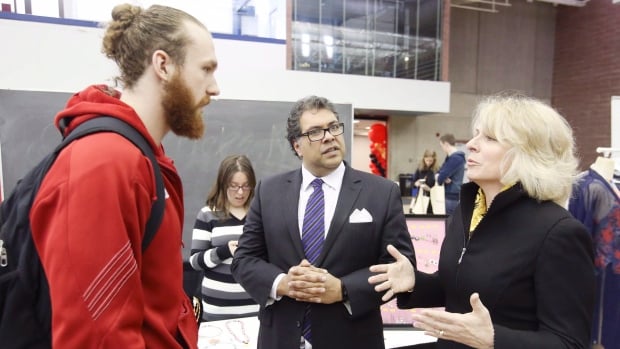
In Calgary, a lot of people see the energy industry and universities as natural partners.
After all, Calgary is a proud oil town. The city’s website on economic development boasts that the city is home to all of the country’s major oil company headquarters and has the highest head office concentration of any city in Canada. It’s a city where “decisions are made and deals are brokered.”
But when it comes to the city’s higher education, the enthusiasm for the industry coming from its largest university has prompted some uncomfortable questions. Is the University of Calgary in bed with the oil industry or do any of its relationships compromise academic freedom?
The university has generally brushed off these questions, suggesting that some controversies it had in the past were isolated incidents or taken out of context. But with at least one independent investigation underway into allegations of academic meddling, the institution’s reputation is hanging in the balance.
A probe, launched by the Canadian Association of University Teachers (CAUT), is focusing on the university’s relationship with pipeline company Enbridge, and allegations of conflict of interest and academic meddling that surrounded their partnership. The university has denied anything inappropriate took place, and the company has also denied allegations of corporate interference. But this case follows other controversies:
U of C Urban Studies Department Coordinator Byron Miller says ties to industry are the source of the “unspoken, but nonetheless understood sense that we have to be careful about what we [professors] say and do.”
While Miller acknowledges that some faculty feel the chill more strongly than others, CAUT executive director David Robinson said he had received enough evidence of conflict of interest and suppression of academic freedom to launch an investigation.
The University of Calgary campus is largely reflective of the city’s downtown core. You can walk from a Petro-Canada-branded engineering building to a learning centre built with funding from oil and gas philanthropist Don Taylor in under the same amount of time you can from Enbridge’s corporate headquarters to Suncor’s downtown.
And although times have been tough for business in recent years due to falling global oil prices, there are over 1,500 energy companies in Calgary — Cenovus, Enbridge, and Suncor among them. The city’s ever-growing skyline is dominated by skyscrapers housing oil companies and the law firms and financial brokers integral to their practice.
“[Calgary] is where the money is. It’s where the players are,” former policy director at the Parkland Institute Regan Boychuk said. “It’s only natural that this would be the first point of contact for such initiatives. The school has obviously made it clear over the years that it’s quite receptive to these sorts of initiatives by the oil patch.”
Boychuk said that oil companies want to be associated with academic institutions such as universities to boost their reputations. He cited polling from the U of C’s School of Public Policy (SPP) that showed “oil executives and oil companies have the credibility of used car salesmen.”
But the credibility of an oil executive can magically shoot through the roof if he or she is standing next to an academic.
“People don’t trust what [oil companies] say, so when they want to make their arguments they have a much better chance [to be taken seriously by] supporting universities and think-tanks. They fund think-tanks and university research to have academics and economists make those arguments,” Boychuk said.
That’s what the university teachers association has been investigating.
CAUT’s probe is focusing on the university’s Centre for Corporate Sustainability, which was previously sponsored by pipeline giant Enbridge Inc. The centre even used to have Enbridge’s name in its title before the company shifted some of its funding to the university’s School of Public Policy in 2014.
At the time that the centre was being set up, several academics questioned whether Enbridge was trying to use the university’s name to boost the company’s environmental credentials following the devastating pipeline disaster that released millions of litres of crude oil into the Kalamazoo River in Marshall, Michigan in July 2010. Meantime, the University of Calgary’s president, Elizabeth Cannon, was sitting as a director of Enbridge Income Fund Holdings, taking home $130,500 in 2015, while making over $600,000 at the university the same year.
To some, her paycheque from Enbridge appeared to put her in a conflict of interest.
Emails released to the CBC through a freedom of information request provide a trail of evidence highlighting the concerns among faculty members. In one email exchange reported by the CBC, former director of the Enbridge Centre for Corporate Sustainability Joe Arvai told former dean of the Haskayne School of Business, Leonard Waverman, that he was worried about Enbridge’s objectives.
“I am not sure what we are signing up for. I have the impression that Enbridge sees the centre as a PR machine for themselves, whereas I see it as an academic research centre,” Arvai wrote.
And in a 2011 email sent to Waverman by U of C Professor Harrie Vredenburg, Vredenburg said the name of the Enbridge Centre for Corporate Sustainability — which was formerly called the Enbridge Centre for International Resource Industries and Sustainability — “smacks of us being apologists for the fossil fuel industry rather than independent scholars and teachers doing work in a broadly defined area.”
“We built IRIS over 17 years now with strong industry support but without being seen as industry apologists. I’m concerned that we may have stepped over the line,” Vredenburg wrote.
CAUT’s Robinson said the evidence warranted a closer look into whether academic freedom was being repressed and whether big oil’s influence was at play.
But the university administration refused to meet with the association’s investigators and warned its professors of the potential fallbacks if they chose to participate in an April fact-finding visit by CAUT.
Provost Dru Marshall sent an email to faculty at noon on March 18 warning that their identities may not be protected if they spoke to the association’s investigators.
“CAUT is an external body that has no official standing on our campus, and is not bound by our policies, including those that protect privacy and confidentiality,” Marshall wrote, adding that “Those of you who choose to participate have the right to express your opinions, and your freedom to do so will be respected. You are reminded that your privacy may not be protected by CAUT, and if you provide sensitive or confidential information to CAUT, that confidentiality may not be protected.”
The tone of the provost’s email made people uncomfortable. Robinson said the notion that CAUT wouldn’t respect the privacy of those they interviewed was totally inaccurate, and described the email as “more than a hint that they didn’t want us on their campus.”
Miller, the urban studies department coordinator, said it didn’t surprise him. He “just regarded it as what we might expect” because “university administration wants to put this story to rest.”
The university says it isn’t under the influence of corporate backers and defends the investments it receives from industry. U of C media relations says corporate funding can “benefit the university without compromising the values of the institution,” adding that there are “rigorous standards to ensure research independence and academic freedom.”
When the Board of Governors commissioned an investigation into conflict of interest after the CBC exposed the relationship between Enbridge and the university, they cleared President Cannon of any breach of University of Calgary procedures.
Enbridge dismissed the criticism as well. The Calgary-based pipeline company had said the CBC story that revealed Enbridge’s involvement in the centre made “unfair and false allegations that Enbridge attempted to influence the centre’s operations and infringed on academic freedom.”
When asked for additional comment, Enbridge referred National Observer to their November, 2015 statement on their relationship with the U of C.
 CAUT President David Robinson said the University of Calgary has jeopardized its academic integrity through oil-industry partnerships. Photo courtesy CAUT.
The Enbridge Centre yielded $2.25-million spread over 10 years, a marginal sum compared to the hundreds of millions the university receives annually.
The University of Calgary’s Development Office — the fundraising arm of the university — generated $218.9-million for the university in 2015, an increase of $71.5-million from the previous year. The U of C hopes to raise $1.3-billion from private donors over the next five years, a goal they’re over halfway to reaching. Robinson said the Development Office has gained a lot of influence within the institution.
But he finds it baffling that the University of Calgary was “so quick to sacrifice their integrity for a relatively small amount of money” from Enbridge.
“They’re given a mandate to get donations and private sector contracts and are often going into territory they shouldn’t be going into,” Robinson said. “Clearly I think in light of constant funding pressures, the allure of private sector funding might be a little seductive. But you have to balance that with the price you’re paying for it.”
When asked to respond to Robinson’s statement, the university’s media relations team sent National Observer a copy of the Board of Governors’ investigation that cleared them of allegations of academic “wrongdoing.”
David Keith was once a star professor at U of C but left over big oil’s influence on the university. Keith is the former director the U of C’s Institute for Sustainable Energy, Environment and Economy (ISEEE), and was involved in the CBC investigation into the Enbridge Centre for Corporate Sustainability.
He declined an interview for this story, but has been critical of the U of C’s corporate partnerships in the past.
Speaking about ISEEE, Keith said the university was unable to strike a balance between corporate interests and environmental research. He told the CBC in 2013 that the university removed another academic from ISEEE at the request of pipeline company Enbridge, essentially compromising the academic integrity of an ostensibly academic research institution.
At the time, Keith said that kind of action “fundamentally misconceives the university’s role.”
And, during the 2015 investigation into the Centre for Corporate Sustainability, he said that from his “conversations with many people who were involved, including Joe [Arvai], but several others, and not just conversations, but detailed notes and emails, my understanding is that Joe Arvai was removed as director of the centre before its formation at the specific request of Enbridge.”
But Enbridge spokesman Graham White said the company made “no such request,” calling it a “misrepresentation that was clarified in our public statement,” which reads: “the then director of the Centre advised that due to other affiliations and commitments, he might not be able to fulfill his role. At that time, Enbridge sought assurances from the University that if the director could not fulfill his duties, a search would begin for his replacement.”
Keith, who left for Harvard in 2011, told the CBC in 2015 that “I’m not claiming that some good analysis from the U of C would have magically saved the province, but better, more unbiased, more forward-looking analysis could have helped us collectively make better decisions, and we lost that.”
Former ISEEE Director and U of C Professor David Layzell “stepped down” from his post in 2012 to “focus on his own research.” When asked for an interview about the University of Calgary’s administrative culture, Layzell said over email that “I really don’t feel that I can talk with you about this.”
He added: “Maybe that says more than us actually talking.”
 University of Calgary President Elizabeth Cannon was also a director on an Enbridge board when the controversy erupted. Photo by Louie Villanueva.
Layzell is not the only professor who finds it difficult to talk. University of Calgary geography professor Gwendolyn Blue, during an October 2015 interview just weeks before the federal election, said university employees were discouraged from making politicized comments because of “our current political conjuncture.”
And the chill extends well beyond election time. Blue said there’s an atmosphere at the U of C that, while difficult to describe, it “prevents a critical commentary, particularly around corporate influence.”
“It’s hard when you live in a company town to throw stones at the company. There’s no easy good guy or bad guy,” she said. “It’s blurry and it’s messy. There’s no knight in shining armour who’s going to come in on a clean energy horse to save us.”
Some professors will only speak on condition of anonymity. One professor at the university told National Observer of feeling “downright scared.” The professor described feeling frightened about criticizing aspects of the university’s strategic plan. Having gotten in trouble before, it seemed unwise to risk further discipline, this source said.
Tenured University of Calgary political science Professor Barry Cooper wrote in the Calgary Herald in 2015 that the University of Calgary’s management culture is “deeply flawed,” and pointed to university president Elizabeth Cannon’s role on the board of directors for the Enbridge Centre for Corporate Sustainability
Cooper said that while he didn’t catch any flack from university administration after the Herald published his column, he admitted that his colleagues may not have been so lucky if they were in his shoes. He said “some of his junior colleagues” told him that they aren’t willing to be as critical of the university because they don’t have tenure.
But Cooper said that “the U of C administration doesn’t have such a hot rep anyway.” If they ever tried to “do something [against] exercising what’s essentially freedom of opinion, they would have the full weight of all the people that disagree with them come down on their heads.”
(Coincidentally, Cooper was also the faculty member involved with the climate-doubting Friends of Science, helping the group set up their “research accounts” at the university that were funded in part by Talisman Energy.)
U of C economics professor Trevor Tombe said the university has never tried to sway his research or intimidate him — even when he discusses environmental policy that might be at odds with some of the university’s corporate partners.
“As any institution populated with people will be, there might be cases where someone oversteps where they shouldn’t. That doesn’t make it an institutional-level problem, that makes it the mistake of that particular individual,” Tombe said.
Another interview request made by the National Observer to engineering professor Denis Onen was re-routed to University of Calgary communications manager Marina Geronazzo. She also referred to the university’s report into the Enbridge Centre that found “no improper conduct by anyone involved in connection with the creation and operation of the centre.”
“We trust this material serves to provide full context and conclusion related to this matter,” her email read.
In another email, she wrote: “Professor Onen has advised he does not feel he is qualified to speak on this.”
The teachers association has been tracking issues at the Enbridge Centre since at least 2013 when it found that most universities don’t outline protections for academic freedom when they strike deals with industry. At that time, the Enbridge Centre for Corporate Sustainability was seen as “one of the better ones.”
“On paper, it looked okay,” Robinson said. “We have to distinguish between what’s on paper and what’s in practice and that maybe the practice in this case wasn’t really reflective of what the agreement actually was.”
In its 2013 report on corporate influence at universities, the university teachers association determined that a different funding deal — the $10.2-million agreement to form the Alberta Ingenuity Centre for In Situ Energy (AICISE) –had compromised the U of C’s academic integrity. AICISE partnered the U of C with companies like Nexen, Shell and Repsol with the stated goal of researching technologies that help reduce the environmental impact of oilsands extraction.
But the association found that control over AICISE research was given to a 10–11 person “management advisory board” comprised mainly of non-academic, private sector members. This board has the power to approve or reject plans and budgets proposed under AICISE, and a majority vote is all that’s needed to carry budgetary and research decisions.
Inconvenient details of yet another research deal — the Consortium for Heavy Oil Research — also surfaced in the association’s report. It found that deals struck with donors like Husky and Nexen stipulated those companies could pull research funding if it wasn’t advancing projects they liked.
The details of the deals described in the 2013 report were not previously known to the public, at the time it was published, but university administrators said that although they didn’t contain specific protections for academic freedom or “other important principles,” things like peer-review and university policy would protect students and staff from breaches of academic integrity.
At the time, former University of Calgary Faculty Association President Robert Sutherland said those most affected by the deals — students and staff — had no way to understand how their experience on campus would change.
“The secrecy and lack of transparency of these agreements is extremely important,” Sutherland said in 2013. “We’re talking about public institutions that have public boards of directors that are supposed to be looking after our interests and they entered into secret agreements.”
Problems over secrecy have dogged the University of Calgary under Cannon’s presidency. The CBC obtained documents through a Freedom of Information request and reported that they showed that Cannon personally approved more than $90,000 in legal fees to fight an information request from the public broadcaster. The story in question detailed a 2012 information request that outlined the relationship between the U of C and the fundraising arm of the Conservative party.
The university has denied that Cannon approved or signed the expenses, saying that it was its acting general counsel who signed them.
That, according to Robinson, is a fundamental problem with university culture. He says universities should be open to scrutiny, but we’re seeing a shift toward secrecy.
On June 24, the University of Calgary approved the largest budget in its 50-year history, $1.27-billion. The provincial government is providing $446.5-million — less than half of the public university’s 2016-17 operations.
Most university administrators point to a lack of “predictable and stable” government funding as the cause of their corporate partnerships. And Alberta universities have seen their share of near-crippling funding cuts in the past five years.
The former Progressive Conservative government cut over $140 million from post-secondary in 2013 and cut again by around two per cent in 2015. Far from replacing money from previous budget cuts, the new NDP government froze tuition fees. The U of C isn’t anticipating any new provincial funding for 2017-18 due to Alberta’s current financial woes.
But the University of Alberta, which also saw cuts to its funding before the NDP were elected in 2015, remained largely unscathed in terms of corporate partnership scandals. U of A biology professor David Schindler has been consistently impressed by the his school’s capacity to fend off bad corporate deals.
“The U of A’s policy on accepting money from industry, government, foundations or private individuals is also very clear that there will be no strings attached by the donor as to what can be reported,” Schindler said. “I don’t think any of the oily schemes outed at the U of C would have ever gotten in the door at the U of A.”
The teachers association expects it will conclude its University of Calgary investigation at the end of August, with publication some time in the fall.
The easiest and safest theft is of public goods, public assets and public money.
And they offer some of the biggest pay-offs.
The owner of public assets is a pushover.
The thieves are highly Unlikely to be prosecuted when the “whodunit” is figured out.
No wonder corporations flock to the Governments.
I found the documentation that really makes the case for the potash industry. It can be applied elsewhere, too.
Potash was taken over by the Government (“nationalized” – – became a crown corporation) in 1975 when the potash companies refused to pay a reserve tax to the people of Saskatchewan. The new crown corporation worked well, putting money into public coffers.
Not much later and after propaganda campaigns about the “inefficiency” of Governments, the Conservative Government of Grant Devine (1982-91) privatized the industry, back to the good ol’ days (pre-1975). (It also completely dismantled the excellent dental programme for kids in Saskatchewan schools.)
The “good ol’ days” are indeed very good for some people. It is standard practice for retired politicians of the right stripe to be appointed to Boards of Directors of companies. It is not uncommon for retired politicians and other “supporters” to receive more than a million dollars a year by sitting on various Boards. Not a bad pay-off for doing a privatization deal while you’re in office.
2014-04-08 PotashCorp CEO Bill Doyle receives $24,761,371 million (U.S.$) upon retirement.
CEO Doyle is only ONE of the retiring executives from the Potash Corp, he pocketed US$24 million. A VP cashed in for $26 million. These numbers are on top of large salaries and perks through the years – – this is only the retirement cash-out. Lord knows how many others hit the jackpot – how many VPs are there?
There would have been some gravy, but not this size of jackpot, had the Conservative Government of Grant Devine not privatized the industry for their friends or ideology or self-interest.
I don’t get it – – how the people of Saskatchewan voted AGAINST their own interests by putting these politicians in power. Propaganda? Brain-washing? They have only themselves to thank for the huge disparities created by the huge heist, theft of public money. Maybe the voters are masochistic? Don’t hear too much about it in the media.
The above article and the following one also show the OTHER money these executives are receiving.
Repeat: NONE of it would have been possible without the privatization by the Devine Govt. Cabinet Ministers are held accountable for compensation paid by Crown Corporations. The following article tells of the failed attempts to rein in the greed.
There are other stories that teach the same lesson :
the Easiest, most lucrative and safest theft is of public assets.
Forget about hi-jacking Brinks trucks!
Many thanks to dentist Dr. Dave Warwick, Hanna AB, for providing an update and bibliography on the Research on the health effects of mercury fillings.
Scroll past the indented paragraphs (which are for newcomers), straight to heading From: dentist Dr. David Warwick, Hanna AB.
The less spirited would have sighed and gone away
The intrepids keep on singing and smiling
A warning to the Harmful Status Quo
While you get high in the evening
Others may be turned on by
Un-doing the harm
And culprits in the doing
I see where we have on this blog more than 80 postings collected through the years, on mercury poisoning from dental amalgams (under the category “Health”). Some are about the UN Treaty to get rid of products containing mercury (we are poisoning ourselves and the environment in which we have to live. Mercury travels.). Dave participated in, for example,
(the posting contains links to more material)
– – – – – – – – –
REQUEST sent to Dave, Aug 16, 2016:
Why I called you
QUESTION (perennial): is there information that should be shared, would be helpful, in event that law suit over mercury fillings is pursued?
I don’t want to pre-judge the likelihood that a suit would ever be launched in Canada; it’s come up again.
Has anything changed? Is the liability issue, for Government Health Depts and for the Dental Industry so huge that liability will never be acknowledged? (which would be why all the solid information that can be brought to bear is not heard or acted upon. Can they not understand that they just have to stop putting mercury into people’s mouths? and they have to re-train to know how to remove mercury fillings with the least damage possible to themselves, their staff and the patients? )
How much is explained by: 2011-06-28 Canada’s chief dentist works for the amalgam industry. No wonder mercury fillings receive an exemption! ?
A woman Susan my age from Vancouver who has MS is incensed about the mercury fillings and vaccinations. Has done a lot of research.
She talked with a Vanc Law Firm:
The law firm I emailed to last week phoned today and stated that she would speak with her co-workers as to joining a class action lawsuit or whatever and will get back to me later in the week. That sounds like a good thing as I have no other thoughts on how to proceed. A class action lawsuit will send a definite message to our mercury-loving government officials who don’t care if we live or die that they should have never allowed amalgam fillings to be installed in peoples’ teeth!!!!! when they absolutely knew better.
She is conversant with Dr Vimy’s work. Grant reminded me: Vimy did the “smoking teeth” video (click the link, Smoking Teeth is the first in this list of videos). There’s his research using insertion of amalgam in sheep.
The most recent I could find online re Vimy is 2011 (he is retired), a short CBC newscast https://www.youtube.com/watch?v=HavLXo_0Xpk He is well-spoken, good interview. (end)
– – – – – – – – – – – – –
the route that will bear actual results ?
– keep sharing information, grow the number of people who are informed.
– Simultaneously use the UN Treaty on Mercury to bring pressure on the dental colleges to stop the insertion of MORE mercury fillings.
– Conversations with the institutions that certify Dental Hygienists & Assistants to emphasize the health risks to these women
– Which leaves individual older dentists who refuse to change their ways as culprits.
– Dental Colleges (some or all?) run clinics in which dental students develop their craft. People who can’t afford to pay a dentist qualify as “the patients”. A young female friend who is a law student went for a filling last year. She didn’t know about mercury fillings. That’s what they filled her tooth with. (The College has received information about the UN Treaty, etc.. Information makes no difference. They dismiss it as crazy people who don’t know the science.) A fellow who came to the Mercury Jamboree is First Nations. The Clinic at the Dental College serves many First Nations people. They all get mercury fillings.
Anyhow – – be persistent and patient. Others have to assume responsibility, too. Perhaps there will be yet more attention paid to the effects of the mercury poisoning on brain functioning:
Huge numbers of baby boomers have had mercury fillings off-gassing in their bodies for decades now. They have added body burden from vaccinations that use ethyl mercury as a preservative. Sixty years of Mercury going to the brain . . . it’s not as if the evidence isn’t there, if you want to find it.
Our immune systems are different, we have different strengths and weaknesses in our immune capabilities. Poisoning by mercury, or other toxics, does not manifest with the same symptoms in everyone. The symptoms (the “disease”) will be different depending on factors like previous exposures, inter-generational damaged DNA, previous injuries, unknowables (many poisons are invisible – think carbon monoxide, think chemicals). But enough! … except
Never mind the mercury that pregnant and breast-feeding baby-boomer-women transmitted to their offspring, who were then given more doses of mercury through vaccinations that definitely contained thimerasol (mercury) as a preservative.
None of this is new – – it’s the lead in gasoline, mercury in paint, cancer in tobacco, Erin Brockavitch, no-we’re-not-torturing-people stories all over again.
The effects of mercury on brain, one small part: we need to re-contact these people with Dave’s update: 2012-07-07 Letter to Health Insurance (mental illness claims approach 50%): stop mercury fillings, reduce mental illness claims.
The liability issue still comes down to what the scientific evidence shows… up until 2012 one could conclude that the evidence is inconclusive……The studies by Woods et.al. throughout the last few years on genetic susceptibility may have changed this. There are 4 studies that he has published which indicate genetically susceptible sub populations show toxicity to the levels of mercury given off by amalgam. This study does a nice job of summarizing this http://www.ncbi.nlm.nih.gov/pmc/articles/PMC3905169/
As well, I am working with a few other folks to publish a paper that further explores susceptible groups to mercury. Our first attempt at publishing was turned down so we are rewriting as we speak… I can’t give you any of the text for the new paper, but the bibliography to date is copied below…
there are two other strategic prongs to discontinuing the use of amalgam. That is the environmental and the occupational issues. The other study we are working on deals with unrealized mercury exposure caused by amalgam particulate. The first submission was denied because of a lack of numbers… so we are working to increase our “n”s and hope to resubmit in October.
As far as question 2, the Health agencies such as Health Canada use earlier studies that use the same data that Woods used in his recent studies to prove “safety”. Nobody has challenged them on this yet.
On the occupational side of things, Alberta Occupational Health and Safety recommended discontinuing amalgam in 2011 ( https://work.alberta.ca/documents/OHS-WSA-handbook-dental-workers.pdf page 23), so they have their butts covered but nobody was listening or wanted to listen.
Environment Canada is a pawn to Health Canada and has no balls. It’s pretty much the same in the states with their three related government organizations.
By the way, one of the fellows I talked to from Health Canada, Phillip Neufeld, stated that the achilles heal of amalgam is the occupational issues. Not that they cannot be overcome, but that the general practice of placing and removing amalgams generally represents an unacceptable level of exposure.
This is a provincial jurisdiction that would involve the dental colleges, the dental assistant and dental hygienist associations and the provincial occupational safety folks. Every province is different, however the key is to rock one, then the others will topple. I hope that the study I am working will increase the conversation regarding occupational and patient safety.
BIBLIOGRAPHY
Weiner JA, Nylander M, Berglund F. Does mercury from amalgam restorations constitute a health hazard? Sci Total Environ. 1990 Dec 1;99(1-2):1-22.
Faggion CM Jr. Is the evidence supporting dental procedures strong? A survey of Cochrane systematic reviews in oral health. J Evid Based Dent Pract. 2012 Sep;12(3):131-134.e14. doi:10.1016/j.jebdp.2012.05.003.
Vähänikkilä H, Tjäderhane L, Nieminen P. The statistical reporting quality of articles published in 2010 in five dental journals. Acta Odontol Scand. 2015 Jan;73(1):76-80. doi: 10.3109/00016357.2014.954612. Epub 2014 Nov 6.
Stegenga J1. Is meta-analysis the platinum standard of evidence? Stud Hist Philos Biol Biomed Sci. 2011 Dec;42(4):497-507. doi: 10.1016/j.shpsc.2011.07.003.
Woods JS, Heyer NJ, Echeverria D, Russo JE, Martin MD, Bernardo MF, Luis HS, Vaz L, Farina FM, Modification of Neurobehavioral effects of Mercury by genetic polymorphism of coproporphyrinogen oxidase in children Neurotoxicol Teratol. 2012 Sep; 34(5): 513–521.
Health Canada. The Safety of Dental Amalgam. 1996. http://www.hc-sc.gc.ca/dhp-mps/alt_formats/hpfb-dgpsa/pdf/md-im/dent_amalgam-eng.pdf
Berlin M. “Mercury in Dental Materials—an updated risk analysis in environmental medical terms.” An Overview of Scientific Literature published in 1997 to 2002. (The Dental Material Commission, Sweden).
SNC-Lavalin Environment. “Mercury exposure and risks from dental amalgam, part 1: Updating exposure, reexamining reference exposure levels, and critically evaluating recent studies.” Final Report to the International Academy of Oral Medicine and Toxicology. Ref: 10738. (November 8, 2010). Available online at http://www.iaomt.org/articles
Richardson GM, Mercury Exposure and Risks from Dental Amalgam in Canada: The Canadian Health Measures Survey 2007-2009 Human and Ecological Risk Assessment Nov. 2012
Basu N, Goodrich JM, Head J, Ecogenetics of Mercury:From Genetic Polymorphisms and Epigenetics to Risk Assessment and Decision-Making, Environ Toxicol Chem 2014; 33:1248–1258.
Basu N, Goodrich JM, Head J, Ecogenetics of Mercury:From Genetic Polymorphisms and Epigenetics to Risk Assessment and Decision-Making, Environ Toxicol Chem 2014; 33:1248–1258.
Koller VJ1, Fürhacker M, Nersesyan A, Mišík M, Eisenbauer M, Knasmueller S. Cytotoxic and DNA-damaging properties of glyphosate and Roundup in human-derived buccal epithelial cells. Arch Toxicol. 2012 May;86(5):805-13. doi: 10.1007/s00204-012-0804-8. Epub 2012 Feb 14.
Bøhna T, Cuhraa M, Traavika T, Sandenic M, Fagand J, Primiceriob R. Compositional differences in soybeans on the market: Glyphosate accumulates in Roundup Ready GM soybeans., Food Chemistry Volume 153, 15 June 2014, Pages 207–215
Krüger M, Schledorn P, Schrödl W, Hoppe H, Lutz W, Shehata A. Detection of Glyphosate Residues in Animals and Humans. J Environ Anal Toxicol 2014, 4:2
http://dx.doi.org/10.4172/2161-0525.1000210
Kwiatkowska M, Huras B, Bukowska B. The effect of metabolites and impurities of glyphosate on human erythrocytes (in vitro). Pestic Biochem Physiol. 2014 Feb;109:34-43. doi: 10.1016/j.pestbp.2014.01.003. Epub 2014 Jan 25.
Samsel A, Seneff S. Glyphosate’s Suppression of Cytochrome P450 Enzymes and Amino Acid Biosynthesis by the Gut Microbiome: Pathways to Modern Diseases Entropy 2013, 15(4), 1416-1463; doi:10.3390/e15041416
Woods JS, Heyer NJ, Echeverria D, Russo JE, Martin MD, Bernardo MF, Luis HS, Vaz L, Farina FM, Modification of Neurobehavioral effects of Mercury by genetic polymorphism of coproporphyrinogen oxidase in children Neurotoxicol Teratol. 2012 Sep; 34(5): 513–521.
Li, T Coproporphyrinogen oxidase (CPOX) polymorphism in human mercury neurotoxicity. University of Washington, 2009, 98 pages; 3377304
Woods JS, Heyer NJ, Russo JE, Martin MD, Pillai PB, Farin FM Modification of neurobehavioral effects of mercury by genetic polymorphisms of metallothionein in children. Neurotoxicol Teratol. 2013 Sep-Oct; 0: 36–44.
Woods JS, Heyer NJ, Russo JE, Martin MD, Pillai PB, Farin FM Modification of neurobehavioral effects of mercury by genetic polymorphisms of metallothionein in children. Neurotoxicol Teratol. 2013 Sep-Oct; 0: 36–44.
Woods JS, Heyer NJ, Russo JE, Martin MD, Pillai PB, Bammler TK, Farin FM Genetic Polymorphisms of catechol-o-methyltransferase modify the neurobehavioral effects of mercury in children. Journal of Toxicology and Environmental Health, Part A, 77:293–312, 2014
Woods JS, Heyer NJ, Russo JE, Martin MD, Farin FM Genetic polymorphisms affecting susceptibility to mercury neurotoxicity in children: Summary findings from the Casa Pia Children’s Amalgam Clinical Trial NeuroToxicology 44 (2014) 288–302 30 July 2014
DeRouen TA1, Martin MD, Leroux BG, Townes BD, Woods JS, Leitão J, Castro-Caldas A, Luis H, Bernardo M, Rosenbaum G, Martins IP Neurobehavioral effects of dental amalgam in children: a randomized clinical trial. JAMA. 2006 Apr 19;295(15):1784-92.
Homme KG, Kern JK, Haley BE, Geier DA, King PG, Sykes LK, Geier MR. New science challenges old notion that mercury dental amalgam is safe Biometals (2014) 27:19–24 DOI 10.1007/s10534-013-9700-9
Wang Y1, Goodrich JM, Gillespie B, Werner R, Basu N, Franzblau A.
An investigation of modifying effects of metallothionein single-nucleotide polymorphisms on the association between mercury exposure and biomarker levels Environ Health Perspect. 2012 Apr;120(4):530-4.
Echeverria D, Woods JS, Heyer NJ, Martin MD, Rohlman DS, Farin FM, Li T, The Association Between Serotonisn Transporter Gene Promotor Polymorphism (5-Httlpr) And Elemental Mercury Exposure On Mood And Behavior In Humans J Toxicol Environ Health A. 2010 Jan; 73(15): 1003–1020. doi: 10.1080/15287390903566591
Gundacker C1, Gencik M, Hengstschläger M. The relevance of the individual genetic background for the toxicokinetics of two significant neurodevelopmental toxicants: mercury and lead. Mutat Res. 2010 Oct;705(2):130-40. doi: 10.1016/j.mrrev.2010.06.003. Epub 2010 Jun 30.
Gundacker C1, Wittmann KJ, Kukuckova M, Komarnicki G, Hikkel I, Gencik M. Genetic background of lead and mercury metabolism in a group of medical students in Austria. Environ Res. 2009 Aug;109(6):786-96. doi: 10.1016/j.envres.2009.05.003. Epub 2009 Jun 9.
Ekstrand J1, Nielsen JB, Havarinasab S, Zalups RK, Söderkvist P, Hultman P. Mercury toxicokinetics–dependency on strain and gender. Toxicol Appl Pharmacol. 2010 Mar 15;243(3):283-91. doi: 10.1016/j.taap.2009.08.026. Epub 2009 Sep 2.
Schubert J, Riley EJ, Tyler SA. Combined effects in Toxicology-A Rapid Systemic Testing Procedure: Cadmium, Mercury, and Lead. Journal of Toxicology and Environmental Health. 4 763-776 1978
Chu KW, Chow KL. Synergistic toxicity of multiple heavy metals is revealed by a biological assay using a nematode and its transgenic derivative Aquatic Toxicology 61 (2002) 53–64
Laks D. Environmental Mercury Exposure and Risk of Autism. Safe Minds, 2008 available at http://www.safeminds.org/wp-content/uploads/2013/04/SM-Env-Mercury-Exposure-and-Risk-of-Autism.pdf
ATSDR. Toxicological Profile for Manganese. Available at http://www.atsdr.cdc.gov/toxprofiles/tp151-c3.pdf
Jomova K, Valko M. Advances in metal-induced oxidative stress and human disease Toxicology 283 (2011) 65–87
Basu N1, Goodrich JM, Head J. Ecogenetics of mercury: from genetic polymorphisms and epigenetics to risk assessment and decision-making. Environ Toxicol Chem. 2014 Jun;33(6):1248-58. doi: 10.1002/etc.2375. Epub 2014 Apr 25.
Onishchenko N1, Karpova N, Sabri F, Castrén E, Ceccatelli S. J Neurochem. Long-lasting depression-like behavior and epigenetic changes of BDNF gene expression induced by perinatal exposure to methylmercury. 2008 Aug;106(3):1378-87. doi: 10.1111/j.1471-4159.2008.05484.x. Epub 2008 May 15.
Bakulski KM, Lee H, Feinberg JI, Wells EM, Brown S, Herbstman JB, Witter FR, Halden RU, Caldwell K, Mortensen ME, Jaffe AE, Moye J Jr, Caulfield LE, Pan Y, Goldman LR, Feinberg AP, Fallin MD. Prenatal mercury concentration is associated with changes in DNA methylation at TCEANC2 in newborns. Int J Epidemiol. 2015 Aug;44(4):1249-62. doi: 10.1093/ije/dyv032. Epub 2015 Apr 22.
Cardenas A1, Koestler DC, Houseman EA, Jackson BP, Kile ML, Karagas MR, Marsit CJ. Differential DNA methylation in umbilical cord blood of infants exposed to mercury and arsenic in utero. Epigenetics. 2015;10(6):508-15. doi: 10.1080/15592294.2015.1046026. Epub 2015 Apr 29.
Stephan Bose-O’Reilly, MD, MPH,a Kathleen M. McCarty, ScD, MPH,b Nadine Steckling, BSc,a and Beate Lettmeier, PhDa Mercury Exposure and Children’s Health Curr Probl Pediatr Adolesc Health Care. 2010 Sep; 40(8): 186–215. doi: 10.1016/j.cppeds.2010.07.002
ATSDR. Toxicological Profile for Mercury. available at http://www.atsdr.cdc.gov/toxprofiles/tp46-c2.pdf
RELATED POSTING:
= = = = = = = = = = = = = = = = = = = = =
http://www.unwomen.org/en/news/stories/2015/9/cyber-violence-report-press-release
Millions affected globally, but most countries still failing to effectively address growing problem
(Revised / updated on 12 October 2015)
A new report released today by the United Nations Broadband Commission reveals that almost three quarters of women online have been exposed to some form of cyber violence, and urges governments and industry to work harder and more effectively together to better protect the growing number of women and girls who are victims of online threats and harassment.
The paper notes that despite the rapidly growing number of women experiencing online violence, only 26 percent of law enforcement agencies in the 86 countries surveyed are taking appropriate action.
Entitled ‘Combatting Online Violence Against Women & Girls: A Worldwide Wake-Up Call’, the paper was released earlier today at an event at United Nations Headquarters in New York by the Commission’s Working Group on Gender, which is co-Chaired by UNDP Administrator, Helen Clark, and UN Under-Secretary-General and UN Women Executive Director Phumzile Mlambo-Ngcuka. Working Group members, which also include representatives from the tech sector and civil society, hope the paper will mobilize the public and private sectors to establish concrete strategies aimed at stemming the rising tide of online violence against women. Without concerted global action to curb the various escalating forms of online violence, an unprecedented surge of ‘cyber violence against women and girls (cyber VAWG)’ could run rampant and significantly impede the uptake of broadband by women everywhere. The paper notes that cyber VAWG already exists in many forms, including online harassment, public shaming, the desire to inflict physical harm, sexual assaults, murders and induced suicides.
The rapid spread of the Internet means that effective legal and social controls of online anti-social and criminal behaviours continue to be an immense challenge. And in the age of the social Internet and ‘anywhere, anytime’ mobile access, cyber violence can strike at any time, and can relentlessly follow its targets everywhere they go.
“In this paper we’re arguing that complacency and failure to address and solve cyber violence could significantly impede the uptake of broadband services by girls and women worldwide,” said ITU Secretary-General Houlin Zhao, who serves as co-Vice Chair of the Broadband Commission, alongside UNESCO Director-General Irina Bokova. “The Net is an amazing resource for personal empowerment, and we need to ensure that as many girls and women as possible benefit from the amazing possibilities it offers.”
Key findings of the paper include:
Women in the age range of 18 to 24 are uniquely likely to experience stalking and sexual harassment in addition to physical threats.
One in five female Internet users live in countries where harassment and abuse of women online is extremely unlikely to be punished.
In many countries women are reluctant to report their victimization for fear of social repercussions.
Cyber VAWG puts a premium on emotional bandwidth, personal and workplace time, financial resources and missed wages.
“Violence against women and girls is never acceptable anywhere, no matter whether it is committed on the streets, in the home, or on the information highway,” said UNDP Administrator Helen Clark. “To achieve sustainable development for all, we must build a world where women and girls can live their lives free of violence and fulfil their potential as valued and equal members of society.”
“Online violence has subverted the original positive promise of the internet’s freedoms and in too many circumstances has made it a chilling space that permits anonymous cruelty and facilitates harmful acts towards women and girls,” said UN Women’s Phumzile Mlambo-Ngcuka. We want to reclaim and expand the opportunities it offers. That means recognizing the scale and depth of the damage being done – and taking strong, concerted steps to call it – and stop it. Abuse online is still abuse, with potency and very real consequences.”
The paper presents a set of Key Recommendations, proposing a global framework based around three ‘S’s – Sensitization, Safeguards and Sanctions.
The paper argues that rigorous oversight and enforcement of rules banning cyber VAWG on the Internet will be an essential foundation stone if the Internet is to become a safe, respectful and empowering space for women and girls, and, by extension, for boys and men.
Facebook: https://www.facebook.com/broadbandcommission
I am impressed by the G&M’s work on this issue. Kudos to journalist Geoffrey York.
At the G&M page: short video, Stephane Dion’s (Minister Responsible) reply to Reporter’s questions. Rubbish.
Also, links to related articles.
– – – – – – – – – – – – – —
by Geoffrey York
Why military dissent is not an oxymoron
by William Astore

To quote former President Eisenhower, who as supreme commander of Allied forces in World War II had learned something of the true nature of war, “Only Americans can hurt America.” (Photo: Joseph Holmes / Flickr)
The United States is now engaged in perpetual war with victory nowhere in sight. Iraq is chaotic and scarred. So, too, is Libya. Syria barely exists. After 15 years, “progress” in Afghanistan has proven eminently reversible as efforts to rollback recent Taliban gains continue to falter. The Islamic State may be fracturing, but its various franchises are finding new and horrifying ways to replicate themselves and lash out. Having spent trillions of dollars on war with such sorry results, it’s a wonder that key figures in the U.S. military or officials in any other part of America’s colossal national security state and the military-industrial complex (“the Complex” for short) haven’t spoken out forcefully and critically about the disasters on their watch.
Yet they have remained remarkably mum when it comes to the obvious. Such a blanket silence can’t simply be attributed to the war-loving nature of the U.S. military. Sure, its warriors and warfighters always define themselves as battle-ready, but the troops themselves don’t pick the fights. Nor is it simply attributable to the Complex’s love of power and profit, though its members are hardly eager to push back against government decisions that feed the bottom line. To understand the silence of the military in particular in the face of a visible crisis of war-making, you shouldn’t assume that, from private to general, its members don’t have complicated, often highly critical feelings about what’s going on. The real question is: Why they don’t ever express them publicly?
“Perpetual war is a far greater threat to democracy in our country than ISIS, Russia, or any other external threat you want to mention.”
To understand that silence means grasping all the intertwined personal, emotional, and institutional reasons why few in the military or the rest of the national security state ever speak out critically on policies that may disturb them and with which they may privately disagree. I should know, because like so many others I learned to silence my doubts during my career in the military.
My Very Own “Star Wars” Moment
As a young Air Force lieutenant at the tail end of the Cold War, I found myself working on something I loathed: the militarization of space. The Air Force had scheduled a test of an anti-satellite (ASAT) missile to be launched at high altitude from an F-15 fighter jet. The missile was designed to streak into low earth orbit to strike at the satellites of enemy powers. The Soviets were rumored to have their own ASAT capability and this was our answer. If the Soviets had a capability, Americans had to have the same — or better. We called it “deterrence.”
Ever since I was a kid, weaned on old episodes of “Star Trek,” I’d seen space as “the final frontier,” a better place than conflict-ridden Earth, a place where anything was possible — maybe even peace. As far as I was concerned, the last thing we needed was to militarize that frontier. Yet there I was in 1986 working in the Space Surveillance Center in Cheyenne Mountain in support of a test that, if it worked, would have helped turn space into yet another war zone.
It won’t surprise you to learn that, despite my feelings, which couldn’t have been stronger, I didn’t speak up against the test. Not a peep. I kept my critical thoughts and doubts to myself. I told myself that I was doing my duty, that it wasn’t my place to question decisions made at high levels in the administration of then-President Ronald Reagan. You can’t have a disciplined and orderly military if troops challenge every decision, can you? Orders are to be obeyed, right? Ours not to reason why, ours but to do or die — especially since we were then at war with the Soviets, even if that war fell under the label of “cold.”
So I buried my misgivings about facilitating a future shooting war in orbit. I remember, in fact, hoping that the ASAT test would go well and that I’d be seen as effective at my job. And in this I think I was probably pretty typical of military people, then and now.
The F-15 ASAT program was eventually cancelled, but not before it taught me a lesson that’s obvious only in retrospect: mission priorities and military imperatives in such a hierarchical situation are powerful factors in suppressing morality and critical thinking. It’s so much easier, so much more “natural,” to do one’s job and conform rather than speak out and buck a system that’s not made for the public expression of dissenting views. After all, a military with an ethos of “we’re all volunteers, so suck it up — or get out” is well suited to inhibiting dissent, as its creators intended.
To those who’ve been exposed to hierarchical, authority-heavy institutions, that lesson will undoubtedly come as no surprise. Heck, I grew up Catholic and joined the military, so I know something about the pressures to conform within such institutions. In the Church, you learn — or at least you did in my day — that the beginning of wisdom is the fear of God, and the “old guard” priests and nuns I encountered were more than ready to encourage that fear. In the military, you learn from day one of basic training that it’s best to put up and shut up. No grumbling in the ranks. No quibbling. Yes, sir; no, sir; no excuse, sir. Cooperate and graduate. That conformist mentality is difficult to challenge or change, no matter your subsequent rank or position.
There’s a sensible reason for all this. You can’t herd cats, nor can you make a cohesive military unit out of them. In life and death situations, obedience and discipline are vital to rapid action.
As true as that may be, however, America doesn’t need more obedience: it needs more dissent. Not only among its citizens but within its military —
maybe there especially.
Unfortunately, in the post-9/11 era, we’ve exalted and essentially worshipped the military as “our greatest national treasure” (the words of former Defense Secretary and CIA Director Leon Panetta at the recent Democratic convention). The military has, in fact, become so crucial to Washington that aspiring civilian commanders-in-chief like Hillary Clinton and Donald Trump lean on retired generals to anoint them as qualified for the job. (For Trump, Lieutenant General Michael Flynn did the honors; for Hillary, General John Allen.)
The Pentagon has, in a very real sense, become America’s national cathedral. If we’re going to continue to worship at it, we should at least ask for some minimal level of honesty from its priests. In militarized America, the question of the moment is how to encourage such honesty.
Call it patriotic dissent. By “dissent” I mean honest talk from those who should know best about the hazards and horrors of perpetual war, about how poorly those conflicts have gone and are going. We desperately need to encourage informed critics and skeptics within the military and the Complex to speak their minds in a way that moves the national needle away from incessant bombing and perpetual war.
Yet to do so, we must first understand the obstacles involved. It’s obvious, for example, that a government which has launched a war against whistleblowers, wielding the World War I-era Espionage Act against them and locking away Chelsea Manning for a veritable lifetime in a maximum security prison, isn’t likely to suddenly encourage more critical thinking and public expression inside the national security state. But much else stands in the way of the rest of us hearing a little critical speech from the “fourth branch” of government.
Seven Reasons Why It’s So Hard to Break Ranks
As a start, it’s hard for outsiders to imagine just how difficult it is to break ranks when you’re in the military. So many pressures combine to squelch dissent — everything from feelings of loyalty and patriotism to careerist concerns and worries about punishment. I wasn’t immune from such pressures, which is why my story is fairly typical. As I’ve said, I had my criticisms of the military, but I didn’t begin to air them until 2007, two years after I’d retired.
Why the delay? I can offer explanations but no excuses. Unless you’ve been in the military, you have little idea how all-enveloping and all-consuming such a life can be. In a strange way, it may be the closest thing to true socialism in America: base housing provided and tied to your rank, government doctors and “socialized” medicine for all, education for your children in base schools, and worship at the base chapel; in other words, a remarkably insular life, intensified when troops are assigned to “Little Americas” abroad (bases like Ramstein in Germany). For Star Trek: The Next Generation fans, think of Ramstein and similar bases around the world as the Borg cubes of American life — places where you’re automatically assimilated into the collective. In such a hive life, resistance is all but futile.
This effect is only intensified by the tribalism of war. Unit cohesion, encouraged at all times, reaches a fever pitch under fire as the mission (and keeping your buddies and yourself alive) becomes all-consuming. Staring at the business end of an AK-47 is hardly conducive to reflective, critical thinking, nor should it be.
Leaving military insularity, unit loyalty, and the pressure of combat aside, however, here are seven other factors I’ve witnessed, which combine to inhibit dissent within military circles.
America used to think differently. Our founders considered a standing army to be a pernicious threat to democracy. Until World War II, they generally preferred isolationism to imperialism, though of course many were eager to take land from Native Americans and Mexicans while double-crossing Cubans, Filipinos, and other peoples when it came to their independence. If you doubt that, just read War is a Racket by Smedley Butler, a Marine general in the early decades of the last century and two-time recipient of the Medal of Honor. In the present context, think of it this way: democracies should see a standing military as a necessary evil, and military spending as a regressive tax on civilization — as President Dwight D. Eisenhower famously did when he compared such spending to humanity being crucified on a cross of iron.
Chanting constant hosannas to the troops and telling them they’re the greatest ever — remember the outcry against Muhammad Ali when, with significantly more cause, he boasted that he was the greatest? — may make our military feel good, but it won’t help them see their flaws, nor us as a nation see ours.
In short, I’m not a former but a retired officer. My uniform may be gathering dust in the basement, but I haven’t forgotten how it made me feel when I wore it. I don’t think any of us who have served ever do. That strong sense of belonging, that emotional bond, makes you think twice before speaking out. Or at least that’s been my experience. Even as I call for more honesty within our military, more bracing dissent, I have to admit that I still feel a residual sense of hesitation. Make of that what you will.
Bonus Reason: Troops are sometimes reluctant to speak out because they doubt Americans will listen, or if they do, empathize and understand. It’s one thing to vent your frustrations in private among friends on your military base or at the local VFW hall among other veterans. It’s quite another to talk to outsiders. War’s sacrifices and horrors are especially difficult to convey and often traumatic to relive. Nevertheless, as a country, we need to find ways to encourage veterans to speak out and we also need to teach ourselves how to listen — truly listen — no matter the harshness of what they describe or how disturbed what they actually have to say may make us feel.
Encouraging Our Troops to Speak More Freely
Perpetual war is a far greater threat to democracy in our country than ISIS, Russia, or any other external threat you want to mention. To again quote former President Eisenhower, who as supreme commander of Allied forces in World War II had learned something of the true nature of war, “Only Americans can hurt America.”
The military and the entire apparatus of the burgeoning national security state should exist for a single purpose: to defend the country — that is, to safeguard the Constitution and our rights, liberties, and freedoms. When it does that, it’s doing its job, and deserves praise (but never worship). When it doesn’t, it should be criticized, reformed, even rebuilt from the ground up (and in more modest, less imperial fashion).
But this process is unlikely to begin as long as our leaders continue to wage war without end and we the people continue to shout “Amen!” whenever the Pentagon asks for more weapons and money for war. To heal our increasingly fractured democracy, we need to empower liberty and nurture integrity within the institution that Americans say they trust the most: the U.S. military. Dissenting voices must be encouraged and dissenting thoughts empowered in the service of rejecting the very idea of war without end.
Some will doubtless claim that encouraging patriotic dissent within the military can only weaken its combat effectiveness, endangering our national security. But when, I wonder, did it become wise for a democracy to emulate Sparta? And when is it ever possible to be perfectly secure?
© 2016 TomDispatch.com
William J. Astore, a retired lieutenant colonel (USAF) and professor of history, is a TomDispatch regular. He welcomes reader comments at wjastore@gmail.com. To listen to Timothy MacBain’s latest TomCast audio interview in which Astore discusses the difficulty of speaking one’s mind in the military, click here, or download it to your iPod here.
We can refuse to accept the pervasive, but false, claims that money is wealth and a growing GDP improves the lives of all.

“Money is just a number, an accounting chit we accept in exchange for things of real value because we have been conditioned to do so almost from birth,” David Korten writes. (Photo: yuoak/iStock)
Our current political chaos has a simple explanation. The economic system is driving environmental collapse, economic desperation, political corruption, and financial instability. And it isn’t working for the vast majority of people.
It serves mainly the interests of a financial oligarchy that in the United States dominates the establishment wings of both the Republican and Democratic parties. So voters are rebelling against those wings of both parties—and for good reason.
As a society we confront a simple truth. An economic system based on the false idea that money is wealth—and the false promise that maximizing financial returns to the holders of financial assets will maximize the well-being of all—inevitably does exactly what it is designed to do:
This results in a vicious cycle of an ever greater concentration of wealth and power in the hands of those who demonstrate the least regard for the health and well-being of others and the living Earth, on which all depend. Fewer and fewer people have more and more power and society pays the price.
A different result requires a different system, and the leadership for change is coming, as it must, from those for whom the current system does not work.
Awareness of system failure is widespread and growing.
Awareness of system failure is widespread and growing. We see it in the rebellion against the establishment wings of the major political parties. We see it as previously competing social movements join forces to articulate and actualize a common vision of a new economy. We see it in varied and widely dispersed local citizen initiatives quietly rebuilding the relationships of caring communities. We see it in millions of defectors from consumerism, who by choice or necessity are living more simply.
Analysis of the sources of the system failure, however, rarely goes beyond vague references to capitalism, neoliberalism, Wall Street, and immigrants.
Most of us have been conditioned by corporate media and economics education—along with the basic fact that we need money to buy the things we need or want—to accept the pervasive, but false, claims that money is wealth and a growing GDP improves the lives of all.
It rarely occurs to us to challenge these claims in our own thinking or in conversations with friends and colleagues. So they persist and allow the corporate establishment to limit the economic policy debate to options that sustain its power.
To build a truly coherent movement with the necessary strength to replace the failed system with one designed and managed to self-organize toward a world that works for all, we must challenge its bogus claims as logical and practical fallacies. And simultaneously affirm the self-evident truth that:
We are living beings born of and nurtured by a living Earth. Life exists—can exist—only in living communities that self-organize to create the conditions essential to life’s existence. Money is just a number, an accounting chit we accept in exchange for things of real value because we have been conditioned to do so almost from birth.
We who work for peace, justice, and sustainability have the ultimate advantage. Truth is on our side. And the deepest truths, those on which our common future depends, live in the human heart. Let us each speak the truth in our own heart so that others may recognize and speak the truth in theirs. Together we will change the human story.
This article was written for YES! Magazine, a national, nonprofit media organization that fuses powerful ideas and practical actions. Licensed under a Creative Commons Attribution-Share Alike 3.0 Licensee
Dr. David Korten (livingeconomiesforum.org) is the author of Agenda for a New Economy, The Great Turning: From Empire to Earth Community, and the international best seller When Corporations Rule the World. He is board chair of YES! Magazine, co-chair of the New Economy Working Group, a founding board member of the Business Alliance for Local Living Economies, president of the Living Economies Forum, and a member of the Club of Rome. He holds MBA and PhD degrees from the Stanford University Graduate School of Business and served on the faculty of the Harvard Business School.
Monsanto have announced that they will dismantle their half-built multi-million dollar GMO seed plant in Malvinas, Argentina, following protests from local citizens over the past 3 years.
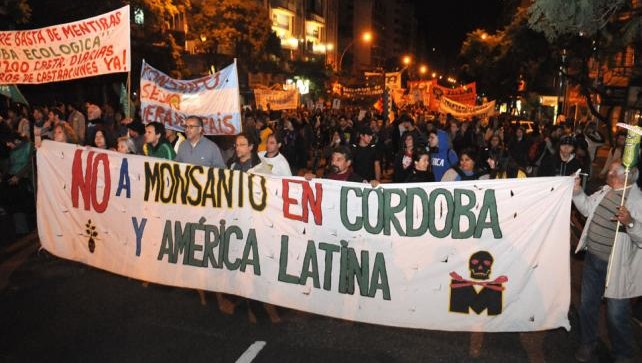
Local Malvinas citizens and GMO Free campaigners from across Argentina forced Monsanto to stop the construction of their GMO seed plant in 2014, through well-coordinated protests at the construction site.
Sources from the head office of Monsanto in Latin America told local Argentinian media that the decision has been made to dismantle the controversial seed plant; the unnamed Monsanto spokesman stated; “The plant was designed to treat 3.5 million hectares of maize, however last year only 2.5 million hectares were sown.” Thus, he stated added “an investment of almost 1500 million makes no sense.”
The Monsanto spokesman also conceded that the local pressure and blockade of the construction site by Malvinas residents and environmentalists had been a factor in the company’s decision.
Several lawsuits have been filed against Monsanto over the illegality of the Malvinas construction permit and the environmental impacts of the project. These lawsuits are ongoing.
Sofia Gatica, one of the leaders of the blockade in Malvinas, told Inf’OGM that “It’s been almost three years that Monsanto has not been able to put a brick or a wire at the construction site… The company is leaving the field but does not yet recognize its defeat in this battle. We talked with those who have to dismantle what remains. We remain on alert and continue blocking, waiting to see what will happen. We want the site to now be devoted to organic and sustainable agriculture.”