Sandra Finley

Jul 082016
 

NOTE:  information is from Prabook.org   Who are they?  See   http://catanova.blogspot.ca/2015/05/prabookorg-identity-theft-r-us.html


http://prabook.org/web/person-view.html?profileId=837182

Ashu Screen Cap Profile

Click on the Screen Capture above.

TEXT

Ashu M. G. Solo

Ashu M. G. Solo, Canadian engineer, mathematician, researcher. Achievements include research in creating multidimensional matrix mathematics including multidimensional matrix algebra and multidimensional matrix calculus; research in methods for maintaining power flow to customers during reconfiguration of radial power distribution systems; research in methods for multiobjective optimization of radial power distribution system operations.

Background

  • Solo, Ashu M. G. was born on September 19, 1971 in Saskatoon, Saskatchewan. United States of America.

Education

  • Bachelor of Science in Electrical and Computer Engineering, University Waterloo, Ontario Canada.

Career

  • Student research assistant Intelligent Systems Research Laboratory University Saskatchewan, 1985—1987. Intern engineer Bell-Northern Research Limited, Ottawa, 1989, Northern Telecom Electronics Limited, Nepean, 1991. Undergraduate research assistant, Very-large-scale integration Group University Waterloo, 1990, hardware design lab, math faculty computing facility, 1992.

Undergraduate research assistant Computer Architecture Laboratory, 1990. Intern engineer Northern Telecommunications Electronics, Nepean, 1991, Allied Signal Aerospace Canada, Etobicoke, 1992, Automation Engineering Associates Limited, Toronto, 1993. Principal Maverick Technologies America Incorporated, since 1994, principal, Research and Development engineer, since 1994.

Principal, instructor Trailblazer Intelligent Systems, Incorporated, since 2007. Information Technology partner Labour Market Opinions, since 2007. Officer cadet Reserve Infantry Canada Army, 1995-1996, Brampton, Ontario.

Major achievements

  • Achievements include research in creating multidimensional matrix mathematics including multidimensional matrix algebra and multidimensional matrix calculus. Research in methods for maintaining power flow to customers during reconfiguration of radial power distribution systems. Research in methods for multiobjective optimization of radial power distribution system operations.

Works

  • Contributor chapters to books, articles to professional journals.

Membership

Fellow: British Computer Society.

Personality

Interests

Kickboxing, martial arts, motorcycling, sports, exercise.

Connections

  • Son of Madan M. and Suman Gupta.
  • mother: Suman Gupta. 
  • father: Madan M.

= = = = = = = = = =

https://thestarphoenix.remembering.ca/obituary/madan-gupta-1083867189

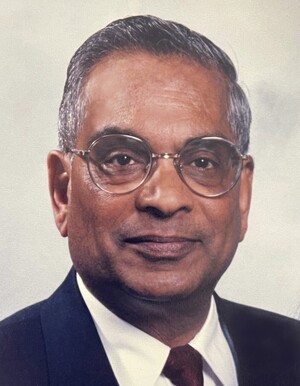
Dr. Madan M. Gupta passed away on November 8, 2021 in Saskatoon, Saskatchewan, Canada from gastrointestinal tract complications.

Condensed Professional Biography of Dr. Madan M. Gupta

At the University of Saskatchewan, Dr. Gupta was a distinguished research chair, engineering professor, and founder and director of the Intelligent Systems Research Laboratory. In 2021, Stanford University recognized Dr. Gupta as being within the top 1% of researchers in the world based on his publications.

Dr. Gupta authored or coauthored over 1000 reviewed and published research papers. He coauthored the seminal book Static and Dynamic Neural Networks: From Fundamentals to Advanced Theory. Dr. Gupta previously coauthored Introduction to Fuzzy Arithmetic: Theory and Applications (the first book on fuzzy mathematics) and Fuzzy Mathematical Models in Engineering and Management Science. Both of these books have Japanese translations. Also, Dr. Gupta edited or coedited approximately 20 other research books as well as many conference proceeding books and journal special issues in the fields of his research interests such as adaptive control systems, fuzzy computing, neuro-computing, neuro-vision systems, and neuro-control systems.

In 1990, Dr. Gupta was elected fellow of the Institute of Electrical and Electronics Engineers (IEEE) for his contributions to the theory of fuzzy sets and adaptive control systems and for the advancement of the diagnosis of cardiovascular disease. In 1993, he was elected fellow of the International Society for Optical Engineering (SPIE) for his contributions to the field of neuro-control and neuro-fuzzy systems. In 2001, he was also elected fellow of the International Fuzzy Systems Association (IFSA) for his contributions to fuzzy-neural computing systems.

In 2014, Dr. Gupta won the Bharat Gaurav Award (translates to Pride of India Award) in recognition of contributions and dedication to worthy causes and achievements. This award was conferred annually by the India International Friendship Society to people who have made outstanding contributions. Also, in 2014, Dr. Gupta won the Hind Rattan Award (translates to Jewel of India Award) in recognition of outstanding services, achievements, and contributions in his field. This award is conferred annually by the NRI Welfare Society of India to selected members of the worldwide Indian diaspora.

In 2018, Dr. Gupta was awarded a Token of Honour award from the IEEE PELS-IES Delhi Chapter. In 2003, Dr. Gupta won a Lifetime Achievement Award at the Fifth Biannual World Automation Congress as well as an Exceptional Service Award at the International Symposium on Uncertainty Modeling and Analysis (ISUMA).

In 1998, Dr. Gupta was awarded the second Kaufmann Prize Gold Medal for his research in the field of fuzzy logic. This was presented in Reus, Spain by the Fundació per a l’Estudi de la Gestió en la Incertesa (FEGI), which is also known as the Foundation for the Study of Fuzzy Management, and the Sociedad Internacional de Gestión y Economia Fuzzy (SIGEF), which is also known as the International Association for Fuzzy Set Management and Economy. In 1991, Dr. Gupta was the co-recipient of the Institution of Electrical Engineers Kelvin Premium.

Dr. Gupta was elected as a visiting professor and a special advisor in the area of high technology to the European Centre for Peace and Development (ECPD), University for Peace, which was established by the United Nations. In 1991, he was invited by the ECPD to visit and lecture at about five industrial and research centers in India.

Dr. Gupta was on the editorial boards of over 15 journals in the field of fuzzy-neural and intelligent systems. Also, he participated in the initiation of some of these journals. He served as a founding member of some international societies such as the International Fuzzy Systems Association (IFSA), North American Fuzzy Information Processing Society (NAFIPS), and Canadian Fuzzy Information and Neural Society (CAN-FINS). He was on numerous research conference committees.

Dr. Gupta’s recent research interests were in the areas of nonlinear control, neuro-vision systems, neuro-control systems, integration of fuzzy-neural systems, neuronal morphology of biological vision systems, intelligent and cognitive robotic systems, cognitive information, new paradigms in information processing, chaos in neural systems, and fuzzy-neural logic in law. He was also developing some new architectures of computational neural networks and computational fuzzy neural networks for application to advanced robotics, aerospace, medical, industrial, and business systems and law. His interest also lay in signal and image processing with applications to medical systems.

Dr. Gupta was born in Lansdowne, India on April 10, 1936. He studied science at University of Allahabad and received his B.E. (Hons.) and M.E. degrees in electronics-communications engineering from the Birla Engineering College (now the Birla Institute of Technology and Science), Pilani, India in 1961 and 1962, respectively. He was awarded the university’s gold medal for being the top graduate. He got married on February 10, 1964. Shortly thereafter, he was awarded a prestigious Commonwealth Scholarship to continue his education in the United Kingdom. As a commonwealth scholar, he received his Ph.D. degree with a specialization in adaptive control systems from the University of Warwick in 1967. Then Dr. Gupta was recruited to be an engineering professor at the University of Saskatchewan in Saskatoon, Saskatchewan, Canada starting in November 1967.

Over the next 54 years, Dr. Gupta was a prolific full-time researcher at the University of Saskatchewan. In the fall of 1998, for his extensive contributions in neuro-control, neuro-vision, and fuzzy-neural systems, Dr. Gupta was awarded an earned doctor of science (D.Sc.) degree by the University of Saskatchewan. In 2010, he was one of only four professors at the University of Saskatchewan who were honored with newly created appointments as distinguished research chairs (now distinguished professors) for “those whose research has contributed significantly to the enhancement of knowledge, whose scholarly activity and accomplishments have enriched selected areas of research, who are recognized nationally and internationally for their impact and leadership, and who set a high standard of research excellence and have demonstrated an outstanding and sustained distinction in research.” Furthermore, Dr. Gupta won a University of Saskatchewan Prime of Life Achievement Award and NSERC Outstanding Merit Award.

Dr. Gupta’s full-time research at the University of Saskatchewan started in November 1967, and he continued doing full-time research as the director of the Intelligent Systems Research Laboratory at the University of Saskatchewan until being hospitalized on October 5, 2021. The University of Saskatchewan previously stopped paying professors when they reached the age of 67. After that, they could pursue leisure activities or keep doing research without pay as professors emeritus. When Dr. Gupta turned 67 in 2003, despite having worked as a researcher and professor at the University of Saskatchewan for 36 years already in 2003, he decided to continue doing research without pay as a professor emeritus because he didn’t believe in retirement and was interested in continuing his research. Dr. Gupta continued doing full-time research without pay as a professor emeritus for another over 18 years at the University of Saskatchewan until he was hospitalized on October 5, 2021. During the over 54 years that Dr. Gupta was a prolific researcher at the University of Saskatchewan, he continuously supervised countless graduate students and postdoctoral fellows.

Principal Research Contributions of Dr. Madan M. Gupta

1. Contributions to the General Field of Dynamic Sensitivity and Adaptivity in Feedback Control Systems:

1.1 Theory of dynamic sensitivity in adaptive control systems
(dynamics of the parameter perturbation processes);

1.2 Systems modelling and identification, and adaptive state observers;

1.3 Studies on some dynamic properties of nonlinear systems and hierarchical optimization methods;

1.4 Design and stability analysis of adaptive control systems using Liapunov signal synthesis approach and some other related approaches;

1.5 Applications of system identification and adaptive control methods to aircraft and robotics systems.

2. Contributions to the Field of Fuzzy Logic and Fuzzy logic Controllers and Fuzzy Neural Networks:

2.1 Fuzzy arithmetic and fuzzy mathematical modelling in engineering and management sciences;

2.2 Mathematical formulation of cognitive uncertainty, mathematics of fuzzy logic, fuzzy- neural morphology, and fuzzy optimization methods;

2.3 Fuzzy logic in the modelling and control of dynamic systems.

3. Contributions to the Field of Dynamic Neural Networks with Applications to Functional Approximations, Fuzzy-Neural Systems, Neuro-Control Systems and Neuro-Vision System with Applications to Robotics Systems:

3.1 Development of dynamic neural networks (DNN)
(new neural architectures, stability analysis, study of chaotic behaviours, and formulation of associative memory);

3.2 Modelling and functional approximation using dynamical neural networks;

3.3 Fuzzy-neural networks with applications to control and vision systems;

3.4 Neuro-control systems with applications to flexible space structures, robotics systems , and tracking problems;

3.5 Neuro-vision systems: theory, motion detection, and processing of dynamic images.

4. Contributions to the Field of Framed Cyclic- Random Processes with Its Applications to the Detection and Diagnosis of Incipient Failures in Cyclic Machines (TISA METHOD):

4.1 Study of framed cyclic random processes;

4.2 Detection and diagnosis of incipient failures in cyclic machines such as turbines, feed water pumps, etc.;

4.3 Development of the TISA (Theta-Invariant Signature Algorithm) for the detection, diagnosis, localization, and quantification of incipient failures in cyclic machines (such as turbines, generators, feed water pumps, etc.).

5. Contribution to the Field of Detection Diagnosis and Prognosis of Early as well as Advanced Ischemic Heart Disease:

5.1 Study of electrocardiac signals under normal and early as well as advanced ischemic cardiac abnormalities;

5.2 Development of the Phase-Invariant Signature Algorithm (PISA) for the detection and diagnosis of Ischemic heart diseases;

5.3 Study of Phonocardiac signals under normal and early as well as advanced i cardiac valvular abnormalities;

5.4 Development of the Phase-Invariant Signature Algorithm (PISA) for the detection and diagnosis of valvular heart problems.

6. Development of Novel Neural Methods for the Analysis of Stability and Design of Robust Controller for Nonlinear Systems:

6.1 The dynamic root-motion approach (DRMA), a novel approach for studying the dynamic characteristic and stability of nonlinear and time varying systems (for both continuous and discrete systems);

6.2 DRMA approach in the design of robust stable neuro-controller with self- learning and adaptive capabilities and for linear and nonlinear systems (both continuous and discrete systems);

6.3 Studying the frequency characteristics, such as bandwidth and damping ratio.

7. Fuzzy-Neural Approach in the Field of Law:

7.1 Mathematical formulation of linguistic description of human perception and cognitive processes using fuzzy arithmetic and fuzzy logic approach;

7.2 Design of fuzzy-neural algorithm (FNA) for individual or group decision making processes;

7.3 Application of fuzzy-neural algorithms (FNAs) in juror’s decision making in the Court of Law and other decision making processes.

General Explanation for People Who Aren’t Engineers of Research of Dr. Madan M. Gupta

Some fields that Dr. Madan M. Gupta did extensive research in are control systems, intelligent systems, computer vision, and biomedical engineering.

A control system uses control loops to manage, direct, command, or regulate the behaviour of other devices or systems. Control systems are used in all kinds of systems including thermostats, industrial automation systems, cars, trucks, airplanes, helicopters, ships, spacecraft, satellites, robots, hard drives, power systems, washing machines, dryers, etc.

Dr. Gupta made many advancements to the theory of control systems, particularly intelligent control systems, adaptive control systems, and nonlinear control systems. These advancements can be used wherever control systems are used.

Intelligent systems theory (also known as artificial intelligence) emulates human or animal intelligence in computers and robots. Intelligent systems are used in all kinds of applications including disease detection, disease diagnosis, drug discovery, other medical applications, data analysis, fake news detection, robot vacuums, robotic lawn mowers, other robots, pattern recognition, image processing, signal processing, voice recognition, self-driving cars, automated flight control, power system optimization, etc. Intelligent systems theory includes branches such as fuzzy logic and neural networks.

Dr. Gupta made many advancements to the theory of intelligent systems, particularly fuzzy logic, fuzzy mathematics, type-two fuzzy logic, neural networks, and higher order neural networks. These advancements can be used in all of the preceding intelligent systems applications. Also, Dr. Gupta made many advancements in applying intelligent systems theory to control systems, pattern recognition, image processing, computer vision, robotics, law, etc.

Image processing and computer vision have applications in self-driving cars, automated parking, collision avoidance, robotics, astronomy, cancer detection from medical imaging, equipment inspection, animal monitoring, other agriculture applications, etc. Dr. Gupta made many advancements to the theory of image processing and computer vision. These advancements can be used in all of the preceding image processing and computer vision applications.

Biomedical engineering involves the development of biological and medical systems and products. Dr. Gupta did extensive research in conjunction with a medical researcher on the detection, diagnosis, and prognosis of early as well as advanced ischemic heart disease using engineering methods including signal processing and a new algorithm.

Other Activities of Dr. Madan M. Gupta

In addition to an accomplished career, Dr. Gupta was a founding member of the Hindu Society of Saskatchewan. While serving as the president of the society from 1983 to 1985, he worked with the Saskatoon community to have the Shri Lakshmi Narayan Temple built. Dr. Gupta was an avid nonfiction reader, puzzle solver, and gardener. He grew a variety of vegetables and fruits every summer and shared them with his friends. Throughout his life, he was a strict vegetarian and never consumed a recreational substance. He enjoyed attending research conferences and traveling with his family to visit more family in India and explore other destinations around the world. Dr. Gupta was fluent in Hindi, Marwari, and English.

Published on November 25, 2021
Jul 062016
 

Finally!  the  UK IRAQ WAR REPORT  (the “Chilcot” Report)  is released.

BACKGROUND  on the 8 – year investigation is at 2015-10-28 I smell gooses cookin’.   Tony Blair, George Bush.     Tony Blair sorry for Iraq war ‘mistakes’ and admits conflict played role in rise of Isis


Today’s  Guardian report:   https://www.theguardian.com/uk-news/2016/jul/06/tony-blair-deliberately-exaggerated-threat-from-iraq-chilcot-report-war-inquiry    

Note:   you can access the voluminous pages that went into the making of the Report on the Guardian posting.   There is a request asking people to let them know if there are important things they have missed (a crowd-sourcing of work on the reporting of the Report).


CHRONOLOGY,  a list of actions in the decades-long international effort to bring these war criminals before the International Criminal Court (ICC),  See  Arrest George Bush. Rule of Law essential to democracy.

– – – – – – – – – – – – – – – – –

ROOTS ACTION PETITION,  Impeach and Prosecute Tony Blair Now

Click on  http://act.rootsaction.org/p/dia/action3/common/public/?action_KEY=12370

– – – – – – – – – – – – – – – –

LETTERS TO ICC

Have been written in the past.  See the CHRONOLOGY of past actions, link above.

I expect there will be a renewed round of letters to the ICC following the release of this UK IRAQ WAR (CHILCOT) REPORT.


Jul 032016
 

“You can’t call in an air strike on a warming climate…There are no military solutions to the most profound problems that are imperilling the planet.

It’s got to be diplomacy,” says former diplomat Daryl Copeland

The interview.   CBC, Sunday Edition,  Michael Enright and Daryl Copeland.   URL below.

Near the end, Enright challenges the idea of working with all nations using North Korea as a case in point;  Copeland defended.

I wanted to reinforce what Daryl Copeland is saying and what Michael Enright was challenging.   The International Crane Foundation has been working in North Korea for 8 years now.   (UPDATE:  See Comments below.)

Why is that relationship with North Korea very successful and what is the value?   The text of my email to The Sunday Edition follows info about the interview.

At bottom is Comment I sent to Daryl Copeland.   He is new to me, I will read his work.  I certainly liked what he said on The Sunday Edition  (I caught the last part).

The solutions to the problems we face are not military and bombing.

– – – – – – –  – – – – – – – –  – – – – – –

http://www.cbc.ca/radio/thesundayedition/getting-it-wrong-steve-martin-art-curator-in-praise-of-the-donkey-the-biological-clock-canadian-diplomacy-1.3655850/rebuilding-canada-s-foreign-service-after-its-decade-of-darkness-1.3658120 

Rebuilding Canada’s foreign service after its “decade of darkness”. 

Canada’s international reputation used to be as a middle power with a proud history of peacekeeping, and as a leader in environmental causes.

But according to former Canadian diplomat Daryl Copeland, the damage done to Canada’s global presence and influence under Stephen Harper’s Conservative government was profound — and it won’t be healed quickly.

We were always…seen as a helpful fixer, a provider of good offices, and a purveyor of fairly progressive ideas….[We] pretty much cemented for ourselves a place in the world as someone that others liked to have at the table. It was thought that we added value. Even if we couldn’t bring a great pile of guns or money to the game, we certainly brought a lot of talent. And that was widely appreciated, and under Mr. Harper, widely missed. – Former Canadian diplomat Daryl Copeland

Copeland spent 30 years as a diplomat, posted to Thailand, Ethiopia, New Zealand and Malaysia. He’s currently a senior fellow at the Canadian Global Affairs Institute, and a visiting professor at the Diplomatic Academy of Vienna and the author of Guerrilla Diplomacy: Rethinking International Relations.

101021-daryl-copeland

“You can’t call in an air strike on a warming climate…There are no military solutions to the most profound problems that are imperilling the planet. It’s got to be diplomacy,” says former diplomat Daryl Copeland. (Emily Chung/CBC)


Copeland says that while he’s encouraged by the steps the Trudeau government has taken, the “jury’s still out” on whether Canada will truly return to its traditional role as a peacekeeper.

He spoke to Michael Enright about foreign policy, what it will take to restore Canada’s global reputation and why today’s problems require diplomatic, not military, solutions.

Click the button above to hear Michael’s interview with Daryl Copeland. 

– – – – – – – – – – – – – – – – – – – – – – – – –  –


THE EXAMPLE OF THE INTERNATIONAL CRANE FOUNDATION,  SENT TO THE SUNDAY EDITION


Hi Michael,

In response to the discussion about ties with North Korea, a specific example of the value of connection:

The International Crane Foundation’s presence on the Anbyon Plains of southeastern North Korea.

This posting by George Archibald nicely describes how programs that are mutually beneficial can flourish, even in countries under despotic leadership:

https://www.savingcranes.org/travels-with-george-north-korea-2013/      

George is the co-founder of the Int’l Crane Foundation, a Nova Scotian by birth and American through work place (Bariboo, Wisconsin, habitat for whooping cranes).   George mentions that entry to North Korea is through his Canadian passport.

You may know his story, one of determination that the whooping cranes would not become extinct when their population was down to 25 individuals. Between whoopers in the wild and in captivity, the still-tenuous population now has more than 500 individuals, thanks to George’s drive and wisdom in working with people.

The Foundation’s mission later extended to include cranes on other continents – – incredibly beautiful birds might I add, most under danger of extinction. He works “on the ground” empowering local people to live, feed themselves, and in some cases re-learn cultural heritage in which cranes have a focal role.

Nesting grounds, migration routes, habitat – – the requisites that must be in place if the cranes are to survive extinction – – demand that people from various countries work together.   North Korea is included in that list. Red-crowned cranes need the wintering grounds provided by the Anbyon Plains, and in a condition that doesn’t poison them.

George’s description of the Foundation’s work in North Korea (began in 2008) (https://www.savingcranes.org/travels-with-george-north-korea-2013/ ) is testament to the strength in human will power, when it is intelligently, intuitively exercised.  Further, George’s great respect and love for people, whoever they are and wherever they live, is apparent in the description of the work in North Korea.

The particular “scientific” endeavor to save cranes is not “humanitarian” in the form of giving “aid” in the usual understanding of that word.

The particular endeavor serves science, it serves cranes and the environment, while simultaneously being highly humanitarian. The empowerment of individuals, even in North Korea, is desirable and possible.   It can happen through people who are not afraid to go there.

I believe it is through George’s great love of people (and cranes!) that he has been successful in convincing the leadership of North Korea to work with him and the Foundation, that the relationship would be mutually beneficial.   The relationship is in its 8th successful year – – proof enough.   (UPDATE:  see George’s input below in Comments.)

NOTE 1: The Foundation has a modest budget; George is a modest man.   He is 69 years old. Rich Beilfuss recently assumed the role of President and CEO. George remains extremely active in the work.

NOTE 2: I met George when he came to my hometown of Luseland, Saskatchewan. The area is a possibility for re-introduction of whoopers into the wild, into former nesting grounds. I subsequently travelled with a small group under George’s guidance to Bhutan where the Foundation has been active since 1996 to protect the wintering grounds of the black-necked crane.  I was indeed fortunate; it is a high-light in my life.

– – – – – – – –  – – – – – – – – – – – –

SENT  TO DARYL COPELAND, AUTHOR OF “GUERILLA DIPLOMACY”,  HEARD ON THE SUNDAY EDITION

Posted as a Comment on Daryl’s website at:

Science Diplomacy for the Age of Globalization

Hi Daryl,


I heard the end of your interview on CBC Sunday Edition, July 3.


“You can’t call in an air strike on a warming climate…There are no military solutions to the most profound problems that are imperilling the planet. It’s got to be diplomacy,” says former diplomat Daryl Copeland.


I am new to your work, look forward to reading it.


Michael Enright questioned the idea of working with countries like North Korea.


I emailed the Sunday Edition and posted on my blog to effect YES! Daryl Copeland is right and here’s an example to illustrate,   http://sandrafinley.ca/?p=16884


You may or may not know about the International Crane Foundation’s (ICF’s) very successful project in North Korea, began in 2008. Without diplomacy and a wise appreciation of the lives of people, it would not have been possible. It obviously contributes to solutions for environmental, species-extinction problems. It less-obviously contributes to the empowerment and fulfillment of North Koreans, the building of relationships between countries.


It is the story of George Archibald, the Canadian behind the ICF, the amazing story of the rescue-from-extinction of the whooping cranes, which became an international effort on behalf of other species of cranes, the environment, and humans.


There was not room in the message to The Sunday Edition, to elaborate on a similar story from Bhutan.   Through serendipity I was able to travel there with a group led by George. I stayed a couple extra days, had pre-arranged to meet with The Bhutan-Canada Foundation. That Foundation had been helping to bring education to people in remote and almost inaccessible villages in mountain valleys. You may know how welcome I was as a Canadian – – the people were so grateful for the help Canadians had been bringing, since the 1970s.   On a shoestring budget.   The bit of assistance provided by the Govt of Canada through the years was abruptly ended by the Conservatives under Harper.


It was senseless strategy, especially when those cuts are offset a billion times over by increases in the purchases of weapons of war like the F-35 stealth or other bombers at a price tag upwards of $30 billion. Not to mention the money that will go into ships that are equipped for and with killer technology. We have been sucked into the American military-industrial-government-university complex. Overtaken by corporate values and really stupid economic indicators (I am a graduate of a College of Commerce.)


While in Bhutan I was incredibly fortunate to also make a small foray into my motivating interest to get to Bhutan: work initiated by former King Jigme at the national and U.N. level, to replace faulty economic indicators used by the West with indicators based on outcomes like the health and happiness of the population and the environment – – identification and measurement of the factors that contribute to the outcomes they want as a society.


Canada has played a role: people from the Vancouver Island Health District went to Bhutan some years ago, to help them establish the baseline data for the project.


I was invited to a meal.   Among the guests were two deputy ministers (Economy and Education) and a Government employee in Environment. George’s “from the beginning” relationship with Bhutan is through a brother of these officials.


Hishey invited us to a family dinner. In my case, so I could pursue conversations about what are very destructive economic indicators in the West (in our ignorance).   I wanted to hear a bit about the experience of the Bhutanese in changing course.


Anyhow, there it is. Bless you for your work, your wisdom, and for speaking out.


Best wishes,

Sandra


Jul 012016
 

Many thanks to Steve.

His Comment  posted on   2016-06-29   Democracy, the Rule of Law. Victory over StatsCan surveys?

makes it possible to construct the TIMELINE for  StatsCan’s

  • mandatory,
  • then voluntary,
  • then back to mandatory,

status of certain surveys.

The question Victory over StatsCan surveys?   is premised on the Reddit posting that reports the letter received from StatsCan by the citizen who told them he was suing them for harassment over a Survey.

Two weeks later StatsCan sent a letter to the citizen, saying that surveys are voluntary.   The legal action against StatsCan was thereby brought to a halt.


As it turns out, the StatsCan letter is not the end of the story.

Steve writes:

Please visit this Stats Can webpage   http://www.statcan.gc.ca/eng/survey/faq#a3

It outlines their view of legality of various surveys. Along with the Census of Population and the Agricultural census, it still says we are “required” to participate in the Labour Force Survey, Business surveys, Agricultural Surveys………..”pursuant to the Statistics Act.”

Then it says “For other Stats Canada surveys, participation is voluntary.”

Within the last 6 months or less, Stats Canada has reformatted their website. There was a section in the former format that clearly stated “All surveys are voluntary.”


First, the TIMELINE.   And then the response to mandatory (or voluntary) to participate “pursuant to the Statistics Act.”

In the following response to the question of  “Citizens have to participate pursuant to the Statistics Act”   I rolled everything into one:   

I think I have covered all the bases now, and in one document (below).

– – – – – – – – – – – – – – – – – – – –

TIMELINE,  STATSCAN ON SURVEYS:  MANDATORY, then VOLUNTARY, then MANDATORY


Re Steve’s statement: Within the last 6 months or less, Stats Canada has reformatted their website. There was a section in the former format that clearly stated “All surveys are voluntary.”

SO the TIMELINE looks something like this:


In the Time leading up to March 2016, which includes Oct 2015:

StatsCan website says the Labour Force Survey is mandatory.

OCT 28, 2015. (“8 months ago”)   Reddit:

A frustrated Canadian asks: Has anyone successfully sued Stats Can for harassment?

Statistics Canada has been harassing us to fill out a survey, calling several times per day and refusing to stop even though we have requested them to stop calling several times now.   This is not a census  . . .

MARCH 2016 (“4 months ago”)  Reddit:

The frustrated Canadian updates.

I ended up contacting a lawyer and advised Stats Can that we were seeking legal action and Stats Can sent us a letter a couple of weeks later confirming that the Labour Force Survey is voluntary and have since stopped harassing us on the phone. Which seems to have resolved the problem for us, at least.

MARCH 2016, approximately:

consistent with their letter to the frustrated Canadian, StatsCan changed their website.

Steve read the

section . . . that clearly stated “All surveys are voluntary.”

JUNE 2, 2016

Steve’s information source:  Please visit this Stats Can webpage http://www.statcan.gc.ca/eng/survey/faq#a3

I (Sandra) did.  When was it last changed?   From the bottom left of page:

Date modified:  2016-06-02

Steve records:

it still says we are “required” to participate in (specified surveys)


See   Are StatsCan “surveys” mandatory?   The answer is still No,  Statscan Surveys are voluntary.

StatsCan threatens Canadians with prosecution for acts that are completely legal.

One explanation of their actions:  When threatened with the prospect of explaining their actions to a judge, they changed their tune, Surveys became Voluntary (The Reddit posting about the letter from StatsCan and Steve’s observation of the statement on the StatsCan website).

The consequence is that the Court action is wiped out.  The citizen who started legal action against them for harassment has no claim against them, because they replied:  the survey is voluntary.

StatsCan then, intentionally or not, waits a few months,  before changing their decree back to:  specified Surveys are Mandatory.

It seems to me the story is this:

StatsCan blew it when they got in bed with the wrong people.

– – – – – – – – – – – – – – – – – – – – – – – –  – – –


RESPONSE TO SPECIFIED SURVEYS ARE MANDATORY,  “PURSUANT TO THE STATISTICS ACT”?   (NO, THEY AREN’T)

StatsCan does not explain, it just asserts.

JoAnne recorded the explanation she was given.  It is consistent with what I’ve heard from others.    From   2014-05-26 Census, Surveys & Lockheed Martin. More concise argument? (conversation with JoAnne)

StatsCan offers 3 points:

  1. Statistics Canada must collect and compile statistics on various subjects.  These subjects are identified in Section 22 of the Act.  The Labour Force Survey is authorized by paragraph 22 (h) – Labour and Employment.
  2. Section 8 permits the minister responsible for Statistics Canada to order that participation in a survey be on a voluntary basis.  No such order has been signed for the Labour Force Survey, therefore, participation is mandatory.
  3. Section 31 sets out penalties for providing false answers or for refusing to participate in a mandatory survey.

– – – – – – – – – – – – – – – – –

However,  their points do not make the case:

RE  StatsCan Point 1:

Statistics Canada must collect and compile statistics on various subjects.  These subjects are identified in Section 22 of the Act.   The Labour Force Survey is authorized by paragraph 22 (h) – Labour and Employment.

Agreed – – yes,  the Act gives them the authority.   Section 22 says:  the Chief Statistician shall, under the direction of the Minister, collect, compile, analyse, abstract and publish statistics in relation to  . . .   (labour and employment).

No problem there.   But note that the granting of authority does not give them the right to override Laws.  They still have to do their work WITHIN THE CONFINES OF THE LAW.

– – – – – – – – – – – – – – – – – – – – – – – – – – –

RE:  StatsCan Point 2:   (repetition of argument made earlier)

Section 8 permits the minister to order that participation in a survey be on a voluntary basis.  

That is a very contentious interpretation of Section 8.

  • It has not been subject to interpretation by a Court of Law   AND
  • it does not stand up to scrutiny.

Section 8 says:

where such information (i.e. a survey) is requested section 31 (the penalties for non-compliance with a census)  does not apply in respect of a refusal or neglect to furnish the information.

StatsCan says that Section 8 makes all Surveys mandatory but the Minister has the option of making some surveys voluntary through an order-in-council.

Section 8 says the opposite.  

StatsCan says the words mean:  Mandatory:   you have to fill in the survey and if you don’t, you can be prosecuted, fined and sent to jail  (the penalties for not filling in a census).

Which is a ludicrous interpretation of the words.

The precise words are:   section 31 does not apply in respect of a refusal.   Which makes surveys voluntary.   Which also happens to be the title of Section 8,  “Voluntary Surveys”.

The process prescribed by Law for making a Survey mandatory is through an Order-In-Council.

– – – – – – – – – – – – – – – – –

RE  StatsCan Point 3:

Section 31 sets out penalties for providing false answers or for refusing to participate in a mandatory survey.

Section 31 of the Statistics Act does not say that   (http://laws.justice.gc.ca/eng/acts/s-19/fulltext.html).

We have Section 8 which defines that penalties do not apply in the case of surveys.  They are voluntary.

Section    Every person who, without lawful excuse,  

First Point:  If StatsCan has not applied to the Courts and successfully argued for an over-ride of every person’s Charter Right to Privacy of Personal Information – – which it has not – – –  that Charter Right is active.   Plus, that Charter Right (a Constitutional Law), has precedence over the Statistics Act.  So, we have lawful excuse not to fill in a survey if it infringes on our Charter Right.

There is an (a) and (b) to Section 31, following the “Every person who, without lawful excuse”.  In reverse order:

Section 31  (b)   refuses or neglects to furnish any information or to fill in to the best of his knowledge and belief any schedule or form that the person has been required to fill in,

        Second Point:  Am I “required” to fill in a Survey?   Section 8 says that penalties do not apply in the case of Surveys.  They are voluntary.   Which means I am not “required” to fill them in.   Also,  am I “required” to fill in a Survey if it infringes on my and others’ Charter Right to Privacy?    Section 31 says if I have lawful excuse,  I don’t have to fill in the Survey.  Which again means I am not “required” to fill in a Survey that demands personal information.

Which leaves

Section 31 (a)   refuses or neglects to answer, or wilfully answers falsely, any question requisite for obtaining any information sought in respect of the objects of this Act or pertinent thereto that has been asked of him by any person employed or deemed to be employed under this Act

Two thoughts re 31 (a).

  • The first kills it:  the Statistics Act is a lower law.   It is unconstitutional if it infringes on a Charter Right.
  • A principle of Law:  higher Courts strike down Laws that are too general or too broad.  They give Governments too wide a swath, enabling them to make almost any citizen’s actions illegal.  Seems to me that Section 31 (a) fits the bill.   Citizens would have zero privacy rights under this wording, they would have to anwer:   .. any question … (provide) any information … asked by any person employed or deemed to be employed  by StatsCan . . .     I don’t think  31(a)  would stand up to a Court challenge.  .

 – – – – – – – –  – – – – – — – – – – — – – – –

INSERT ADDITIONAL,  Feb 2016:  From posting   http://sandrafinley.ca/?p=16207

RE:    former Chief Statistician agrees with the premise of your second reason (Charter Right to Privacy). He states that while the mandatory collection of personal information is in violation of the charter right, however it is a ‘legitimate violation of the right’ (the idea that rights may be rescinded for a social good) because it is a recognized necessity as outlined in the statistics act.

MY REPLY:

Yes, the Government may rescind the rights of an individual.  However,

  1. The Statistics Act does not give the Government the authority to do that.  StatsCan cannot just declare that this is so.
  2. In order to override the Charter Right of an individual, the Government has to pass the “Oakes Test“.

If StatsCan wishes to take away Canadians’ Charter Right to Privacy of Personal Information, it would have to make an application to the Court to do so, supplying the Court with the arguments to satisfy the Oakes Test, and win the Court’s approval.   It has not done that.   So the Charter Right stands.

REFERENCE:

Charter of Rights and Freedoms, Section 8 Privacy – Case Law: The Queen Vs Plant protects a “biographical core of personal information” from the state. Oakes Test to override.

– – – – – – – – – – – – – – – – – – – – – – – – – –

FOR PEOPLE NEW TO THE ISSUE:

We have a Charter Right to Privacy of personal information. Anyone who believes that their personal information is secure in the StatsCan data base is extremely gullible  – – –  reference Edward Snowden, Glenn Greenwald disclosures regarding American surveillance and “back-door” access to data bases, plus the articulated statements that Americans (the NSA, FBI, DofD) want access to ALL the data on Canadians.

We have Lockheed Martin Corp (American surveillance) involved.   See the Travel Expense Claims from the Assistant Chief Statistician:

EXPENSE CLAIMS TELL A STORY

From  http://www.statcan.gc.ca/eng/about/expense/petermorrison/2010

Morrison, Peter, Assistant Chief Statistician

Travel expenses – 2010

Date Purpose Cost
January 28, 2010 ARCHIVED – Lockheed Martin Steering Committee Meeting $909.88
October 11, 2010 ARCHIVED – Participate at the 2010 Meeting of the International Census Forum and Lockheed Martin Senior Management Steering Committee Meeting $2,062.94

From  http://www.statcan.gc.ca/eng/about/expense/petermorrison/2009

Morrison, Peter, Assistant Chief Statistician

Travel expenses – 2009

Date Purpose Cost
June 22, 2009 ARCHIVED – To attend the Steering Committee Meeting with Lockheed Martin and visit the United States Data Processing Centre (DPC) site $1,262.61
$684.78
September 7, 2009 ARCHIVED – International Census Forum 2009


Jun 302016
 

Significance of the Rule of Law applies to, for example:

  • the visits of war criminals to Canada
  • the fight to insist that Statistics Canada upholds the Rule of Law in its relationships with citizens
  • the awarding of Government contracts to corporations that act outside the Rule of our Laws
  • fixed election dates
  • vaccine passports

Excerpted from    2009-10-08   Arrest Bush:   Letters to RCMP and Chief of Police.  COMPREHENSIVE argument.


SIGNIFICANCE OF THE RULE OF LAW


We are in big trouble if the laws do not apply to those who govern.

Many of us do not appreciate the significance of  The Rule of Law.  We take it for granted.

We don’t stop to think what it would be like if we DO NOT HAVE the rule of law.

We don’t stop to think about WHAT UNDERMINES the rule of law? . . .  If people see that the law applies to them, but not to rich people, they grow to hold the law in disdain.

Unequal application of the law breaks down the rule of law.  The response then, of those who govern, is to invoke martial law, a police state, because people become unruly.

People comply with the law if they see that it is fair and equally applied.  You can have a measure of PEACE in the community if the Rule of Law is upheld.

Many of us do not appreciate that it is the CITIZENS in a democracy who have responsibility for ensuring that the rule of law is upheld.

We don’t bother to understand that World War Two happened because the PEOPLE in Germany, the influential, the educated, the police, the lawyers, and judges DID NOT stand up and speak up when they saw things that were wrong in the application of the laws.

Citizens have to stop things BEFORE they get out of hand. The German people did not do that.  After a certain point, bad actors cannot be stopped, except through the extreme measures of (World) war.

IF YOU BELIEVE that young lives were expended for a good cause in World War Two, then get the hell off your butts and do something to preserve what they fought and died for.

In pre-war Germany, people did not stand up and insist that law-breakers be arrested and tried in courts of true justice.

As bad actors amassed power, they were allowed to break the laws with no fear of prosecution.

All persons, regardless of wealth, social status, or the political power wielded by them, are to be treated the same before the law.

“The rule of law means that the law is above everyone and it applies to everyone. Whether governors or governed, rulers or ruled, no one is above the law, no one is exempted from the law, and no one can grant exemption to the application of the law.

“The rules must apply to those who lay them down and those who apply them – that is, to the government as well as the governed.  Nobody has the power to grant exceptions.”

People must, of course, KNOW WHAT THE LAW IS, if the rule of law is to be upheld.

We are in big trouble if we are ignorant, because then we are disempowered and at the mercy of bad actors.

The laws as they apply to George Bush for crimes against humanity are spelt out in the letter to the Chief of Police.

We do not have the luxury of being ignorant, and we do not have the luxury of being complacent.

/Sandra

Jun 292016
 

UPDATE:  I rolled-into-one  the arguments to address each point that refutes StatsCan’s claims that specified surveys are mandatory.  And filled in the gaps so the argument is as water-tight (under the Law) as I can make it.   See  2016-07-01  StatsCan Website: Surveys are Mandatory then Voluntary then Mandatory.

See the Comments below.    JPB asks a question re methodology (2016-07-23)  – – I added it to the above comprehensive posting (Mandatory then Voluntary).    /Sandra

= = = = = = = = = = = = = = = = = = = = = = =

Should we celebrate?

Canadians have been struggling with StatsCan’s appetite for personal information.  For almost a decade there has been a steady stream of information- seekers arriving on this blog.   The heaviest traffic by far is on  Are StatsCan “surveys” mandatory?

JoAnne is representative:

I was furious to learn of the nature of personal information that I would be required to provide.   I am inclined towards not doing it but have a letter from Stats Canada saying it is mandatory by law.

The discussion with JoAnne elaborates on the situation and JoAnne’s options in the face of StatsCan’s threats which have no base in Law (surveys are voluntary):    2014-05-26 Census, Surveys & Lockheed Martin. More concise argument? (conversation with JoAnne)

All those years, and all the Canadians who stood their ground, insisting on the Rule of Law – –  I think we might together have finally convinced StatsCan that the Rule of Law WILL BE UPHELD by citizens, if no one else!    (Ref:   Democracy: Significance of the Rule of Law )

This  from a Reddit posting:

I ended up contacting a lawyer and advised Stats Can that we were seeking legal action

Stats Can sent us a letter a couple of weeks later confirming that the Labour Force Survey is voluntary . . .

(See  StatsCan Surveys: Has anyone successfully sued StatsCan for harassment?  from exchange on Reddit)

– – – – – – – – – – – – – – – – – –

I cannot find a general statement on the StatsCan website that tells citizens:   surveys are voluntary.

However,  I did find information pages on four different surveys being conducted in 2016 that inform about the Voluntary status, listed below.

I found two surveys being done in 2016 that show “mandatory”.    One of them is the Labour Force Survey (LFS).   BUT,

– – – – – – – – – – – – – – – –

 A VICTORY FOR CITIZENS ON THE RULE OF LAW:  SURVEYS SHOW “VOLUNTARY” ON THE STATSCAN WEBSITE
  1. Survey of Household Spending

http://www.statcan.gc.ca/eng/survey/household/3508

Survey participation:   voluntary

Date modified: 2016-05-13

2.  Longitudinal and International Study of Adults

http://www.statcan.gc.ca/eng/survey/household/5144

A Statistics Canada interviewer with an official photo ID card will visit your home to carry out the interview. All members of your household aged 15 and older will be selected to participate. Data collection will be conducted by the computer-assisted personal interview (CAPI) method.

Survey participation: voluntary

Date modified:   2016-04-28

3.  Households and the Environment Survey (HES)

http://www.statcan.gc.ca/eng/survey/household/3881

Survey participation: voluntary

Date modified:  2016-04-28

4.  Travel Survey of Residents of Canada

http://www.statcan.gc.ca/eng/survey/household/3810

Survey participation: Voluntary

Date modified: 2016-06-07

PLEASE READ THE COMMENT AND RESPONSE BELOW.   THIS POSTING IS CONTINUED.
Jun 292016
 

The European Union is part of a structure of governance.

Media coverage of Brexit hardly mentions the question of governance.

And yet it is there in the interviews of UK citizens who voted “leave”.

We don’t have a word for the problem that exists in governance.


The Governance question does not emerge clearly because citizens do not have a commonly understood word to capture what they are experiencing.


ONE   Try this:   I describe what I experience.  The only word I have for it, is “it”.

  • “It” has different smells
  • “It” has different feels
  • “It” has different strengths
  • I am sometimes very aware of it, and sometimes not at all

What am I talking about?  Can you create in your mind an understanding if we don’t have a common word?    Can we have a discussion about “it”?

(“It”  is the wind.  . . .  Now, our discussion can soar!)

TWO   Try this:

  • “It”  means we will have to pay multiple-millions of dollars to corporations if they don’t like laws we pass to protect our resources.
  • “It”  means to Europeans that they will have to open their fields and markets to gmo foods that their laws and wishes prohibit.
  • “It”  feels as though we citizens are powerless.

Is there a common word that describes “it”?    Are there discussions about “it”?   . . .  what is the one word we can all use to immediately conjure what it is you or I are talking about?

Not many media people have adopted the word “Corporatocracy“.  The majority of citizens do not know the word.  Yet it has been in the vernacular for more than a decade.

I just found this excellent article on CounterPunch.

Bernie Sanders vs. the Corporatocracy   

EXCERPT:

Corporatocracy is the power to which Mr. Sanders is speaking. It is defined in the New Oxford American Dictionary as “a society…that is governed or controlled by corporations.”  In such a society public policy is crafted not to advance the general well being of the people, but to protect, enhance, or create profit opportunities for hegemonic corporations.

This is America today: our democracy has been supplanted, transformed by the engines of corporate lobbying and the influence of corporate campaign contributions.

(A backup copy of the full article is at  http://sandrafinley.ca/?p=16837)

– – – – – – – – – – – – – – – – – – – – – – – – – – – – – – – – – – – – – – – – – – – – –
MY NOTE TO CBC, THE CURRENT (June 29, 2016)

RE:   Post-Brexit results: Is governing by referendum democratic?

http://www.cbc.ca/radio/thecurrent/the-current-for-june-29-2016-1.3657498/post-brexit-results-is-governing-by-referendum-democratic-1.3657625  )


I read in The Guardian a page of reasons given by brexiters on why they voted “leave”.   I am not hearing their views reflected by the pundits.

The 20-minute discussion among your experts, “Is governing by referendum democratic?” omitted a crucial factor.

CBC listeners to the rescue!   The lady from Gabriola Island whose letter was read on The Current, immediately following your Panel was dead on. She gave eloquent voice to many brexiters (trade deals that give corporations rights that over-ride citizen rights, governance structures that remove the ability to hold decision-makers to account (NO,  that reason is in The Guardian list – – any chance I could obtain a copy of The Lady from Gabriola’s list?)

It becomes apparent that the question to be answered is:

If democracy has been usurped by some other form of government,

how do citizens go about getting rid of the usurpers?

How do they get some semblance of democracy back?

Brexiters saw an opportunity and they used it.

(UPDATE:  see   2016-07-07 Maude Barlow: Brexit, CETA and the right way to create trade agreements.   Corporatocracy.)

For that the pundits label them as being poorly-informed, guided by their emotions (irrational) and thus incapable.

Defense of Democracy does not carry obvious economic benefits; it does require some kind of intuitive knowledge that democracy is on its way down the drain.

I recommend that the pundits learn and use the word “corporatocracy” which has been in the vernacular at least since 2004.


Some may be further interested:

CONTRAST

  • coup d’etat   (by corporate interests) and
  • revolution   (citizens taking back their power).

see   http://sandrafinley.ca/?p=634    


– – – – – – – –    END OF NOTE TO CBC   – – – – – – –

EXCERPT FROM the preceding URL, CONTRAST which is:   2010-09-13 RCMP identify coup d’etat as threat to Canada, Ottawa Citizen. Never Never Land.


RE:   The RCMP have put the risk of a coup d’état on the list of four threats to Canada. OTTAWA CITIZEN, © The Montreal Gazette.

“Military historian Edward Luttwak says, “A coup consists of the infiltration of a small, but critical, segment of the state apparatus, which is then used to displace the government from its control of the remainder”, thus, armed force (either military or paramilitary) is not a defining feature of a coup d’état.” (wikipedia)

I’d say that coup d’états happen when the powers-that-be want more power and control than they already have.  Or, they feel a threat to their power and agenda.

What would threaten them, in today’s world?  . . .  Why did the RCMP list coup état?  . . . Answer one of the questions, you’ve answered both.

Growing dissatisfaction among growing numbers of “peasants” would be a threat to the powers-that-be.   Sufficient dissatisfaction, large enough numbers, intention . . . but that would be called a “revolution”, not a coup d’état.

So let’s see.  The RCMP say the threat of a coup d’état exists.  Earlier,  I and others have said that we have corporatocracy, not democracy in Canada.   Which means that the coup d’état has ALREADY TAKEN PLACE   (“the infiltration of a small, but critical, segment of the state apparatus, which is then used to displace the government from its control of the remainder”).

What does the RCMP statement mean then?  Does it mean that there is a threat of EVEN MORE coup d’état-ing?

To answer that, put yourself into the shoes of the powers-that-be (the ones doing the coups).  What do THEY see?  . . .   I see coup d’état . . .  they see revolution.   We are viewing the same world, but through a different set of eyes.   A power struggle between us and them.

I was astounded to hear “coup d’etat” used in the media, from the RCMP.  . . .  But why the surprise?  I have been saying that the success of the opposition to the tar sands, the success in protection of water,  etc., threatens the corporate agenda.  That “revolution” threatens the corporate agenda.  When I stop to think, as a population moves toward revolution, yes, that is when coup d’états happen.   The population wakes up to what has been happening, they stop being sheeple, the powers whose interests are threatened must resort to military/police (violence) to impose their will.

In this network we have documented the growing military/police state in Canada.   What is that other than the signs of a coup d’état?   But is that the coup d’état that the RCMP are thinking of?

So is there evidence of dissatisfaction and unrest,  IN LARGE ENOUGH NUMBERS to trigger pre-emptive (that’s what it would be), MORE coup état-ing by large corporations working with their quislings?

Another question:  if the RCMP see potential coup d’état, where does that leave THEM?

We’re all in this together.  I think we need to understand the situation and share it.  Otherwise we, as Canadians,  can’t solve it.

Back to Coup d’état / Revolution: LARGE ENOUGH NUMBERS?   .. . .  don’t need to address that one.  “They” would see large enough numbers, enabled, empowered and connected by the ability to exchange information by email, the net, and cheap phone technology.

DISSATISFACTION?  . . . .  try George Monbiot’s September 20th article, “THE PROCESS IS DEAD” (below)

This is part of a short series of postings, one of which talks about the movie “Sounds like a Revolution” http://www.soundslikearevolution.com/ .  I recommend the movie.  It is very helpful to understanding today’s political affairs.

= = = = = = = = = = = = = = = = = = = = = = = = = = = = = = = = = = = = =

(2)    RCMP LIST COUP D’ETAT AS THREAT, OTTAWA CITIZEN, September 13, 2010

Ottawa Citizen, Montreal Gazette, etc.

RCMP identify coup d’etat as threat 

Considered operational priority. First time such language in planning report, signals emphasis on national security 

By IAN MACLEOD, Postmedia News; Ottawa Citizen September 13, 2010

RCMP officials have identified a new threat to national security: a coup d’etat.

The reference to a violent overthrow of the federal government is contained in the RCMP’s plans and priorities report to government for 2010-11. It lists national security as one of five operational priorities for the year.

The document then cites four specific security concerns:

– ¦Espionage and sabotage.

– ¦Foreign-influenced criminal activities detrimental to the interests of Canada.

– ¦Terrorism.

– ¦ “Activities aimed at over-throwing, by violence, the Government of Canada.”

RCMP officials were not immediately available Friday to explain the reference, but such language has not appeared in previous RCMP reports.

Over the past year, the Mounties have signalled a renewed emphasis on national security issues that have been pushed aside by law enforcement’s preoccupation with global terrorism since 9/11.

In a major speech last fall, for example, RCMP Commissioner William Elliott said while transnational terrorism and “homegrown” radicalization remain big threats, so too are economic espionage by foreign states, transnational organized crime, proliferation issues, illegal migration and other border-security issues.

While hyperbolic, the mention of a coup threat appears to reflect the force’s return to a broader operational approach to guarding national security.

It’s also not the first talk of a government overthrow.

The 1999 book Agent of Influence alleged the U.S. CIA plotted a de facto coup of Lester B. Pearson’s government in the early 1960s.

Canadian author Ian Adams claimed that after the 1963 assassination of U.S. president John F. Kennedy, CIA counter-intelligence branch head James Jesus Angleton became convinced Pearson was an agent for Russian intelligence and supposedly had information from a Soviet defector backing him up.

“The CIA took great personal offence at Pearson’s independent stands in foreign policy, his grain trades with the Soviet Union, his antiwar positions on Vietnam, and especially his friendly stance on Cuba,” wrote Adams.

To get at Pearson, the CIA set its sights first on Canadian diplomat James Watkins, Canada’s ambassador to Russia in the mid-1950s and a friend of the prime minister.

After 27 days of interrogation by the Mounties, the 62-year-old Watkins’s troubled heart gave out and he died, apparently without supplying the confession the spymasters hoped could bring down the government.

© Copyright (c) The Montreal Gazette


Jun 252016
 

http://canadians.org/blog/ceta-appears-be-hold-council-canadians-calls-new-study-deal   ]


Will Harper’s free trade deal with the European Union survive Brexit?


With the United Kingdom voting to leave the European Union, the Council of Canadians is calling on the Trudeau government to support our call for the Parliamentary Budget Officer (PBO) to conduct an independent analysis of a Canada-EU Comprehensive Economic and Trade Agreement (CETA) minus Great Britain.


We believe it is prudent for the Canadian government to delay their signing of the deal (scheduled for October 27) and conduct a new study on this ‘free trade’ deal given both the turn of events yesterday with the Brexit vote and the reality that the Canada-EU feasibility study that provided the rationale for CETA talks is now almost a decade old.


The CBC notes, “Canada does far more business with the UK than other EU countries”, “CETA was based on tradeoffs and calculations that included British consumers and businesses — compromises that were sometimes painful and prolonged”, the UK represents about 10 per cent of the beef sector Canada was hoping to gain with the deal, and, after all, the UK is the second largest economy in the EU.


In terms of the beef sector, an iPolitics article quotes John Masswhol, director of government and international relations for the Canadian Cattlemen’s Association, who says each commodity group will have to “re-assess” the value of the deal now, adding “Maybe the value is the same, maybe it isn’t. It’s too early to draw conclusions.”


Unfortunately, the CBC reports, “Early Friday morning, [trade minister Chrystia Freeland] spoke to her European Union counterpart, Cecilia Malmstrom, and reiterated that Canada’s commitment to ratifying their ‘gold-plated’ trade deal remains firm.” We believe this is a hasty position for the government to take.


That said, the CBC suggests Freeland’s optimism could be “wishful thinking”.


Their analysis notes, “The summer agenda in Brussels is now in flux, depending on how quickly the British move to begin divorce proceedings with the European Union.” They also note, “With critical ratification votes ahead, the real problem may be losing the U.K. as Canada’s political ally in Brussels, one that was very helpful generating support for the deal in more reluctant European capitals.”


The Canadian Press highlights, “Canada’s envoy to Britain, High Commissioner Gordon Campbell, [said] prior to the referendum that a leave victory could scuttle CETA because the EU would become overwhelmed with negotiating Britain’s departure.” That article also quotes Fen Hampson, a foreign policy expert at the Centre for International Governance Innovation, who says, “I would say CETA is probably dead.” A Toronto Star article quotes Greg Tereposky, a partner at law firm Borden Ladner Gervais who specializes in international trade, who says, “My view on this, and it’s entirely speculation, but we will have CETA go into a holding pattern, at least for the foreseeable future.” And a Radio Canada article quotes Doug Porter, chief economist at the Bank of Montreal, who says, “It may have gone so far that this isn’t going to completely derail it, but the widespread view was the UK was Canada’s biggest supporter and driver for this deal with the European Union and now with them stepping away from the European Union, one does have to wonder about the fate of CETA.”


The United Kingdom was reportedly a key ally to Canada in its ongoing effort to get the EU to approve two antimicrobial solutions used to wash beef and pork carcasses. Those approvals have not yet been secured. And the UK was also an ally to Canada in promoting the export of genetically modified crops to Europe.


In terms of next steps, CBC adds, “Votes in the European Parliament in Brussels can be unpredictable. Freeland has been open about the need for Canada to keep lobbying to overcome resistance to ratifying in some countries. Her campaign — and she calls it that — may be made longer, or harder, with a Brexit.”


The Council of Canadians is prepared to continue to campaign against CETA and to promote trade relations with the UK and the European Union that are based on social and ecological justice.


To read about our campaign to stop CETA, please click here:

http://canadians.org/ceta   ]

Further reading:     The Brexit vote and CETA

http://canadians.org/blog/brexit-vote-and-ceta   ]


Brent Patterson’s blog

Political Director of the Council of Canadians

http://canadians.org/blogs/brent-patterson   ]


Jun 222016
 

Thanks to Dianne who writes:

He is a great human.

John Perkins 2015 “9/11 As Catalyst For 14 …

42:06       16,344 views June 22, 2016

www.youtube.com/watch?v=EoQo43mquHY

= = = = = = = = = = = = = = = = = = = =

Earlier:  2014-02-04    John Perkins, Confessions of an Economic Hitman, interview. Important contribution to understanding our world.