Sandra Finley

Dec 042015
 

Question:  In June 2014 with the investigation of Ashu’s complaints against me to the Green Party of  Canada about to commence,  could I not have just given out the password, instead of taking the password off?

There are two facets to the answer.  Both say “No.”:

  1.   By my observation of Ashu’s interactions with other people he is fuelled by conflict and engagement.

My strategy for dealing with him from day 1 in early December 2013 is to do my job, but never engage with him in any way.

My job was to forward the complaint against him to the Federal Office of the GPC for 3rd party, independent, arms’ length resolution by the Ethics Committee.   I did that.

Since I forwarded the complaint, as I would have done with any such complaint, Ashu has never received any kind of communication from me,  with the exception of when he appeared at the Saskatoon Airport at 6:00AM when my daughter and I were standing in line to board a flight.  I responded verbally to his verbal attacks on me.  A westJet attendant stepped in and started to call Security at which time Ashu hastily left the terminal.   That is the only time I have communicated with him;  my replies were honest, non-aggressive and bewildered.

I have never varied from the strategy to refuse to engage.  The soundness of that approach was reinforced by the Parksville RCMP when I was questioned by them.

I was not about to send an email to Ashu with the password;  that would have invited a renewed onslaught directly at me.  It was bad enough what he was doing to others;  I did not need more to deal with.

IN ADDITION to this,

2.   The question “Could I not have just provided the password, instead of removing it?”  makes pre-suppositions that are not valid.

The most significant pre-supposition is that removal of the password would actually put Ashu’s safety or that of his family at risk.

I invite you to look on my blog and find the postings related to  Ashu.  They are buried in the back rooms of my blog, very difficult to find.  (Categories X1A and X1B).

Ashu claims that anyone doing a search on his name would find them.  The information that would allegedly place him and his family at risk is related to his name changes.

People who are under attack by Ashu have the same question: “Who is this guy?”.   They do an internet search on his name.  Everyone I know who has done a search on Ashu’s name before and after me has come upon information published by Vital Statistics of Saskatchewan:  Ashu changed his name twice in the period around 1999.  His original surname is Gupta.

Ashu makes it known that his father is a professor of engineering at the U of S;  if Ashu did not himself tell you,  people would search “Ashu Solo plus Gupta”.  They will find the same information on the U of S website, as I did.   They would find the family information on the University of Saskatchewan website long before they’d find it in the back rooms of my blog .

Dec 042015
 

Complaint against Ashu Solo, Saskatoon SK by Sandra Finley  to RCMP, Parksville,  July 28, 2014

Includes citations from legislation and his actions against others, not just myself.

Click on:     complaint-to-police-parksville

(I don’t know what to recommend.  The Police have talked with Ashu.  I am aware of no other actions.   So what’s the answer?   Was my documentation ineffective because there was too much information?   Or did other complainants record too little information?   His cyber bullying (violence) against young women, his bullying and harassment,  the fear that people have of what he might do if they report him . . .  he is breaking laws.  Plenty of evidence. So what gives? )

Dec 012015
 
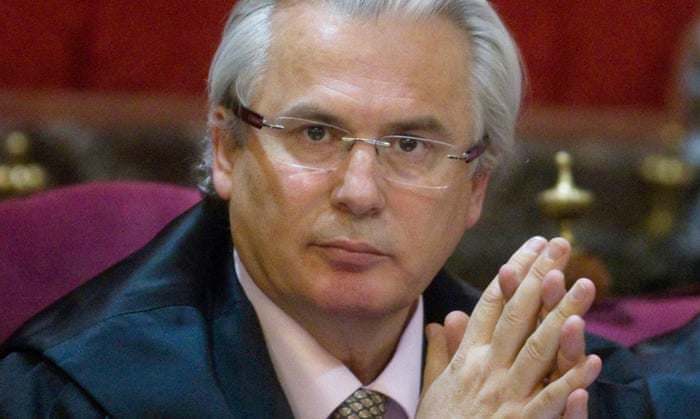
What is the importance of Garzon’s recent
“crucial that the financial and arms flows to ISIL be investigated“ ?


Two excerpts from 2015-11-22 Offshore Banking and ISIS.   

  • The flow of money and weapons to ISIS is unlikely to be stopped because it would mean shutting down the offshore banking of the elites.
  • (causes of terrorism)   

Universally, the outcomes (of American interference in resource-rich countries to ensure access of American corporations to cheap oil, copper, labour, land, … ) are corruption of governance, the siphoning off of resource revenues, impoverishment of local people, poisoning of their environments, mobilization of local freedom fighters determined to protect their families and their land, growth of military – – “terrorism”.

Garzon is savvy.  Behind his call for an investigation into where the money for ISIS is coming from (wow!):

2015-08-20 Spain’s campaigning judge, Baltasar Garzon, seeks change in law to prosecute global corporations. The Guardian

Excerpt:

… the idea that economic and environmental crimes be considered crimes against humanity, akin to torture or genocide …

. . . This latest initiative will likely face serious political obstacles as well, said Garzón. “The problems will come when this initiative affects powerful countries, such as the United States, China or Israel,” he said. “But little by little the path will be paved.”

Garzon offers a non-violent tool for achieving the impossible.   “Terrorism” will continue to grow unless we stop the appropriation of resources that do not belong to us, the destruction of other people’s environment and governance systems.   Garzon’s proposal addresses the “at root” causes of terrorism.

His dogged determination means we have a torch to follow.

The following indicates Baltasar Garzon could use help spreading his message.

Blows my mind:
  • Media coverage of Garzon’s  “crucial that the financial and arms flows to ISIL be investigated”  will mention his past work for international justice.   It will NOT mention his pursuit through the courts of  “The Bush Six“.   The picture painted:  Garzon has pursued these bad guys in the world (e.g. Pinochet) and the gaping hole in the picture must be maintained – – do NOT indicate ANYTHING about his work that might cast us in a bad light.


  • Often, on-line “Comments” will point out such serious omissions.   In this case they are critical for understanding why Garzon lost his judgeship in Spain, for one thing.  I did a quick scroll-through of Comments and found not a peep about Garzon’s efforts vis-a-vis  “The Bush Six”.   But I suppose, the Commenters can’t see our own role, they are informed by the media and the media won’t mention it.

Postings related to Garzon,  (right-hand sidebar).

NOTE:  “Excerpts” is now working.  Clicking on Garzon will generate a list of the postings related to him with a short excerpt from each.

Solidarity with the Warriors

The “Wedding of strength” posting has a short summary of Garzon.

The earliest of the postings are about Garzon’s pursuit of the Bush Six.


– – – –  – – – – – – – – – –  – – –  – 

RELATED:  Did you know?

2015-02-07 Russia leads initiative at UN to stop the flow of money to ISIS

You can bet that the propaganda machines are revving into high gear.  There will be character assassinations of Russia, along with Garzon and Prime Minister J Trudeau who has mandated his Minister Responsible for Canada Revenue to work with the international community to shut down the illegal activity in the offshore banking of the elites.  (see 2015-11-22 Offshore Banking and ISIS)

Any bets on whether the U.S. signs onto any UN initiatives to investigate offshore banking?

Dec 012015
 

http://sputniknews.com/world/20151130/1031009792/financial-flows-isil.html

Cutting Financial Flows, Traffic of Arms Vital to Counter ISIL

The head of WikiLeaks founder Julian Assange’s legal team, Baltasar Garzon, considers it to be crucial that the financial and arms flows to ISIL be investigated, stressing that so far “it has not been done enough there.”

MADRID (Sputnik) — The fight against Islamic State (ISIL, or Daesh in the Arab world) cannot be carried out exclusively by military means, as it also requires curbing financial support and arms deliveries to the extremists, the head of WikiLeaks founder Julian Assange’s legal team, Baltasar Garzon, told Sputnik Monday.

Garzon, a former judge who spent 32 years investigating terrorism offenses in Spain, considers it to be crucial that the financial and arms flows to ISIL be investigated, stressing that so far “it has not been done enough there.”

Instead, the international community has chosen the easiest counter-terrorism strategy — military efforts, which, according to the lawyer, must be accompanied by close coordination between a wide number of states, that should not be focused “exclusive on combat action but should rather be carried out on a way deeper level.”

ISIL is a violent extremist group that has seized large areas in Iraq and Syria since 2014 and is notorious for committing many human rights atrocities. Its activities have been outlawed in Russia.

The United States has been leading a coalition of some 60 countries launching airstrikes against ISIL positions in Syria and Iraq since 2014. The military campaign in Syria has not been approved by the UN Security Council or Damascus.

Russia has been conducting anti-terrorist airstrikes in Syria since September 30 at the request of Syrian President Bashar Assad.

Also Garzon stated that the universal jurisdiction should be extended to cover economic and environmental crimes.

“We are proposing what we define as the new principles of universal jurisdiction stipulating the extension of this mechanism to cover not only genocide and war crimes as crimes against humanity, but also a new vision in which other legal rights may be at stake and affect humanity, such as economic and environmental crimes,” Garzon said.

He added that these principles have already been formulated by his team, with a pursuant universal academic and legal debate underway.

The legal doctrine of universal jurisdiction considers some crimes so serious that they affect the entire international community providing any state with the right to exercise its jurisdiction to prosecute the perpetrators.

Dec 012015
 
http://sputniknews.com/analysis/20150207/1017945720.html

How ISIL Gets Its Money – Donations, Oil Smuggling, Kidnapping, Extortion

The growing influence of the Islamic State encouraged Russia this week to submit a draft resolution to the UN Security Council, to divert or stop the flow of money flow to IS.

MOSCOW (Sputnik), Alexander Mosesov — The economy of the notorious Islamic State (IS) extremist group is being nourished by funding in the form of charity donations, oil smuggling, and kidnapping and extortion of government-paid wages, experts told Sputnik on Friday.

The Islamic State currently poses a great danger not only to both Iraq and Syria, but also to stability in the entire Middle East. The increasing influence of the Islamist group could be expressed using the ancient Roman saying attributed to statesman Marcus Tullius Cicero: “the sinews of war are infinite money.”

This very reason encouraged Russia this week to submit a draft resolution to the UN Security Council, to divert or stop the flow of money flow to IS. However, exact steps to cut the sinews out of the IS economy have not been clearly identified.

‘DONATIONS’ AND OIL SMUGGLING

“Wealthy private donors continue to wire funds to IS. It was recently reported that these funds actually go through the United States on occasion,” Renad Mansour, former adviser to Iraqi Kurdistan’s regional government told Sputnik, adding that Lebanon and Jordan are also used as ‘in-between’ countries.

Lina Khatib, the director of the Carnegie Middle East Center, said that the Islamic State receives sums from non-state actors “mainly from the Gulf.” She also added that the system of funding is necessarily complex and involves legal devices using so-called dummy charities.

The extremists also purchase oil from middlemen and resell it to Syria and Turkey through retaining anonymity by using brokerages. This aspect of the IS economy has been affected by the recent change on the commodities market.

“Middlemen are finding it more difficult to smuggle the oil, which has fallen in price. There is no doubt, then, that the oil income has decreased (probably by half),” Mansour said.

At the same time, Khatib assured Sputnik that “the price of IS-produced oil on the black market has not been affected by the global oil price drop.”

KIDNAPPINGS AND EXTORTIONS

On Friday, a 26-year-old female aid worker from the United States was reportedly killed in an unconfirmed Jordanian airstrike. She was held hostage for 18 months with a $6 million ransom demand. A number of British, Japanese, US, Iraqi, Syrian and other nationals have also been kidnapped through the existence of the terrorist group.

“Some countries have paid for the release of hostages,” Mansour said, while Khatib noted that ransoms for hostages help “generate significant income.”

The wages extortion is a less well known source of income than the above-mentioned three. Renad Mansour explained that Iraq pays “the salaries of its civil servants from the national budget, and many of these civil servants live in under Islamic State control. As such, they continue to receive wages (and even retirement for some).”

The expert added that the money could “end up going towards IS.”

ISLAMIC STATE VS. AL-QAEDA: FUNDING MATTERS

The world’s most notorious global Islamist organization before the appearance of the Islamic State was Al-Qaeda. Despite seemingly similar goals and ideology these two differ greatly, particularly in funding.

“Under the mindset of being a state, IS is trying to become economically independent. This is why an emphasis is put on exporting oil, taxation, extortion, and kidnappings – generally, avenues of income that are not dependent on another party,” Mansour told Sputnik.

Khatib agreed with the expert, saying that IS makes donor funding “only supplementary to its core income.”

WHAT SHOULD BE DONE?

“Closer monitoring of the activities of international charitable and aid organizations as well as stricter procedures related to money laundering in the Middle East are needed to try to halt IS’s financial transactions,” the Carnegie Middle East Center director said.

She underlined that donor funding only accounts for a small part of IS funding and that prosecuting money laundering activities would “[…] have a limited impact” on the terrorist group.

The former adviser to Iraq’s Kurdistan regional government outlined two major steps to choke the IS economy. The first step would be to monitor and crack down “on money laundered to the IS” and finding “the origins of such payments.”

The second step, according to Mansour, has to do with oil smuggling networks as “they remain key to IS’s unofficial economy.”

Given that no particularly successful advancements have been made since June 2014, when IS proclaimed a caliphate on the captured territories, these steps are not simple to execute.

Dec 012015
 

http://www.theguardian.com/world/2015/aug/20/spain-judge-baltasar-garzon-prosecute-global-corporations#comments

Baltasar Garzón to push for economic and environmental crimes to be treated as those against humanity at international conference next month

Baltasar Garzon’s innovative use of universal jurisdiction is under attack from Spain’s government. Baltasar Garzon’s innovative use of universal jurisdiction is under attack from Spain’s government. Photograph: Juan Medina/Reuters

Ashifa Kassam in Madrid

He has brought down governments, closed newspapers and ordered the arrests of dictators.

Now Baltasar Garzón, the Spanish judge who redefined the boundaries of cross-border justice, has set his sights on widening the definition of international law to target corporations that carry out economic or environmental crimes.

“Humanitarian and economic crises cause more deaths around the world than all of the genocides we have documented,” said Garzón, who made headlines around the world when he ordered the 1998 arrest of former Chilean dictator Augusto Pinochet in London.

Next month, he and other leading activists, judges and academics from a dozen countries will come together at a conference in Buenos Aires to push forward the idea that economic and environmental crimes be considered crimes against humanity, akin to torture or genocide.

Actions that could be considered criminal, said Garzón, include those of the so-called vulture funds that undermine countries’ debt restructuring, or companies that turn a blind eye to the abusive exploitation of natural resources such as coltan, used in mobile phones, digital cameras and computers.

These actions fit within the definition of crimes against humanity, as they affect certain sectors of the population and trample on human rights, he said. Referring to environmental crimes, he said: “We’re seeing how climate change is connected to natural disasters and famines.”

The recent crisis in Greece had yielded another example of what he saw as criminal behaviour. “While the Greeks were voting in the referendum, there was a massive exit of capital from the country, some €2bn. It left the country on the brink of collapse and limited how much money citizens could withdraw each week,” said Garzón. Widening the application of international law could enable courts to force the return of this capital or to embargo it.

The mechanism for prosecution would be universal jurisdiction, a provision in international law that allows judges to try cases of human rights abuses committed in other countries. The doctrine would be particularly helpful in going after large corporations, as it would allow the law to equally pursue perpetrators regardless of where their headquarters are located.

For much of the past two decades, Spanish judges were among the leaders of applying universal justice, relying on the doctrine to reach beyond Spanish borders and investigate serious human rights abuses in Argentina, Rwanda and Guatemala.

Last year, after a court in Spain ordered Interpol to issue arrest warrants for former Chinese leader Jiang Zemin and four other senior Chinese officials over alleged human rights abuses in Tibet decades ago, the governing People’s party fast-tracked a reform to curb the use of universal jurisdiction in Spain.

Critics accused the Spanish government of prioritising trade relations with China over human rights. Garzón, whose judicial career in Spain ended in 2012 after he was convicted of illegally ordering the wiretapping of conversations between defence lawyers and clients in a corruption case involving the People’s party, warned that the changes were part of a wider step backwards on human rights in Spain.

This latest initiative will likely face serious political obstacles as well, said Garzón. “The problems will come when this initiative affects powerful countries, such as the United States, China or Israel,” he said. “But little by little the path will be paved.”

Nov 282015
 

NOTE:

I was curious whether tax havens, an election plank, are explicit in Prime Minister Justin Trudeau’s letter of Mandate to the Minister for Revenue Canada.  Good news – – they are!

 Invest additional resources to help the CRA crack down on tax evaders and work with international partners to adopt strategies to combat tax avoidance.

(http://pm.gc.ca/eng/minister-national-revenue-mandate-letter#sthash.PTkgj0lA.dpuf)

– – – – – –  – – – – – – – – – – – – – – – – – – – –

CBC News

Former HSBC employee Hervé Falciani, a fugitive from Switzerland, talks to reporters last month in France. He provided global tax authorities with info on tens of thousands of secret Swiss bank accounts, enabling investigators to recover billions of dollars in unpaid tax.

Former HSBC employee Hervé Falciani, a fugitive from Switzerland, talks to reporters last month in France. He provided global tax authorities with info on tens of thousands of secret Swiss bank accounts, enabling investigators to recover billions of dollars in unpaid tax. (Denis Balibouse/Reuters)


192 shares
Facebook
Twitter
Reddit
Google
Share
Email
Related Stories

Switzerland has sentenced a former bank IT employee referred to as the “Edward Snowden of tax evasion” to five years in prison for leaking records on 106,000 account holders, including about 1,800 from Canada, in a move that led to billions of dollars in unpaid taxes being recovered by countries around the world.

Whistleblower Hervé Falciani, a former head of computer security at HSBC’s private banking arm in Geneva, was sentenced in absentia Friday after being convicted of corporate espionage for taking records that showed the bank helped hide the equivalent of $255 billion of clients’ money.

He did not attend the trial and remains at large in his native France, where he can avoid arrest because France doesn’t extradite its own citizens.

Falciani began copying the records to his personal computer in 2006, and later fled when he was confronted by his employer.

In a 2010 interview with CBC News in Nice, France, he said he was driven by profound qualms about the secrecy of the Swiss banking industry and how it enabled wealthy people around the world to shield money from tax authorities.

“I came to the point that something was very wrong and should be changed,” he said. “A huge industry is made just to go around rules that we can’t go around as simple citizens.”

HSBC indicted in France

As a result of the documents Falciani exposed, tax investigations were launched in France, Italy, Britain, India and Canada, among other countries.

The value of accounts tied to Canada was around $4 billion, from which the Canada Revenue Agency said it has recovered $28.4 million in unpaid taxes on hidden money, while Revenue Quebec has recouped an additional $34.4 million. France recovered half a billion euros in unpaid taxes.

faclciani-hsbc-300

CBC News interviewed Falciani in 2010 in Nice, France, and revealed that nearly 1,800 secret HSBC Swiss accounts belonged to Canadians. (CBC)

The Falciani revelations were among the first in a series of leaks of offshore banking data in recent years that have exposed how wealthy people worldwide use networks of secret accounts and shell corporations to hide income and avoid or evade tax.

But Swiss authorities and HSBC have maintained that Falciani’s actions amounted to theft. He was finally charged last December following a six-year investigation, with the country’s attorney general alleging Falciani was motivated by profit and tried to sell the account info he took.

A month prior, France had indicted HSBC on allegations the bank helped launder the proceeds of tax fraud through the same Swiss private banking accounts.

A separate Swiss investigation into HSBC resulted in the bank paying a $53-million settlement and avoiding criminal charges. Switzerland has not charged any HSBC bankers or executives.

U.S. and Belgian authorities are still looking into the bank.

Canada never brought tax evasion charges against any of HSBC’s Canadian account holders.

It is not illegal to have an offshore account or numbered company, but all the income must be properly reported to tax authorities.


Read more about offshore banking leaks:

Nov 262015
 

It’s very easy to follow – – good English sub-titles.  Just give it a minute.


Europeans are seeing Canadian experience with Investor State Dispute Settlements (ISDSs) through German Public TV.

This is a very important and informative video.   Many thanks to people in Germany.  And to Janet Eaton – – her remarks below.   Also,  Osgoode Hall Law School professor Gus Van Harten makes very important contributions.  Maude Barlow, Council of Canadians has been a stalwart for years on the Trade Deals.  There’s a link below – – Bless Maude.

I think it’s left to us to forward the word to Canadians and Americans.   It just isn’t being discussed, how are people supposed to know?

https://www.youtube.com/watch?v=YV2NZ9MQh0w

= = = = = = = = = = = = = = = = = = = = = = = = = =

RELATED:

2015-01-14 FTA’s Chapter 11 Makes Canada Most-Sued Country Under Free Trade Tribunals, Huffington Post

2015-03-06 We Canadians get to gift Exxon/Mobil $17.3 million! (compliments of NAFTA)

2015-04-18 Hundreds of Millions of Dollars already paid out to corporations because of trade deals. It’s about to multiply many times over (TPP, CETA, etc.).    (Has a number of links to other postings.)

2015-10-16 Texas Oil Tycoon T. Boone Pickens’ $700-Million NAFTA Lawsuit Against Ontario Nears End, NY Times & Huffington Post

2015-11-22   Offshore Banking and ISIS.

(But click on the video at top from Germany – – it sets everything in an entirely new light.)

With thanks to Janet Eaton:

Dear All,

Here is the video prepared for German Public Television with English subtitles  made for  European citizens to understand the true nature of Investor State Dispute Settlement about which there has been such huge backlash in Europe and especially Germany. [An earlier version in German was released some time ago.]

By highlighting a Canadian case under NAFTA, the first major agreement between developed countries with ISDS included, the producers were warning Europeans about what could happen when saddled with NAFTA- like ISDS agreements with both Canada under CETA and the US under TTIP.

It could  also be useful for lobbying in Canada to have the struggles of a local community portrayed in situ with local interviewees who fought against a large American  quarry there only to lose under ISDS i.e.  the Digby Neck Nova Scotia Bilcon case which has become a lightening rod for critique of ISDS world wide.

Likewise for European cases – Vattenfall against the German decision, after Fukushima,   to phase out nuclear power and Spanish government’s decision to stop the subsidization of solar companies operating in Spain.

You will also see and hear analyses from many legal experts from various European countries as well as from Canada and the US as to what is transpiring politically and economically with what the majority see as an unfair attack on the public sphere and a violation of national sovereignty.

There is also significant documentation provided by Cecilia Olivet from the  Transnational Institute one of Canada’s Trade Justice Network’s  collaborators in bringing to  light the egregious nature of ISDS.

This video should also be useful for informing the public about the mechanics of ISDS and its private tribunals, behind the scenes machinations, and multiple impacts compared to public law courts hence giving an unfair advantage to corporations.

The Vattenfall case against the German decision to phase out nuclear power plants after the Fukushima disaster also reminds us of the Lone Pine Resources case against the government  of Quebec for placing a moratorium on fracking and how difficult it could be to enforce agreements on Climate Action made in Paris as Professor Gus van Harten well knows . He has called for a trade deal exemption clause in his new report, “An ISDS Carve-out to Support Action on Climate Change” a move championed by the Council of Canadians and Maude Barlow.

http://www.nationalobserver.com/2015/09/23/news/nafta-and-fipa-could-derail-cop21-paris-climate-change-agreement-report-claims

Please share this with colleagues and your lists.

https://www.youtube.com/watch?v=YV2NZ9MQh0w

all the best,

janet

——- Forwarded message follows ——-

From:                         Pia Eberhardt

Dear all,

In October, the first German public TV channel broadcasted a pretty good 45 minute documentary on the investor-state dispute settlement system (ISDS), in TTIP and elsewhere: “Konzerne klagen – wir zahlen”.

The film goes in depth into the cases of energy giant Vattenfall vs. Germany, Bilcon against Canada as well as the numerous cases of solar investors against Spain.

It includes strong statements from people from the arbitration industry, politicians, NGO activists as well as academics.

CEO and TNI have now subtitled the video in English and Spanish (you have to activate the subtitles yourselves): https://www.youtube.com/watch?v=YV2NZ9MQh0w Some quotes from the movie can be found below, to give you an impression. All the best, Pia

“It’s been a bonanza for the legal industry, that’s growing up around this treaties and it’s ultimate, it only exists, because at some point everyone expects: The public will have to pay.” Gus van Harten, Professor for International Law „

We do see people essentially speculating on the outcomes of corporate attacks on governments.“ Ben Beachy, Sierra Club „

The moment in which those standards as fair and equitable treatment have been applied in an extensive way, meaning that any legislative change which impairs or which brings with it as a consequence that a certain expected investment is not longer going to be possible – this is in my eyes a perversion of the system.“ José-Maria Beneyto, Professor for international law
* * * * * * * * * * * P i a   E b e r h a r d t Corporate Europe Observatory (CEO) Cranachstraße 48 50733 Cologne Germany www.corporateeurope.org Tel.: ++49 (0)221 789 678 10 Mobile: ++49 (0) 152 56 30 91 02 pia  AT   corporateeurope.org skype: piaebse Sign up to the CEO e-newsletter: http://www.corporateeurope.org/subscribe-our-newsletter

Nov 252015
 

http://www.themilitant.com/2010/7445/744549.html  
 (Books of the Month column)

Below is an excerpt from The Struggle is My Life by Nelson Mandela, one of Pathfinder’s Books of the Month for November. The book contains his writings and speeches in the fight against the apartheid regime in South Africa, from the time he joined the African National Congress Youth League in 1944 to his release from 27 years of incarceration in 1990. The piece below is from an article he wrote in March 1958, titled “New Menace in Africa.” It takes up the growing threat posed by U.S. imperialism to the mass struggles against colonial rule that had won political independence for many countries in Africa. Copyright © 1990 by Pathfinder Press. Reprinted by permission.

BY NELSON MANDELA
Quite naturally the colonial peoples all over the world have in various ways waged ceaseless battles against foreign domination. In many areas this battle has been decisively won whilst in others it still rages. The imperialist countries have been driven out from practically the whole of Asia and the Pacific regions. China, India, Ceylon, Burma and the United States of Indonesia have won their national independence. In Africa a large number of territories have thrown off the imperialist yoke and are now independent states. Egypt, the Sudan, Ethiopia, Libya, Morocco, Tunisia and Ghana are no longer dependencies of foreign powers. In Algeria, Nigeria, Somalia and Uganda self-government in the near future is anticipated. All over the world the people are astir and the struggle for political progress is gathering momentum by the day. Imperialism has been weighed and found wanting. It has been fought and defeated by the united and concerted action of the common people.

Whilst the influence of the old European powers has sharply declined and whilst the anti-imperialist forces are winning striking victories all over the world, a new danger has arisen and threatens to destroy the newly won independence of the people of Asia and Africa. It is American imperialism, which must be fought and decisively beaten down if the people of Asia and Africa are to preserve the vital gains they have won in their struggle against subjugation.

The two world wars, which weakened the old powers and which contributed to the growth of the political and economic influence of the USA, also resulted in the growth of the anti-imperialist forces all over the world and in the intensification of the struggle for national independence. The old powers, finding themselves unable to resist the demand by their former colonies for independence and still clinging desperately to their waning empires, were compelled to lean very heavily on American aid. The USA, taking advantage of the plight of its former allies, adopted the policy of deliberately ousting them from their spheres of influence and grabbing these spheres for herself. An instance that is still fresh in our minds is that of the Middle East, where the USA assisted in the eviction of Britain from that area in order that she might gain control of the oil industry, which prior to that time was in the control of Britain… .

Imperialism in disguise
American imperialism is all the more dangerous because, having witnessed the resurgence of the people of Asia and Africa against imperialism and having seen the decline and fall of once powerful empires, it comes to Africa elaborately disguised. It has discarded most of the conventional weapons of the old type of imperialism. It does not openly advocate armed invasion and conquest. It purports to repudiate force and violence. It masquerades as the leader of the so-called free world in the campaign against communism. It claims that the cornerstone of its foreign policy is to assist other countries in resisting domination by others. It maintains that the huge sums of dollars invested in Africa are not for the exploitation of the people of Africa but for the purpose of developing their countries and in order to raise their living standards.

Now it is true that the new self-governing territories in Africa require capital to develop their countries. They require capital for economic development and technical training programmes, they require it to develop agriculture, fisheries, veterinary services, health, medical services, education and communications. To this extent overseas capital invested in Africa could play a useful role in the development of the self-governing territories in the continent. But the idea of making quick and high profits, which underlies all the developmental plans launched in Africa by the USA, completely effaces the value of such plans in so far as the masses of the people are concerned. The big and powerful American trade monopolies that are springing up in various parts of the continent, and which are destroying the small trader, the low wages paid the ordinary man, the resulting poverty and misery, his illiteracy and the squalid tenements in which he dwells, are the simplest and most eloquent exposition of the falsity of the argument that American investments in Africa will raise the living standards of the people of this continent.

The American brand of imperialism is imperialism all the same in spite of the modern clothing in which it is dressed and in spite of the sweet language spoken by its advocates and agents. The USA is mounting an unprecedented diplomatic offensive to win the support of the governments of the self-governing territories in the continent. It has established a network of military bases all over the continent for armed intervention in the domestic affairs of independent states should the people in these states elect to replace American satellite regimes with those who are against American imperialism. American capital has been sunk into Africa not for the purpose of raising the material standards of its people but in order to exploit them as well as the natural wealth of their continent. This is imperialism in the true sense of the word.


Nov 222015
 

Among the top oil-producing countries in the world are

  • Saudi Arabia
  • Iran
  • United Arab Emirates
  • Kuwait
  • Iraq

– – – – – –  – – – – – – – – –

Syria is a small country; it’s not in the top 10 or 11 producers, but it produces oil.

Unimaginable wealth in those countries.   . . .  which is a big part of why ISIS exists and specifically in the Middle East.

The analysis is right:  to stop ISIS you have to stop their access to money and to weapons.   (Many of their fighters are paid.)

That might be unlikely to happen.

You do not hear debate about how ISIS’ access to money and weapons will be stopped.
And why is there no debate?    . . .
you are getting into the economy of the ultra rich and the ultra corrupt.


In that economy, it does not matter whether you are

  • ISIS (a terrorist or freedom fighter)
  • a drug runner
  • an Arab Prince
  • an Executive of a Western Arms manufacturer
  • a wealthy client of KPMG Vancouver,    or indeed
  • a member of the Bush enclave.

The common denominator is lots of money.

Offshore banking ensures that the money will not enter the economy of the commoners, silly fools who pay taxes in support of public goods and programs.

To more fully understand the significance of offshore banking and ISIS, I think you have to start with American/British/European Imperialism.

Use this one little example:  Mohammad Mosaddegh https://en.wikipedia.org/wiki/Mohammad_Mosaddegh

Think – 1951.   Six years after the end of World War II, an era in which many countries were reclaiming their countries from imperialist forces.  (India, Ceylon, Egypt, Libya, Morocco, Ghana, Algeria, Nigeria, Uganda, many more …  In the words of Nelson Mandela,  Imperialism has been weighed and found wanting. It has been fought and defeated by the united and concerted action of the common people.)

But back to Mossadegh as an example:

Mossaddegh was the democratically elected[1][2][3] Prime Minister of Iran from 1951 until 1953, when his government was overthrown in a coup d’état orchestrated by the American Central Intelligence Agency and the British Secret Intelligence Service.[4][5]

An author, administrator, lawyer, and prominent parliamentarian, his administration introduced a range of progressive social and political reforms such as social security, rent control, and land reforms.[6] His government’s most notable policy, however, was the nationalization of the Iranian oil industry, which had been under British control since 1913 through the Anglo-Persian Oil Company (APOC / AIOC) (later British Petroleum and BP).[7]

Many Iranians regard Mosaddegh as the leading champion of secular democracy and resistance to foreign domination in Iran’s modern history. Mosaddegh was removed from power in a coup on 19 August 1953, organised and carried out by the CIA (Kermit Roosevelt) at the request of MI6.  

(In the interests of the oil companies.  The U.S. had a large stake, too.)

In another posting I’ll provide a compendium of precisely the same stories – –  only the country, the name of the democratically-elected leader, and the year are different.   The resource being protected for exploitation by Western Corporate is usually, but not always oil.

The stories vary in their degree of brutality.  The popular leader who was determined that his countrymen will be the beneficiaries of their resources, might be beheaded or “removed”.  Bloody civil war might be fomented.

Universally, the outcomes are corruption of governance, the siphoning off of resource revenues, impoverishment of local people, poisoning of their environments, mobilization of local freedom fighters determined to protect their families and their land, growth of military – – “terrorism”.

Mossadegh’s fate is sufficient to set the stage.   If you have any doubts that it is representative of Imperialism in the world since WW2, the compendium (to come) will remove the doubts.    Now,  on to the offshore

OFFSHORE BANKING  (includes Tax Havens)

It’s worth the time to try and understand a bit of the huge role played by offshore banking.   It is estimated that half of the world’s GDP flows through tax-sheltered secret bank accounts and trusts – – trillions of dollars.

Maybe you think it’s not a big deal, you live in Canada and it’s not all that bad here.   (??)


The connection to ISIS and a sea of refugees make it worth your while to know a bit about how these things work.  And if you think the same factors applied to Canada will not result in the same outcomes,  the propaganda of Imperialism has been successful, alas!

The institutions, the bankers, consultants, accountants, auditors and lawyers are the same,

whether you are

ISIS, the CIA, a Bush crony or B.C. resident Marshall Cooper.

(Cooper is the fellow who used KPMG Vancouver’s

plan that would “target” wealthy Canadian residents worth at least $10 million. It offered them “confidentiality,” … and the ability to receive money “free of tax.”

In return, KPMG would take a 15 per cent cut of the taxes dodged….”

There’s more than one relationship between “offshore banking” and ISIS.

  • The obvious relationship is to the movement of oil money and illicit activity related to weapons and the corruption of regimes.  ISIS uses all that machinery, too (the same secret banking).


  • The not-so-obvious connection:  Corrupt Westerners, working with their Corrupted Counterparts, use the offshore banking to siphon off the money.

The oceans of oil that have been exported from the Middle East should have resulted in peoples who are wealthier than Americans (who ran through their oil supply and went into declining domestic production of conventional stocks by the 1970s.  Jed Clampett and the Beverly Hillbillies are bygones of history.  We forget that the U.S. had, at one time, large domestic conventional oil stocks.).

From P. 135,  A Game as Old as Empire, edited by Steven Hiatt:

“Iraq is a rich country, but its people are poor,”  … 2006 … one fifth of the population – 2 million families – live below the poverty line, defined as having income of less than a dollar a day. “

(That’s just one of the Middle Eastern countries, one of the world’s top-producers of oil.)

There is poverty in the Middle East.  And it’s not because they are Muslim, or incompetent, or dishonest or barbaric.

There is poverty and violence in the Middle East because Imperialist Powers stop at nothing to assert control over resources, for their own benefit.   Mossadegh is one in a long line of tragic casualties through the years since WW2 – – the potential for great good  overcome by forces of evil, repeatedly.   This is “us”, not “them”.

I was curious whether tax havens, an election plank, are explicit in new Canadian Prime Minister Justin Trudeau’s letter of Mandate to the Minister for Revenue Canada.  Good news – – they are!

 Invest additional resources to help the CRA crack down on tax evaders and work with international partners to adopt strategies to combat tax avoidance.

See more at: http://pm.gc.ca/eng/minister-national-revenue-mandate-letter#sthash.PTkgj0lA.dpuf

I know this:  Prime Minister Trudeau’s intentions are a threat to the big and corrupt players in that economy that exists in a layer above ours.   It will be a David vs Goliath.  I want David to win.

For David to win,  we had all better start talking and explaining to our fellow citizens about offshore banking.  Without us behind him, Trudeau will be shred to ribbons by propagandists and who knows what.  Trudeau’s potential for great good will be snuffed just like Mossadegh, Lumumba, Torrijos,  the list is long.  The bad guys are psychopaths.   They are “us” (the West), not “them” (Muslims).

The story of BCCI, one of the offshore banks, is telling.  When action in the U.S. against BCCI commenced, just imagine how those with power, money, influence and no conscience, rallied around to make sure that part of their infrastructure would not get damaged, or Heaven forbid, shut down!

More on that later.  (I’d like to acknowledge Lucy Komisar, author of BCCI’s Double Game:  Banking on America, Banking on Jihad,  published in  A Game as Old as Empire, P. 69.)

The flow of money and weapons to ISIS is unlikely to be stopped because it would mean shutting down the offshore banking of the elites.

It’s important way beyond us, and beyond ISIS that J Trudeau and his Cabinet succeed on tax evasion and money laundering through offshore banking.

/Sandra

This posting follows:    2015-11-18    I’d blow our heads off, too.  A poem in word Graphs.