Sandra Finley

Aug 312015
 

A.   Dispersed among the people?

B.   In the hands of the government?

C.   In a combination of government and business?

D.   In corporate hands?

E.   In a combination of people plus government plus corporations?


If the answer is not A, then it’s not democracy?


In the last couple of decades the role of corporations in the decision-making of government has been normalized.


The idea that government is not required to regulate, that self-regulation is superior, led to weakening, followed by crisis and potential collapse of economic systems.


The individual

The community

The organization

The corporation

The government


We learned long ago that we are all both good and bad. That sometimes the bad will prevail. And so we agreed upon the rule of law. We have the rule of law for:

– the individual

– the community

– the organization

– the corporation

– the government


We have the rule of law SPECIFICALLY BECAUSE we learned that we are all both good and bad, that self-regulation is not reliable. If it was, we wouldn’t need laws.


How, in the name of Goodness, the idea that self-regulation by the commercial function in the society could work ever came to replace the wisdom of the ages, I don’t know.


If you have a democracy, the power is dispersed among the people.


It is obviously very easy for the government to become the power.  Their power has to be kept in balance.   How do the people in a democracy hold the government in check? .. If you answered through elections, you are wrong. It is fundamentally through the laws of the land.

Governments cannot break those laws. If they do, then they have stepped over the line that defines democracy.

If the people in the democracy cannot bring the government back within the rule of law, the democracy is lost.

It is obvious that the government and corporations must not be allowed to use the laws, policing, law enforcement and jail system as a coercive force against citizens.

That is another boundary which must not be over-stepped . It is something different from “the rule of law”. It is rule by force, a sign that democracy is claimed but not real.


It is up to citizens to:

a. not allow the laws to be used in a coercive way

b. disallow the writing of laws that compromise the essential balance between state regulation and self regulation.


Breach of the law by the Government of Canada is not a minor matter.   The Government is descending us into a state of lawlessness if it does not obey the laws of Canada and the international treaties we have signed.

The use of the judicial system as a coercive instrument to silence protest is a giant step over the line.

I am curious

is it lost

understanding?

Basic information

One needs

If you live

In democracy

Were you taught?

If not

What purpose was served

In not teaching?

Aug 242015
 

Why was the response from US academic experts to the global financial crisis so muted? 

In the second extract from his book Inside Job, Charles Ferguson argues that corruption in universities is deeply entrenched

(NOTE:  The Inside Job documentary can be watched for free on-line.)

Charles Ferguson

Monday 21 May 2012 20.00 BST   Last modified on Wednesday 1 October 2014 12.39 BST

Many people who saw my documentary Inside Job found that the most disturbing portion of the film was its revelation of widespread conflicts of interest in universities, at thinktanks, and among academic experts. Viewers who watched my interviews with eminent professors were stunned at what came out of their mouths.

Yet we should not be surprised. Over the past couple of decades medical professionals have amply demonstrated the influence money can have in a supposedly objective, scientific field. In general, medical schools and journals have responded well, adopting disclosure requirements. The economics discipline, business schools, law schools and political science schools have reacted very differently.

Over the past 30 years, significant portions of American academia have deteriorated into “pay to play” activities. These days, if you see a famous economics professor testify in Congress, or write an article, there is a good chance he or she is being paid by someone with a big stake in what’s being debated. Most of the time, these professors do not disclose these conflicts of interest, and most of the time their universities look the other way.

Half a dozen consulting firms, several speakers’ bureaus and various industry lobbying groups maintain large networks of academics for hire for the purpose of advocating industry interests in policy and regulatory debates. The principal industries involved are energy, telecommunications, healthcare, agribusiness – and, most definitely, financial services.

Some examples. Glenn Hubbard became dean of Columbia Business School in 2004, shortly after leaving the George W Bush administration. Much of his academic work has been focused on tax policy. A fair summary is that he has never seen a tax he would like. In November 2004 Hubbard co-authored an astonishing article, jointly with William C Dudley, then chief economist at Goldman Sachs. The article, How Capital Markets Enhance Economic Performance and Facilitate Job Creation, warrants quotation. Remember, this is November 2004, with the bubble well under way: “The capital markets have helped make the housing market less volatile … ‘Credit crunches’ of the sort that periodically shut off the supply of funds to home buyers … are a thing of the past.”

Hubbard refused to say whether he was paid to write the article. He also refused to provide me with his most recent government financial disclosure form, which we could not obtain otherwise because the White House had destroyed it. Hubbard was paid $100,000 (£63,000) to testify for the criminal defence of two Bear Stearns hedge fund managers prosecuted in connection with the bubble, who were acquitted. Last year, Hubbard became a senior economic adviser to Mitt Romney’s presidential campaign.
Larry Summers has held almost every important government position in economics. Treasury secretary under President Clinton, in 2009 he became director of the National Economic Council in the Obama administration.
Although sensible about many issues, Summers has made a succession of well-documented mistakes and compromises. And his views on the financial sector would be hard to distinguish from those of, say, [Goldman Sachs chief] Lloyd Blankfein or [JP Morgan boss] Jamie Dimon.
Most of our information about Summers comes from his mandatory government disclosure form. Summers’ 2009 disclosure form stated his net worth to be $17m-$39m. His total earnings in the year prior to joining the government were almost $8m. Goldman Sachs paid him $135,000 for one speech.

Summers is a compromised man who owes most of his fortune and much of his political success to the financial services industry, and who was involved in some of the most disastrous economic policy decisions of the past half century. In the Obama administration, Summers opposed strong measures to sanction bankers or curtail their income.

Harvard still does not require Summers to disclose his financial-sector involvements. Both Harvard and Summers declined my requests for information.

The problem of academic corruption is now so deeply entrenched that these disciplines, and leading universities, are severely compromised, and anyone considering bucking the trend would rationally be very scared. Consider this situation: you’re a PhD student, or a junior faculty member, considering doing some research on, say, compensation structures on risk-taking in financial services, or the potential impact of public disclosure requirements on the market for credit default swaps. The president of your university is … Larry Summers.

The chairman of your department is …Glenn Hubbard. Or you’re at MIT, and you want to examine the decline in corporate tax payments. The president of MIT is Susan Hockfield, on the board of GE, a company that has managed to avoid paying hardly anycorporate taxes for several years.

How much do these forces actually affect academic research and policymaking? The available evidence suggests that the effect is large.

Academic commentary on the financial crisis by economists has been remarkably muted. There are, to be sure, some notable exceptions. But for the most part, the silence has been deafening. How can an entire industry come to be structured such that employees are encouraged to loot and destroy their own firms? Why did deregulation and economic theory fail so spectacularly?

The release of the film Inside Job clearly touched a nerve with regard to these questions. I was contacted by a large number of students and faculty, and there has been a great deal of debate. Departments including the Columbia Business School have adopted disclosure requirements for the first time. But most universities still have no such requirements, and few if any have any limitations on the existence of conflicts of interest. The same is true of most academic publications. Newspaper reporters are strictly prohibited from accepting money from any industry or organisation they write about.

Not so in academia.

There has been one significant positive development. Earlier this year, the American Economics Association adopted a disclosure requirement for the seven journals it publishes. But most institutions continue to oppose further disclosure and, when I was making my film, refused even to discuss the subject.


This is an edited extract from Inside Job: the Financiers Who Pulled Off the Heist of the Century by Charles Ferguson, published by Oneworld at £12.99. Order a copy for £10.39 with free UK p&p here or call 0330 333 6846. Charles Ferguson will appear at the Edinburgh international book festival on Sunday 12 August.

Aug 202015
 

http://www.theguardian.com/environment/2015/aug/20/wellcome-trust-loses-millions-as-its-fossil-fuel-investments-plunge-in-value?CMP=EMCNEWEML6619I2

  Keep it in the ground

Medical charity sold off two-thirds of its investments in Shell but lost an estimated £175m in the last year due to falling share prices in the fossil fuel sector

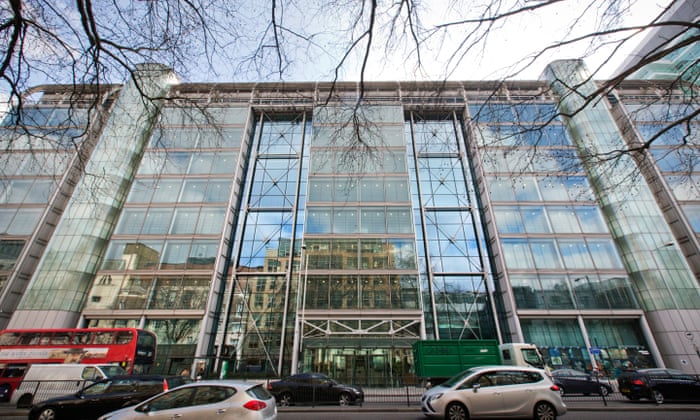
The Wellcome Trust, Euston Road, London. Photograph: Graham Turner The Wellcome Trust, Euston Road, London. Photograph: Graham Turner Photograph: Graham Turner for the Guardian

The Wellcome Trust’s investments in fossil fuel companies have lost an estimated £175m in the last year, due to sharp falls in share prices. Research by the Guardian shows the medical charity has sold off two-thirds of its holding in Shell but also increased its investment in the fastest falling of its stocks, mining giant BHP Billiton, by 8%.

The Wellcome Trust is the world’s second-biggest non-governmental funder of medical research but has been the focus of a Guardian campaign asking the Trust to sell its fossil fuel investments, which today stand at an estimated £370m.

The Wellcome Trust invests in four major fossil fuel companies, all of which have seen large falls in their share prices

Current fossil fuel reserves are already several times greater than could be burned while keeping below the internationally agreed target of 2C of global warming. But coal, oil and gas companies continue to explore for new reserves. The Keep it in the Ground campaign argues that financing such companies is inconsistent for an organisation dedicated to improving health, given that a recent landmark report concluded climate change threatens to undermine half a century of progress in global health.

The Wellcome Trust – which funds a range of research into diseases such as cancer, malaria and Ebola – invests in four major fossil fuel companies, all of which have seen large falls in their share prices in the last year. BHP Billiton’s share price slid by 45%, Shell’s by 30%, Rio Tinto’s by 29% and BP by 21%.

Bill McKibben, founder of the global fossil fuel divestment campaign which has seen companies, universities, churches, cities and philanthropic organisations around the world divest, said the Wellcome Trust’s failure to divest from fossil fuels meant it had lost money that could have funded its programmes.

“It’s sad that the Wellcome Trust is fine with drilling the Arctic and building vast new coal mines; and it’s sad, too, that their ability to finance their fine work suffers from this myopia,” said McKibben. “I’m sure they’ll wise up eventually, but for the sake of the planet one hopes it happens sooner rather than later.”

A Wellcome Trust spokeswoman said: “The range of individuals and organisations working to improve human health is wide and it would be surprising if this community did not contain a diversity of opinion about how best to reduce carbon emissions. The Wellcome Trust believes that engagement with the small number of energy companies in which we invest gives us the best opportunity to contribute to change, but we understand and respect the views of those who disagree.”

Join us in asking the Gates Foundation and Wellcome Trust to commit now to divesting from the top 200 fossil fuel companies within five years and to immediately freeze any new investments in those companies.   (Go to the URL:   http://www.theguardian.com/environment/2015/aug/20/wellcome-trust-loses-millions-as-its-fossil-fuel-investments-plunge-in-value?CMP=EMCNEWEML6619I2

The Guardian’s research reveals that the Wellcome Trust sold off two-thirds of its shareholding in Shell, reducing its investment to £53m today, according to share register data filed on 1 June. Shell has the 8th largest oil and gas reserves of any publicly traded company in the world. It is actively exploring the Arctic for oil and gas and operates in Canada’s tar sands, both of which scientists say are incompatible with dealing with climate change.

But Wellcome increased its holding in BHP Billiton by 8.3%, according to a filing on 1 June, making Wellcome’s stake worth £90m today. BHP’s coal reserves are the 6th largest of any public company. When burned, the carbon emissions would be equivalent to the annual emissions of the US, European Union, India and Russia combined.

Wellcome’s shareholdings were unchanged in its two other major fossil fuel investments, BP (£131m) and Rio Tinto (£97m). BP’s oil and gas reserves are equivalent to the combined annual emissions of the US and Russia, while Rio Tinto’s coal reserves are equivalent to the combined annual emissions of all the nations in the European Union.


Jul 202015
 

We live in a digital age.  We had better understand the implications.

I do not like this.   You may wish to share, so others will know how it works.  It applies between Google’s Gmail and a different entity, LinkedIn.   I do not know if there are other instances.   If I am wrong,  let Google explain.

It is not a  “so what?!”.


I received an email in November 2014, see Message from Dan Morgan, request to add  him to my LinkedIn network.   Dan Morgan is the American author of “Merchants of Grain“.    A phone call confirmed, as I suspected, he had not sent a request to me.

But how did LinkedIn connect him to me?   The riddle was solved when I stumbled across an email from 2010.

This comes at a time when I am reading “The Age of Cryptocurrency” (encrypted currency or secure, anonymous, electronic money).

 Page 47:.

But all those who used their knowledge in a bid to enact social change saw cryptography as a tool to enhance individual privacy and to shift power from big, central institutions to the human beings who live in their orbit.  

(I think of Julian Assange and Edward Snowden, but this was even before their time.)

Page 50

Guided by the principle that in the digital age protecting privacy would be crucial for maintaining an open society, the Cypherpunks set their active minds to creating tools to allow people to maintain anonymity.


A few years ago I tried repeatedly to get my profile removed from “LinkedIn” social media.

When I received requests like the one from Dan,  I contacted the person to explain that I do not participate in LinkedIn.    . . . .    But then . . .   hmmm . . .  did the person who originated the request ACTUALLY  initiate a request to join my LinkedIn network (that I don’t actually have)?   Something seemed kind of fishy even though using the Dan Morgan example,  the email I received says:

From: Dan Morgan [mailto:member@linkedin.com

As mentioned, Dan Morgan, like some others I contacted, had not sent a request to join my LinkedIn network.

SO HOW DOES LinkedIn CONSTRUCT A CONNECTION?

I can see a link between work I have done (crop production, Canadian Wheat Board)  and Dan’s book, “Merchants of Grain”.   But how would LinkedIn make the connection?

As you will see below, LinkedIn has access to the content of your Gmail account (if you have one).   Gmail is a Google product;  Google is a “big institution”!

I looked to see if Google owns LinkedIn.   The answer is no.   (2011)   LinkedIn Goes Public But Who Owns The Biggest Slice Of The Pie?  

Dan:  LinkedIn got access to all my “contacts”, which includes every email I have ever sent or received — then sent out “invitations” to all of them unbeknownst to me.

The access has to be to both “contacts” and emails sent and received, because people do not keep everyone in their “contacts” file.

THE MYSTERY

Dan Morgan had suggested on the phone back in November 2014, that he and I must have exchanged emails or something similar that caused LinkedIn to make the connection.   I have known of Dan’s book for a long time, but could not recall being in contact with him.

By accident, 8 months later I stumbled on a brief email exchange we had back in 2010.  5 years ago.   Mystery solved.    . . .   Funny,  I am not experiencing my usual elation at solving a riddle!   All I can say is, “Bless and support the cryptographers,  the ones who recognized two and three decades ago, where internet technology would take us.  And the associated dangers for open society.”

I get especially nervous when I see the impunity with which lies and manipulations manufactured in this case, by LinkedIn by way of Gmail (Google),  affect me directly.  I don’t even have to “imagine” it! 

Googling around discloses that LinkedIn creates profiles that the person themself has not erected on LinkedIn.  (http://appmagma.com/hey-linkedin-nobody-wants-this/)  LinkedIn then uses that profile to decoy others into signing up for LinkedIn.

But it goes beyond that.   The notice sent by LinkedIn to me is an actual lie.  It says that Dan Morgan sent the email.   He did not.   And LinkedIn accessed private email messages to construct the connection.  None of this is right, not in an open and democratic society.

I do not have a gmail account  (Dan Morgan does). And I hate the new Outlook software that keeps trying to make me sign up for Microsoft’s “OneAccount”.


I wish to share my exchange with Dan, so others will at least know the way in which their information is used.

– – – – – – – – – – – – – – – –  – – – – – – – – – –  –

DAN MORGAN AND SANDRA FINLEY,  HOW DID LINKEDIN MAKE THE CONNECTION?    AN EMAIL EXCHANGE IN 2010.

FIRST,  TWO EMAILS FROM 2010, FORGOTTEN ABOUT  (Skim past them)

On Fri, Feb 5, 2010 at 7:09 PM, Sandra Finley wrote:

Dear Dan Morgan,

I am from Saskatchewan.  Your book Merchants of Grain is still treated as a piece of holy scripture!

Can you tell me:  is The Merchants of Grain published in 2000 the same as was published in the 1980’s?  I would like to send the most current edition to Manfred Ladwig in Germany.  The copy I have is a 1980 publication date.  Do I need to find a copy with a 2000 publication date?

Manfred is a documentary filmmaker for German Public Television.  I met Manfred a few years ago when he came here in relation to a documentary on GM crops.  He subsequently did a documentary on Monsanto.

Manfred is now working on the Grain Corporations.  He writes:

I prepare a story about corporate power at the example of the world wheat trade: my story line follows this keywords: wheat from food to commodity: corporate influence (the big so calledABCD`s: ADM,Bunge,Cargill,Dreyfuß) prices of bread, feeding the world, hunger. I know- a big task, but I try to tell something about the real power in the background. Is there anybody you know as an insider of those big TNC`s (especially ADM and Cargill), who by the way own our german wheat importing companies?

Also, maybe you would be a good person for Manfred to talk with?  and so I am sending this email to connect you to each other, “just in case”.

I was in touch with Brewster Kneen who wrote Invisible Giant (Cargill) – see appended.  Brewster feels that he is now out-dated in his information base.   He recommended Mary Hendrickson at the University of Missouri whom I emailed, but have not heard back from.

I will repeat Manfred’s question to you:

Is there anybody you know as an insider of those big TNC`s (especially ADM and Cargill), who by the way own our german wheat importing companies?


Thank-you for your journalistic and other efforts to create an informed citizenry.  We may yet find our way back to democracy!   I increasingly use “corporatocracy” to describe our current form of Government.

Best wishes,

Sandra Finley

– – – – – – – – – – – – – – – –  – – – – – – – – – – – – –

From: Dan Morgan  Sent: February 5, 2010 7:30 PM    To: Sandra Finley   Subject: Re: Merchants of Grain – for German Public Broadcasting Documentary

the latest version of the book is the same as the original..  it has not been updated. glad there is still interest..

I believe a Senate committee recently put out a report on the manipulation of the wheat market by outside speculators — mainly commodity index funds — in 2008.

– – – – – – – – – – – – – – – –  – – – – – – – – – – – – –

THEN, IN NOVEMBER 2014, I RECEIVE   Message from Dan Morgan, request to add  him to my LinkedIn network.

I tracked down his phone number and asked:  Did you send this request? , , ,   The answer is no.   We had a short discussion.

– – – – – – – – – – – – – – – –  – – – – – – – – – – – – –

From: Sandra Finley  Sent: July 19, 2015 1:05 PM    To: Dan Morgan   Subject: FW: Merchants of Grain – for German Public Broadcasting Documentary

Hello Dan Morgan,

I phoned you a couple months ago to inquire if you had requested to be connected to me through “LinkedIn”.   (I had received a notice from LinkedIn that you had.)  Your answer was “no”.

The appended email exchange with you from Feb 2010, which I came across today, probably answers the question of how it is that LinkedIn technology was able to generate a message to me, connected to you.

The question is how they obtained access to a private exchange.

Best wishes,

Sandra Finley

– – – – – – – – – – – – – – – – – – – – – – – – – – – – –

From: Sandra Finley   Sent: July 19, 2015 1:37 PM   To: Dan Morgan   Subject: (2 of 2) The answer re LinkedIn is gmail account ?

Hi again Dan,

Sorry to bother you.    I googled because other people must be experiencing the same re LinkedIn.

From this URL, I gather that LinkedIn has access to GMAIL accounts.   It would explain how it is that LinkedIn generated a request by (not) you to connect with me.

http://appmagma.com/hey-linkedin-nobody-wants-this/

/Sandra

– – – – – – – – – – – – – – – –  – – – – – – – – – – – – –

From: Dan Morgan  Sent: July 19, 2015 1:26 PM   To: Sandra Finley    Subject: Re: FW: Merchants of Grain – for German Public Broadcasting Documentary

Sandra, thanks for your msg.. it appears that LinkedIn got access to all my “contacts”, which includes every email I have ever sent or received — then sent out “invitations” to all of them unbeknownst to me. This is how they jack up their numbers for the benefit of Wall Street, I suppose.

sorry to have bothered you..

right now I am at work on a major project involving the development of the U.S. biofuels industry.. haven’t looked much at Canada, but I should.. interesting stuff.

— Dan Morgan

= = = = = = = = = = = = = = = = = =

BREWSTER KNEEN,  AUTHOR OF “THE INVISIBLE GIANT”  (CARGILL)

http://www.ramshorn.ca/invisiblegiant.html

Invisible Giant: Cargill and Its Transnational Strategies, Second Edition by Brewster Kneen. Pluto Press/UBC Press, 2002, 222 pages

Brewster Kneen writes: “When Pluto Press asked me to produce a second edition of Invisible Giant, I was shocked and  amazed at the changes I found since the first edition appeared in 1995. Not only had the number of global corporate players shrunk alarmingly, but they have virtually eliminated competition between themselves through complementary strategies and business activities while at the same time forming joint ventures and partnerships amongst themselves, again to reduce the inefficiencies of competition.

Cargill has played this game with great skill and dedication. Its reward last year was sales of US$51 billion derived from having some component of just about everything we eat pass through its hands at some point in its journey from farm to supermarket.

My purpose in writing this book is not, however, to overwhelm the reader-eater with indigestion and despair. I remain convinced that as corporations such as Cargill get bigger and bigger, and appear to exercise ever greater control over the global food system, their sheer size limits their agility and activity.  By understanding the rules they play by and the businesses they are involved in, we can gain an understanding of how we should proceed if we want a different game and a different kind of business, one in which the goal is to ensure that everyone is adequately nourished while living respectfully and harmoniously with all Creation.”

Jul 102015
 
Published on
Renowned human rights expert Thomas Buergenthal said Cheney and a number of CIA agents ‘should appear before the ICC.’
(Photo: Gage Skidmore/flickr/cc)

Former ICC judge Thomas Buergenthal said he believes that the architects of mass torture during the George W. Bush era, such as former vice president Dick Cheney, will eventually face prosecution. (Photo: Gage Skidmore/flickr/cc)

A former judge for the International Court of Justice and renowned expert on human rights law told a reporter this week that former vice president Dick Cheney should be prosecuted for war crimes and torture.

Eighty-one-year-old Thomas Buergenthal told Newsweek journalist Robert Chalmers that “some of us have long thought that Cheney, and a number of CIA agents who did what they did in those so-called black holes [overseas torture centers] should appear before the ICC [International Criminal Court].”

“We [in the USA] could have tried them ourselves,” added Buergenthal. “I voted for Obama but I think he made a great mistake when he decided not to instigate legal proceedings against some of these people.”

The former judge added that, despite the inaction so far, he believes eventual charges are inevitable: “I think—yes—that it will happen.”

Buergenthal was born in the former Czechoslovakia and currently lives in Maryland where he works as a professor of law at George Washington University. He served for a decade as a judge for the International Court of Justice—the main judicial arm of the United Nations—before retiring in 2010. Chalmers described him as the “most distinguished living specialist in international human rights law.”

The occasion for the interview was the release of Buergenthal’s new memoir, A Lucky Child, about surviving the Holocaust. The conversation covered far more territory than the war crimes of the former U.S. vice president, touching on the plight of Syrian and Iraqi refugees, as well as anti-black racism in U.S. police departments.

Buergenthal also described former President George W. Bush as “an ignorant person who wanted to show his mother he could do things his father couldn’t.”

Jul 102015
 

http://www.theguardian.com/world/2015/jul/10/poor-must-change-new-colonialism-of-economic-order-says-pope-francis?CMP=EMCNEWEML6619I2

The pontiff condemns the impoverishment of developing countries by the world economic order and apologised for the church’s treatment of native Americans

Pope Francis makes his speech in Santa Cruz, Bolivia, where he called for the poor to have the “sacred rights” of labor, lodging and land. Pope Francis makes his speech in Santa Cruz, Bolivia, where he called for the poor to have the “sacred rights” of labor, lodging and land. Photograph: Alessandro Bianchi/Reuters


Pope Francis has urged the downtrodden to change the world economic order, denouncing a “new colonialism” by agencies that impose austerity programs and calling for the poor to have the “sacred rights” of labor, lodging and land.

In one of the longest, most passionate and sweeping speeches of his pontificate, the Argentine-born pope used his visit to Bolivia to ask forgiveness for the sins committed by the Roman Catholic church in its treatment of native Americans during what he called the “so-called conquest of America”.

The pontiff also demanded an immediate end to what he called the “genocide” of Christians taking place in the Middle East and beyond, describing it as a third world war.

“Today we are dismayed to see how in the Middle East and elsewhere in the world many of our brothers and sisters are persecuted, tortured and killed for their faith in Jesus,” Pope Francis said.

“In this third world war, waged piecemeal, which we are now experiencing, a form of genocide is taking place, and it must end.”

Quoting a fourth century bishop, he called the unfettered pursuit of money “the dung of the devil”, and said poor countries should not be reduced to being providers of raw material and cheap labour for developed countries.

Repeating some of the themes of his landmark encyclical Laudato Si on the environment last month, Francis said time was running out to save the planet from perhaps irreversible harm to the ecosystem.

Pope Francis bolivia

Pinterest

Pope Francis shakes hands with a mining worker’s leader watched by Bolivia’s president Evo Morales, right, in Santa Cruz, Bolivia. Photograph: Rodrigo Abd/AP

Francis made the address in the city of Santa Cruz to participants of the second world meeting of popular movements, an international body that brings together organisations of people on the margins of society, including the poor, the unemployed and peasants who have lost their land. The Vatican hosted the first meeting last year.

He said he supported their efforts to obtain “so elementary and undeniably necessary a right as that of the three “Ls”: land, lodging and labour”.

His speech was preceded by lengthy remarks from the left-wing Bolivian president Evo Morales, who wore a jacket adorned with the face of Argentine revolutionary Ernesto “Che” Guevara. He was executed in Bolivia in 1967 by CIA-backed Bolivian troops.

Njuns bolivia

Pinterest

Nuns on their way to Pope Francis’ mass in Santa Cruz on Thursday. Photograph: Mario Tama/Getty Images

“Let us not be afraid to say it: we want change, real change, structural change,” the pope said, decrying a system that “has imposed the mentality of profit at any price, with no concern for social exclusion or the destruction of nature”.

“This system is by now intolerable: farm workers find it intolerable, labourers find it intolerable, communities find it intolerable, peoples find it intolerable. The earth itself – our sister, Mother Earth, as Saint Francis would say – also finds it intolerable,” he said in an hour-long speech that was interrupted by applause and cheering dozens of times.

Since his election in 2013, the first pope from Latin America has often spoken out in defence of the poor and against unbridled capitalism but the speech in Santa Cruz was the most comprehensive to date on the issues he has championed.

Francis’ previous attacks on capitalism have prompted stiff criticism from politicians and commentators in the United States, where he is due to visit in September.

The pontiff appeared to take a swipe at international monetary organisations such as the IMF and the development aid policies by some developed countries.

“No actual or established power has the right to deprive peoples of the full exercise of their sovereignty. Whenever they do so, we see the rise of new forms of colonialism which seriously prejudice the possibility of peace and justice,” he said.

“The new colonialism takes on different faces. At times it appears as the anonymous influence of mammon: corporations, loan agencies, certain ‘free trade’ treaties, and the imposition of measures of ‘austerity’ which always tighten the belt of workers and the poor,” he said.

Last week, Francis called on European authorities to keep human dignity at the centre of debate for a solution to the economic crisis in Greece.

He defended labor unions and praised poor people who had formed cooperatives to create jobs where previously “there were only crumbs of an idolatrous economy”.

In one of the sections on colonialism, he said: “I say this to you with regret: many grave sins were committed against the native peoples of America in the name of God.”

He added: “I humbly ask forgiveness, not only for the offences of the church herself, but also for crimes committed against the native peoples during the so-called conquest of America.

“There was sin and an abundant amount of it.”

The audience gave Francis a standing ovation when he put on a yellow miner’s hat that was given to him at the end of his speech.

The pope made his speech at the end of his first full day in Bolivia, where he arrived on Wednesday. On Thursday morning he said a mass for hundreds of thousands of people and said that everyone had a moral duty to help the poor, and that those with means could not wish they would just “go away”.

Francis praised Bolivia’s social reforms to spread wealth under Morales. On Friday, he will visit Bolivia’s notoriously violent Palmasola prison.

The pope looked bemused on Wednesday night when Morales handed him one of the more unusual gifts he has received: a sculpted wooden hammer and sickle – the symbol of communism – with a figure of a crucified Christ resting on the hammer.
Francis leaves on Friday for Paraguay, the last stop on his “homecoming” trip.


Jul 092015
 

Consider the current debacle in Canada over how women are treated in

  • the military
  • the RCMP
  • on campus (Dalhousie dental students and other examples)
  • in the kitchens of some restaurants.

Consider in the light of the appended letter written in 1947.

The letter is father-to-son, following the son’s marriage.   It is an inter-generational transfer of wisdom, including how the husband should treat the wife.  A couple of terms will be offensive to some, but vernacular evolves – this was rural Saskatchewan almost 70 years ago.    The father and son are my Grandfather and Father.

The viewpoint is highly empathic with women.  The letter instructs how to treat the woman you marry.  But in practice, my Grandfather extended that attitude outside the home – values that he lived.

In the post-war years there wasn’t much in the way of social programmes.   (The war ended in 1945;  the letter was written in 1947.)   “JV” or “Vern” quietly assisted widows in caring for their children (Luseland was his community.  Maybe it was because  he knew the men who had been killed.  These were their wives and children.  Maybe he felt a duty?  I don’t know . . . all I ever knew while he was alive is that he had friends.  I didn’t know that some of them needed help and he gave it.  He was energetic in his relationships, which includes with me.)

As was the father, so was the son.   My Father, all his life,  held men who were disrespectful of women in contempt.

There is a large connection between war and the treatment of women.  I think you can gain understanding of the treatment of women in society by looking at the treatment of women in times of war.

THE PROFUNDITY OF THE RELATIONSHIP BETWEEN DISRESPECT FOR WOMEN AND WAR (MILITARY EXPERIENCE)

I have been gifted by quirks of fate that barred my Father and my Grandfather from going overseas in the world wars.

The family legacy of respect for women would more likely (not necessarily, but “more likely”) have been one of disrespect, had they been in the killing fields.

A take-away for me, it hit me like a ton of bricks, from Keith Lowe’s book “Savage Continent“:

(it is historically men who go to the killing fields, not women – – I would be saying “men and women” were this not the case)

We should not be surprised,  the historical record is abundant with examples:   angry men use women (physically weaker) to vent their anger and other emotions, also to try and establish some sense of control over lives gone out-of-control.   Women are a valve through which to release violence.

Every soldier who returns from war necessarily brings hidden threads of violence with him.   The more people we send to the killing fields, the more violence we are creating in our own country.

People who are emotionally, psychologically, and spiritually healthy do not value killing other people.

Men (people) whose values have been betrayed one way or another,  whose self-determination has been taken, who have been manipulated or conditioned into hatred,  who have been robbed of their strength, who are robbed of their ability to be “providers” to their families,  can be expected to extract a toll from their society.

The dropping of bombs has one outcome:  increasing the violence in the world,  in ways that we know and do not know,  reference (2015-06- 06)  Epigenetics & Trauma.  A further consideration,  cellular memory passed inter-generationally.

The violence is a failure of every aspect of our being, except for the force of the brute.

You may understand why I have no love for Mother’s Day.   It has been desecrated.   It had a noble birth in 1870 as a movement by women to put an end to the practice of sending their sons to the killing fields.  If we can do that, we can start to reverse the violence in our society and in others.  (2007-05-14  Origin of Mother’s Day, 1870 & Jezile, Son of Man).

EXCERPT,  SAVAGE CONTINENT:

Taken from  (2015-01-02)   Collaborators and Vengeance. Savage Continent, Europe in the Aftermath of World War II by Keith Lowe.

. . .    Commanders in all the Allied armies turned a blind eye to the excesses of their men; and civilians took advantage of the chaos to redress years of impotence and victimization by dictators and petty tyrants alike.”

. . .   Nonetheless, the violence committed in vengeances’s name was appalling and widespread.  Women and children were victimized over and over again; the most famous instances involved French women whose heads were shaved by angry mobs because they had slept with Germans or otherwise collaborated, but uncountable thousands of women and children were maimed or killed simply because somebody had the inclination, for whatever reason, to do so.

NOTE:  the author of this review doesn’t name rape;  the book documents the horrific raping of women in uncountable thousands, in Europe, in the chaotic aftermath of World War Two (systems of Government broken).

 As mentioned,  Savage Continent is powerful testament to the truth of the idea that disempowered, angry men take out their alienation on the weaker sex.

The Americans have been in wars now, for decades.  Non-stop.  That means a steady flow of violence back into the U.S.A.    Like ebola spreading.   A disease, but this one brought upon oneself.

CANADA ENTERED THE WAR IN AFGHANISTAN.  AND NOW MORE WARS IN THE MIDDLE EAST.

The behaviour is terribly regressive.

Derek asked What should be our focus?   Maybe we should focus on exposure of the degree to which American foreign policy (war) is being shepherded into Canada?   A betrayal of our values.


If my son went to the killing fields, and returned, he would necessarily be burdened with  emotional, psychological and spiritual scars.    As good a person as he is, it would be very difficult for him, at some time of high stress, NOT to vent the betrayal of his values in an inappropriate action against someone.   The family legacy of respect for women would be placed in jeopardy.  . . .   Here’s the letter from my Grandfather to my Father.  From me to my son:

= = = = = = = = = = =  = =  = = = = = = = = = = = =

APPENDED

March 1947,  FAMILY LEGACY, FROM MY GRANDFATHER

FINLEY BROS.

McCORMICK-DEERING FARM OPERATING EQUIPMENT

CHEVROLET CARS, HARDWARE, GAS & OILS

LUMBER

Luseland, Sask.

Dear Bob:

You have married one of our finest girls and entered into a mutual partnership for Life. There are many pitfalls that create dissension and so often wreck lives and homes. We think both you and Valerie have enough good hard common sense to never fall into them.

The easiest one to fall into is criticism. It is the most senseless of all and most of the criticisms are so trivial as to be not even worth mentioning still they are the one thing that undermines the very foundation of happiness and so often leads to disaster.

We know you well enough that you will always have a common purse. The woman earns one half the salary as truly as the man and is entitled to her share. Some men never divulge their financial plight to their wives for fear they will think them inferior in the battle of Life. What a sad mistake. Many a shipwreck on the shores of finance, with all its disastrous consequences is due to the fact the wife never realized the condition of the finances. No one will be as careful or spend as stintingly as a woman if she knows the true financial status of the family. Never let your wife beg for a dollar. Hand your purse to her and she will never abuse the privilege. They say the humiliation of begging for every dollar has broken more homes than any other single factor.

Differences of opinion will happen in every family. That’s the very spice of Life. Every remark we make in the street is challenged. Just make a remark in a body of people and almost every one has a different opinion. Never build difference of opinion into a volcano till there is an eruption.

If wifee gets peeved and 999 times out of 1000 she is justified, smile, just smile. Come back to the house with a hearty laugh and she will laugh with you. Never sulk. I once had a friend who refused to speak for 2 and 3 weeks at a time. This is the most contemptible, lowest, vilest, meanest form of torture on earth. If that man had come back at supper time singing as he walked up the path, and hearty “hello, Mother” the clouds would all have disappeared and happiness would have flooded into that home like a ray of sunshine and washed away any tears-if there were some. Instead of that it was the opposite and when he passed on, it was a sweet relief and release for the whole family and they did not hesitate to express it.

The woman always has the worst of Life’s partnership. The slavery and drudgery of house work, the same thing over and over again, cooking, washing dishes, sewing, mending, sweeping, washing, ironing, darning day after day, week after week, month after month, year after year—-the long hours of waiting , waiting, waiting, late meals, all the long hours of back breaking toil that are too often thought so little of and too little appreciated.

Compare it with a man’s work, the constant mingling amongst people, the pleasant and lighter tasks of selling, talking, laughing, loafing, the  ever changing scene.  Outside in the sunshine, visiting farmers, running out to the farm in the car with the radio running—just the loveliest kind of a life while the wee wife is home slaving over a hot stove on a hot day trying to make a pleasing and tasty meal for her husband. Remember her meals are always good—some are better than others. A wife always appreciates a little praise instead of the silence or criticism.

You and Valerie have pushed the boat out into the Stream of Life and the only thing that counts as you drift along in the current is Happiness. Nothing else matters. You both can be happy and it is so easy if both just use your good common sense.

No couple in this community ever  started out in life with such a good start and so many good chances. Make the best of it. Smile, laugh, sing as you go, never scold. There’s nothing can blot out the sheer joy of living.

Your mother and Dad’s hearts go with you in wishing you both all the good fortune, all the happiness in the world, good health and long life.

Love—oceans of it

Dad and Mother.

Jul 092015
 

Does OPPORTUNISM rule?   I see an opportunity right now.   Should that be our focus?  (Derek asked the question)  . . .

THE CURRENT OPPORTUNITY   is in electoral reform:
  • Old-timers in our network will know that I was, for a time, on the Saskatchewan Chapter of Fair Vote Canada (FVC).   Our network has helped with awareness of the need to re-design our voting system.   First-past-the post (FPTP) is part of the problem with our democracy.   I became pretty convinced when FVC made an excellent presentation to the Green Party of Canada Convention in 2006.  I also looked into Equal Voice (getting women elected in equal numbers as men, in ALL elected bodies).  . . .   FVC has been the educator, the strongest voice, has staying power, and is the best-recognized name in the effort to change the voting system.

I think The Liberals (Justin Trudeau)  have done a pretty good job of developing a plan that would see Canadians work through to implementation of a better voting system.   This is a recent announcement, an opportunity to capitalize on.  The Greens have been part of the educating force on this, for a decade now.  They will support the Liberals.   There’s a good chance  the NDP will.  And who knows?  the results of the October 2015 Federal Election might bring enlightenment to the Conservatives!  A re-designed voting system is coming within reach.   Stepping further  …

  • I trust the leadership of Elizabeth May.   Quite some time ago, she said that the Canadian Senate is so badly broken that it should be scrapped.  The NDP (Thomas Mulcair) is solidly in favour of dismantling the Senate.  We can push for MORE than a change to the voting system!  Our governing institutions need re-thinking.   Things are on the cusp of a move in that direction – – just need a gentle push!

If we manoeuvre well,  we could make real progress   . . .  voting system, Senate . . .

BUT there’s more!   With that kind of support for ideas that have been pushed for years, and especially if we can get a minority Government, with the Greens (Elizabeth May) holding the balance-of-power we might expand the package!   (Elizabeth understands things – – she is consistently out in front on issues.)

It gets a little (r)evolutionary now . . .

The Party system is a huge problem.

I started touching on it four years ago, maybe earlier.   (2011-04-12)     What are some answers for our system of governance?

I could not think of a practical alternative to the problem of Political Parties.

THEORETICALLY,  but not in realty, the party system allows us to hold people accountable because they promise to do such-and-such.  We buy their ideas with our votes.   The winner then delivers on their promises.  But we did not vote to join the war in Afghanistan.  We did not vote to give patents on life forms;  there was not even discussion – – the Federal and Provincial Governments just handed over hundreds of millions of our dollars for the genetic engineering of plants (with animals and insects to follow?), with its concomitant ownership (patenting) of seeds – – control of our food system.  Nothing went through Parliament, or any form of public discussion.   It was the Liberals federally and the NDP Provincially in Saskatchewan that did that good deed for corporate interests.  But back to point:

Problems with the Party system were identified, 200 years ago!:

It serves to distract the Public Councils, and enfeeble the Public Administration…. agitates the Community with ill-founded jealousies and false alarms;

kindles the  animosity of one…. against another…. it opens the door to foreign influence and  corruption…

thus the policy and the will  of one country are subjected to the policy  and will of another.

 “One country” and “another” could be the U.S. and Canada.

There are a few observations in “What are some answers…?” The Territories in Canada do not use the party system.    I have heard Elizabeth May say, on more than one occasion:  the Constitution of Canada establishes the Government of Canada.  There is not one word about a party system in the Constitution.

It would be a battle to put an end to political parties (corporate and financial interests would mount huge opposition because the party system serves them so well.  They have two or three political parties to wine, dine and manipulate.  338 individual legislators independent of Party control would be a challenge to them.   (The Green Parties internationally subscribe to a set of common, excellent principles;  de-centralization of power –  strong democracy  – is one of them.)

We’d need a strong vision of how the replacement for the Party system works, but if the door is open to a re-design of our system of governance,  maybe the Party system should be discussed.   Under it, we are stalled out.  The status quo is not working.   George Washington described the dysfunctionality of the party system more than two hundred years ago.

I believe that we have to bring an end to “public-private-partnerships” (PPP’s) if we are to reclaim our democracy.   Through the years I have trotted out the statements to support that view-point.  PPP’s are a recipe for corruption.  There is a cause and effect relationship.  We  know it from experience.  And the statements by various authorities state it eloquently.   Those statements are repeated in What are some answers …?


THE WAY THE PRECEDING IS WRITTEN DOWN LEADS TO TWO QUESTIONS:

–   Animus is the motivation to do something, the spirit driving something.   Can IDEAS be the animus behind a system of governance?   (currently we organize around a group of people who, as a collective,  seek power.  That is the prime motivation.)

If we voted for what we want, we would vote for

  • Trudeau’s idea for change in the voting system
  • Mulcair’s idea about getting rid of the Senate
  • figure out what to do about the party system.  We need ideas, that can be tackled on a cooperative basis.  Adversarial is not serving us well.    In the North, elected representatives have a process for electing the Premier or Prime Minister by and from amongst themselves.  Maybe the outcome could be a Parliament that works together to do the job assigned to them collectively:  their job is to legislate, in the public interest.
  • We need ideas: If we designed our system of governance around IDEAS, might we be able to remedy another long-acknowledged flaw in the current system:   four-year election cycles lead to decisions by elected representatives that are VERY short-term in outlook.   (Maybe rotational voting – – a four-year election cycle with one-quarter of the Legislators elected each year?   But someone will have a better idea.)

Go where the opportunities are?  Right now that would be Reform of our system of governance.

Jul 092015
 

I hate being at the mercy of propaganda!   Richard Heinberg and Rodrigue Tremblay offer insights on today’s chaotic world that should be part of the informed public conversation.

First, here’s where I’m coming from.  I am not an expert, but I can help stimulate discussion, that might lead to better pathways:

  • Effective propaganda places blame for the debt crisis on irresponsible Greeks.   NO, the irresponsible people are the Big Lenders.  And the Enablers of the Big Lenders are Governmental bodies that pick up the tab for loan defaults, using public money.   There are no incentives for the Big Lenders to be responsible in their lending.   Follow the money, honey!   And note that Goldman Sachs played a large role in the 2007-08 economic meltdown that affected Greece, AND it played a role in the falsified representation of Greece’s financial status to the EU.

  • The media sometimes harps on without addressing and connecting the real issues.


There are reports of “contagion”:  the Greek crisis will be repeated in other European countries.   NO, it will not be “contagion” but rather that the same conditions exist – – other countries sit on the brink of bankruptcy, too.  Japan is included in the list of countries with debt as serious as the Greeks.   Moving from Japan in the Far East to China and its current economic turmoil,  can the work of Richard Heinberg have relevance there, as well as for Greece?  . . .


  • IMPORTANT, HEINBERG’S CONTRIBUTION, seeing Greece in an entirely different light:

Most of our Leadership and media fail to contemplate that a finite planet coupled with aggressive resource extraction brings us to a new phase.   In Greece and elsewhere, now and even earlier, human civilization is beginning to experience “Thc End of Growth“.

It is necessary to respond to the crises with this in mind.   You have to know what the actual problem is before you can creatively set out on a plan of recovery.  Heinberg articulates the situation well and is a Leader in the “Where to, from here?”.   (I notice also that the King of Bhutan has enlisted Heinberg.)

See  Richard Heinberg’s talk on Sustainability, Growth Limits and role of Philanthropy    (includes background on Heinberg)

    • Richard Heinberg is well-known for his book, “The End of Growth“, among other things.
    • I was fortunate to attend a talk he gave, a few years back.


Jul 082015
 

With thanks to Janet Eaton:

Richard Heinberg concludes:

It  is probably not within the capability of philanthropic foundations to avert all the human impacts that will accompany the end of economic growth, nor the environmental impacts of past growth. Nevertheless, the strategic application of some of society’s accumulated wealth toward solving the problem of systemic adaptation to the end of growth could reduce immediate human suffering and leave more of our global ecosystem intact for future generations. That is certainly a worthy goal.


CONTENTS

(1)  RICHARD HEINBERG’S ADDRESS TO CONFERENCE

(2)  INTERNATIONAL CONFERENCE ON PHILANTHROPY,  JUNE 2015,  GREECE

(3)  RICHARD HIENBERG’S BIOGRAPHY

(4)  (Added by Sandra)  ADDITIONAL, RE HEINBERG

============================


(1) RICHARD  HEINBERG’S ADDRESS TO CONFERENCE  http://www.postcarbon.org/sustainability-metrics-growth-limits-and-philanthropy/


Sustainability Metrics, Growth Limits, and Philanthropy

Richard Heinberg

25 June, 2015


As the metrics of sustainability become ever more robust and sophisticated, it is ever more apparent to many of us who study those metrics that industrial civilization, as currently configured, is unsustainable.


Ecological footprint analysis tells us that we are presently using 1.5 Earths’ worth of resources annually. We are able to do this only by drawing down renewable resources at a rate that exceeds their ability to regenerate; in other words, by stealing from the future.


Planetary Boundaries analysts have identified nine crucial parameters that define a safe operating space for humanity within the global ecosystem. We are currently operating outside that safety zone with regard to four of the boundaries. Exceeding just one boundary far enough, long enough, imperils both human society and the ecosystem on which it necessarily depends.


The most widely discussed of those boundaries is the planetary carbon budget. As we all know only too well, the CO2 content of the atmosphere now exceeds 400 parts per million—up from the pre-industrial level of 280ppm—and we appear to be well on our way to 450, 550, or even 650ppm, while climate scientists have determined that 350 ppm is the safe limit.


Those numbers, plus extinction rates, rates of ocean acidification, rates of topsoil erosion, and rates of deforestation, are the metrics of sustainability that tend to be most frequently discussed by environmentalists, and the alarming numbers being reported for these indices are certainly sufficient to support my opening assertion that current industrial society is unsustainable. However there are two other important metrics that have fallen out of fashion, largely because many people assume they measure society™s health rather than its vulnerability.  One is human population growth. We all love humanity, but how much of it can the Earth support?  World population stands at about 7.3 billion, and is on course to reach between 9 and 11 billion later this century. Yet a growing human population makes all those previously mentioned ecological “perils” including climate change, deforestation, loss of biodiversity, and soil “degradation” harder to address.


The other, even less fashionable metric of unsustainability is GDP growth, of which population growth is a component.  As economies expand, their energy use rises, their greenhouse gas emissions increase, and their consumption of both renewable and non-renewable resources grows.  Thus there tends to be an inverse relationship between the size of the economy and the well-being of the natural environment.  Of course, there have been many efforts to decouple economic growth from ecological “damage” by switching energy sources, by recycling, by banning the most harmful chemicals, by designing buildings and manufacturing operations to be more energy efficient, by regulating industrial practices of all kinds.  And indeed it is possible to point to better or worse examples of economic expansion in terms of environmental impacts. Sometimes countries with high GDP are able to use their wealth to clean up local environmental damage and to outsource resource extraction and heavy manufacturing to poorer nations, whose air and water quality suffers as a result. On a global basis, however, the overall correlation still holds.


One of the key components of ecological discourse since the early 1970s has been the recognition that economic growth is, beyond a certain point, self-limiting. The Limits to Growth study of 1972 pointed out that our planet has finite resources as well as a finite capacity to absorb industrial wastes. As those source and sink limits are approached, various feedback processes within the economy itself are likely to lead to a reversal of the decades-long trend toward expansion, possibly accompanied by financial “crashes” since our financial system depends so much upon returns on investments, which themselves require continued economic acceleration.


The “standard run” scenario from the Limits to Growth scenario series showed a peak and decline in world industrial output during the first half of this century, or right about now; indeed, many economists are today noting a slowing of growth worldwide (this is especially clear for the older industrialized countries—Europe, the United States, and Japan; however, it may also be the case even for the Asian tigers, principally China, which posted such dramatic expansion during the past two decades).  Economist Larry Summers, former Chief Economist of the World Bank, discusses the current deceleration in terms of secular stagnation, attributing its cause to demographic or financial factors, including too much debt.  However, it is hard to disregard the coincidence of the 43-year-old scenario study and the emerging reality.  Ecological and biophysical economists have identified causal factors linking energy resource depletion and accumulating environmental impacts with the economic slowdown, reducing the likelihood that the coincidence is merely one of chance.


Many of us who have been part of the growth limits discussion have arrived at a common view of the situation that can be summarized as follows: Economic growth may not be entirely over, but its limits are indeed within view. However, societies have become systemically dependent on economic expansion to provide jobs, returns on investments, and government tax revenues. Policymakers have made no plans to respond to the end of growth because the economists whom they listen to refuse to acknowledge that environmental limits to growth exist. This puts us in a bind. Policymakers, including central bankers, seem to have no choice but to tromp on the accelerator of monetary policy to achieve growth at any and all cost, even as physical scientists warn that further expansion will imperil both the environment and the economy.


Nevertheless, policy options to achieve a deliberate and managed adaptation to the end of growth do exist.  Understanding these requires that we expand our discussion of sustainability beyond the environmental factors already mentioned.


Post-Keynesian economists have argued that financial sustainability is undermined by societies’ accumulation of too much public and private debt, which tends to lead to financial crashes. A significant and sustained increase in the debt-to-GDP ratio is increasingly regarded as a warning sign.  It is worth noting, in this regard, that a February 2014 study by the consulting firm McKinsey & Co. found that total global debt is up 40 percent since 2007 to $199 trillion. As a percentage of GDP,  debt is now higher in most nations than it was before the crisis of 2008.  On average globally, the ratio of total debt to GDP was (at the time of the study) 286 percent as compared to 269 percent in 2007.  By the way, Greece’s government debt stands at 177 percent of GDP, which is a higher ratio than that of just about any nation except Japan.  Meanwhile Greece’s total debt (public and private) to GDP ratio is a little over 300 percent, a figure exceeded by Japan, Ireland, and Portugal, and about on par with Spain, the Netherlands, and Belgium.


Of course, all debt becomes risky when there is no economic growth, because the means for repayment of debt with interest become problematic. On the other hand, growth in debt can, at least temporarily, help expand GDP: nearly all new money is today created through the issuance of debt, so if the economy is deflating, one temporary solution might be to rapidly expand debt. But how can this be done under the circumstances? If GDP is not growing, banks tend not to loan and businesses tend not to borrow, so debt expansion in that case can only be accomplished by governments and central banks, which become borrowers and lenders of last resort so as to restart growth and prevent a cascading debt default crisis.


Meanwhile historians and sociologists are now in broad agreement that very high levels of economic inequality are socially unsustainable, leading eventually to an erosion of the perceived legitimacy of governance institutions. Income inequality is measured by the GINI index, which represents the income distribution within a nation.


There are linkages among the metrics we have just surveyed.  Increasing amounts of overall debt tend to worsen economic inequality, as interest is transferred from borrowers to lenders. Meanwhile, GDP growth—partly because it is tied to an increase in overall indebtedness—also tends to intensify economic inequality, unless governmental redistributive measures are put in place. We see these trends, for example, in China, where rapid GDP expansion has been accompanied by dramatic growth in overall debt and by an increasing GINI index.


The financial and social markers of sustainability—or unsustainability—when considered alongside the ecological metrics already mentioned would suggest the following policy options for addressing our current set of dilemmas:


From a financial standpoint, it makes sense to cancel a great deal of public and private debt, despite the perceived affront to those who invested and loaned in the first place.


To prevent bank runs and the proliferation of further debt, banks should be prevented from loaning more than the amount of their deposits.


Substantial currency reforms, beyond the scope of this short talk, would be required including the disaggregation of the functions of currency, and the creation of democratic and decentralized institutions for direct credit clearing.


From a social perspective, this would be a good time for government to do all it can, for as long as it can, to guarantee the very basics to everyone (food, shelter, and work), while taxing wealth and high incomes in order to reduce economic inequality and therefore social instability.


These recommendations are quite apart from, and in addition to, those that might aim to rein in environmental damage including a more rapid shift toward renewable energy sources, the vigorous pursuit of energy efficiency, habitat conservation and restoration, and localization of economies and especially food systems so as to deal with the inevitable decline in availability of cheap transport fuel.


What would a sustainable, post-growth society look like, then, in terms of the metrics mentioned?  It would have gradually falling population and GDP, but improving quality of life as measured by alternative indices such as the Genuine Progress indicator (GPI) or Gross National Happiness (GNH).  It would have stable levels of biodiversity and falling levels of carbon emissions. It would have stable levels of debt managed through direct credit clearing, and a low and stable level of economic inequality as measured by the GINI index.


There is one other implication of the growth-limits discourse that is highly relevant to the subject of this conference. That is the meaning of the end of growth for philanthropy. Here we are confronted by a great irony: humanity is approaching a time when philanthropy will be more needed than ever, to address proliferating environmental and humanitarian crises. Yet our existing philanthropic model depends upon growth, via returns on financial investments. Can philanthropy survive in a post-growth economy?


Philanthropic foundations represent large pools of wealth that accumulated during the recent, decades-long, anomalous period of rapid economic expansion. In most cases, that wealth is being shepherded by individuals and groups driven by an ethical impulse, and guided by a humanitarian and often an ecological sensibility. How can wealth stewards do the most good under the circumstances?


Permit me to make two broad suggestions.

First: Think systemically. Symptoms of environmental, social, and financial breakdown abound, and must be dealt with one by one as they arise.

But in terms of helping society adapt to limits, the most bang for the buck will probably be gained from efforts that seek to fundamentally redesign systems transport systems, food systems, communications systems, health care systems, financial systems, indeed the economy itself. These systems arose in their current forms during a century when the increasing availability of cheap, concentrated, and portable energy sources drove innovations in manufacturing and transport, and led to the creation of debt-based money systems and the consumer economy. As our global energy regime changes, and as growth wanes, these systems will come under worsening stress and will have to adapt. It is in the guiding of that adaptation that the greatest opportunities may lie, both for the proliferation of benefits and the prevention of harm.


Second: Don’t remain wedded to the traditional philanthropic model in which giving is tied to investment returns. If economic growth is ending, that means philanthropy must change. This is a crucial moment for civilization and for the survival of countless species. If we don’t get the adaptive process right during the next ten or twenty yearῳ, the accumulated wealth of foundations may evaporate without it having accomplished the good works it could have done.


Foundations, and the non-governmental organizations that depend upon them, understandably tend to focus on what might be called “easy sustainability”—projects that can achieve measurable results that look good on yearly reports. How many tons of carbon emissions have we prevented? How many acres of rainforest have we preserved? These are certainly worthy achievements, but sometimes they can cause us to lose sight of the deeper goal of systemic sustainability. Seeing and approaching that goal requires understanding sustainability in the most essential terms possible.


As a way of helping identify those essential terms, I’ve previously noted five axioms of societal and ecological sustainability. These are as follows:


1. Any society that continues to use critical resources unsustainably will collapse.


2. Population growth and/or growth in the rates of consumption of resources cannot be sustained.


3. To be sustainable, the use of renewable resources must proceed at a rate that is less than or equal to the rate of natural replenishment.


4. To be sustainable, the use of non-renewable resources must proceed at a rate that is declining, and the rate of decline must be greater than or equal to the rate of depletion.


5. Sustainability requires that substances introduced into the environment from human activities be minimized and rendered harmless to biosphere functions.


To these we might add two axioms of financial and social sustainability:


6. To be sustainable, a financial system must generate only as much debt as can realistically be repaid; given that the tendency is for debt levels to increase anyway, periodic “jubilees,” or occasions of general debt forgiveness, are advisable.


7. To be sustainable, complex societies must find ways to limit inequalities of wealth, which might otherwise increase to the point where those with the least no longer regard governance systems as legitimate.


We are obviously very far from meeting those first five conditions of environmental sustainability. Nevertheless, even if our society—the most complex in history largely because it has found ways to exploit its environment far more intensively—is poised for a process of contraction and simplification, we still have choices. Shall we minimize suffering and destruction by deliberately slowing and downsizing, or accelerate until we hit the wall? The metrics of sustainability including alternative economic indicators, such as GPI and GNH, as well as environmental indicators such as rates of species loss and atmospheric carbon indices can help us if we listen with open minds and hearts. They can guide us as we redesign systems to reduce the need for energy and resource inputs, to reduce environmental impacts, to reduce perceived unfairness, and to promote better quality of life in the face of reduced material consumption.


As long as government is enthralled by the cult of growth, philanthropic foundations will remain among the only entities in society with the power and the flexibility to think outside the box—that is, with the courage and imagination to act in terms of a long view of societal sustainability that is not tied to the next quarter’s profits or the upcoming election. But to do this, philanthropy must be aware of its own box and find ways to tear down the walls that obscure a realistic view of the limits and opportunities before us.


What would this imply in practical terms? Perhaps it would mean supporting the work of organizations that promote a systemic, rather than just a piecemeal understanding of sustainability; and supporting demonstration projects that offer new directions for systemic adaptation—ways of providing food, transportation, health care, financial services, and other necessities in ways that are deeply sustainable.


It is probably not within the capability of philanthropic foundations to avert all the human impacts that will accompany the end of economic growth, nor the environmental impacts of past growth. Nevertheless, the strategic application of some of society’s accumulated wealth toward solving the problem of systemic adaptation to the end of growth could reduce immediate human suffering and leave more of our global ecosystem intact for future generations. That is certainly a worthy goal.


This talk was given at a conference in Greece on 25 June, 2015.

http://www.postcarbon.org/sustainability-metrics-growth-limits-and-philanthropy/


——————–


PHILANTHROPY CONFERENCE GREECE JUNE 25-26

(2) The Fourth Annual International Conference on Philanthropy took place in Athens on June 25th and 26th, 2015. The two-day conference explored the issue of “Philanthropy and Sustainability”.

http://www.snf.org/en/initiatives/snf-annual-international-conference/


The goal of this year’s conference was to examine and debate philanthropy’s efforts to help address sustainability issues, but also to inquire about the use of sustainability practices in informing sustainable philanthropic thinking and action. We aimed to assess and discuss philanthropy’s role in attaining a sustainable society. At the same time, the conference also focused on how we go about achieving sustainable philanthropic engagement, emphasizing efforts to accomplish sustainable education, health, and artistic commitment, as well as sustainable social welfare.


The focus of the Fourth Annual SNF International Conference on Philanthropy was closely tied to the progress of the Foundation’s largest grant for the development of the Stavros Niarchos Foundation Cultural Center, a project that includes the construction and complete outfitting of the new facilities of the National Library of Greece and the Greek National Opera, as well as the creation of the 170,000m² Stavros Niarchos Park. Sustainability is one of the SNFCC’s fundamental values; the creation of an environmentally friendly and sustainable infrastructure for the buildings and the Park is an important goal in the design and construction of the SNFCC.


Conference Program


To watch the recording of the 4th SNF Annual International Conference click here.

http://www.snf.org/en/initiatives/snf-annual-international-conference/2015-annual-conference/


———


(3) RICHARD HIENBERG

http://www.postcarbon.org/our-people/richard-heinberg/


Richard is Senior Fellow-in-Residence of the Post Carbon Institute and is widely regarded as one of the world’s foremost Peak Oil educators. He has authored scores of essays and articles that have appeared in such journals as Nature, American Prospect, Public Policy Research, Quarterly Review, The Ecologist, Resurgence, The Futurist, European Business Review, Earth Island Journal, Yes!, Christian Science Monitor, and The Sun; and on web sites such as Resilience.org, TheOilDrum.com, Alternet.org, ProjectCensored.com, and Counterpunch.com.


Since 2002, Richard has delivered over five hundred lectures to a wide variety of audiences in 14 countries—from insurance executives to peace activists, from local officials to members of the European Parliament. He has been quoted and interviewed countless times for print (including for Reuters, the Associated Press, and Time magazine), television (including Good Morning America, Canadian Broadcasting Corporation, Australian Broadcasting Corporation, Al-Jazeera, and C-SPAN), and radio (including WABC and Air America).


Richard has appeared in many film and television documentaries, including Leonardo DiCaprio’s 11th Hour, is a recipient of the M. King Hubbert Award for Excellence in Energy Education, and in 2012 was appointed to His Majesty the King of Bhutan’s International Expert Working Group for the New Development Paradigm initiative.


Richard’s animations Don’t Worry, Drive On, Who Killed Economic Growth? and 300 Years of Fossil Fuels in 300 Minutes (winner of a YouTubes’s/DoGooder Video of the Year Award) have been viewed by more than 1.5 million people.

= = = = = = = = = = = = = = = = = = = =


(4)  (Added by Sandra)  ADDITIONAL, RE HEINBERG

EARLIER POSTING

SEE ALSO:

1.  http://www.commondreams.org/views/2015/04/07/great-burning-rising-greatest-challenge-humanity-has-ever-faced 

The Great Burning: On Rising to the Greatest Challenge Humanity Has Ever Faced   by Richard Heinberg How shall we manage the last days of the Great Burning? And what will come next? These are quite literally the most important questions our species has ever faced.

2.  Essay,  Richard Heinberg’s ‘Our Renewable Future’

Richard Heinberg, one of the world’s premiere energy analysts, recently wrote an excellent essay called ‘Our Renewable Future’ which he has now published as a Simplicity Institute Report. It’s a fascinating discussion that reviews the current state of our energy predicament and reminds us that how we use energy is as important as how we get it. The essay is freely available from the link below: http://simplicityinstitute.org/publications