Sandra Finley

May 092015
 

Ellen Dorsey, executive director of the Wallace Global Fund and another key figure . . . :

“I think at pivotal moments in history we have seen editors and media outlets stand up and take unprecedented action. One could think of the abolition of slavery and the civil rights movement in the US and I liken the Guardian’s campaign to that kind of courageous action. I hope it will bring other institutions along to follow suit . . .”

– – – – – – – – – – –  – – – – – – – – – – – – – – –

http://www.theguardian.com/environment/2015/mar/06/climate-change-guardian-threat-to-earth-alan-rusbridger


As global warming argument moves on to politics and business, Alan Rusbridger explains the thinking behind our major series on the climate crisis


Antony Gormley Connection by Antony Gormley. Illustration: Antony Gormley



Journalism tends to be a rear-view mirror. We prefer to deal with what has happened, not what lies ahead. We favour what is exceptional and in full view over what is ordinary and hidden.

Famously, as a tribe, we are more interested in the man who bites a dog than the other way round. But even when a dog does plant its teeth in a man, there is at least something new to report, even if it is not very remarkable or important.

There may be other extraordinary and significant things happening – but they may be occurring too slowly or invisibly for the impatient tick-tock of the newsroom or to snatch the attention of a harassed reader on the way to work.

What is even more complex: there may be things that have yet to happen – stuff that cannot even be described as news on the grounds that news is stuff that has already happened. If it is not yet news – if it is in the realm of prediction, speculation and uncertainty – it is difficult for a news editor to cope with.  Not her job.


For these, and other, reasons changes to the Earth’s climate rarely make it to the top of the news list. The changes may be happening too fast for human comfort, but they happen too slowly for the newsmakers – and, to be fair, for most readers.

These events that have yet to materialise may dwarf anything journalists have had to cover over the past troubled century. There may be untold catastrophes, famines, floods, droughts, wars, migrations and sufferings just around the corner. But that is futurology, not news, so it is not going to force itself on any front page any time soon.

Even when the overwhelming majority of scientists wave a big red flag in the air, they tend to be ignored. Is this new warning too similar to the last? Is it all too frightening to contemplate? Is a collective shrug of fatalism the only rational response?


The climate threat features very prominently on the home page of the Guardian on Friday even though nothing exceptional happened on this day. It will be there again next week and the week after. You will, I hope, be reading a lot about our climate over the coming weeks.

One reason for this is personal. This summer I am stepping down after 20 years of editing the Guardian. Over Christmas I tried to anticipate whether I would have any regrets once I no longer had the leadership of this extraordinary agent of reporting, argument, investigation, questioning and advocacy.

Very few regrets, I thought, except this one: that we had not done justice to this huge, overshadowing, overwhelming issue of how climate change will probably, within the lifetime of our children, cause untold havoc and stress to our species.


So, in the time left to me as editor, I thought I would try to harness the Guardian’s best resources to describe what is happening and what – if we do nothing – is almost certain to occur, a future that one distinguished scientist has termed as “incompatible with any reasonable characterisation of an organised, equitable and civilised global community”.

It is not that the Guardian has not ploughed considerable time, effort, knowledge, talent and money into reporting this story over many years. Four million unique visitors a month now come to the Guardian for our environmental coverage – provided, at its peak, by a team including seven environmental correspondents and editors as well as a team of 28 external specialists.

They, along with our science team, have done a wonderful job of writing about the changes to our atmosphere, oceans, ice caps, forests, food, coral reefs and species.

For the purposes of our coming coverage, we will assume that the scientific consensus about man-made climate change and its likely effects is overwhelming. We will leave the sceptics and deniers to waste their time challenging the science. The mainstream argument has moved on to the politics and economics.

The coming debate is about two things: what governments can do to attempt to regulate, or otherwise stave off, the now predictably terrifying consequences of global warming beyond 2C by the end of the century. And how we can prevent the states and corporations which own the planet’s remaining reserves of coal, gas and oil from ever being allowed to dig most of it up. We need to keep them in the ground.


An oil field in North Dakota, US.

An oil field in North Dakota, US. Photograph: Les Stone/Les Stone/Corbis

There are three really simple numbers which explain this (and if you have even more appetite for the subject, read the excellent July 2012 Rolling Stone piece by the author and campaigner Bill McKibben, which – building on the work of the Carbon Tracker Initiative – first spelled them out).

  1. 2C: There is overwhelming agreement – from governments, corporations, NGOs, banks, scientists, you name it – that a rise in temperatures of more than 2C by the end of the century would lead to disastrous consequences for any kind of recognised global order.
  2. 565 gigatons: “Scientists estimate that humans can pour roughly 565 more gigatons of carbon dioxide into the atmosphere by mid-century and still have some reasonable hope of staying below 2C,” is how McKibben crisply puts it. Few dispute that this idea of a global “carbon budget” is broadly right.
  3. 2,795 gigatons: This is the amount of carbon dioxide that if they were burned would be released from the proven reserves of fossil fuel – ie the fuel we are planning to extract and use.

You do not need much of a grasp of maths to work out the implications. There are trillions of dollars worth of fossil fuels currently underground which, for our safety, simply cannot be extracted and burned. All else is up for debate: that much is not.

We need to keep it in the ground. This was the starting point for the group of journalists who met early in January to start considering how we would cover the issue.

But how?

Some will make the case for governmental action. Within nine months, the nations of the world will assemble in Paris, as they did previously in Copenhagen and Kyoto and numerous other summits now forgotten. Can they find the right actions and words, where they have failed before? It is certainly important that they feel the pressure to achieve real change.

Others will make the case for reducing the fossil fuel exposure of investment portfolios by decarbonisation. Or going further to full divestment from the most polluting fossil fuel extraction companies. Next week, McKibben will describe how the cause of divestment is moving rapidly from a fringe campaign to a mainstream concern for banks and fund managers.

It is now very much on the radar of the financial director rather than the social responsibility department. If most of these reserves are unburnable, they are asking, then what does that say about the true value of carbon-dependent companies? It is a question of fiduciary responsibility as much as a moral imperative.

We will look at who is getting the subsidies and who is doing the lobbying. We will name the worst polluters and find out who still funds them. We will urge enlightened trusts, investment specialists, universities, pension funds and businesses to take their money away from the companies posing the biggest risk to us. And, because people are rightly bound to ask, we will report on how the Guardian Media Group itself is getting to grips with the issues.


In addition to words, images and films, we will be podcasting the series as we go along, to give some insight and transparency about our reporting and how we are framing and developing it.


We begin on Friday and on Monday with two extracts from the introduction to Naomi Klein’s recent book, This Changes Everything. This has been chosen because it combines sweep, science, politics, economics, urgency and humanity. Antony Gormley, who has taken a deep interest in the climate threat, has contributed two artworks from his collection that have not been exhibited before – the first of many artists with whom we hope to collaborate over coming weeks.

Where does this leave you? I hope not feeling impotent and fearful.

Some of you may be marching in London on Saturday 7 March. As McKibben will argue next week, the fight for change is also full of opportunity and optimism. And we hope that many readers will find inspiration in our series to make their own contribution by applying pressure on their workplace, or pension fund, to move.

But, most of all, please read what we write. Real change can only follow from citizens informing themselves and applying pressure. To quote McKibben: “This fight, as it took me too long to figure out, was never going to be settled on the grounds of justice or reason. We won the argument, but that didn’t matter: like most fights it was, and is, about power.”


May 092015
 

(For Next-day commentary see:   2015-05-09   The courts stood up to NSA mass surveillance. Now Congress must act .  The Guardian)

– – – – – – – – – – – – – – – – – – – – – – – –

http://www.reuters.com/article/2015/05/07/us-usa-security-nsa-idUSKBN0NS1IN20150507 

Technology | Thu May 7, 2015

May 092015
 

http://www.theguardian.com/commentisfree/2015/may/09/the-courts-stood-up-to-nsa-mass-surveillance-now-congress-must-act

The appeals court in New York found that the ‘collect it all’ policy is unlawful. On 1 June, Congress can make sure it is stopped once and for all

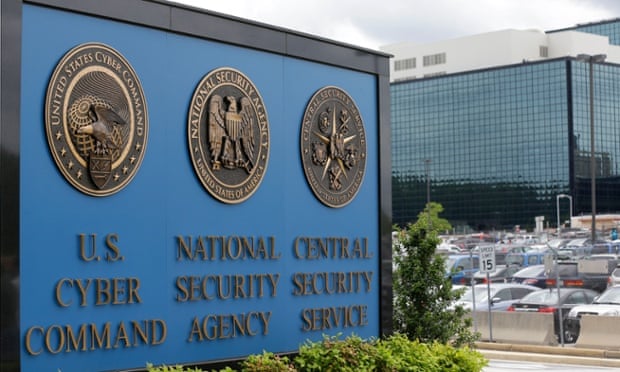
NSA After the Edward Snowden leaks not enough has been done to stop mass surveillance. Photograph: Patrick Semansky/AP

One of the documents that Edward Snowden delivered to American journalists two years ago was a now-infamous NSA slide titled “New Collection Posture.” The slide summarizes, in surprisingly candid terms, the objective of the largest, most powerful surveillance agency on the face of the earth. ‘Collect it all’, it says.

The idea is that the NSA needs to vacuum up everything it can — because, well, one never knows what information might one day become useful. You can’t find the needles unless you have a haystack, intelligence officials say. You can’t connect the dots unless you first collect the dots. ‘Collect it all’ is a mentality, a mindset.

But ‘collect it all’ is also a legal theory and the significance of Thursday’s extraordinary ruling from an appeals court in New York is that it rejects this theory — or at least one manifestation of it. The government relies on a provision of the Patriot Act to collect the call records of hundreds of millions of Americans — the vast majority of them, needless to say, not suspected of having done anything wrong. On its face, the Patriot Act provision permits the government to collect records that are “relevant” to authorized investigations, but the government argues that everything is relevant because anything might be — one day.

Thursday’s decision rejects this argument categorically. “The interpretation the government asks us to adopt defies any limiting principle”, the court writes. To adopt it, the court observes, would permit the government to appropriate any private collection of data into a government database for future review. This, the court writes: “would be an unprecedented contraction of the privacy expectations of all Americans.”

The decision focuses on the NSA’s call-records program, but its implications are broader. This is because the same defective legal theory that underlies the call-records program is at work in some of the NSA’s other mass-surveillance programs as well. The NSA once collected the internet metadata of millions of Americans, arguing that all of the data was relevant because some of it might be. The CIA is reported to be amassing records of international financial transactions on the same theory. And, until recently, the Drug Enforcement Administration operated its own massive call-records database.

Right after the appeals court’s decision, Senator Richard Burr, the chair of the Senate Intelligence Committee, appeared to disclose that the NSA is also collecting Americans’ IP addresses in bulk, presumably in an effort to assemble a massive database documenting Americans’ activities online. As Marcy Wheeler, who first noticed the disclosure, has since pointed out, the disclosure has mysteriously disappeared from the congressional record. There’s some murkiness about precisely what Burr meant, but there’s no question that Burr’s IP-address dragnet would be an unremarkable extension of the government’s collect-it-all logic.

Thursday’s decision was about the call-records program, but the government will have to consider its implications for other programs as well, including ones that have yet to be officially disclosed to the public.

But perhaps the more immediate effect of Thursday’s decision will be on the debate now unfolding in Washington. The Patriot Act provision that underlies the call-records program is scheduled to sunset on 1 June, and over the next three weeks Congress must decide whether to reauthorize the provision, scale it back or allow it to expire. The appeals court’s decision should strengthen the hand of advocates who believe the revisions currently being considered by Congress don’t go far enough, and it should strengthen the resolve of legislators who have been pushing for more comprehensive reforms.

If Congress can’t coalesce around more comprehensive reform, the best course would be to let Section 215 expire. The intelligence community hasn’t even attempted to make a serious case that this authority is actually necessary. And as the recent ruling reminds us, it’s an authority that’s been grossly abused already and that could readily be abused again.

The court has done its part. Now it’s Congress’s turn.

May 052015
 

In follow-up to:  2015-04-24   Former PM Jean Chrétien to meet with Vladimir Putin in Moscow :

http://ottawacitizen.com/news/politics/the-gargoyle-trudeau-mum-on-chretien-putin-meeting

By Jesse Winter

Former prime minister Jean Chrétien.

Former prime minister Jean Chrétien.   CP


Justin Trudeau is keeping mum about former prime minister Jean Chrétien’s recent visit to Moscow.

First, Trudeau’s spokesman, Cameron Ahmad, said the leader won’t comment on whether he was given a heads up or not that Chretien was planning to meet with Russian President Vladimir Putin. Second, he also wouldn’t say whether Trudeau supports the former Liberal chieftain reaching out to Putin.

Chrétien met with Putin on Thursday in Moscow in his role as co-chair of the InterAction Council, a group of former world leaders who advocate for global peace and security, economic revitalization and universal ethical standards.

According to an InterAction Council press release, Chrétien and Putin were to talk about the state of relations between Russia and the West – currently pretty frosty.

The Canadian government in particular has been taking pains to shun Putin politically. Prime Minister Stephen Harper and his government have used decidedly strong language condemning Putin and urging Russia to “get out of Ukraine.”

The government recently announced a two-year mission that will see Canadian soldiers training Ukrainian fighters as they face Russian-backed separatists in a shaky ceasefire in the country’s east. That brings the Canadian support for Ukraine to more than $400 million.

Harper’s spokesman, Stephen Lecce, says the government wants to know what Chrétien told Putin. “Mr. Chretien was clearly not representing the Government of Canada at this meeting. Our Government’s position on the Putin regime is clear,” he said.

A spokesperson for Chrétien did not return a call for comment. It’s expected that Chrétien will report the details of his conversation with Putin when the InterAction Council meets in Wales this June.


May 042015
 

By Reid Robinson, The Starphoenix May 4, 2015

Robinson was an administrator at the University of Regina for many years, serving as dean of arts, associate vice-president academic and university secretary.


A recent article by Marina Warner, of the Man Booker Prize committee for 2015, illustrates the deep malaise that is afflicting universities in the United Kingdom. It was entitled Learning my Lesson: The Disfiguring of Higher Education. She ruminates on her own experience as a professor at the University of Essex and provides chapter and verse for her pessimistic analysis. Warner is particularly critical of “managerialist philistinism” that is wrecking the ideal of emancipation through learning.

What relevance does this have to the Canadian experience? Regrettably, some of the more disastrous developments in the U.K. system worm their way into the Canadian system. And “managerialist philistinism” is no stranger to the Canadian scene.

The managerialist approach is accomplished by hiring presidents who see themselves primarily as CEOs rather than academics, and their pay must be CEO-appropriate. At University College London, student protesters at a recent demonstration pointed out that the annual salary of the provost (vice chancellor) could cover the annual wages of about 20 employees on the university’s cleaning staff.

Over the past 10 years, the extraordinarily rapid increase in provost salaries in the U.K. has been mirrored in the increase in presidents’ salaries in Canada. Also in the scramble to be seen to be “accountable,” myriad expensive gatekeepers have been hired to swell the ranks of senior administration.

This diversion of a significant amount of money from teaching and research into administration has consequences, as evidenced in the recent troubles of York University and the University of Toronto. A disproportionate amount of teaching responsibility has been farmed out to lowly paid temporary employees, with inevitable outcomes.

A significant problem that faces Canadian universities is funding. How much comes from government and how much comes from students? This is becoming a major political issue in many provinces.

Consider two very different approaches being taken in the U.K. In England, a revolutionary change was recently introduced to provide the government with substantial savings in university grants. The total cost of the teaching component was charged directly to the student. Thus, typical student fees are now in the range of $17,000.

This was accompanied by an elaborate student loan scheme whereby this cost is all covered, and repayment of the loan is only due over a long-term period (but with interest charged) after the student has graduated and has an income of more than $40,000. The long-term consequences of this approach have yet to be seen, but alarm bells are ringing in that students will start off their professional lives with the equivalent of a mortgage hanging around their necks. The other concern is the perceived long-term default rate.

An immediate consequence is the enormous incentive universities now have to generate income by recruiting students, especially international students who are charged more. Bluntly, many students are inappropriately being persuaded to attend university, with horrendous consequences.

Scotland is using an entirely different approach. Tuition is free for all Scottish students. On his last day in office just after the referendum, First Minister Alex Salmond of the Scottish National Party unveiled a stone monument at a university in Edinburgh, paid for by the Scottish government, that was inscribed with the words he had previously used in the Scottish Assembly: “The rocks will melt in the sun before I will allow tuition fees to be imposed on Scottish students.”

How the issue of student fees in Canada will be dealt with is of enormous importance. It will be of considerable interest to see how these issues play out in Scotland and England. In the present election campaign in the U.K., the Achilles heel of the Liberal Democrats has been their about-face in campaigning in 2010 for abolition of student fees, and then supporting a tripling of fees when they were part of government.

Let’s all hope that the despairing pessimism expressed by Marina Warner about university experience in the U.K does not take root in Canada. Let us, at least, avoid like the plague “managerialist philistinism.”


Apr 292015
 

The system of closed-door trade tribunals has been around for decades now, nestled like a ticking time bomb into hundreds of smaller bilateral trade agreements between nations. (Photo: Backbone Campaign)The system of closed-door trade tribunals has been around for decades now, nestled like a ticking time bomb into hundreds of smaller bilateral trade agreements between nations. (Photo: Backbone Campaign)


http://fpif.org/the-case-that-blew-the-lid-off-the-world-banks-secret-courts/

There’s an international awakening afoot about a radical expansion of corporate power — one that sits at the center of two historic global trade deals nearing completion.

One focuses the United States toward Europe — that’s the Transatlantic Trade and Investment Partnership (TTIP) — and the other toward Asia, in the Trans-Pacific Partnership (TPP). Both would establish broad new rights for foreign corporations to sue governments for vast sums whenever nations change their public policies in ways that could potentially impact corporate profits.

These cases would not be handled by domestic courts, with their relative transparency, but in special, secretive international tribunals.

It’s a stupendously powerful tool and a double win for the corporations: It’s a money machine that loots public treasuries and a potent tool to stifle unwelcome regulations, all wrapped in one. As Senator Elizabeth Warren recently wrote in the Washington Post, “Giving foreign corporations special rights to challenge our laws outside of our legal system would be a bad deal.” But it’s a deal U.S. lawmakers are rapidly preparing to make as they debate extending “fast-track” trade promotion authority to President Barack Obama.

The system of closed-door trade tribunals has been around for decades now, nestled like a ticking time bomb into hundreds of smaller bilateral trade agreements between nations. But not so long ago, the trade tribunal system wasn’t the stuff of high-profile op-eds by U.S. senators. It was virtually unknown except among a small cadre of international lawyers and trade specialists.

The case that brought the system into broad public view was born 15 years ago this month on the streets of a city high in the Andes. How that case was won holds powerful lessons today for the battles over the TTIP, the TPP, and the effort to hand global corporations enormous new legal powers.

The Water Revolt

It started here in Cochabamba, Bolivia, in April 2000, when citizens rebelled against the takeover of their public water system by a foreign corporation.

In what became known as the Cochabamba Water Revolt, thousands of Bolivians faced down bullets and batons to take back their water from Bechtel, the California engineering giant. Within weeks of taking over the local public water system, Bechtel’s Bolivian company had hit water users with price increases averaging more than 50 percent, and often far higher. Families faced stark choices between keeping water running from the tap or food on the table.

So they rebelled.

Protesters shut down this city of half-a-million people three times with blockades and general strikes. The right-wing government sent in soldiers and police to defend Bechtel’s contract, killing a teenage boy and leaving hundreds of others wounded. But the protests only increased, and finally Bechtel was forced to flee Bolivia, returning the water to public hands.

A year later, however, Bechtel struck back — this time in a World Bank trade court. The company demanded not only the $1 million it had invested in the country, but a full $50 million — the rest being the future “profits” the company claimed it had forgone by leaving.

Bechtel’s case against Bolivia sparked a second rebellion. This one was global and just as powerful, a citizen action campaign that stretched worldwide. In the end, Bechtel would walk away not with the $50 million that it demanded from Bolivians, but just 30 cents and a badly damaged public image. The case also ripped the mask off a system of secret trade courts that today sits at the heart of the trade debate.

A System Designed for Corporate Advantage

Here in Bolivia, a soccer team from anywhere else would be foolish to play a match against a Bolivian team in La Paz, the nation’s capital. At nearly 13,000 feet above the sea, most foreigners find it a serious challenge just to climb a staircase, much less chase a ball for 90 minutes.

The legal venue chosen by Bechtel — the World Bank’s International Center for the Settlement of Investment Disputes (ICSID) — has a similar quality. It’s a playing field tilted deeply to corporate advantage.

It’s no small irony that Bechtel went to the World Bank, since it was the World Bank that set the Cochabamba Water Revolt in motion to begin with.

In 1997, World Bank officials made the privatization of Cochabamba’s public water system a condition of loans the bank was issuing to expand water service in the country. So Bolivia’s government was compelled to offer a 40-year lease to Bechtel, complete with a guaranteed annual profit of 16 percent — a gouging deal backed by the willingness of the government to shoot its own people if required.

The World Bank’s ICSID and other international tribunal systems are a corporate dream. The tribunals that decide these cases are made up of lawyers who move from being highly paid corporate defenders in one case to supposedly impartial judges in the next, a blatant conflict of interest. It’s a system where testimony is commonly sealed and where cases are heard thousands of miles away from the communities involved.

Unsurprisingly, corporations win either a full or partial victory more than half the time.

The Court of Public Opinion


The citizen campaign that took on Bechtel refused to wage its fight in the confines of Bechtel’s carefully chosen judicial comfort zone.

The organization I run, the Democracy Center, and our Bolivian and global allies took aim at Bechtel instead on the battlefield where citizen movements do best: the court of public opinion. That campaign became a powerful early prototype for how to organize in the age of the Internet, driven not so much by an orchestrated grand plan as by sheer, viral inspiration.

Through our own articles and our work with journalists from the New Yorker, PBS, and elsewhere, the Democracy Center kept telling, over and over again, the powerful narrative of a David and Goliath victory on the streets of Cochabamba. Water Revolt leaders from Bolivia also traveled across the world to share their story directly.

We hung that story not just around Bechtel’s corporate neck, but the neck of its CEO and namesake, Riley Bechtel. We even released his personal email address to thousands of people. As people reached out to us to get involved, we armed them with the hard evidence and some advice on strategy, encouraging them to take whatever action they were moved to take that could build pressure on the corporation.

The result was a beautiful, global spectacle of citizen power.

In San Francisco, activists shut down Bechtel’s headquarters by chaining themselves together in the lobby. A local coalition also got the San Francisco Board of Supervisors to pass a city resolution calling on Bechtel to drop its Bolivia case — just as the company was negotiating a major city contract.

In Amsterdam, people mounted a ladder outside Bechtel’s local office and renamed the street for the teenager killed by soldiers during the Cochabamba Revolt. In Washington, protesters picketed the house of the president of Bechtel’s Bolivian water subsidiary. At the South Africa Earth Summit, Bolivian activist Marcela Olivera recruited organizations to join a “Citizens Petition to the World Bank” calling on Bechtel to drop the case. EarthJustice filed a legal petition demanding public participation, and the Institute for Policy Studies mobilized Washington NGOs.

From one corner of the world to another, Bechtel was seized upon by angry Lilliputians tying a mighty corporate Gulliver to the ground.

The Power of Storytelling

In January 2006, besieged Bechtel officials flew to Bolivia and signed a deal with the Bolivian government under which it dropped its World Bank case for two shiny 1 boliviano coins — the cost of a local bus fare. No other major corporation, before or since, has ever been forced to drop such a major trade case by a campaign of citizen pressure waged against it.

In the end, Bechtel was defeated by something very simple: a story. It was a narrative about people fighting for their water, and of a corporation content to see them killed in order to squeeze the poor for profits it never earned. The mighty corporation could never escape the moral power of that story. We hit Bechtel with it using not just one tactic, but every tactic we could think of — from legal briefs to direct action. We didn’t waste time debating which approach was more worthy.

The trade battles before us today, including the TPP and TTIP, must also be fought with stories that lift the issue above technical jargon and into popular understanding.

And there’s no shortage of stories to tell. The tobacco giant Phillip Morris demands $2 billion from Uruguay for the sin of strengthening health warnings on cigarette packages. The people of El Salvador face a $300-million case from a Canadian-Australian mining company because El Salvadorans were able to block toxic mining operations. Germany faces a demand of €700 million from a nuclear energy company because, in the aftermath of the Fukushima disaster, popular movements won a moratorium on new nuclear power plants in the country.

Telling the stories of cases like these is essential to building a broader public understanding of what’s at issue in these arcane negotiations: a corporate power play against basic democracy.

“It is impossible to overstate the impact of the people’s victory in Cochabamba against Bechtel,” Noami Klein observed recently. “At a time when winning real victories seemed like a distant dream, we suddenly saw that it was still possible to win, even against a giant U.S. multinational.” In the battle of the Bolivian people against Bechtel, David beat Goliath not only once, but twice. In the midst of the current battles on trade, the spirit of both those victories and their concrete lessons well deserve our remembrance.

Jim Shultz is executive director of the Democracy Center and lives in Cochabamba, Bolivia. He tweets at @jimshultz.


Apr 282015
 

http://www.theglobeandmail.com/news/politics/former-pm-jean-chretien-to-meet-with-vladimir-putin-in-moscow/article24124208/

Former prime minister Jean Chrétien met with Russian President Vladimir Putin in Moscow in 2002. (Fred Chartrand/The Canadian Press) Former prime minister Jean Chrétien met with Russian President Vladimir Putin in Moscow in 2002. (Fred Chartrand/The Canadian Press)

  (Note:  go to the URL to see the Comments on the article.)


Apr 282015
 

2015-04-20-1429571893-9271908-maudeandangela.jpg


By Sujata Dey

Berlin — Yesterday (April 20, 2015),  Maude Barlow, national chairperson of the Council of Canadians, challenged the Canada-European Union Comprehensive and Economic Trade Agreement (CETA) and other trade deals in a panel discussion with German Chancellor Angela Merkel. During the panel, Chancellor Merkel presented her G7 presidency priorities.

“While the themes of the 2015 G7 are laudable — combatting poverty, infectious disease and hunger; protecting the climate; and empowering women — the trade policies of the G7 countries have actually contributed to all the problems they are going to be discussing,” said Barlow. “These trade deals will exacerbate growing inequality and a deteriorating environment.”

Barlow appealed to German and European leaders to reject CETA and its investor-state dispute settlement provisions, which allow corporations to sue countries over labour, environmental and social standards that impede profits.

On Saturday, as part of a International Day Against Free Trade Agreements, thousands of people in Germany — including 23,000 in Munich — protested free trade agreements, in particular CETA and the Transatlantic Trade and Investment Partnership (TTIP), the U.S.-EU free trade deal. Opposition against CETA and TTIP is strong in Germany, with many German leaders outright opposing the provisions allowing corporate lawsuits.

“CETA and TTIP export the worst of each continent to the other continent. They undermine the higher food, safety and environmental regulations in Europe by allowing North American companies to challenge these standards. And they impose higher drug prices on North America as they extend patent protections there. Also, they give European companies access to municipal and public services, leading to privatization. These deals favour the one per cent at the expense of the public interest,” adds Barlow.

Barlow also cautions European leaders who have expressed hope that these deals could provide them access to cheap energy.

“European alternative energy production and energy conservation policies are models for the world. North American North American Energy– fracking and tar sands– are dangerously unsustainable. Greater access to oil is not going to help Europe or the planet.”

The panel was part of a G7 Civil Society Dialogue Forum hosted by the German NGO Forum on Environment & Development, VENRO (the Association of German Development and Humanitarian Aid NGOs) and the German G7 presidency.

The audio recording of the event can be found here.

Photos can be found here.

Photo: World Future Council

Apr 262015
 

Note:

  • the tour includes a location near Orillia ON.
  • Saturday, May 23rd is the next international March Against Monsanto.  A list of the Canadian events and links to other information  is at http://sandrafinley.ca/?p=9497

Back to Neil Young:

http://www.rollingstone.com/music/news/neil-young-recording-new-album-with-willie-nelsons-sons-20150108

Lukas Nelson and Neil Young

Neil Young will bring Willie Nelson’s sons Lukas (pictured) and Micah to promote their new album ‘The Monsanto Years’

Neil Young and Promise of the Real, a band featuring Willie Nelson’s sons Lukas and Micah, will hit the road this summer in support of their upcoming album together, The Monsanto Years. Young’s new LP will reportedly arrive on June 16th according to a press release sent to promoters, while the Rebel Content Tour itself will kick off July 5th at Milwaukee’s Summerfest.

For years, Young has railed against Monsanto, the chemical company specializing in genetically modified seeds. In January, Young revealed that he was working on an album called The Monsanto Years, but the rocker appeared to be joking about the title at the time. “I’m working on another album now that I’m going to be doing with Willie Nelson’s sons,” Young said. “It’s an upbeat review of the situation.”

At a surprise concert April 16th at San Luis Obispo, California’s SLO Brewing Co., Young and Promise of the Real debuted 11 new tracks that might appear on their joint LP. Those songs boasted protest-minded titles like “Monsanto Years,” “Rock Starbucks,” “Seeds” and “Too Big to Fail,” fan site Sugar Mountain reports. Young had previously teamed with the Nelson brothers at Farm Aid and the Bridge School Benefit.

According to the Burlington Free Press, Young’s Rebel Content tour will feature the rocker’s first ever concert in Vermont. The newspaper speculates that Young is rewarding the Green Mountain State for their stance on genetically modified organisms, or GMOs. Vermont passed a law requiring companies to list whether their food contained GMOs, and in a note to fans, Young called for a boycott of Starbucks for their part in the effort “to sue Vermont, and stop accurate food labeling.” The coffee giant later clarified that they were not involved in the lawsuit against Vermont.


Apr 212015
 

http://www.lfpress.com/2015/04/20/governor-general-paved-the-way-for-chakmas-double-dip

Governor General of Canada David Johnston (Postmedia Network)

Governor General of Canada David Johnston (Postmedia Network)

Related Stories

Long before public outrage over double-pay wobbled the future of the  head of Western University, another academic ushered into Canada an era of perks and payouts — our current Governor General, David Johnston.

Johnston came to Rideau Hall in 2010 as a heralded choice but also with pay cheques and benefits from the University of Waterloo that year and the next totalling $1.67 million. Most of that came from contracts that entitled him to two years of paid leave, Ontario Sunshine Law disclosures show.

Johnston didn’t reply to questions Monday e-mailed to his spokesperson from The Free Press.

But Richard Leblanc, a Toronto lawyer who advises boards and teaches at York and Harvard universities, said Johnston paved the way for other university executives. ​

That should concern taxpayers, students and faculty alike. Though Johnston and others borrowed private-sector perks, they did so without many of the controls that keep in line the leaders of publicly traded companies.

“They need adult supervision,” Leblanc said. “They want the perks without the constraints.”

Other university heads followed Johnston’s lead, cashing out when they left office with fully paid administrative leave. Such provisions are common across Canada, The Free Press has found, not only at the country’s biggest schools but some of its smallest: Two years ago, the principal of tiny Brescia University College in London, Colleen Hanycz, was paid $444,386 — more than the president of the University of Toronto.

But those payouts flew mostly under the radar until Western’s Amit Chakma took in $967,000 in salary and benefits last year.

Chakma blundered by taking it midway through his tenure and in a way that rubs average Joes the wrong way: Double dipping, collecting a regular salary and then getting a second for forgoing an administrative leave.

“He became a lightning rod,” Leblanc said Monday.

A public storm it was after The Free Press reported Chakma’s double pay, a second massive payout in 2009 from Waterloo and his option to double dip again in 2019. Last week, 30 Western senators voted for a non-confidence motion in Chakma and another five to abstain — about 42% of the total.

That’s a crippling blow, said Leblanc, who suspects Western board members are now debating whether to back Chakma or cut bait.

It was Johnston who changed what it meant to be a university president in Canada, said Leblanc: Predecessors focused on how schools functioned; he turned outwards to push for donations, a path also taken by Chakma.

This new cadre face little incentive to spend wisely when they can cut costs by growing class sizes and replacing tenured professors with cheaper contract teachers.

“There’s no pressure for (management) efficiency,” Leblanc said.

The Ontario NDP wants to ban double dipping and cap executive pay, but if the cap is too low, universities may bleed talent, he warned.

The better fix is to mimic what’s done at publicly traded companies:

— Set performance targets that measure not just cost but quality and report them publicly to tax payers.

— Link targets to executive pay.

— Recruit board members with certain skills so they can provide oversight to administration rather than serve as a rubber stamp.

— Make the whole board review the presidential contract rather than a small executive committee.

— Create a code of conduct and whistle-blowing provisions.

— Require independent audits.

“Universities have largely been immune (from controls),” he said. Governments must force changes.

The uproar in London has reached phones at the Canadian Taxpayers Federation. “We need more accountability,” said Christine Van Geyn, the federation’s Ontario director.

jonathan.sher@sunmedia.ca

Twitter.com/JSHERatLFPress​

— — —

David Johnston’s pay and pension set a benchmark, observers say:

— Car allowance with no hard cap

— $3,000 for legal, money and tax advice

— $500,000 loan at 3% interest to get a home at a time when the rest of us paid an average of 6.73% for a fixed five-year mortgage.

— A souped-up pension that could pay him as if he had twice as many years of service than he did.