Sandra Finley

Apr 082018
 

http://www.dailymirror.lk/article/Punishment-of-Julian-Assange-is-political-not-legal-148445.html

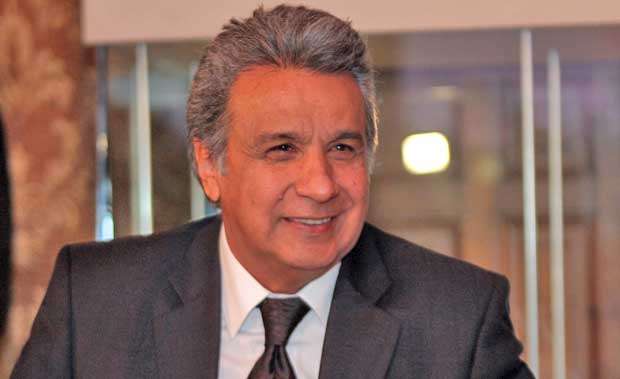
Ecuadorian President Lenin Moreno


Recent reports that the Ecuadoran government has blocked internet / phone access and disallowed visitors to Wikileaks founder Julian Assange – who has been holed up in the Ecuadoran Embassy in London for five and a half years – point to the latest in a series of moves apparently generated by US pressure, in what seems to be a concerted attempt, along with its allies, to subject the controversial whistle-blower to punishment outside of any legal process. Assange has been confined to the embassy building since he was granted political asylum by Ecuador in 2012.  His physical and mental health have reportedly suffered on account of his isolation, which has now been intensified by jamming his electronic communications.
According to reports, two months ago when Assange lost his bid to overturn the arrest warrant issued by UK authorities, the judge, maintaining that Assange had ‘restricted his own freedom,’ said that “in contrast to most prisoners he enjoyed access to a computer, mobile phone and the internet.” These are the very facilities that he is now deprived of, making his conditions even more like those of a sentenced prisoner.
Assange has never been charged. He fears that if he steps out of the embassy he will be arrested and extradited, eventually to the US, where he could be tried for espionage based on Wikileaks’ publication of thousands of classified US documents exposing shocking conducts of the US military in Iraq and Afghanistan. His lawyers have said he could face the death penalty there.
In a statement explaining its move, the Ecuadorean Government has said that “the conduct of Assange via his messages on social media puts at risk the good relations that Ecuador maintains with the United Kingdom, the European Union and other nations.”  The conduct in question is said to be Assange’s tweeting of his views on the Catalonian crisis.


“Assange has never been charged. He fears that if he steps out of the embassy he will be arrested and extradited, eventually to the US, where he could be tried for espionage based on Wikileaks’ publication”

In Ecuador’s 2017 presidential election in which current President Lenin Moreno took office, it was his conservative opponent who threatened to evict Assange, while Moreno had said he could stay, reports say.  It was Moreno’s government that granted Assange Ecuadorean citizenship in December, to provide him with ‘another layer of protection,’ and sought to give him diplomatic immunity. All of this would suggest that there has been recent outside pressure on Ecuador on this issue.
With Swedish prosecutors having last year formally dropped their investigation into rape allegations in Sweden, all that the UK authorities are left with to justify Assange’s arrest is the argument that he ‘skipped bail’ when he took refuge in the Ecuadorean embassy.  Now, recent revelations of email correspondence between Sweden’s prosecutors and Britain’s Crown Prosecution Service (CPS) have added credence to the view that Assange’s plight has more to do with mala fide intentions of those who wish to see him punished, than any pursuit of justice. It appears that the last four years of Assange’s imprisonment in the embassy have been entirely unnecessary.  “In fact, they depended on a legal charade” wrote Jonathan Cook in Counterpunch in February.


““His only ‘crime’ is that of a true journalist — telling the world the truths that people have a right to know” 

Cook reveals that Sweden actually wanted to drop the extradition case against Assange back in 2013. “Why was this not made public? Because Britain persuaded Sweden to pretend that they still wished to pursue the case” he said.
“According to a new, limited release of emails between officials, the Swedish director of public prosecutions, Marianne Ny, wrote to Britain’s Crown Prosecution Service on October 18, 2013, warning that Swedish law would not allow the case for extradition to be continued,” he wrote. Cook further said that the CPS destroyed most of the emails relating to this correspondence, contrary to CPS protocols, and that only fragments remain.
In 2016, a UN working group ruled that Assange was being arbitrarily detained by the governments of Sweden and UK, and that he was entitled to his freedom of movement, and to compensation. Both British and Swedish authorities disregarded the ruling, with the British Foreign Secretary reported as saying it was “frankly ridiculous.”

Wikileaks founder Julian Assange


Following the announcement that Assange’s internet and phone access has been cut off, journalists, artists, intellectuals and high profile personalities including ex-CIA officials have rallied to his support, gathering outside the embassy and sending appeals to the Ecuadorean government to allow him his right to freedom of speech.
“His only ‘crime’ is that of a true journalist — telling the world the truths that people have a right to know” said a group that included American linguist and political theorist Noam Chomsky, Australian journalist/ film-maker John Pilger, Slovenian philosopher Slavoj Zizek and many other high profile figures.In an open letter published online they called on president Moreno to end the isolation of Assange, saying Ecuador’s government was justifying the gagging of Wikileaks’ publisher “under extreme pressure from Washington and its collaborators.”


“The conduct of Assange via his messages on social media puts at risk the good relations that Ecuador maintains with the UK, EU and other nations”

“This censorious attack on free speech is not happening in Turkey, Saudi Arabia or China; it is right in the heart of London… If the EU and the UK continue to participate in the scandalous silencing of a true dissident in their midst, it will mean that free speech is indeed dying in Europe,” they wrote.
Zizek in a separate article in Defend Democracy Press noted that “Ecuador is a small country, and one can only imagine the brutality behind-the-scenes pressure exerted on it by Western powers to increase the isolation of Julian Assange from the public space.”  He said Assange “is not spying on the people for those in power, he is spying on those in power for the people. This is why the only ones who can really help him now are we, the people.”
As Jonathan Cook asks:“One has to wonder at what point will most people realise that this is – and always was – political persecution masquerading as
law enforcement.”

Apr 062018


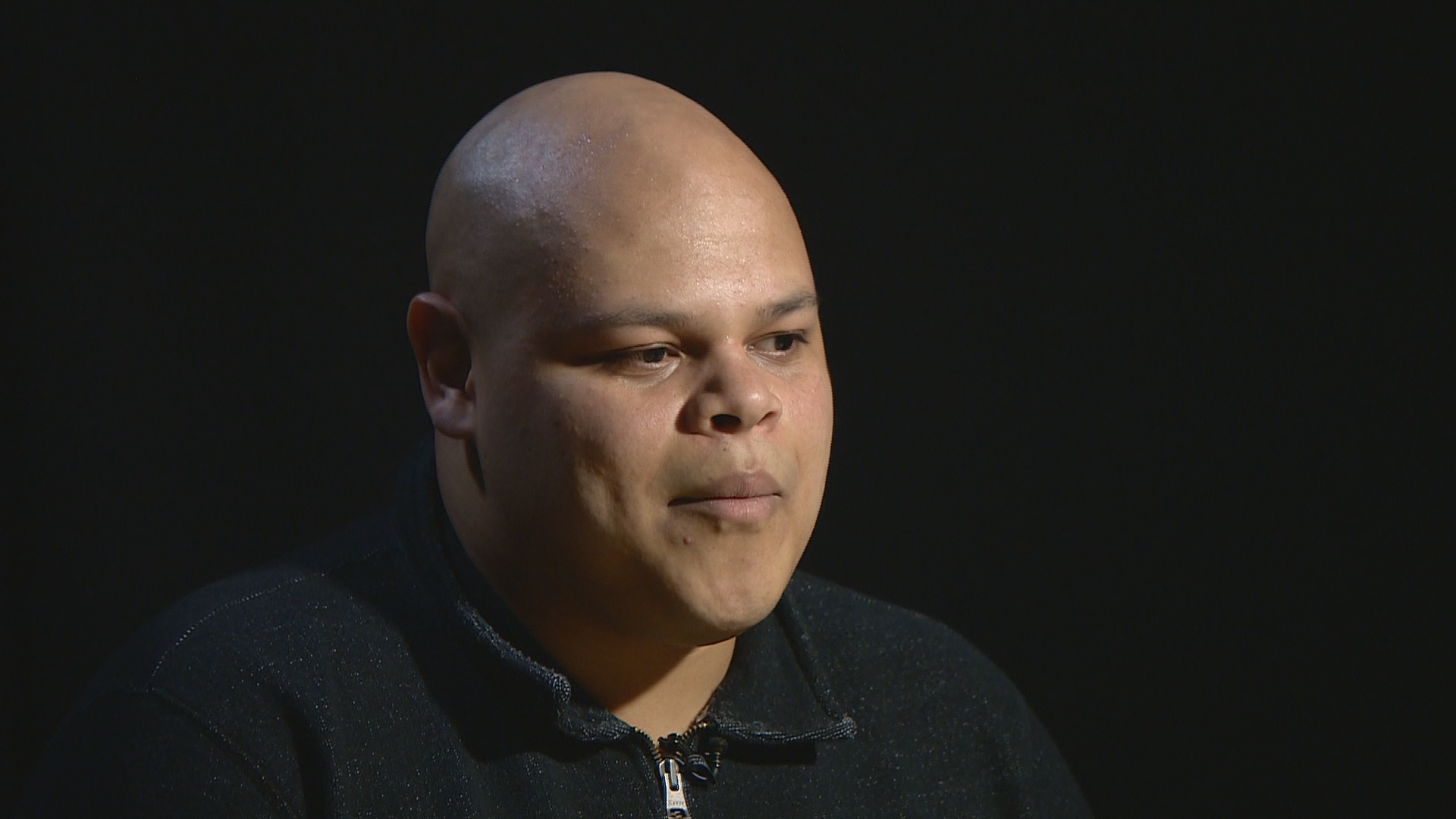
The young author in this interview is profound.

RECOMMEND:   Go to the URL.  Below is a back-up copy (there are a couple of missing audio links). 

http://www.cbc.ca/radio/thecurrent/we-re-competing-with-extremists-for-our-young-people-s-futures-says-author-who-escaped-gang-culture-1.4606013

Jamil Jivani’s new book looks at the alienation that can lead to young people becoming radicalized. (Wim Van Cappellen/Harper Collins Canada)

We’re competing with extremists for our young people’s futures, says author who escaped gang culture

When Jamil Jivani was eight years old, he and his father were stopped by police in Brampton, Ont.

“He was harassed and made to sit on the curb like a criminal, and yelled at and bullied in front of me,” the lawyer and author remembers.

“It hit me so hard and it made me think: ‘Well I guess when I grow up to be a man that’s what I’m going to have to experience too.'”

Jivani, now 30, struggled with his identity in his teens and felt the pull of violence and crime. He also became involved with a radical group — the Five Percent Nation — both online and through attending meetings.

Despite this early experience of alienation, he became an author, activist, and graduate of Yale Law School.

He told The Current’s Anna Maria Tremonti that when children feel rejected by authorities or societies that are supposed to protect them, it “sends a message that the world isn’t here for you.”

He said this may leave them vulnerable to others with dangerous ideologies, from gangs to political extremists, to step in and offer the promise of fixing the world — if you’re willing to fight on their terms.

It’s the subject of his new book Why Young Men: Rage, Race and the Crisis of Identity.

Jamil Jivani in studio with Anna Maria Tremonti. (CBC)

Make young people see their potential

Jivani was a disengaged student who failed his Grade 10 literacy test. The experience left him feeling stupid and “almost like a broken person,” he recalls.

“I was a set of pieces that were waiting to be put back together,” he said.

“With the right or wrong influences around me, I could have been turned into anything.”

Combating the problem is a matter of making young people feel like they are key to the future of humanity, he said.

“The more you can make young people feel that level of responsibility, and feel that level of leadership, the more I think you can get greatness out of them.”

“But when people are doing that to get the worst forms of rage and violence out of them, we’ve seen that it works.”

The National
Why Young Men Become Radicalized

In the notorious neighbourhood of Molenbeek in Brussels, a Canadian finds insight into the roots of radicalization. 11:40

Being ‘a tough guy’

His teenage years were spent getting in fights and trouble in school, and trying to be “a tough guy” involved in gang culture, like the men he saw in popular culture.

Things came to a head when he asked a friend to buy him a gun.

“He quoted me a price, and told me: ‘Just let me know when you want it.'”

Jivani went home and cried.

“I remember thinking: ‘Wow, I had the chance to be the tough guy that I fantasized I would want to be, when I listen to rap or watch movies — and I almost had my bluff called.'”

He never got the gun, because he realized that it would prove the prejudice that others felt about him. He also didn’t want to lose his mother.

“The only good thing I had in my life at that point was my mother,” he says, “and I really felt like I might cross the line if I had a gun, where she might give up on me.”

With the right or wrong influences around me, I could have been turned into anything.– Jamil   Jivani  

It was a turning point, but not an easy one. Jivani writes about “the capacity to aspire”: the tools and opportunities available to young men who want to change their lives.

While many are limited by financial or educational opportunities, he points out that young people can also be constrained by their own imaginations.

“Doing the work as a society to provide them with an understanding of the diversity of things that they’re capable of is so important,” he said.

The Current
Jamil Jivani on his cancer diagnosis
00:00 01:35

Jivani says that facing his own mortality has made writing a book about his experiences more meaningful. 1:35

Jivani wants people to realize that this is a competition for our young people’s futures.

It may seem like a lost cause sometimes, he said, but you have to hang on for that breakthrough moment.

“You have to be actively involved in their life,” he said, “be passionate about supporting them and empowering them.”

Show them that you care, he adds, about their lives, their friends, even about what they’re reading on the internet.

“They’ll see that passion,” he said, “and they need it.”

Listen to the full conversation at the top of this page, where you can also share this article across email, Facebook, Twitter and other platforms.


This segment was produced by The Current’s Howard Goldenthal.


Mar 292018
 
Also regarding Hotez:
Published March 26, 2018 | Best in Video

Click on:

http://www.thevaccinereaction.org/2018/03/baylors-doc-hotez-bullies-parents-of-vaccine-injured-children-barbara-loe-fisher/

Many years ago when I was having a conversation with a senior official at the Centers for Disease Control during a public engagement meeting, we explored the reason for why public health officials and parents of vaccine injured children were at such odds with each other. I said it was because we disagreed about the science. He said no, it was a disagreement over values and beliefs. Recently, a physician dean at Baylor University College of Medicine made it clear that it is a lot about doctors getting off on demonizing and bullying parents of vaccine injured children.


Mar 272018
 

I posted the official news of this earlier:    2018-03-06   Significant. European Court of Justice rules on ISDS (Investor State Dispute Settlement) clauses.

The importance of this article:  community-based publications operating to put important information like this into the hands of everyday people.  AND! some repetition is good for my memory!


With thanks to Janet E:

Quotes from Nick Readon, and Pia Eberhardt herein who have both written about implications of ISDS regarding the Digby Neck Quarry and who were leaders in EU coalitions to stop ISDS in CETA.

See info on The Big Issue North independent street newspaper at bottom of e-mail

fyi-janet

==============================

https://www.bigissuenorth.com/news/2018/03/beginning-end-secret-corporate-courts/#

By Clare Speak

Transparency campaigners are celebrating after the highest court in Europe
ruled that offshore courts allowing multinational corporations to sue governments
are not legal.


These courts, known as investor-state dispute settlement (ISDS) tribunals, exist outside national or European legal systems. They usually meet in secret, give no right of appeal and, in the majority of cases, rule in favour of the corporations. It might sound like the stuff of dystopian nightmares but they have been around for two decades.


Found in the small print of most international trade deals, ISDS rules give big business the right to use these courts to sue over any measure that adversely affects their profits – including bringing in laws to protect public health and the environment.


“Dead in the water”


The rules have already been successfully used by businesses to sue countries countless times. Notable cases include French corporation Veolia suing the Egyptian government for raising the minimum wage, and US tobacco giant Philip Morris suing Australia after its government brought in plain cigarette packaging.


As these ISDS tribunals exist outside normal court system, including Europe´s judicial system, the European Court of Justice ruled that they are incompatible with EU law.


ISDS is best known as being part of the controversial Transatlantic Trade and Investment Partnership (TTIP), a planned EU-US agreement that sparked protests on both sides of the Atlantic. The rule is also found in the Comprehensive Economic and Trade Agreement (CETA), a similarly controversial deal between the EU and Canada, which has not been fully implemented yet because of disagreements over ISDS.


The ruling means TTIP is now “dead in the water”, campaigners say, and it´s also hoped to “spell the end of CETA as we know it”.


“ISDS not only violates EU law, it is also dangerous for democracy, taxpayer money and much needed policies, for example, to combat climate change. Now is the time to stamp out the excessive corporate privileges once and for all,” Pia Eberhardt, CEO of Corporate Europe Observatory, told Big Issue North.


“EU member states should terminate existing investment treaties and withdraw from the Energy Charter Treaty.”


The ECJ´s ruling came after one such court ordered the Slovakian government to pay EUR22 million (£19.4 million) in damages to Achmea, a Dutch healthcare company. The company sued using ISDS rules within a Netherlands-Slovakia trade agreement when the Slovak government decided to place limits on healthcare privatisation, which Achmea said harmed its potential future profits. When Slovakia refused to pay, Achmea then started proceedings against it in the German courts, which asked the ECJ to check whether this was compatible with European law.


ISDS is found in hundreds of similar international trade and investment deals already in effect worldwide. In European member states at least, these agreements will now no longer be viable.


Brexit effect


Eberhardt said ISDS-like parallel legal systems for corporations should now be scrapped from all EU trade deals, whether with Canada, Japan or the many other countries with which they are currently negotiated.


“The decision marks the beginning of the end of ISDS in Europe,” stated Laurens Ankersmit of environmental activist lawyers ClientEarth, adding that they were looking at legal options to force EU member states to end trade agreements containing ISDS if they did not do so voluntarily.


One country that is not expected to give up such agreements easily is the UK.


“As it´s leaving the EU, Britain might think it can avoid terminating its investment treaties with EU member states,” Nick Dearden, director of Global Justice Now, told Big Issue North.


The UK´s post-Brexit trade talks are the most secretive yet, Dearden added. This lack of transparency means any future UK-US deal is widely expected to contain many of the worst parts of the stalled TTIP deal, including ISDS.


“Transparency is much worse than with TTIP,” said Dearden. “At the moment our MPs have no ability to know what´s going on.”


He added that British MPs have “essentially no rights at all” when it comes to trade deals – they can´t stop them, amend them or even scrutinise trade minister Liam Fox.


While trade experts say the UK government is very likely to want ISDS in any future UK-US trade deal, the US might actually change its position.


Although the US has long been a proponent of corporate courts, there is now growing scepticism. US trade representative Robert Lightizer is not a fan, and the US has already proposed to partially scrap ISDS in its NAFTA trade deal renegotiations after it has caused endless hold-ups.


As public awareness and anger over the corporate court system continues to grow, Dearden says ISDS is now “coming under pressure globally” and points out it has been rejected in trade negotiations by countries from South Africa to Ecuador. If the US turns against ISDS too, the UK could be left struggling to find any trade partners willing to accept it.


Photo: “MPs have no ability to know what´s going on,” says Global Justice Now´s Dearden who delivered a petition against TTIP to the European Commission Buy this week’s mag Find a vendor


Big Issue North is a business solution to a social problem.


It´s a limited company employing staff to produce and distribute a weekly magazine that is sold by people who have limited other ways of earning an income in the North West and Yorkshire and Humber.


As well as selling the magazine, our vendors are given advice by staff on how to get help with anything from developing their skills or accessing English language courses, to getting housing, financial or health advice, which can help them achieve their goals and improve their lives for good.


Around 250 people sell Big Issue North each week. Big Issue North sellers buy the magazine from one of our regional offices for £1.25 and then sell it on established pitches in towns and cities for £2.50. They keep the £1.25 they make on every magazine.


Selling Big Issue North gives people the opportunity to earn an income. It also gives them motivation and self-esteem.


Big Issue North sellers are making a commitment to earn an income – working not begging.

Eighty five per cent of vendors have never begged and 64 per cent of those who have committed crime prior to selling the magazine say they have offended less since they have been selling.


The Big Issue North Trust is a registered charity (charity number 1056041), which raises funds to provide a range of support for sellers including support accessing services, help getting ID, home furnishing packages and projects such as breakfast clubs.


——————–


Big Issue North started in December 1992 as a Manchester supplement within the London-based Big Issue.


From there, Big Issue North grew as an independent publication distributed in the North West and Yorkshire and Humber. To expand the range of services that we offered to vendors, Big Issue North Trust was established in 1996.


A big fundraising campaign, plus National Lottery money and a regeneration grant from English Partnerships meant we were able to move into office in Manchester in 1998, with offices in Liverpool, Leeds, Sheffield and Hull to follow, along with sub-offices in Preston and Kendal.


Since becoming independent, we have retained close ties with Big Issue, sharing advertising and working together on common projects to support our vendors and improve what we do.


Big Issue North is also one of 112 street paper projects in 34 countries, which are supported INSP (International Network of Street Papers). INSP supports the development and sustainability of its members, and adds value to their work so that thousands of homeless vendors – more than 250,000 so far – can earn a living and improve their lives. INSP does this by providing a range of services and projects, including the annual Global Street Paper Summit and the INSP News Service.


Big Issue North and Big Issue North Trust are part of The Big Life group. Working across the north, Big Life is in the business of changing lives, creating opportunities for people who have the least.

Mar 262018
 

From: Sandra Finley
Sent: March 26, 2018 1:31 PM
To: The Sunday Edition
Subject: re March 25 Edition, commentary, Police malfeasance


Dear Michael Enright,     (CBC Radio, The Sunday Edition)


Yes, public trust in Canadian justice is undermined when Police malfeasance is brought to light.   It challenges the public image of the Police.

The examples cited in your commentary were of front-line officers, for example, lying under oath.

There was no mention of the higher-ups in the Policing organization.   Leadership has a large influence on the ethical behaviour of subordinates.


An excerpt from the book, “Social Media, Politics and the State: Protests, Revolutions, Riots, Crime and Policing in the Age of Facebook, Twitter and Youtube” (2014),  is available online.   It illuminates the example I am unable to dislodge from my memory, of the role of police Leadership itself, in the undermining of public trust in the Police.


There have been seven hundred thousand “views” of the main video of police officers disguised as protesters at Montebello in 2007, and just under another hundred thousand hits on the secondary videos.   The numbers of people who have discussed, read articles, and been informed by newscasts adds to those numbers.  The actions of front-line officers were not only influenced,  they were directed by police Leadership.

In the aftermath of Montebello,  I did not observe venom spit at the three officers who were arguably there to incite violence, which is an offence.  It was understood that the problem was with the “higher-ups” who condoned, stone-walled, and refused to hold a public inquiry as to who was behind the decision to deploy police provocateurs.


Excerpts from  Social Media, Politics and the State elucidate further:

(Police ‘Image Work’, p. 231).

“Police use news media to manage and maintain control over situations, including their public image.”

Note, the management of public image is performed not by front-line officers, but by the higher-ups.

The Police have traditionally set the framework to  “maintain control over their public perception of authority as legitimate” . . . “ the public perception of the police as THE legitimate authority (social power)”.   . . .

In a changed world, if police actions are illegitimate, social media makes it possible to transfer some control over imaging out of police hands.  They are no longer the ‘authorized knowers’ of the situation.

“Police continue to favour news media contacts to control and frame events.”

Official police statements are used for this purpose.  (Again, that is not the work of front-line officers.)  In the particular example, the official police statements were contradicted by on-line videos taken at the event.  The lies (contradictions) were quickly pointed out by the on-line community.


I just wanted to point out that it is unfair to point out malfeasance by front-line officers, and exclude malfeasance by “the higher-ups”.  I provide one egregious example (Montebello) to make the case;  there are others.


My friends and family know not to phone me on Sunday mornings; I do not have time for them when the Sunday Edition is on.   Thank-you to you, and to everyone at The Sunday Edition.


Sandra Finley


Mar 252018
 

The Vancouver Sun reports:

“The harvest (of herring eggs) in the area where the infections took place — a stretch of coastal waters from French Creek to Qualicum Beach . . .”.  

I describe my experience in that same water, in  Submission to BC Govt officials, re the proposed Bowser Sewage Treatment Plant   (2017-09-12).


Please go to the Vancouver Sun.  The following is a back-up copy, to guard against the URL becoming invalid.

by Matt Robinson


National researchers are testing whether the bacteria that led to unusual cholera infections on Vancouver Island last week are associated with cholera outbreaks seen in other parts of the world.


There are several types of bacteria that can lead to vibrio cholera infections and the testing being done at the Public Health Agency of Canada’s National Microbiology Laboratory should produce answers within the week, said Shannon Waters, a medical health officer with Island Health Authority.


“In the meantime, this is a unique situation that we wanted to let people know about,” Waters said Sunday on the heels of the closure of a traditional fishery believed connected to the infections.


The public health agency has a mandate to prevent and control infectious diseases and prepare for and respond to public health emergencies, among other things.


There have been eight main cholera pandemics in the past two centuries, according to the health agency. The disease is most common in tropical and subtropical areas and most cases are in the Indian subcontinent and Africa, according to the health agency.


More than 100,000 people die from cholera around the world each year, the U.S. Centers for Disease Control said.


Cholera killed at least 20,000 people in Canada in the 1800s, but the disease has largely been eradicated in this country.


The Ontario Ministry of Health says an average of one case per year is reported in that province, but all of those individuals were exposed to cholera in a country where the disease is endemic.


Cholera tends to be spread by consuming water contaminated with infectious feces, but epidemics caused by infectious raw fish and seafood have also been reported, according to the health agency. The disease incubates for a few hours to several days.


The cases in B.C. have been traced back to consumption of herring spawn, “a treasured traditional food source for First Nations throughout Vancouver Island,” Waters said.


The harvest in the area where the infections took place — a stretch of coastal waters from French Creek to Qualicum Beach, just north of Nanaimo — had just happened, Waters said.


On Friday, the Department of Fisheries and Oceans shut down three fishery management areas on the west coast of the island to hand-picking of herring eggs. That closure was the latest in an area with several existing sanitary closures for shellfish harvest, according to the fisheries ministry. Marine water sampling from the area earlier this month had shown elevated fecal coliform levels.


Asked whether the outbreak was caused by unsanitary waters in the area, Waters said that’s not known.


“We haven’t seen this before,” she said. “People have harvested herring eggs (in the area) and eaten them for generations and generations. This is new and we’re looking into, but it certainly makes us wonder a number of things. I think the marine environment, especially for First Nations, but for all of us, is a treasured resource of food, recreation and travel and it’s under a lot of pressure from sewage, boat traffic (and) rising temperatures and our health is connected to it.”


Island health is working with the First Nations Health Authority and the B.C. Centre for Disease Control to learn more, she said. Marine water, leftover food and clinical samples are all being tested, according to the fisheries ministry.


Waters stressed that the cholera concerns only pertain to the areas now closed to herring spawn fishing.


“Right now there’s no reason for people harvesting eggs from other areas to be concerned about eating them. We’ve had no reported cases of illnesses from other areas,” she said.


The cases are connected only to herring eggs laid in the marine environment, and not to roe harvested directly from the fish, as the First Nations Health Authority pointed out in a recent news release.


All three people confirmed infected are First Nations individuals. A spokesman at the First Nations health authority could not confirm from which First Nations the affected individuals were from. There are a trio of nations based near the areas subject to the closures.


mrobinson@postmedia.com


— With files from The Canadian Press

Mar 242018
 

RELATED:  2018-03-22  Canadian government getting money from GM salmon sales    (Public-Private-Partnerships are so good for us!)

There are many postings about Salmon.   I just set up a category.  To generate a summary list, click on the small grey text at top left, under the Title of the posting.


This article by Dr. Mercola explains the reasons for the toxicity of the fish.   A significant factor is the fish feed (pellets).  The article is very good.   Especially when it gets past the first part, which many of us already know.  A new video that explores salmon from the Norwegian fish farms is introduced.      /Sandra

With thanks to Grant.  (You may wish to go to the URL).
https://articles.mercola.com/sites/articles/archive/2018/03/24/why-farmed-salmon-are-toxic.aspx?utm_source=dnl&utm_medium=email&utm_content=art1&utm_campaign=20180324Z1_UCM&et_cid=DM200215&et_rid=255049991

 54 minutes

Story at-a-glance
  • Salmon farming is a disaster both for the environment and for human health, and tests show farmed salmon is about five times more toxic than any other food tested
  • In animal feeding studies, mice fed farmed salmon developed obesity and diabetes — effects researchers believe are related to toxic exposures
  • Besides pesticides and antibiotics used in fish farming, the most significant source of toxic exposure is the dry pellet feed, which contains dioxins, PCBs and other toxic pollutants
  • PCB concentrations in farmed salmon are, on average, eight times higher than in wild salmon
  • Farmed salmon also does not have the nutritional profile of wild salmon, containing more than 5.5 times more omega-6 fat than wild salmon, which further skews rather than corrects most people’s omega-3 to omega-6 ratio

By Dr. Mercola

If you’re aware of the health benefits of animal-based omega-3 fats and the fact that salmon is a great source, you may be shocked to discover that farmed salmon has more in common with junk food than health food. This is the grim reality revealed in Nicolas Daniel’s documentary “Fillet-Oh-Fish,” which includes exclusive footage from fish farms and factories across the globe.

Among the experts featured is Kurt Oddekalv, a respected Norwegian environmental activist who claims salmon farming is an unmitigated disaster, both from an environmental and human health perspective. Below the salmon farms dotted across the Norwegian fjords is a layer of waste some 15 meters (49.2 feet) deep, teeming with bacteria, drugs and toxic pesticides, and since the farms are located in open water, this pollution is in no way contained.

Farmed salmon also pose a more direct toxic threat to your health. Fish has always been considered a health food, but food testing reveals that today’s farmed salmon is one of the most toxic foods in the world. As noted by the producers of the film, “through intensive farming and global pollution, the flesh of the fish we eat has turned into a deadly chemical cocktail.”1

In a global assessment of farmed salmon published in the January 2004 issue of Science,2 13 persistent organic pollutants were found. Farmed salmon also does not have the nutritional profile of wild salmon. Rather than being a wonderful source of much-needed omega-3 fats, farmed salmon contains far more omega-6 than omega-3, which can have deleterious health ramifications, seeing how most people are deficient in omega-3 while getting far more omega-6 than they need.

Salmon Farming Is Not a Green Solution

More than half of the fish Americans eat now comes from fish farms.3 Aquaculture promotes itself as a sustainable solution to overfishing, but in reality, fish farms cause more problems than they solve. For starters, it takes 1.5 to 8 kilograms of wild fish to produce just 1 kilogram of farmed salmon, so the aquaculture industry is actually contributing heavily to the depletion of wild fish stocks rather than saving it.4

A salmon farm can hold upward of 2 million salmon in a relatively small amount of space. As with land-based factory farms where animals are kept in crowded conditions, fish farms are plagued with diseases that spread rapidly among the stressed fish. According to Oddekalv, sea lice, pancreas disease5 and infectious salmon anemia virus have spread all across Norway, yet consumers have not been informed of these fish pandemics, and sale of diseased fish continues unabated.

A number of dangerous pesticides are used to stave off disease-causing pests, one of which is known to have neurotoxic effects. Workers who apply the pesticide must wear full protective clothing, yet these chemicals are dumped right into open water.

The pesticides used have also been shown to affect fish DNA, causing genetic mutations. Disturbing examples of deformed cod are shown, and estimates suggest about half of all farmed cod are deformed in this fashion. What’s worse, female cod that escape from farms are known to mate with wild cod, spreading the genetic mutations and deformities into the wild population.

Nutritional Content of Farmed Fish Is Very Different From Wild Salmon

Farmed salmon suffer less visible but equally disturbing mutations. The flesh of the farmed salmon is oddly brittle and breaks apart when bent — a highly abnormal feature. The nutritional content is also wildly abnormal. Wild salmon contain about 5 to 7 percent fat, whereas the farmed variety can contain anywhere from 14.5 to 34 percent. For a visual demonstration of this difference in fat content, check out the video above.

The elevated fat content is a direct result of the processed high-fat feed that farmed salmon are given. But farmed salmon don’t just contain more fat overall; the real tragedy is the radically skewed ratios of omega-3 to omega-6 fats.6 Half a fillet of wild Atlantic salmon contains about 3,996 milligrams (mg) of omega-3 and 341 mg of omega-6.7 Half a fillet of farmed salmon from the Atlantic contains just a bit more omega-3 — 4,961 mg — but an astounding 1,944 mg of omega-6;8 more than 5.5 times more than wild salmon.

While you need both omega-3 and omega-6 fats, the ratio between the two is important and should ideally be about 1-to-1. The standard American diet is already heavily skewed toward omega-6, thanks to the prevalence of processed foods, and with farmed salmon, that unhealthy imbalance is further magnified rather than corrected.

Farmed and Dangerous9 provides an example of a salmon feed label, and the ingredients are very telling in terms of where these excess omega-6 fats are coming from. The first nine ingredients in Skretting’s “Winter Plus 3500″ salmon feed are poultry meal, fish meal, poultry fat, fish oil, whole wheat, soybean meal, corn gluten meal, feather meal and rapeseed oil. These are all ingredients that no wild salmon has ever encountered and is about as far from a species-appropriate diet as you can get.

Farmed Salmon Are Five Times More Toxic Than Any Other Food Tested

Farmed salmon also contain far higher levels of contaminants than wild, in part because of their elevated fat content. Many toxins readily accumulate in fat, which means even when raised in similarly contaminated conditions, farmed salmon will absorb more toxins than the wild fish. Shockingly, research reveals the most significant source of toxic exposure is not actually the pesticides or the antibiotics given to farmed salmon, but the dry pellet feed.

Pollutants found in the feed include dioxins, PCBs, chlorinated pesticides and a number of other drugs and chemicals. When consumed by the salmon, these toxins accumulate in the fat. One study,10 which tested 700 salmon samples collected from around the world, found PCB concentrations in farmed salmon are, on average, eight times higher than in wild salmon.

According to the authors, “Risk analysis indicates that consumption of farmed Atlantic salmon may pose health risks that detract from the beneficial effects of fish consumption.”

Another group of scientists concluded that11 “Consumption of farmed salmon at relatively low frequencies results in elevated exposure to dioxins and dioxin-like compounds with commensurate elevation in estimates of health risk.” Toxicology researcher Jerome Ruzzin has also tested a number of different food groups sold in Norway for toxins, confirming that farmed salmon contain the greatest amount of toxins of them all, and by a large margin.

Overall, farmed salmon are five times more toxic than any other food tested. In animal feeding studies, mice fed farmed salmon grew obese, with thick layers of fat around their internal organs. They also developed diabetes. Ruzzin notes that a theory gaining traction is that rising rates of obesity are related to the increasing number of toxins and pollutants we’re exposed to through our environment and food. In light of his own findings, Ruzzin has stopped eating farmed salmon.


What Makes the Fish Feed so Toxic?

To investigate why the fish feed is so toxic, the film visits a Norwegian fish pellet plant. Here, we find out that the main ingredient is eel, used for their high protein and fat content, and other fatty fish from the Baltic Sea. That’s where the problem begins, as the Baltic is highly polluted. Some of the fish have toxic levels of pollutants, which then simply get incorporated into the feed pellets.

In Sweden, fish mongers are required to warn patrons about the potential toxicity of Baltic fish. According to government recommendations, you should not eat fatty fish like herring more than once a week, and if you’re pregnant, fish from the Baltic should be avoided altogether. Swedish Greenpeace activist Jan Isakson reveals some of the sources of all this pollution. Just outside of Stockholm, there’s a massive paper mill on the bank of the Baltic that generates toxic dioxins.

Nine other industrialized countries surrounding the Baltic Sea also dump their toxic waste into this closed body of water. Dioxins bind to fat, which is why herring, eel and salmon end up accumulating higher amounts than other fish. So, as a result of being deemed unfit for human consumption, some of these fatty fish are now primarily used as fish food. Alas, in the end, these toxins wind up on our plates anyway whenever we eat farmed fish, especially farmed salmon.

One of the Best Kept Secrets of the Fish Industry

Some of the toxicity also stems from the manufacturing process of the pellets. The fatty fish are first cooked, resulting in two separate products: protein meal and oil. While the oil has high levels of dioxins and PCBs, the protein powder also adds to the toxicity of the end product. To this protein powder, an “antioxidant” called ethoxyquin is added. According to the filmmaker, this is one of the best kept secrets of the fish food industry — and one of the most toxic.

Ethoxyquin was developed as a pesticide by Monsanto in the 1950s. Its use is strictly regulated on fruits, vegetables and in meat, but not in fish, because it was never intended for such use.

Fish feed manufacturers never informed health authorities that they were using the chemical as a means to prevent the fats from oxidizing and going rancid, and so its presence in farmed fish was never addressed. Disturbingly, testing reveals farmed fish can contain levels of ethoxyquin that are up to 20 times higher than the level allowed in fruits, vegetables and meats.

What’s more, the effects of this chemical on human health have never been established. The one and only study ever done on ethoxyquin and human health was a thesis by Victoria Bohne, a former researcher in Norway who made a number of disturbing discoveries, including the fact that ethoxyquin can cross the blood brain barrier and may have carcinogenic effects. Bohne was pressured to leave her research job after attempts were made to falsify and downplay her findings.

Others have linked the secret use of ethoxyquin in Norwegian fish farming and the lack of scientific investigation into its effects to the Norwegian minister of fisheries and coastal affairs, Lisbeth Berg-Hansen, who also happens to be a major shareholder in a commercial salmon farm, and has held many high-ranking positions within the fishing industry.

Are You Eating Fish or Fish Waste?

Fish can be one of the healthiest foods you can eat, but in the industrial age you have to be really mindful of your choices. If you needed another reason to avoid processed foods, watch this film to the end, where it describes how fish waste has become a “highly valued commodity” used in processed foods. At less than 15 cents per kilo (2.2 pounds), fish heads and tails, and what little meat is left over after filleting, are a real profit maker.

Virtually nothing actually goes to waste anymore. Fish waste is washed and ground into a pulp, which is then used in prepared meals and pet food. Since food manufacturers are not required to tell you their products contain fish pulp rather than actual fish fillet meat, this product offers a high profit margin for food manufacturers. One tipoff: if the product’s list of ingredients includes fish without specifying that it’s made with actual fillet of fish, it usually means they used fish waste pulp.

Fish fraud is also commonplace. Investigations have shown that 1 in 3 fish labels is false or misleading. Typically, an inexpensive fish is mislabeled as a more expensive one. Some farmed fish are also passed off as wild. Since traceability is more complex in the processed food industry, due to the mixing of ingredients, that’s where most of the fish fraud occurs. It’s somewhat more difficult to pass off fillets of fish as another species, although that also occurs.

Healthy Seafood Options

It’s become quite clear that fish farms are not a viable solution to overfishing. If anything, they’re making matters worse, destroying the marine ecosystem at a far more rapid clip to boot. So, what’s the answer? Unfortunately, the vast majority of fish — even when wild caught — are frequently too contaminated to eat on a frequent basis. Most major waterways in the world are contaminated with mercury, heavy metals and chemicals such as dioxins, PCBs and agricultural chemicals.

This is why, as a general rule, I no longer recommend eating fish on a regular basis. There are exceptions, however. One is authentic wild-caught Alaskan sockeye salmon; the nutritional benefits of which I believe still outweigh any potential contamination. The risk of sockeye accumulating high amounts of mercury and other toxins is reduced because of its short life cycle, which is only about three years. Additionally, bioaccumulation of toxins is also reduced by the fact that it doesn’t feed on other, already contaminated, fish.

Alaskan salmon (not to be confused with Atlantic salmon) is not allowed to be farmed, and is therefore always wild-caught. My favorite brand is Vital Choice Wild Seafood and Organics, which offers a nice variety of high-quality salmon products that test high for omega-3 fats and low for contaminants.

Canned salmon labeled “Alaskan salmon” is a less expensive alternative to salmon fillets.  Remember that wild salmon is quite lean, so the fat marks — those white stripes you see in the meat — are on the thin side. If a fish is pale pink with wide fat marks, the salmon is likely farmed. Avoid Atlantic salmon, as salmon bearing this label are almost always farmed.

Another exception is smaller fish with short lifecycles, which also tend to be better alternatives in terms of fat content, such as sardines and anchovies. With their low contamination risk and higher nutritional value, they are a win-win alternative. As a general rule, the closer to the bottom of the food chain the fish is, the less contamination it will accumulate.

Just make sure they’re not from the Baltic Sea, which is exceptionally polluted. Other good choices include herring and fish roe (caviar), which are full of important phospholipids that nourish your mitochondrial membranes.


Mar 242018
 
World Beyond War is planning an annual global conference in Toronto on September 21 and 22, 2018, at OCAD University (Ontario College of Art and Design University). We hope to help bring peace movements from Canada, the United States, and elsewhere more closely together.

You say you’re against war, but what’s the alternative? Let’s design and build an alternative system of global governance – one in which peace is pursued by peaceful means. Learn how at #NoWar2018!

We will explore how the rule of law has been used both to restrain war and to legitimize it — and how we can re-design systems to abolish the institution of war and uphold human and ecological justice.

The conference will take place on Friday Sept 21 (5:30 p.m. to 9:00 p.m., doors open at 4:00 p.m.) and Saturday Sept 22. (9:00 a.m. to 7:00 p.m.). Local groups may organize a film festival and a book event on Sept 20. A blue-scarf march through Toronto is planned for 2 p.m. on Sept 23.

We’ve posted the detailed agenda at worldbeyondwar.org/nowar2018

Speakers already confirmed include: Christine Ahn, Saul Arbess, Medea Benjamin, Leah Bolger, Anne Creter, Gail Davidson, Pat Elder, Norman Finkelstein, William Geimer, Doug Hewitt-White, Tony Jenkins, Peter Jones, Tamara Lorincz, James T. Ranney, Kent Shifferd, Alice Slater, David Swanson, Daniel Turp, Greta Zarro, Kevin Zeese. Read their bios here.

Register to attend with early-bird discount:

Donate to allow someone else to attend who otherwise could not afford to.


Sponsor (and, if desired, table).


Advertise in Program.

Endorse.

Volunteer to help in Toronto.

Send us ideas.

Rides and Lodging Board.

THANK YOU TO

Peace Ambassadors:

Home Rule Globally.

Endorsers:

Ontario Clean Air Alliance
NukeWatch
Code Pink

Places doing events showing livestream or video:

Coop Anti-War Cafe, Berlin, Germany


Spread the word on Facebook and Twitter. Here’s Facebook event page.


Mar 232018
 

Catherine McKenna was interviewed on CBC Radio – –

2018-03-18   Environment minister Catherine McKenna on contradiction at heart of Canada’s energy policy, CBC Sunday Edition

News, three days earlier,  Justin Trudeau’s government sees nuclear energy as “an important part of Canada’s current clean energy basket”and is lobbying foreign nations to include it in climate change talks – –

2018-03-15   Climate: Trudeau government is banking on nuclear power


Maybe I missed it;  I didn’t hear any mention of nuclear power in Minister McKenna’s presentation (CBC interview).   So let’s ask her.

I sent the following which also raises “follow-the-money” issue.

– – – – – – – – – – – – – – – – – – – – – – – – –

My letter to the Minister

From: Sandra Finley
Sent: March 20, 2018 8:48 PM
To: ec.ministre-minister.ec@canada.ca
Subject:    Do you KNOW that Natural Resources Minister Carr is pushing nuclear energy in the climate talks, Copenhagen  Bonn, in May?


Dear Minister McKenna,


QUESTION 1:   Are you aware that the Ministry of Natural Resources under Jim Carr  – – “Canada” – – is pushing to have nuclear energy included as a solution, in Climate discussions at Copenhagen  Bonn in May?

I caught most of your interview on CBC Radio, March 18th.  It was not apparent to me that you are aware.

– – – – – – – – – – – – – – – – – – – – – – –


QUESTION 2:   Are you aware of former 4-term Liberal Cabinet Minister (under PM’s Martin & Chretien) Anne McLellan’s role on the Board of Cameco (nuclear industry)?

(Re  DSU:  Most of the deferred equity-based compensation paid to directors takes the form of deferred share units (DSUs)).

From  https://www.cameco.com/about/board-of-directors/anne-mclellan   (at end of Dec, 2016, McLellan held almost a million dollars worth of Cameco shares)

Securities Held

As of December 31, 2016

Year Cameco Shares DSUs Total Shares & DSUs Total value of Shares & DSUs Meets share ownership targets
2016 100 38,253 38,353 $ 538,478 Yes (145%)
2015 100 33,413 33,513 $ 572,066 Yes
Change –– 4,840 4,840 $(33,588)

For share ownership compliance, Anne’s shares and DSUs held at December 31, 2016 are valued at $929,756.00

– – – – – – – – – – – – – – – – – – – – – – –

REGARDING  QUESTION 1:

Kim Rudd, Parliamentary Secretary to the Minister of Natural Resources, Jim Carr,

Speech to the Canadian Nuclear Association on February 22, 2018.

NOTE:  the UN meeting on Climate Change (May 6, 2018) was actually in Bonn, Germany – – not in Copenhagen as stated by Kim Rudd.

. . .meeting again in Copenhagen in May and we have ensured that nuclear energy will have its place in a broad, high-level discussion on a global transition to a low-carbon economy,”

And,

From spokesperson for Natural Resources Canada, Jerri Southcott:

Nuclear energy is an important part of Canada’s current clean energy basket and will continue to play a key role in achieving the country’s low-carbon future.

(From   2018-03-15 Climate: Trudeau government is banking on nuclear power)


– – – – – – – – – – – – – – – – – – – – – – –

The assertion  “nuclear . . . will continue to play a key role in achieving the country’s low-carbon future.”   struck me as incongruent.   Why would a political party in Canada promote the nuclear industry?  Canadian provinces, moving from the West eastward:

  • British Columbia‘s policy is no-nuclear. The Crown corporation, BC Hydro “reject(s) consideration of nuclear power in implementing B.C.’s clean energy strategy.”
  • Albertans fought down nuclear reactors on the Peace River (from 2007 until 2011 when Bruce Power completely bailed out of efforts to build reactors in Alberta).
  • Saskatchewanians fought down nuclear reactors planned for the North Saskatchewan River, 2009.

(Saskatchewanians also fought down 3 separate attempts by the industry to build a deep geological Repository for high level radioactive waste disposal in northern Saskatchewan.)

  •  Manitobans gained their experience at Pinawawa (“Whiteshell”) in 1978.   “No.”

(The High Level Radioactive Waste Act was assented to in 1987.  It is illegal to import radioactive waste into Manitoba.)

  • The citizens of Ontario have had enough experience to know the high cost of nuclear energy.

(Mayors of Cities around the Great Lakes, on both the Canadian and American sides, banded together to stop the transport of radioactive waste through their water supply bound for disposal on the other side of the Atlantic.   I don’t know the number of communities in Ontario that have said “No” to the disposal of radioactive waste anywhere in their vicinity.   For fifty years the industry has been trying unsuccessfully to get rid of their waste.   Meanwhile the old reactors in Ontario have to be dealt with, as they near end-of-life.  What happens then?)

  • The Province of Quebec put an end to nuclear reactors.

(The Quebec Legislature prohibited import of radioactive waste for storage in Quebec.)

  • Point LePreau has been a financial sinkhole for the people of New Brunswick.


What are the Liberals thinking?!    . . . Nuclear energy is an important part of Canada’s current clean energy basket and will continue to play a key role in achieving the country’s low-carbon future?      I kind of have to laugh.   It’s getting politically expensive to keep backing that which citizens have fought against.  Except that . . .  there’s a reason.   Always is.

WHY  are Canadians so opposed to nuclear energy?   . . .  It’s because the economics don’t make sense.    Most Ontarians, Quebecers, and New Brunswickers, provinces that have had nuclear energy, understand that.  And the rest of us learn from their experience.  (UPDATE:  a large issue in the Ontario Provincial Election, June 7, 2018, is the high cost of electricity in Ontario, which is to say,  the high cost of nuclear.)

Citizens become the paupers.


The question then, is, who wins?   Not in general terms, but SPECIFICALLY.  That is the role of investigative journalists to discover – – there ARE beneficiaries.   WHO are they?   . . .  follow the money.   I will get to that after this comment:

When a population fights a reactor because it will enslave them to very expensive electricity, at the cost of investing in alternatives, and

then turns around to fight the transportation of (the industry’s estimate in 2009, more now) 20,000 truckloads of accumulated high level radioactive waste, you may, as I did, come to view the nuclear industry as a Ponzi scheme.  Someone gets left holding the bag, at the end.   “Someone” is the good old, not-yet-angry-enough citizen.

It’s pretty simple:   a business needs a revenue stream to cover its costs.  The industry has old reactors in Ontario;  billions of dollars are being spent to extend their lives.   Costs go onto electricity bills.  The last “new” reactor began construction in July 1985,  more than three decades ago.

No new reactors means no new revenue streams to replace the old ones.

BUT,  simultaneously, the industry has (by its own estimates in 2009, more now) upwards of $24 billion for the cost of building a Repository for its accumulated waste.  That estimate does not include the cost of transporting all the waste to the site. (Some years ago, the industry was required to start putting money into a fund to address those eventual costs.  It has so far collected a small portion of the necessary money.)

There’s the Ponzi:

Without new reactors they don’t have a replacement revenue stream.  So, dwindling cash in-flow.  Large out-flows.  How are they going to pay the cost of accumulated waste disposal, an estimated $30 billion dollars?   I have no idea what their existing debt-loads are.  There are contaminated sites to be cleaned up, at large expense.  There isn’t one insurance company willing to sell insurance to them.    A new reactor requires capital investment.  But investors don’t line up when the potential for returns looks lousy.

No new reactors?  . . . in a Ponzi, the last guy to buy in (Ontario?) ends up footing the bill.   Most of the other provinces have said. “It’s not going to be us.”

UNLESS  . . .  unless the industry has access to the public purse to foot the bills, they’re hooped.  Seems to me.

The Liberals appear to be gambling that they can use spin doctors and count on ignorant voters.  I don’t think we are that gullible.


So WHY the big push, by the Trudeau Government, to commit Canada to nuclear reactors and to have other countries adopt them as a (false) answer to climate change?   . . .   follow the money.

When I read the words of Natural Resources Minister Jim Carr’s parliamentary secretary,  we have ensured that nuclear energy will have its place,  I went to Cameco’s website.  (If you don’t know Cameco, see https://en.wikipedia.org/wiki/Cameco.)

Who are the current Executive and Board members?    https://www.cameco.com/about/board-of-directors 

 No longer:  Nancy Hopkins, Saskatoon corporate lawyer who had been on the Cameco Board since 1992, had Cameco shares and options worth $1,001,871 in 2008;  $1,843,273 in 2009.

The fight over the North Sask River reactor was in 2009.  As mentioned, the reactor was defeated.  Not good news for Cameco’s share value.

The Fukishima nuclear reactor disaster was in March 2011, seven years ago.  Cameco shares fell, but had been falling.  The high was in mid-June, 2007,  $59.46 per share.  The next high, mid-Feb 2011, $41.34.   Down to $18.41 by the end of 2011;  no recovery – – trading around $12.00  in mid-March, 2018.   Today’s share value is down by 80% over its June 2007 high.

If Nancy did not unload her shares, the value of her portfolio investment in Cameco has plummeted.  The same is true for other Executive members of Cameco.  But investment in Cameco shares is only part of the money.

What does the compensation look like for Cameco Executives?  What’s at stake for them, or for the aspiring executives to succeed them, if the industry can’t bring new reactors on-stream?  It will be compensation + perks + share value + intangibles of being on the Board (influence, connections).


(Ref, chart from:  http://quote.morningstar.ca/Quicktakes/Insiders/ExecutiveCompensation.aspx?t=CCJ) 


Key Executive Compensation

    2012

10,234,004

    2013

10,497,424

    2014

15,062,235

     2015

14,617,837

     2016

14,446,905


Timothy S. Gitzel/President and Chief Executive Officer 4,772,534 4,720,325 5,099,097 5,917,347 5,924,134


Grant E. Isaac/Senior Vice-President and Chief Financial Officer 1,818,511 1,760,075 2,791,418 2,076,531 2,558,113


Robert Steane/Senior Vice-President and Chief Operating Officer 2,396,780 2,223,135 2,591,850 3,370,965 2,624,740


Alice Wong/Senior Vice-President and Chief Corporate Officer 1,246,179 1,172,529 2,198,320 1,552,552 1,679,768


Sean Quinn/Senior Vice-President, Chief Legal Officer and Corporate Secretary – 621,360 2,381,550 1,700,442 1,660,150


These people are in the 1%, having been given access to a public resource, once owned by a Crown Corporation.   From 2013 to 2014 Key Executive Compensation rose by 43% (from $10 million to $15 million), at a time when their share value had been in uninterrupted decline since February, 2011.   And just after the CRA – – –

Grant Isaac was into his fourth year with Cameco (Chief Financial Officer), Nancy Hopkins, corporate lawyer, her 21st year on the Board, when the CRA went after Cameco, over offshore shell companies:

The uranium producer estimates it has avoided declaring $4.9-billion in Canadian income, saving it $1.4-billion in taxes, over the last 10 years.

2013-05-01   Cameco’s $800-million tax battle, Globe & Mail  

(Update:  2017-08-17 Cameco wins PROCEDURAL victory in offshore ‘transfer pricing’ tax battle, (not the end of the case)  Financial Post)


Citizens were pretty pissed.  We pay taxes, they don’t.  That’s not all.  Intolerable conflicts-of-interest:

Nancy served as a Director on the Board of Governors of the University of Saskatchewan from 2005-2013, serving as the Chair of the Board in the last three years. Nancy also sat on the Board of Cameco Corporation (CCO on the TSX; CCJ on the NYSE) for 24 years, and, in that time, chaired the Compensation Committee, the Audit Committee, and the Governance Committee. (https://www.mcdougallgauley.com/people/nancy-hopkins/)

During Nancy’s time as Chair of the University Board of Governors, the Provincial Government of Brad Wall transferred (2011) between $30 and $47 million to the University EAR-MARKED for the nuclear industry.  (http://www.cbc.ca/news/canada/saskatchewan/sask-spending-30m-on-nuclear-research-centre-1.987996).  Nancy did not protect University autonomy by insisting that public funding of the University has to be “no strings attached”.  Further:

Grant Isaac was Dean of the Edwards School of Business at the U of S.   In July, 2009, Cameco Corp hired him; in 2011 he became Senior Vice-President and Chief Financial Officer.   In January 2013, Grant was appointed by the Government to the Board of Governors of the University.

(I met with Grant when he was still Dean of the Business School, to understand whether what is taught in Economics classes is still the same as it was when I was a student there, (1967-71).   Grossly deficient economic indicators, GDP, the ability of corporations to offload costs to the public to pay, etc..   The answer was “yes”.   Grant put it this way:   “If there was a way to change it, it would have been done by now.”   So, no problem teaching junk to students.   That was in 2008 when the faculty was still on strike (http://www.cupe1975.ca/index_archive_071106.html).  Grant went to Cameco in summer 2009.  Would he have been selected if he had been active in seeking changes to a flawed economic system that is taking the planet to the brink?

(INSERT, UPDATE:  OTHER universities ARE doing something:   2018-03-21     Hallelujah! GDAE Textbooks for Economics Courses (Tufts University))

There are no laws in Saskatchewan to prohibit corporate (or union) donations to political parties.


In  2009, the President of the University, Peter McKinnon, was hosted at Cameco’s fly-in fishing lodge,  Yalowega Lake, in northern Saskatchewan.   The Lodge has its own gourmet chef.   https://briarpatchmagazine.com/articles/view/follow-the-yellowcake-road.

McKinnon (who was dean of the Law School, before becoming President of the U) attacked those who challenged Nancy Hopkins’ conflict-of-interest (heavily invested in Cameco, Chair of the U Board of Governors, involved in decisions re allocation of university priorities and Government funding for the nuclear industry).  He angrily declared that there was no conflict-of-interest.

So,  WHO ELSE is on the Board?  And does it have any bearing on my question:

WHY the big push, by the Trudeau Government, to commit Canada to nuclear reactors?  It doesn’t make sense – – the level of resistance right across the country is high, and known.   The last “new” reactor began construction 30+ years ago.   To go into international negotiations and try to foist nuclear energy on other countries, when your own citizens won’t tolerate it, only undermines the integrity of Canadian business.    What’s up?


Anne McLellan?   She was brought onto the Cameco Board in 2006.  You may recall Anne – – for years, the only federal Liberal elected in the West (Edmonton).   Served 4 terms.  She was Federal Minister of Justice, of Health, of Natural Resources, Deputy Prime Minister, , ,  under Paul Martin and Jean Chretien.

A Liberal of influence.  Was awarded an Order of Canada.   After politics she went on corporate boards.   She earns more than a million dollars a year from her board work.  I assume there’s a reason why she was called to the Board of Cameco.


On February 11, 2016, as Natural Resources Minister, Carr purchased seven tickets to a NHL game featuring the Winnipeg Jets versus the Boston Bruins. His guests included the energy ministers . . . .

Carr represents the riding of Winnipeg South Centre,   https://www.ourcommons.ca/Parliamentarians/en/members/Jim-Carr(89059).

Kim Rudd, Parliamentary Secretary to the Minister of Natural Resources, Jim Carr, from Cobourg, represents the Ontario riding of  Northumberland—Peterborough South. 

Her speech to the Canadian Nuclear Association on February 22, 2018:

. . .meeting again in Copenhagen in May and we have ensured that nuclear energy will have its place in a broad, high-level discussion on a global transition to a low-carbon economy,”

Jerri Rudd,  “spokesperson for Natural Resources Canada”,  “Nuclear energy is an important part of Canada’s current clean energy basket and will continue to play a key role in achieving the country’s low-carbon future.”

who is she?  see https://en.wikipedia.org/wiki/Jerri_Southcott    


Anyhow, there you go.   When I followed the money, on the thing that didn’t make sense to me – – if I know the list of provinces that have fought against nuclear and won – – the extent of the dedicated “no to nuclear“, surely the Liberal Party knows the same.   I conclude it is not the interests of Canadians that are being served.   Yet again.   Corruption trumps.


For your consideration, Minister McKenna.

For your sake, for the sake of  Tax-payers’ wallets, for the sake of democracy and integrity, I wish it was otherwise.

Best regards,

Sandra Finley


UPDATE:  2018-06-04   Election – The people of Ontario don’t like the high cost of nuclear energy. The Federal Govt, the 1%, and the spin doctors think nuclear is great

UPDATE:  2018-07-25   Commentary & Updates. Cameco lays off hundreds of Saskatchewan employees, extends site shutdowns, CBC News.

 

Mar 232018
 
Donald Trump campaigning in Sarasota, Florida, November 2016

During the 2016 presidential elections Bill Clinton believed his wife’s team had failed to learn one of the lessons of Brexit: working people felt alienated and there was an anti-establishment mood in the air. But his suggestions were politely acknowledged and then discreetly shelved by the number-crunchers in charge. “He’d report back from the field on what he was hearing at campaign events,” Jonathan Allen and Amie Parnes wrote in Shattered: Inside Hillary Clinton’s Doomed Campaign. “[The] response was always a variation on the same analysis: the data run counter to your anecdotes. Bill liked data, but he believed it was insufficient … He felt it was important to talk to voters and get a real sense for what they were feeling.” In the battle between raw numbers and raw emotion, the numbers won and Hillary lost.

Recent revelations that Donald Trump’scampaign paid Cambridge Analytica to target potential voters with bespoke messages would lead some to argue that Hillary’s problem wasn’t that her team privileged data over lived experience. The problem was that Team Trump had better data.

In an undercover recording for Channel 4 Cambridge Analytica’s head of data, Alexander Tayler, effectively claimed Trump owed his victory to his company: “When you think about the fact that Donald Trump lost the popular vote by 3m votes but won the electoral college vote,” he bragged. “That’s down to the data and the research.”

The still unfolding story of how personal information was leveraged for financial profit and political gain lays bare the vulnerability of democracy to new technology. The situation was bad enough. With social media lies can spread far faster than scrutiny can ever travel because people are now able to curate both their own news and the communities in which they distribute it. This is, partly, why 12 years after the start of the Iraq war, half of Republicans still believed Iraq had weapons of mass destruction (it didn’t) and two years ago 59% of Trump supporters still thought Barack Obama was not born in America (he was). Ignorance and bigotry need no help: in the fetid pit of prejudice and presumption they can breed and disperse freely. So to have private contractors harvesting personal information and using it to target the people they think are most susceptible to certain political messages, all for electoral gain and corporate profit, is disturbing. Facebook, which stands accused of failing to monitor how data collected from the platform was being used, should be held to account; Cambridge Analytica, which was allegedly linked to the leave side in the Brexit referendum , should also be investigated.

The questions raised in the past week about the harvesting of data, and the targeting of voters based on personal information that they may have parted with unknowingly, are serious. And yet to accept the claim that outside intervention was primarily responsible for Trump’s victory or the Brexit vote feels like an even more serious transgression.

There is a desire among some liberals, many even, to dismiss the events of recent years as something other than what they were – a massive political defeat. Some of this dismissiveness comes from a deeply illiberal place, that effectively insists people are too stupid to understand what they want or what is best for them. There is also a wish to avoid responsibility for failing to connect politically in the decades since the financial crisis with a message that resonated, and to seek instead a legal remedy or technical reprieve by impeaching the president or annulling the referendum.

There is no contradiction between accepting that the Russians, Facebook, ignorance, Cambridge Analytica or stupidity played a role and understanding that a far larger drama, which has been under way for far longer, makes sense of the role they were able to play. If Trump is removed by impeachment, so be it. But that will be an inadequate salve for the long-running sores that made him possible.

Cambridge Analytica didn’t invent the racism, misogyny and xenophobia that have corroded American political culture and made Trump possible. These social pathologies were eating away at our democracies long before social media was invented. Their roots are deeper, their reach farther and their influence greater than any algorithm could conjure.

The Russians did not tell Hillary Clinton to send surrogates to Arizona shortly before the election, when they would have been far more helpful in Michigan or Wisconsin. They didn’t tell her to give a speech at Goldman Sachs for $225,000 in the wake of a huge bank bailout or call half Trump’s supporters a “basket of deplorables”. Facebook hadn’t been invented when she was for the Iraq war before she was against it, or when she was against gay marriage before she was for it.

Social media platforms, nefarious bots and dodgy data companies can amplify views that are already out there and distort perspectives that already exist – but they cannot invent them. In short they can manipulate the supply of ideas, but they cannot create the demand for those ideas from thin air.

Trump’s victory and Brexit came in a time of growing economic inequality, wage stagnation, mass migration, rising xenophobia and racial tension. Bill Clinton was right – there was a mood out there. That mood emerged from material conditions that mainstream parties had made possible over the past few decades, through, among other things, illegal war, deregulation, trade liberalisation and vile rhetoric on immigration. And on both sides of the Atlantic liberals failed to either take responsibility for this or adequately respond to its consequences. Now they are paying the price.

None of this excuses the actions of those who have sought to mislead us nor denies the power of the memes, messages and misinformation that they have produced. With some help, what begins life as received wisdom can graduate to common knowledge and mature into a full-blown script that people recite without knowing where it came from or what, precisely, it means. “We just put information [like ‘crooked Hillary’] into the bloodstream of the internet and watch it grow,” claimed Cambridge Analytica’s CEO, Alexander Nix, who has since been suspended. “Give it a little push every now and again over time to watch it take shape … So this stuff infiltrates the online community with no branding, so it’s unattributable, untrackable.”

We know these things made a difference. Given the narrow margins of defeat in both the Brexit referendum and the 2016 presidential election, it is an open question whether they made the difference that tipped us over the edge. That matters.

But either way, the question remains: what were we doing so close to the edge? And how do we get out of the pit we are now in? We do not yet have the answer to the second question. But we can be fairly sure we won’t find it in an algorithm.