Sandra Finley

Feb 132018
 

The G7 Summit is in Charlevoix, Quebec, June 8-9, 2018.  https://g7.gc.ca/en/

Canada tops the list with the Toronto G20 Summit, 2010.  Canadians coughed up

  • $1.1 billion dollars to pay for happenings in Toronto and Huntsville, June 25 to 27.
    Canadians are so hospitable.   Do you know how much each one of us contributed?   And we’ve invited them back!
  • 19,000 police were in Toronto   (National Post report)
  • 10,000 protesters
  • 1,000 arrests, the largest mass arrests in Canadian history


Please, if you find any errors in this posting, let me know via the “Comment” space at the bottom.   Thank-you.  /S


WHY the relentless protests?   . . .  I looked for a quote that encapsulates why people were willing to spend time and sometimes money (transportation, accommodations)  to join different protests.  What made them give up a day, or more, to attend an event that would have unknown outcomes?  I started with protests at the Summits.   Then added some other major protests, creating a list.  See Bold text; the voicing of  the disquiet, although the events are different, is similar.   The grievances are largely the same.

Why aren’t they heard and acted upon?  To me they make sense, they are understandable.  Our leaders should want to find effective solutions.:   (The list is not intended to be “scientific”, nor is it representative inasmuch as I didn’t look for quotes from the powers-that-be, to explain why they attended a Summit, for example.)

  1.  Seattle 1999 WTO   (World Trade Organization)

Conservative estimate:  40,000 protesters in Seattle  (does not include simultaneous protests in New York, Washington, and other centres)

While the media concentrated on Seattle’s riots, the tear gas and the looting, the demands on the streets of Seattle were not for an end to world trade but for a fairer and more democratic system.

. . .   More than 500 people were jailed on Wednesday.  (Seattle).  

– – – – – – – – – – – – –

Regarding lawsuits against the City:

“The key point, the lesson learned, is you cannot arrest peaceful protesters here in Seattle or anywhere else in the country,” said Kenneth Hankin, a Boeing worker and lead plaintiff in the lawsuit.

The trial stemmed from the arrest of Hankin and the other protesters at a downtown park Dec. 1, 1999, where they were sitting and singing patriotic anthems.

More below on The Battle in Seattle.

2.   Montebello 2007  North American Leaders’ Summit  (SPP)

Maude Barlow of the Council of Canadians said people shouldn’t be fooled about who really sets the agenda at these summits: the 30 business leaders who sit on the North American Competitiveness Council.

The group comprises leaders from 10 companies in each country and includes corporations like Wal-Mart, General Electric and weapons-maker Lockheed Martin. They advise the three national governments on facilitating trade.

Barlow called for a moratorium on the “profoundly anti-democratic” Security and Prosperity Partnership (SPP) until the citizens of all three countries are consulted and their elected representatives are given oversight over the business-driven initiative.

Flanked by U.S and Mexican opponents of the scheme and Canadian labour activists, Barlow told a news conference Monday that big business is trying to create a competitive North American trade bloc.

“And for this they need regulatory, resource, labour and environmental convergence to the lowest common standards,” she said, predicting that it will ultimately include a common passport, common currency and free trade in resources, including oil, gas and water.

“This is not about security for people, social security, security for the poor, environmental security or job security. This is about security for the big corporations for North America.”   . . .

A group of powerful business executives has been invited to make a closed-door presentation Tuesday at the summit on changes they believe the continent needs. No such invitation was extended to scientists, environmentalists, or other social activists.

There’s more on Montebello below – – the police who were disguised and deployed for the purpose of turning the protest violent.

3.  London G20 Summit,  April 2009

disquiet over economic policy, anger at the banking system and bankers’ remuneration and bonuses, the continued war on terror and concerns over climate change.

Although the majority of the protests and protesters were peaceful, the threat of violence and criminal damage were used by police as a reason to detain, or “kettle“, protesters as part of Operation Glencoe.

. . .   there were large protests and small ones, different groups, different locations in London.

the peaceful “March for Jobs, Justice and Climate” . . .  organised by Put People First, a civil-society coalition  – –   35,000 marchers

4.  Pittsburgh G20, Apr 2010:

The mood of the action tended to be uncompromisingly critical of the G20, of big corporations, and of capitalism as such. “We’re rallying here just a few miles from where the corporate robber barons have settled down to divide up the planet, that group of bankers, financiers and political leaders who have wreaked havoc upon our world,” proclaimed one of the speakers, urging listeners to “fight for another world, put people before profits.”  The crowd roared with approval, and others spoke in a similar vein, but the assembly was completely free from violence and arrests. 

  5 to 8 thousand protesters                   190 arrests            More below

5.  Toronto G20 Sept 2010:

if G20 governments could spend billions of dollars to rescue banks in trouble, why not find money to help unemployed workers for the environment and for social causes.” . . .  “It wasn’t the workers of the world that caused the financial crisis. We don’t want to see a transfer of wealth from the public sector to the private sector.”[30]

Cost to Canadian tax-payers, the ones who don’t offshore their money to avoid taxation:

– $1.1 billion dollars to pay for the 3-day event.

– 19,000 police in Toronto  (National Post link below)

– 10,000 protesters

– 1,000 arrests, the largest mass arrests in Canadian history

6.  Occupy Wall Street, New York City, mid-Sept 2011 (the first one)
received global attention and spawned a surge in the movement against economic inequality worldwide.[7]Wikipedia
Caused by: Wealth inequality, political corruption, corporate influence of government, inter alia
“We are the 99%”
 

7.  March Against Monsanto,  2013 (the first one)

Monsanto is one of a few corporate flash-points;  they embody many of the issues.   MAM was started in 2013 by young mothers who want to be able to feed nutritious, not contaminated with chemicals, food to their families.  Dads want the same, but it was the women who got things rolling.   The poisoning of food and water supplies, corruption of governments (regulatory functions),  corruption of universities, liars – – Monsanto is a well-known member of the corporatocracy.

(Alas! not updated since 2015)  List of March Against Monsanto (MAM), No to GMO, & GE Free Groups, emphasis on Canada

I haven’t listed the other MAMs, except for the upcoming one in May, 2018.

8.  Peoples Climate March, New York Sept 2014  (the first one)

 a massive demonstration that carries on.

There is no Planet B

Great to see ppl take to the streets & combat climate change, protect the next generation & fight for jobs & economic justice.

 . . .  the mood of the marchers was anything but somber. It was a racially diverse crowd with marchers of all ages. There were women with flowers in their hair. A man dressed in Uncle Sam overalls. There were little girls in strawberry sundresses and boys in baseball caps astride their fathers’ shoulders.

There were babies in strollers, like the boy who’d traveled with his family from Nashville and was now rolling down Pennsylvania Avenue carrying a sign that read, “Less pollution, more solutions.” There were elderly folks, too, such as 91-year-old Dorothy Peterson, who had traveled from Pittsburgh. She had a sun hat that resembled the earth and carried a sign in her wheelchair that read, “Mother Earth is older than me. Respect your elders.”

“It’s beautiful,” said Allison Dale, a geologist from Conshohocken, Pa. “It’s so well organized and everyone is really friendly and in a really good mood.”

The protest itself smelled of sweat, sunscreen and the occasional whiff of incense. It sounded like a drum circle — a never-ending drum circle. The cacophony included banjos and boomboxes and at least one kazoo, tambourines and ukuleles and, yes, cowbell. Lots of cowbell. At one point, a full-on brass band — tubas, trombones, trumpets — waltzed by in full swing in front of the White House, while a man on stilts danced amid the musicians.

There were chants, of course:

“Shame, shame, shame!”

“Hey hey, ho ho, Scott Pruitt has got to go!”

“Resistance is here to stay, welcome (Trump) to your 100th day.”

But none more ubiquitous than, “The oceans are rising and so are we!

The climate event differs from last week’s March for Science in its focus and also its participants — only 1 out of 8 contingents of Saturday’s protest featured scientific researchers. . . .

Women’s March Jan 2017   (the first one)

was a worldwide protest on January 21, 2017, to advocate legislation and policies regarding human rights and other issues, including women’s rights, immigration reform, healthcare reform, reproductive rights, the natural environment, LGBTQ rights, racial equality, freedom of religion,[17] and workers’ rights. Most of the rallies were aimed at Donald Trump, immediately following his inauguration as President of the United States, largely due to statements that he had made and positions that he had taken which were regarded by many as anti-women or otherwise offensive.[11][18] It was the largest single-day protest in U.S. history.[19]   

The Washington March drew 440,000 to 500,000 people. Between 3,267,134 and 5,246,670 people participated in the Women’s March in the United States.[23] In total, worldwide participation has been estimated at over five million.[9][10][24]  . . .   including 29 in Canada

[26][27] In Washington D.C. alone, the march was the largest single political demonstration since the anti–Vietnam War protests in the 1960s and 1970s.[28][29] The Women’s March crowds were peaceful, and no arrests were made in Washington, D.C., Chicago, Los Angeles,[b] New York City, and Seattle, where an estimated combined total of two million people marched.[31]

https://en.wikipedia.org/wiki/2017_Women%27s_March  (Some of the data is from the Washington Post, this-is-what-we-learned-by-counting-the-womens-marches

9.  Climate March April 2017

10.  March Against Monsanto May 2018    Coming.

11.  Charlevoix, PQ G7  Jun 2018        Coming.

Donald Trump will be an attendee.  Mind you, he backed out of a trip to the UK because of warnings about the protests that would ensue.  He has the memory of the June 2017 Women’s March.   The protesters came from everywhere, including Canada.

George W Bush and Dick Cheney no longer come to Canada after protesters mobilized to insist that the Rule of Law applies to everyone.   Protests in Vancouver meant that Cheney was confined to “the club” for 7 hours, unable to leave.   That helped convince him that he shouldn’t come back.

I could list Occupy events, Idle No More rallies, on and on without end – – the root of the disquiet is similar.  The protests at the Summits are part of the same phenomenon, the mobilization of people who understand that we have to bring about change, if our children are to inherit a habitable and empathic world.

We live in interesting times.  Don’t think we don’t have power.

= = = = = = = = = = = = = = = 

The above is consequence of the following:

On 2/6/2018, Sandra Finley wrote:

Hi Guy (not his real name),

I undertook to send you info re Harper’s attacks on activists, “environmentalists” and others of their ilk.

I think the following are better than his words.  They are his actions.

. . .

2.       Or, how about this one?   Montebello, the “North American Leaders’ Summit”, connected to the “SPP”, 2007.   They got away with it.   A year-and-a-half of calls for a public inquiry, which should have happened.

I still find it hard to believe that this not only can, but did, happen in Canada.  Harper, his boys, and the Police working together.  I repeat the description many times, trying to drive it into my head:   the Police had to have been trained, they were disguised, and they were deployed as provocateurs, to turn a peaceful protest violent.  Thank goodness for video cameras.    I know Paul Manly who pieced together the video and put it up on the internet.  They don’t come any better than Paul.

2008-11-28  Follow-up on Montebello, Police provoke Violence at SPP protest (2007)  

– – – – – – – – – – – – – – – – – –

Sent: February 7, 2018
To: Sandra Finley
Subject: Re: re Harper’s attacks on activists

Was this not preceded by violence in Toronto when protesters violently attacked during a Summit?  This was a police effort to get ahead of the problem but was handled amateurishly if not stupidly.  The tactic is a good one meeting fire with fire.  I like the idea of outlawing face masks.  Facial recognition techniques will help to curb the violence.

/g

– – – – – – – – – – – – – – – – – –

From: Sandra Finley
Sent: February 8, 2018
Subject: RE: re Harper’s attacks on activists Montebello, Toronto

Hi G,

Wrong time line, which is important to correct:  Montebello came first

Montebello 2007

Toronto 2010

A bit of background:  Through the years, the name of the “corporatocracy” has changed.  “SPP” is no longer used, not after it became too well-known to the public.  The corporatocracy used it up to about the time of Montebello, and then dropped it.  (Remove the target.)

Their tactics remain largely unchanged and were partly spelt out (stupidly and brazenly), see   2006-09-13  Maclean’s Magazine interview, President of the Americas for Lockheed Martin Ron Covais, Meet NAFTA 2.0

The protests against the corporatocracy go back beyond Seattle, but use that as a starting point – – 20 years of protests over the transnationals.   Global – – the protests in other countries don’t receive a lot of coverage in Canada, no matter how big they are.

The Seattle protests (simultaneous in Washington, New York, etc.) were in 1999 when “WTO” was the nomenclature.  You may remember them, or not if you were outside North America.  Friends of mine joined the busloads of Canadians who traveled to Seattle to protest the corporatocracy.   The estimated number of protesters was not less than 40,000, in Seattle alone.  There’s a well done, balanced, film I should watch a second time – – “Battle in Seattle”.   A tactic, resisted by Seattle’s mayor, but done anyway:   when the violence started (provocateurs who were paid?),  the police (National Guard)  were placed in a strait-jacket with instructions not to interfere with the trashing of property – for a period of time.  THEN they were called in with tear gas, clubs, rubber bullets.

The  violence became the message.

2016-08-25 Revisiting the lessons of the Battle of Seattle and its aftermath, by Walden Bello.

2008-11-23 Battle in Seattle, the movie. Highly recommended. Resistance WTO, SPP.


So, we have Seattle in 1999.

Montebello was 2007.

There is no doubt that the “provocateurs” who attempted to turn the protest violent were police officers.  The videos, the fast-thinking protesters who yanked down the face masks while others photographed the faces, the ability to name the officers, forced the head of the Quebec police to hold a press conference. It’s all in the video.

Harper, after relentless insistence that a public inquiry was needed, finally agreed.   That was a tactic in itself:  agree to the demand;  wait long enough, people will eventually forget.  The inquiry was never held.

There was no doubt in my mind that the next protests over the “corporatocracy” would be met with, by more sinister tactics;  the power brokers would not be caught out as they were at Montebello.

They never think to do the rational thing:  use your brains, deal with the “why” of the protests.   No, they continue to protect their turf, be damned what’s happening to the planet, using force and violence against the peasants.   They don’t understand that they are going to die, just like everyone else.  What is the point of their behavior?


The 2009 G20 Pittsburgh Summit.  https://en.wikipedia.org/wiki/2009_G20_Pittsburgh_summit

. . . Friday also saw massive actions involving a broad coalition headed by the pacifist-oriented Thomas Merton Center. As one speaker emphasized at the action’s start, said, “I remind you, this is a peaceful, permitted march. We’re confronting G20 policies, not police.” This “Peoples’ March” (linked in the minds of many with issues raised in the earlier Peoples’ Summit) was punctuated by three rallies). . ., with an estimated 5000 to 8000 participants. The demonstration was quite diverse, including religious and community activists, anarchists, socialists, environmentalists, human rights advocates, opponents of war, trade unionists, veterans, and others. The mood of the action tended to be uncompromisingly critical of the G20, of big corporations, and of capitalism as such. “We’re rallying here just a few miles from where the corporate robber barons have settled down to divide up the planet, that group of bankers, financiers and political leaders who have wreaked havoc upon our world,” proclaimed one of the speakers, urging listeners to “fight for another world, put people before profits.” The crowd roared with approval, and others spoke in a similar vein, but the assembly was completely free from violence and arrests.[49][50][51][52][53][54]

Much of the news media tended to minimize peaceful protests, however, and gave greater attention to arrests. These included controversial police actions of Friday evening, after the G20 Summit and the organized protests had ended. Taking place in Schenley Plaza and at the nearby University of Pittsburgh campus, they involved more sweeping arrests, and more charges of police violence, than had been the case the night before.

According to police accounts, about 4,500 people participated in protests throughout the city, with 190 arrests being made.[55] Approximately $50,000 worth of damage was caused to area businesses, with $15,000 worth being attributed to one individual, David Japenga of California, accused of breaking 20 windows and doors in Oakland on Thursday night.[56]


Toronto 2010,  the G20-G8 Summit.

Ottawa initially allocated $179 million for the G8 and G20 summits — three days of talks that are now expected to set taxpayers back at least $1.1 billion. Most of the money, about $930 million, is for security.

You will recall the $2 million dollar “fake lake”  – a backdrop they could take pictures in front of;  all the money that went into the riding of Tony Clement (Federal MP, President of the Treasury Board), including, for a $100,000 gazebo that was an hour’s drive from the location of the Summit.

From Wikipedia, well foot-noted  https://en.wikipedia.org/wiki/2010_G20_Toronto_summit_protests:

. . .   a large group comprising as many as 10,000 people protested downtown during the afternoon of June 26

if G20 governments could spend billions of dollars to rescue banks in trouble, why not find money to help unemployed workers for the environment and for social causes.” Sid Ryan of the Ontario Federation of Labour said in a speech, “It wasn’t the workers of the world that caused the financial crisis. We don’t want to see a transfer of wealth from the public sector to the private sector.”[30]

Number of Police, according to the National Post:  19,000: Estimated number of police officers in Toronto on the weekend  

The largest number of mass arrests in Canadian history.  The Post reports (June 28, 2010)  900: Estimated number of summit-related

arrests.   (After the dust settled, the total number of arrests was set at 1,100.)    http://nationalpost.com/posted-toronto/the-denouement-g20-protest-by-the-numbers-reports-of-900-arrests

The costs of similar Summits held in other cities were a fraction of what it cost Canadian tax-payers.   The number of police employed was similarly outrageous in Canada.  19,000 versus a general number of 5,000 police for summits in other cities.

= = = = = = = = = = = = = = = =

2012-06-10 G-20 Summit, Toronto. And kettling, a tactic of police, now counter-used by crowds to “kettle” the police.

Much of “The violence” is deliberate instigation, and not by protesters.  It is done to discredit the protesters.  Media are duped into covering the violence and not the issues under protest.  It is also done, especially the Toronto SCALED UP, to send a message:  stay at home if you don’t want to get hurt.   Friends of mine attended the Toronto Summit.  They are good people who went because they are well-informed and worried:  corporate rule is fascism.  The biggest mass arrests in Canadian history took place, more than a thousand.   Among the arrested were people going about their business – -nothing to do with the protest.   A couple of reporters were arrested.  A friend was arrested;  his whole life has been dedicated to community work.  He would not harm a flea.  We all have the right, even the duty to stand up and speak when the elites, who are only people, do what they are doing today.

The violence will be curbed when Government starts doing what it is supposed to do:   there is only one sector of our society tasked with “guarding the store”.   It is the Government.   It is their job to regulate in the public interest, to protect and serve the public interest.  To see that there is adequate funding for enforcement of regulations that protect The Commons, that upon which we are all dependent for survival.   Governments are not the henchmen for the big corporations.

The situation in Canada deteriorates as the Corporates worm their way into more and more of the governance and public structures.  They are a corrupting force.  It is a recognized problem in many countries.   Citizens around the world are connected and working to remove the usurpers.

A few years ago I attended a small gathering of American activists in Washington because I wanted to see firsthand what the mood and thoughts were of these people.    David Korten is the author of When Corporations Rule the World.  He is just one of the people who were there for the 4 days.   Without exception, I found the presenters to be the genuine article.  Caring, thinking people with life and work experience abroad who understand the role of the American empire in the world.  John Perkins’ Confessions of an Economic Hit Man (updated 2014) is further testament.  These people work tirelessly for the public good.  Think of Daniel Ellsberg.  People like him join the protests in front of the White House.  They are the voices of sanity in a crazed society.

As you may have guessed, IMHO the “protesters” are not the problem; They are our hope and our inspiration.

= = = = = = = = = = = = = = = =

RELATED:    2010-04-29    Is it armies and war that win civil rights (democracy)?    Soundtrack for a Revolution.    (speaks to one of the biggest myths of our time.)

And, from  The Post-Corporate World, Korten, 1999, P. 27:

When the modern corporation brings together the power of modern technology with the power of massed capital, it also brings together the scientist whose self-perceived moral responsibility is limited to advancing objective instrumental knowledge and the corporate executive whose self-perceived moral responsibility is limited to maximizing corporate profits.  The result is a system in which power and expertise are delinked from moral accountability, instrumental and financial values override life values, and what is expedient and profitable takes precedence over what is nurturing and responsible. 

As Hobbes aptly demonstrated, it all follows logically from the premise that life is accidental and meaningless – a story that denies life meaning, denies life respect, and absolves us of responsibility for the harm our actions may cause.  Yet this is not our natural predisposition, which leads to the stressful and morally disorienting psychological conflict . . .  “

= = = = = =

Now I need some humour!  And beauty.

Sandra

Feb 132018
 

With thanks to Janet M,   I watched the movie.

And used it in reply to Mellisa, re “Strategies”,  see below.

JANET WRITES:

. . .  To my shame, I had never heard of this woman.

Who btw, is an old pal, I guess, of Gloria Steinem. Who appears several times in the documentary.

Lawyer. Life-long defender (FIERCE) defender, I might add of women’s rights. People’s rights! People of all stripes.

A lawyer who is not afraid to carry a placard, or organize a sit-in.   Incredible warrior woman!

If you need a shot of inspiration, I suggest you watch it! It’s on Netflix 

(INSERT, Sandra:   It was at the Sundance Film Festival, and is now in some theatres.   On Netflix I found it through the little icon of a magnifying glass (the search button); enter “Allred”).

& it MadeMyWeek!!!! No kidding.

Here is an article about the documentary.

http://www.latimes.com/entertainment/movies/la-et-mn-seeing-allred-review-20180208-story.html

Janet

p.s. …  Brenda watched & said (using the Subject line ‘Gloria!’)

Thank you my friend  So glad you brought my attention to this  So inspiring! I never knew her story  I really love the way she diffused the fury of the people who attacked  her  This makes her even stronger  I will go to bed tonight with a smile on my face!  Liz said: Glorious! Truly enjoyed this recommendation of yours, so THANKS! Janet 🙂

I had never heard of her either – maybe because we’re not regular TV watchers??! But will definitely watch again, and share with others!

I really learned from her forbearance – I would have immediately slugged the guy who relentlessly taunted her at the Women’s March in Washington last January.

WOW is right!

= = = = = = = = = = = = = = = = = =  = = = = = = = =

RE:  STRATEGIES

In reply to Melissa’s “Comment” on the posting  Zsuzsanna Holland, mercury fillings, lawsuit against Dental Assoc., B.C.

I am thinking: the strategies used in any battle are important to success. So too, are the weapons used.  A lawsuit is just one of the options.

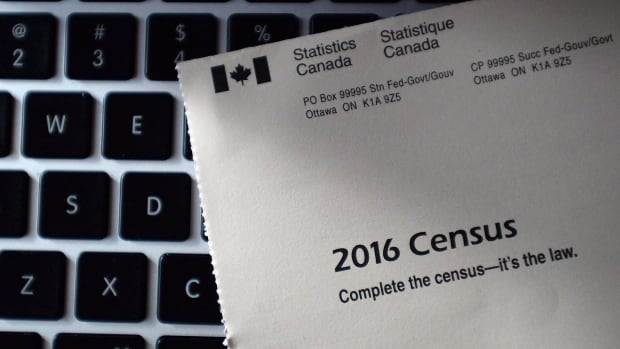
Susan Shackleton (one of the other Commenters) told me of the huge effort in 1998, in Ontario, by Wayne Obie to launch a lawsuit re dental amalgam. 8,000 people were signed up. This posting is about another person’s efforts, Zsuzsanna Holland’s, to obtain justice through the court system. ZsuZsuanna went to the end of the line: the Supreme Court of Canada decision was to not hear her appeal of the Provincial Court’s decision. The same thing happened in the appeal process when I was found guilty over the StatsCan / census / Lockheed Martin / constitutional right to privacy of personal information issue. The Supreme Court elected not to hear the appeal. That’s as far as an individual case can go in the Justice System. But it’s not the end-of-the-line, by any means.

Susan and I did look into the possibility of another lawsuit. A small bit of the correspondence is appended. Today, I think “never mind how much time a class action lawsuit would take to organize, given how long court cases take, I’d be dead before there was any resolution!” The Justice system is not always about justice – – it can be about overcoming decades of conditioning, of propaganda.

The not-so-well-known American rights lawyer, Gloria Allred, with decades of experience, uses alternative strategies to Court, when Court isn’t going to work. A recent movie “Seeing Allred” tells the strategies she has used to great success. I’ll post (the above).  I’m not saying that her strategies should be used; just saying that other strategies besides lawsuits can be used, with good success.

Wayne Obie dedicated himself to the cause of stopping mercury fillings, at great personal cost. I haven’t heard from Zsuzsanna recently; I don’t know how she’s doing.

Their courageous work is carried on by many people and organizations. The weapon used is information. We aren’t all Gloria Allred’s. Or Robert F Kennedy Jr’s (Kennedy’s specialty is the poisoning of water supplies. A no-brainer, mercury going down the drain from dental offices helped motivate him on this specific topic.) You have to be crazy to be knowingly putting mercury into water supplies, let alone directly into humans. Next thing you know, they’ll be changing the Periodic Table to change mercury from the most toxic of the elements to becoming a beneficial one!

So what do we do? these are changing times. The justice system is not the only means to bring an end to the slow poisoning of people by implanting mercury in their mouths, and dumping it in waterways.

When I see a child, I hope they will be spared. That’s a decision by their parents or care-givers. And if the dentists charge a bonus for non-mercury alternatives, then it may be a decision dictated by income.

I can’t shout loud enough, or send enough emails to make a difference. But Canadians are pretty good at talking with each other, and using their ingenuity. I think of the suffragettes – – women who fought for the right to vote. In the UK and in the USA the suffragettes were brutalized by the powers-that-were. They were imprisoned, force-fed when they went on hunger strikes. It was terrible what they went through, but they didn’t stop. They won. Canadian women did street theatre. They mocked the men, they made people laugh at the silliness of the arguments. They fought hard, but with different tools, and won.

Talk, talk, talk. Be alert. Plug into a network that specializes in mercury fillings. The mission is to prevent other people from having to suffer what you did. The opportunities to participate in a way that suits you, will come.

Best wishes,
Sandra

APPENDED

From: Sandra Finley
Sent: August 22, 2016 9:40 AM
To: Kathryn
Subject: Mercury fillings, Wayne Obie

Hi Kathryn,

Susan Shackleton from Vancouver is interested in the idea of starting a Petition to get the use of mercury fillings stopped. I suspect – – hope – – there will be step-by-step work on that. (I have a few too many pots on the stove to be the initiator.)

Will you let me know if you have any success in finding Wayne Obie?
I sent an email to the lawyer David Himelfarb (employed by Wayne in the 1990’s), this morning. I hope it was okay to tell your connection.  Here’s what I said:

For purpose of collecting signatures for a Petition on mercury fillings,
Do you know if there is any way of finding names of people (8,000) who were associated with the 1998 lawsuit?
I understand there may be privacy considerations and some of the people will now be deceased.
We found Kathryn (surname deleted) who helped with the 1998 suit. She knew Wayne Obie quite well. . . . He might still have info that would be helpful in contacting some of the 1998 people.

There is new research that adds to the already-solid base for stopping the use of mercury fillings.

Thank-you for your consideration.

Thank-you so much for taking my phone call Kathryn, and for discussing what must be a difficult subject for you.

Best wishes,
Sandra Finley

Feb 122018
 

I have wondered about the assertions (Kinder Morgan pipeline),  the Provincial Government has no jurisdiction.   The Federal Government decides  ?? :


JASON MACLEAN

Contributed to The Globe and Mail

Jason MacLean is an assistant professor at the University of Saskatchewan, College of Law

Mere moments after the B.C. government announced its intention to develop additional measures to improve its “preparedness, response and recovery” relating to spills of diluted bitumen, including the oil that will flow through Kinder Morgan’s controversial Trans Mountain pipeline expansion, the constitutional verdict was already in.

“The government of Alberta will not – we cannot – let this unconstitutional attack on jobs and working people stand,” Alberta Premier Rachel Notley said.

“Look, we’re in a federation,” added Prime Minister Justin Trudeau in a subsequent radio interview. “We’re going to get that pipeline built.”

“To the extent that this is meant to imperil Trans Mountain,” said Alan Ross, a regional managing partner with Borden Ladner Gervais LLP, whose clients include Kinder Morgan, “there really is a very clear federal jurisdiction with respect to matters such as pipelines or railways that cross provincial borders and are federally regulated.”

The constitutional jurisdiction over pipelines is clear all right. Clear as bitumen.

In a 2016 decision known as Coastal First Nations concerning a similarly controversial project, the Northern Gateway pipeline, the B.C. Supreme Court concluded that while Northern Gateway was interprovincial, it was not national, and it posed risks that would have disproportionately impacted British Columbians. According to the Court, “to disallow any provincial regulation over the project because it engages a federal undertaking would significantly limit the Province’s ability to protect social, cultural and economic interests in its lands and waters.”

“It would also go against,” the Court added, “the current trend in the jurisprudence favouring, where possible, co-operative federalism.”

Those two words – where possible – are crucial.

The real constitutional question here is whether B.C.’s anticipated oil-spill regulations encroach on the core of the federal government’s power to approve interprovincial pipelines such as Trans Mountain.

And the answer to that by-no-means-clear question will ultimately turn on what B.C.s regulations actually say and do.

In the meantime, here’s what we know: B.C.’s anticipated regulations will build on existing pipeline and rail transport measures, which were approved last fall absent any constitutional controversy whatsoever. The new regulations will be designed to ensure immediate and geographically specific responses following an oil spill, whether from a pipeline or from the rail or truck transport of oil; maximize the application of regulations to marine spills so as to complement existing federal measures; restrict the increase of diluted bitumen transportation until the behaviour and effects of spilled bitumen can be better understood and managed; and allow for compensation for the loss of public and cultural use of land, resources and public amenities resulting from bitumen spills.

The development of these regulations is prudent. There is much we do not yet know about how diluted bitumen behaves in different environments and how long spilled oil remains an ecological threat. In order to fill these gaps in our scientific knowledge, B.C. will create an independent scientific advisory panel to inform future spill-response measures. These efforts complement, rather than contravene, the federal government’s commitment to invest in world-leading marine safety, including research on cleaning up oil spills.

As a matter of constitutional law, so long as B.C.’s safety regulations are enacted in a bona-fide manner to protect British Columbia’s environment and economy from bitumen spills, and not as an indirect way of usurping the federal government’s approval of Trans Mountain, the courts should uphold them. So long as B.C.’s safety regulations are conditions of operation that apply to the transport of diluted bitumen across the board and do not amount to a prohibition of a federally approved project, the regulatory powers of the province and the federal government can co-operatively co-exist.

Of course, when it comes to co-operative federalism, what’s good for the goose is good for the gander. In a recent case involving an open-pit gold and copper mine southwest of Williams Lake, B.C., a federal environmental assessment concluded that the adverse environmental effects of the project could not be justified. The project’s proponent, Taseko Mines, challenged the federal government’s decision on constitutional grounds, arguing that the federal environmental assessment violated the province’s clear jurisdiction over what was an exclusively provincial undertaking.

The Federal Court disagreed, however, concluding that “a project of such magnitude as the one considered in the present case will likely have impacts in areas of both provincial and federal responsibility.”

Environmental assessment in Canada, the Court added, is designed to “promote co-operation and co-ordinated action between federal and provincial governments.”

After all, we’re in a federation.


Feb 122018
 

https://www.theguardian.com/media/2018/feb/11/sweden-tried-to-drop-assange-extradition-in-2013-cps-emails-show 


UK prosecutors tried to dissuade Swedish counterparts from dropping the charges, exchange shows

Julian Assange

Julian Assange on the balcony of the Ecuadorian embassy in London. Photograph: Facundo Arrizabalaga/EPA

Swedish prosecutors attempted to drop extradition proceedings against Julian Assange as early as 2013, according to a confidential exchange of emails with the Crown Prosecution Service seen by the Guardian.

The sequence of messages also appears to challenge statements by the CPS that the case was not live at the time emails were deleted by prosecutors, according to supporters of the WikiLeaks founder.

Assange was first questioned over allegations of sexual assault and rape in Sweden, which he denies, in 2010. He travelled to the UK later that year and Swedish authorities began extradition proceedings against him.

He subsequently skipped bail and was granted asylum in the Ecuadorian embassy in London in 2012 in order to avoid extradition. It was not until last year that the Stockholm publicly announced they had dropped their European arrest warrant application for him.

Assange still faces arrest for breaching his former bail conditions in the UK if he leaves the embassy in Knightsbridge. He fears there is a secret US indictment against him relating to WikiLeaks’ disclosure of leaked classified US documents.

The newly-released emails show that the Swedish authorities were eager to give up the case four years before they formally abandoned proceedings in 2017 and that the CPS dissuaded them from doing so.

Some of the material has surfaced from an information tribunal challenge brought late last year by the Italian journalist Stefania Maurizi.

The CPS lawyer handling the case, who has since retired, commented on an article which suggested that Sweden could drop the case in August 2012. He wrote: “Don’t you dare get cold feet!!!”.

As the case dragged on, the Swedish director of public prosecutions, Marianne Ny, wrote to the CPS on 18 October 2013 explaining that she had few options left. “There is a demand in Swedish law for coercive measures to be proportionate,” she informed London.

“The time passing, the costs and how severe the crime is to be taken into account together with the intrusion or detriment to the suspect. Against this background, we have found us to be obliged to lift the detention order … and to withdraw the European arrest warrant. If so this should be done in a couple of weeks. This would affect not only us but you too in a significant way.”

Not all the emails are preserved in the exchange, but three days later Ny emailed the CPS again to say: “I am sorry this came as a [bad] surprise… I hope I didn’t ruin your weekend.”

The CPS lawyer wrote back to Ny in December 2013, insisting: “I do not consider costs are a relevant factor in this matter.” This was at a time when the Metropolitan police had revealed that its security operation to prevent Assange escaping from the embassy had already cost £3.8m. “I do wonder occasionally if the police just make public comments because they think it will somehow progress a case,” he wrote.

“All we can do is wait and see [and perhaps be eternally grateful that neither of us have to share a room in the embassy with him over Christmas!].”

At the beginning of the legal battle over Assange in 2011, the CPS advised Swedish prosecutors not to interview him in Britain, but they eventually did.

The CPS lawyer also told Ny that year: “It is simply amazing how much work this case is generating. It sometimes seems like an industry. Please do not think this case is being dealt with as just another extradition.”

Assange’s supporters allege that the CPS has been inconsistent in declaring whether or not the case was live. In dismissing a personal data request by him in April 2013, the CPS wrote that they could not release anything “because of the live matters still pending”.

But when explaining the deletion of emails about the case in 2014, after the CPS official who had been corresponding with Ny retired, it was defended on the grounds that: “The case was, therefore, not live when the email account was deleted.” Little had changed over that period, Assange’s supporters maintain.

A CPS spokesperson said: “As there are legal proceedings still under way it would be inappropriate to comment.”

Westminster magistrates court is due to deliver judgment on Tuesday in response to arguments from Assange’s lawyers that continuing to enforce the arrest warrant is disproportionate after so many years.

The UK supreme court ruled last week in relation to a case about the Chagos Islands that diplomatic cables published by WikiLeaks are admissible as evidence in the dispute over creating a marine protection zone in the British territory.

Feb 072018
 

LONDON—A British judge on Tuesday upheld a U.K. arrest warrant for WikiLeaks founder Julian Assange, leaving him still a wanted man in the country where he has spent more than five years inside the Ecuadorean Embassy.

Judge Emma Arbuthnot rejected a call from Assange’s lawyers for the warrant to be revoked because he is no longer wanted for questioning in Sweden over alleged sex crimes. It was issued in 2012 for jumping bail.

“I am not persuaded the warrant should be withdrawn,” Arbuthnot told lawyers, journalists and Assange supporters gathered at London’s Westminster Magistrates’ Court.

However, she allowed Assange’s lawyer to make a new set of arguments challenging whether it is in the public interest to continue the case against Assange, and said she would rule on them next week. A decision in Assange’s favour would end Britain’s case against him.

Assange, 46, has been holed up in Ecuador’s embassy in London since he took refuge there in June 2012 to avoid extradition to Sweden, where prosecutors were investigating allegations of sexual assault and rape made by two women in 2010.

Swedish prosecutors dropped the case last year, saying there was no prospect of bringing Assange to Sweden in the foreseeable future. But Assange was still subject to the British warrant for breaching his bail conditions in 2012.

The judge said that if Assange wanted the warrant lifted he should surrender to authorities and come to court. She said he would be able to argue his case and “put an argument for reasonable cause” for breaching his bail conditions.

After the ruling keeping the warrant in place, the judge agreed to let Assange’s lawyer, Mark Summers, argue in his client’s absence that the warrant should be lifted because it was no longer in the public interest to arrest Assange.

Summers said Assange had several serious health problems including depression, and argued that the five and a half years he has spent inside the embassy were more than adequate punishment for his actions.

He also cited a UN report in support of Assange.

Arbuthnot said she would rule on those arguments Feb. 13.

Had the judge ruled in Assange’s favour on Tuesday, he would have been free to leave the embassy without being arrested on the British warrant.

However, Assange suspects there is a secret U.S. grand jury indictment against him for WikiLeaks’ publication of leaked classified American documents, and that U.S. authorities will seek his extradition. He fears he will immediately be taken into custody if he leaves the embassy, sparking what would likely be a long legal battle against extradition to the U.S.

Assange lawyer Jennifer Robinson said after the court session that he is willing to face British justice if he receives a guarantee that he will not be sent to the U.S. to face prosecution.

“The British authorities’ failure to provide assurance against that risk is the reason he sought asylum in the embassy in the first place,” she said. “This is and has always been our overriding concern.”

U.S. officials haven’t confirmed whether a request for Assange’s extradition has been made.

Tuesday’s ruling prolongs a stalemate that has kept Assange as Ecuador’s houseguest for 5 1/2 years. Last month, Ecuador said it had granted the Australian-born hacker citizenship in a bid to break the logjam.

Ecuador also asked Britain to grant him diplomatic status. Britain refused, saying “the way to resolve this issue is for Julian Assange to leave the embassy to face justice.”

If the British case against Assange is dropped, it might make it easier for Assange to obtain diplomatic status, which could ease his way for possible travel to Ecuador without risking arrest and extradition proceedings.

British prosecutors had opposed the removal of the warrant, saying Assange shouldn’t be immune from the law simply because he has managed to evade justice for a long time.

Extradition lawyer Rebecca Niblock, of the law firm Kingsley Napley, said before the ruling that Assange’s legal argument was a long shot.

“Failing to surrender to bail is like insulting the court’s authority” and unlikely to go down well with the court, she said.

Feb 072018
 

APPENDED:  background on the Tamiflu vaccine and Rumsfeld’s connection to it.

Sometimes I don’t want to circulate information like the following:  we know the theme.   More detail seems like unnecessary repetition.

Boot myself!  I don’t think we CAN stop.   It is dangerous NOT to arm people, when we’re talking Big Pharma.  Earlier postings document the drive to mandatory vaccination schedules, without which a child is banned from attending school.   There is a large effort in the US and in Canada to ensure CHOICE in the several questions regarding vaccination (whether to vaccinate? which vaccinations? how many at a time? at what age?).

RELATED:   2018-02-06 Indian Study Reveals Birth Dose of Hepatitis B Vaccine Unnecessary

In the United States, since 1991 the Centers for Disease Control and Prevention (CDC) has recommended that all infants receive the hepatitis B vaccine on the first day of birth before leaving the newborn nursery.  . . .    (a well-written article.)

= = = = = = = = = = = = = = = = = = = = =

http://www.thevaccinereaction.org/2018/02/did-big-pharma-and-who-corruption-trick-the-world-into-tamiflu/

Recommend:  listen to the video.  This paragraph is not the full text:

In October 2002, 22 scientists, nine WHO Secretariat members, and two drug industry representatives met in Geneva to draw up draft guidelines on the use of antivirals and vaccines for influenza. These form the basis of advice issued to the world two years later. Included in this were three annexes—each drawn up by an eminent scientist present at the original meeting. The WHO would be expected to examine any financial link these three scientists and any others advising it would have with pharmaceutical companies. It said it did but it’s refusing to make public the details. In 2004, this guidance was distributed to nations as the definitive thinking on on pandemic planning. It was a stamp of approval that helped spark a worldwide rush for the drugs.

Around $10 billion has since been spent on Roche’s Tamiflu and another $2 billion on rival Relenza made by GSK.  (GSK is Glaxo Smith Kline.)

= = = =  = = = = = = =

2009-10-07   I want parents to know this about vaccinations, mercury, Rumsfeld, and money devoid of conscience. (Rumsfeld’s connection to Tamiflu)

= = = =  = = = = = = =

THE EFFECTIVENESS OF TAMIFLU?

If you have the flu, there are several prescription medications available including: oral oseltamivir (Tamiflu), inhaled zanamivir (Relenza), or the intravenous drug peramivir (Rapivab).  However, studies show that these medications only help you recover one day faster from the flu. Rather than going to the doctor’s office to get examined and get a prescription, you might prefer to stay home and rest and drink plenty of fluids.

Over the counter (OTC) medications don’t cure the flu but they can help you feel better by treating symptoms such as aches, coughs, and sore throats.  Antibiotics do NOT work against the flu because it is caused by a virus and not by bacteria.

Tamiflu is heavily advertised, but many doctors believe that Tamiflu does not work well enough to justify the high cost of the drug, or the CDC recommendation that all patients take it.  These doctors point out that there is very little high quality evidence that Tamiflu reduces the rate of serious complications from the flu.

Feb 072018
 

hepatitis B text

“We found birth dose was not needed as infection rates were the same regardless of birth dose.”
— Jacob Puliyel, MD

A study funded by Indian Council of Medical Research (ICMR) and published in the Indian Journal of Pediatrics was recently conducted by a group of pediatricians to examine if the birth dose of the hepatitis B vaccine is crucial for acquiring full immunity against hepatitis B infection.1

India first introduced the hepatitis B vaccine in 2006. Approximately 61 percent of Indian women give birth at home rather than in a healthcare facility, making it nearly impossible for healthcare providers to administer newborn vaccines. Given this reality, the Indian government’s policy is to give the hepatitis B vaccine at birth to the 39 percent of babies born in healthcare settings and to administer the first dose at six weeks for babies born at home.2

Hepatitis B is an infection of the liver caused by the hepatitis B virus. It can either be acute and self-resolving or chronic, possibly leading to liver cirrhosis.3 This virus spreads through contact with infected body fluids such as blood transfusions and unprotected sexual contact and can pass from mother to baby.1

Blood samples from 1- to 5-year old children from five states (Delhi, Rajasthan, Uttar Pradesh, Uttarakhand and Gujarat) were collected to measure antigen and antibodies of the hepatitis B virus. In this sample, 880 children were fully vaccinated with the hepatitis B vaccine starting at birth, 686 were fully vaccinated but without the birth dose of the hepatitis B vaccine and 844 were unvaccinated.4

The findings showed that children who were fully vaccinated with or without birth dose of the hepatitis B vaccine had similar levels of protection against the infection.1 The study’s lead author Jacob Puliyel, MD, who is a pediatrician at St. Stephens Hospital in Delhi stated:

We found birth dose was not needed as infection rates were the same regardless of birth dose. However, if the mother is a hepatitis B carrier especially if she is e-antigen positive, the baby must be vaccinated at birth.1

Dr. Puliyel added:

Studies must be replicable before they can be accepted. We now have two studies, one from South India and this one from North India showing that many babies have acquired passive immunity that may be protecting them soon after birth when they are most vulnerable to develop chronic hepatitis. Further, studies may be done to confirm these findings.1

The results of the study support the Indian government’s approach to vaccinate babies born at home at six weeks instead of at birth.

In the United States, since 1991 the Centers for Disease Control and Prevention (CDC) has recommended that all infants receive the hepatitis B vaccine on the first day of birth before leaving the newborn nursery.5 Women who give birth in U.S. hospitals and medical facilities are routinely screened for hepatitis B infection.

Although only babies born to hepatitis B infected mothers are at risk for hepatitis B infection at birth and have a 20 to 90 percent increased risk of becoming chronically infected with hepatitis B, every newborn is vaccinated whether the mother tests negative or positive.6 According to the CDC, this national policy was instituted to reduce the risk of a newborn contracting the disease from a mother who may not know she is infected with hepatitis B.5

Feb 052018
 

– – –  Unusual for the UK Establishment to rule against the US Establishment.  Are the times a-changin’?


https://www.theguardian.com/law/2018/feb/05/hacking-suspect-lauri-love-wins-appeal-against-extradition-to-us

By  Owen Bowcott,  Legal affairs correspondent.   Extradition.

Rights groups and lawyers for 33-year-old welcome landmark judgment against extradition to US

 0:39

A high court ruling blocking extradition to the US of Lauri Love, a student accused of breaking into US government websites, has been welcomed by lawyers and human rights groups as a precedent for trying hacking suspects in the UK in future.

The decision delivered by the lord chief justice, Lord Burnett of Maldon, is highly critical of the conditions Love would have endured in US jails, warning of the risk of suicide.

Lawyers for the 33-year-old, who lives in Suffolk, had argued that Love should be tried in Britain for allegedly hacking into US government websites and that he would be at risk of killing himself if sent to the US.

There was cheering and applause in court on Monday when Burnett announced his decision. He asked supporters to be quiet, saying: “This is a court, not a theatre.”

In his judgment, Burnett said: “It would not be oppressive to prosecute Mr Love in England for the offences alleged against him. Far from it. Much of Mr Love’s argument was based on the contention that this is indeed where he should be prosecuted.

“The CPS [Crown Prosecution Service] must now bend its endeavours to his prosecution, with the assistance to be expected from the authorities in the United States, recognising the gravity of the allegations in this case, and the harm done to the victims.”

The court heard evidence from psychiatrists who work in the US prison system and questioned the adequacy of safeguarding procedures in US prisons.

The CPS, which acts on behalf of the US authorities in the case, said it would read the judgment before deciding whether or not to appeal. It has 14 days to decide whether or not to appeal to the supreme court.

Emerging from the front of the court afterwards, Love said: “This is not just for myself. I hope this sets a precedent for the future for anyone in the same position that they will be tried here.”

At a press conference later, he added: “I am greatly relieved that I’m no longer facing the prospect of being locked up in a country I have never visited. This legal struggle has defined my life for the past four years. I’m not looking forward to be being prosecuted but I think there’s a better chance that it will be done justly and fairly in the UK.”

Love, who holds joint British and Finnish nationality, has Asperger syndrome and severe depression. His supporters had gathered outside the Royal Courts of Justice before the hearing carrying placards declaring: “Trump can’t get no Love”, “Free Love”, “Trial at home” and “Give Love a chance”.

They feared he would be held in solitary confinement and face a jail sentence of up to 99 years in the US.

Welcoming the judgment, Emma Norton, the head of legal casework at Liberty, which intervened in the case, said: “We are delighted that the court has today recognised Lauri’s vulnerability, close family connections to the UK and the potentially catastrophic consequences of extraditing him. This was always a case that could have been prosecuted here and it’s shameful that Lauri and his family have been put through this terrible ordeal.”

His father, the Rev Alexander Love, had said his son feared for his life because he did not think he could cope with the trauma of being sent to the US. He also praised Theresa May for devising the legal test that prevented Love’s removal.

Nick Vamos, a solicitor at the law firm Peters and Peters and a former CPS extradition specialist, said: “This judgment will mean that US and UK prosecutors will need to be very careful in future about how they decide who should prosecute cases of concurrent jurisdiction, and will have to focus far more than previously on a suspect’s connections to the UK.

Feb 052018
 

Lou writes:

Sandra, thinking of why you do what you do,,, your activism .. your blog

Here is Sri Eawaran’s February 4, copied from my very old Words To Live By –


“No man is an island, entire of itself; every man is a piece of the continent, a part of the whole.” John Donne


The unity underlying life is so complete and pervasive that when we inflict suffering on the smallest creature, we injure the whole. When we refrain from habits that harm others, when we take up jobs that relieve suffering, when we work to put an end to anger and separateness, we strengthen the whole.


There is nothing more important in life than learning to express this unity in all our relationships. Violence, war, and insensitivity to our fellow creatures are external manifestations of the disunity seething in our consciousness. When we begin to practice spiritual disciplines, right from the first day, however slowly, we begin to transform our character, conduct, and consciousness. When the divisiveness which has been agitating us and  making life difficult begins to mend, we get immediate evidence in our daily life. Our health improves, long-standing personal conflicts subside, our mind becomes clearer, and a sense of security and well-being follows us wherever we go.


********************************

Jan 292018
 

Many thanks to Janet E for her continuing updates.

A NAFTA tribunal held Canada liable for rejecting a bid by Bilcon (an American company) to build a gravel quarry in the ecologically sensitive coastal area of Digby Neck, N.S.  It is estimated that Canada would have to pay more than $500 million, just for protecting the environment in accordance with Canadian law.    Details below.

UPDATE,   a very important article:

2018-02-15    Tearing up NAFTA? Please start with Chapter 11,   re Bilcon’s $500 million claim against Canadians. iPolitics


UPDATE:  
Subject: Re: Bilcon, NAFTA, ISDS

2018-02-15

. . .     We hope to have a decision from the federal court within the next two months.  Fingers crossed.

Lisa

Lisa Mitchell, Executive Director
ECELAW| lisa  AT  ecelaw.ca
(t) 902 670 1113
Twitter: @ecelaw

= = = = = = = = = = = = = = = = = = = = = = = = = =

Janet writes:

The Bilcon Digby Neck case is back in the news as the government of Canada challenges a landmark arbitral award brought under the North American Free Trade Agreement (NAFTA) It will attempt to have the case set aside and environmental groups are helping.    Both Sierra Club Canada and East Coast Environmental Law are acting as Intervenors with Ecojustice representing them as noted in their joint press release below from which  the following statements are extracted:

The NAFTA tribunal exceeded its jurisdiction when it made determination on what a Canadian environmental assessment panel can decide, groups say

 Lisa Mitchell, executive director of East Coast Environmental Law said : “If the tribunal’s decision is allowed to stand, it would signal to local communities that no matter how much damage a project might do, their concerns can be essentially overruled by a NAFTA tribunal decision, at great financial cost.”

Gretchen Fitzgerald, National Program Director of the Sierra Club Canada Foundation said   “If government is committed to strengthening our environmental laws, Canada must reverse this decision and close the trade loophole in ongoing NAFTA negotiations. International trade agreements should not supersede the health of Canadians or interfere with our environmental assessment laws and protections.”

For background information on the case – see

Digby Neck Quarry Bilcon Case, Tribunal Decision and Dissent By Janet M Eaton

www.sierraclub.ca/sites/sierraclub.ca/files/JANET201505.pdf

==================================================

RELATED:

2015-11-16 YouTube: German Public TV tells Europeans re ISDS (Investor State Dispute Settlements). Canada? U.S.? What are we seeing?

2015-04-18 Hundreds of Millions of Dollars already paid out to corporations because of trade deals. It’s about to multiply many times over (TPP, CETA, etc.).

==================================================

http://www.sierraclub.ca/en/Press-Release-Bilcon-NAFTA-court-case

PRESS RELEASE FROM Ecojustice, East Coast Environmental Law, and Sierra Club Canada:


FOR IMMEDIATE RELEASE

January 29, 2018

Environmental groups in court to intervene in NAFTA tribunal overstep

NAFTA tribunal exceeded its jurisdiction when it made determination on what a Canadian environmental assessment panel can decide, groups say

OTTAWA — Environmental groups are in court today to help Canada challenge a landmark arbitral award brought under the North American Free Trade Agreement (NAFTA) Chapter 11 provision by

American corporation, Bilcon.

A NAFTA tribunal held Canada liable for rejecting a bid by Bilcon to build a gravel quarry in the ecologically sensitive coastal area of Digby Neck, N.S. It is estimated that Canada would have to pay more than $500 million, just for protecting the environment in accordance with Canadian law.

“NAFTA tribunals are only supposed to decide questions of NAFTA law,” said Amir Attaran, lawyer at Ecojustice’s law clinic at the University of Ottawa. “They have no business deciding Canadian law and least of all, ordering Canadian taxpayers to compensate an American corporation because its proposed project threatened the environment. We expect the Federal court to put the NAFTA tribunal in its proper place.”

Represented by lawyers from Ecojustice, East Coast Environmental Law (ECELAW) and the Sierra Club Canada, will appear as interveners during the legal proceedings.

“Bilcon had the opportunity to have a Canadian court rule on the federal government’s rejection of its project. Instead the company chose to sue Canada for its decision to follow an independent environmental assessment panel’s recommendation to prioritize protecting communities and the environment, and reject the quarry project,” said Lisa Mitchell, executive director of East Coast Environmental Law. “If the tribunal’s decision is allowed to stand, it would signal to local communities that no matter how much damage a project might do, their concerns can be essentially overruled by a NAFTA tribunal decision, at great financial cost.”

Bilcon’s proposal for a 120 hectare quarry on Digby Neck, N.S. was to be located 50 metres from the shoreline to facilitate shipping across the Bay of Fundy. This increase in shipping traffic in an ecologically-sensitive environment could put important species, like the endangered North Atlantic right whale in harm’s way — one of the serious threats considered by the environmental assessment panel.

“If government is committed to strengthening our environmental laws, Canada must reverse this decision and close the trade loophole in ongoing NAFTA negotiations,” said Gretchen Fitzgerald,
National Program Director of the Sierra Club Canada Foundation. “International trade agreements should not supersede the health of Canadians or interfere with our environmental assessment laws and protections.”
Members of ECELAW and Sierra Club Canada Foundation were full participants in the Joint Review Panel that resulted in the decision to reject the proposed quarry — partly on the basis of its adverse impact on the ‘core values’ of the affected communities. The groups provided information and support to the community, brought the concerns to the attention of the public and engaged with experts to provide valuable input on the ecological and socio-economic impacts of the coastal quarry.
–  30 –
FOR MORE INFORMATION:
Amir Attaran, lawyer | Ecojustice law clinic at the University of Ottawa
aattaran@ecojustice.ca
Lisa Mitchell, executive director | East Coast Environmental Law
1-902-670-1113 (mobile)
lisa@ecelaw.ca
Gretchen Fitzgerald, National Program Director | Sierra Club Canada Foundation
1-902-444-7096 (mobile)
gretchenf@sierraclub.ca