Sandra Finley

Jun 092017
 

Two very good videos in this coverage.

https://trofire.com/2017/05/16/roundup-not-first-monsantos-legal-troubles/

By Josh Gay

You have probably seen that The Ring of Fire and Mike Papantonio of America’s Lawyer have covered Monsanto extensively lately for newly exposed court documents detailing the chemical giant’s dastardly efforts to deceive the public about their deadly products, especially Roundup, the best-selling weed-killer in the world. While Monsanto continues to face harsh allegations, their products continue to fly off the shelves. However, Roundup is hardly the first time Monsanto has come under fire for their products. The company has a long history of churning deadly chemicals out to the masses and has gone to extreme lengths to cover up their misdeeds.

In February, San Francisco’s Northern District Court ruled that Monsanto had to unseal embarrassing communications related to the cancer-causing chemical glyphosate. Plaintiffs are coming forward in a class action lawsuit claiming that using the popular weed-killer Roundup, which contains glyphosate, has had carcinogenic effects. Gardeners, nursery workers, landscapers, farmers, and agricultural workers have seen a rise in both Hodgkin’s and Non-Hodgkin’s Lymphoma, as well as Hairy-Cell Leukemia, Chronic Lymphocytic Leukemia, and Multiple Myeloma.

The State of California has already ordered Monsanto to place labels on Roundup, telling consumers that using the product may cause cancer. In 2015, the International Agency for Research on Cancer (IARC) of the World Health Organization (WHO) declared that glyphosate likely caused cancer. In the wake of these revelations, hundreds of lawsuits have been filed against Monstanto.

During one lawsuit, it came to light that Monsanto conducted “ghost-written” studies which painted their products in a favorable light. The company would then pay researchers to sign their names to the research to dupe the public. Papantonio describes these bought-and-paid-for scientists as “biostitutes.”

video):

Monsanto then hired armies of internet trolls to spread the fake research on Facebook, Twitter, and Reddit. Social media users even started to intentionally misspell the company’s name as “Monsant0” to thwart the provocateurs, when discussing the cancer-causing chemicals.

Monsanto even went as far as to cozy up to federal regulators to influence the outcome of investigations. In April 2015, Jess Rowland of the Environmental Protection Agency (EPA) bragged in a phone conversation that he deserved recognition if he could halt an investigation that was being conducted by the Agency for Toxic Substances and Disease Registry, which is part of the US Department of Health and Human Services (HHS). Rowland told a Monsanto executive, “If I can kill this I should get a medal.” Judge Vince Chhabria, who is overseeing the case, said that he may call Rowland for questioning in the cancer suit. Petitions are now circulating calling for a wider investigation into Monsanto’s collusion with the EPA.

Mike Papantonio is ready to take on the chemical giant, saying:

“Monsanto has hidden behind lies for too long. I’m going to devote the next few years to uncovering those lies.”

Papantonio has set up a website for those that have been hurt by Monsanto’s deceptive measures. You can find out more information on the legal fight against Roundup at the following link: ROUNDUP Lawsuit

Of course, this is hardly the first-time Monsanto has had to answer for its deadly chemicals. In 1984, Monsanto paid the bulk of a $180 million settlement in a class-action lawsuit that linked Agent Orange to Vietnam veterans’ medical problems. In 2013, the company had to pay $93 million to the town of Nitro, West Virginia for contamination resulting from an Agent Orange manufacturing plant in the town.

The company, along with their corporate spin-off Solutia, has also paid out hundreds of millions of dollars for health issues related to polychlorinated biphenyls, or PCBs, which also has been shown to cause Non-Hodgkin’s Lymphoma. A trial in West Anniston, Alabama, found that Monsanto and Solutia were liable for “negligence, nuisance, wantonness, and suppression of the truth.” The resulting settlement cost Monsanto and Solutia over $700 million.

Additionally, Monsanto was found guilty in a French court for the chemical poisoning of a farmer that used the very popular herbicide, alachlor, which is marketed as Lasso. The farmer complained of headaches, memory loss, and stammering after using and inhaling the weed-killer.

Monsanto has also spent millions of dollars fighting legislation that would require genetically modified foods to be overtly labeled. The company has bought plenty of support for their genetically modified organisms (GMOs) within the government.

It is important to note that Monsanto has also been forced to pull many advertising campaigns for spreading false information in them. New York’s Attorney General, the UK Advertising Standards Authority (ASA), and the French Supreme Court all have ruled the Monsanto’s marketing of Roundup as safe, non-toxic, and biodegradable has been misleading. Additionally, a Brazilian Regional Federal Court and the South African Advertising Standards Authority have ruled that Monsanto made “unsubstantiated” claims about genetically modified crops.

Their campaigns to sell the public on their deadly chemicals have been utterly shameless. A scientist, Dr. Patrick Moore, even went as far as to claim that Roundup was perfectly safe to drink. But refused to drink the herbicide when a French TV host challenged him to do so.

After losing out on a bid to acquire the controversial company Syngenta, Monsanto now has its sights set on a $66 billion merger with the chemical company Bayer. The companies are hoping that the Trump administration will help push through the complex merger. Farmers are fearful that the merger will raise seed and pesticide prices while also halting innovation. Small to medium farms will be squeezed to the brink of survival. Meanwhile, newer and safer products will have a hard time coming to market.

It is obvious that Monsanto cares only about profits. It doesn’t matter that their products are known to cause cancer. It doesn’t matter that they lie to the public. It doesn’t matter that they are going to constrict the market so fiercely that it will cripple the agriculture industry in our country. To Monsanto, as long as the money continues to roll in, nothing else matters.


Jun 092017
 

Joanna Kempner’s work:  

  • how social relations shape the production of knowledge
  • research investigating  how the social world shapes what we do not know 

I stated this way:

  • the pharmaceutical companies have a great impact on what gets researched, and on
  • what gets reported.

– – – – – – – – –

Joanna Kempner   was one of three women interviewed on CBC regarding migraines,   Not just a headache.

 Thoughts took me to Linguistics:  headaches, migraines, pain in head.

I emailed Joanna Kempner about the pharma industry (medications and vaccines).

I am interested in her work,  her posts on migraine.com,

But truthfully,  it’s subversion:  I wrote to Joanna Kempner because I was concerned that the other two researchers may have links to the pharmaceutical industry, be “under the influence”.  And therefore would not want to hear what I propose.

It’s a long shot that anything will come from my input, sent also to CBC Radio,  The Current,  host Anna Maria Tremonti.

– – – – – – – – – – – – – – – – – –

The production of knowledge  is fundamental to democracy and to health.   I am a “sapper”  – – obstacles such as the corruption of research have to be addressed, or we are thwarted from ever making the progress we need to make.

MY EMAIL TO JOANNA KEMPNER & CBC

Edited.

Subject: re CBC Interview, June 7th.  Not just a headache.  Thank you.

Hello Joanna,

  . . .     I suspect that you have an interest in finding underlying causes, so that if possible, more people will not be afflicted with the debilitating effects of migraines, headaches and pain in the head.

I note:  the pharmaceutical companies have a great impact on what gets researched, and on what gets reported.

The industry interest is, of course, oriented toward “cure”, or false “prevention”.   (True prevention is removal of cause, as in lead in gasoline, cigarettes, harmful substances.)


Both my kids suffer or suffered from migraines.  They were born in 1980 and 1982, a girl and a boy; today they are in their mid-thirties.

Onset was age 12 for my daughter and a bit older for my son.

The first experience:  a call from a very worried elementary school teacher.  My daughter had become suddenly incoherent and confused.

I picked her up;  she was unable to formulate sentences.   She could answer “yes” or “no” to basic questions.   I was alarmed.

At emergency she was diagnosed with a migraine and put on a drip.

A neurologist was consulted.

After one migraine event, and on the first visit, he wrote a prescription for a drug that would “prevent” migraines.

He said she would be on the medication for the rest of her life.

I did not fill the prescription and it was a long time before she had another migraine.

Three weeks after that first episode, I saw in the newspaper, notice of an event at a hospital to help migraine sufferers.  I attended.

The presentation was put on by a drug company to my surprise.   The featured doctor who was assisting, in ways investing in the company, was the neurologist who saw my daughter for 10 minutes and prescribed life-long drugs for a 12-year-old, following a single incident.

It is accepted that migraines are sometimes the consequence of allergies, both food and environmental.  MSG is a known trigger for headaches/migraines.

This past spring,  just before her 37th birthday,  after 3 years of living in B.C. (a change in environment),  and after recording the circumstances around onset of migraine attacks,  it became apparent that one trigger for my daughter is pollen from alder trees.   The piecing together is below, see APPENDED.

The interviews for Not just a headache set me to puzzling.   Please follow these thoughts:

My daughter avoids some foods, and she has a definite allergy to alder tree pollen.   Over and over again, what you hear from parents of children who have suffered from deleterious effects of larger numbers of vaccinations now given to children:   they have serious food and other allergies and sensitivities.

I searched the CDC (Centre for Disease Control) list of vaccines, that shows associated side effects.  I searched for the word “headache”.

https://www.cdc.gov/vaccines/vac-gen/side-effects.htm       

16 matches for “headache”.  I did a quick skim.

headaches —  1 in 3 people who are injected with some vaccines  (roughly speaking) get “headache”.

MSG is used as a stabilizer in a few vaccines.   It’s a known cause of migraines/headaches, as mentioned.

I don’t think anyone would dispute, it’s well documented:

mercury, formaldehyde, and aluminum are also ingredients in various vaccines.  Borax, too.


My experience with educational (research) institutions, and Government agencies is:   yes, there is manipulated research and scientific papers.  BUT maybe more importantly,  the research that NEEDS to be done, is not – –  because it threatens financial interests.   It is as large a problem in Canada as in the U.S.   But back to the immediate point:

By observation of my kids and others, there is a  headachemigraine continuum.

The spectrum goes from

  • those people who have zero headaches and migraines, to
  • those who have headaches but not migraines, to
  • those who have some of both,
  • to those who have severe and chronic migraines/headaches  . . .  to . . .
  • those who have pain in the head?  (maybe a matter of linguistics?)

I know the URL, but do not know the source / credibility of this SURVEY which says there is a marked increase in migraines among children, that is NOT associated with larger numbers of vaccines administered.

Migraine in vaccinated children

1-3 vaccinations               9.70%

4-6 vaccinations             10.98%

7-9 vaccinations             70.99%

10-15 vaccinations             12.84%

16-20 vaccinations             22.52%

21-30 vaccinations             21.61%

31-40 vaccinations             22.41%

41-50 vaccinations             50.00%


Which I would say is plausible:  migraines often bring severe pain in the brain.  Kids who have suffered vaccine injury suffer neurologically, sometimes becoming non-verbal,  hands over both ears, clasping their heads.  Banging their heads against walls and so on.  They are in pain?

LINGUISTICS:   That would not get reported as “migraine” or “headache”;  it gets reported as head banging,  but it may be along the same continuum of pain in the brain as headaches and migraine?

I did a bit of nosing around on-line.  There is plausibility for research (with integrity) between vaccines and migraines.

But the CDC whistleblower,  Dr. William Thompson, has revealed the corruption in the CDC vaccines department,  which makes their research unreliable.

Not only that – – there will be large obstacles placed in the path of anyone who thinks a plausible migraine – vaccine relationship is worthy of study.

Another problem is that as with many toxins, mercury for example,  the effects on health may not be immediately experienced.   Health outcomes can be experienced years, even decades later;  accumulations and interactions of toxins (stresses) are at play.  “Triggers” or “tipping points” come into play.

Females suffer migraines at a much higher rate than males.  Males suffer serious adverse reactions from vaccines (e.g. head banging) at a much higher rate than females.

(And I remind you that over $3 billion dollars has been paid out by the Vaccine Injury Court in the U.S. for vaccine injury, another verboten topic until recently, with awareness accelerated by the whistle-blowing of Dr. Thompson.)

From the internet:

Posted by: deleted_user 07/02/2008 Mood: Ok

Does anyone else believe that they started having migraines, or thier migraines got worse, after receiving the MMR vaccine as an adult?

My doctors says it is not related but it is the only change in my life that I can pinpoint.

Thanks in advance for your comments!!

DanielleJ

So there you go:

  • The CDC website says that “headaches” are experienced by about 1 in 3 of persons who are injected with some vaccines.
  • The survey  Migraine in vaccinated children shows a significant peak at 7-9 vaccinations  (70.99%)
  • It is possible that clasping your head between your hands, and head banging are related to pain in the head of a non-verbal child
  • Allergies (food, environmental, synthetic chemicals in scents (perfumes)), are known to trigger migraines and headaches.
  • Children who have been diagnosed with vaccine damage are (almost without exception?) known to suffer from food and environmental allergies)
  • MSG is a known cause of migraines and headaches.  MSG is added to some vaccines as a stabilizer.
  • Mercury, aluminum, formaldehyde, borax are also injected as part of various vaccines.


Off-gassing of mother’s mercury fillings crosses the placental barrier + mercury in mother’s body accumulates in fatty tissue (same happens in fish) means in utero + breastfeeding exposure to mercury.  Now add mercury and/or other poisons in the heavy vaccination schedule.  Substances that are highly toxic to the brain, injected directly (don’t even go through the gastro-intestinal tract)  – – headaches, migraines sooner or later, pain in the head  – –  anybody surprised?


I noticed re MigraineCanada – it receives funding from Tribute Pharmaceuticals.

Maybe some brave soul or team, somewhere, will research a possible connection between vaccines and migraines.    Conditions become normalized – –  current disease conditions are not normal, even if they make large contributions to “GDP”.

It is stated that there is a connection, for some people, between onset of puberty and beginning of migraines.  A reasonable question:  what was age when the last childhood vaccinations were administered?

Both my children were religiously vaccinated (not with the number of vaccines that are administered today).  I had no idea of the ingredients in vaccines.   Informed consent was non-existent.     But I don’t know whether their migraines are associated with vaccines.

Or whether their children will be subject to migraines:  damage done to our genetic material can be transmitted inter-generationally.  We typically refer to it as “inherited” or “congenital” or “in our genes”.   Another soothing offered by Linguistics.   It is damaged genetic material that gets passed down from one generation to the next.

/Best wishes,

Sandra Finley

= = = = = = = = = = =

APPENDED,  MIGRAINES CAUSED BY ALLERGY TO ALDER TREE POLLEN:

March 31, 2017


Today, someone there told Kelly that the alder tree is likely triggering the migraines.


Kelly and I worked through things, see below  (Experience  and research on internet).

We agree.  It seems clear that Kelly is allergic to alder tree pollen.   The allergy causes migraines that Kelly has in spring.   Could be birch tree allergy, too.


Kelly knows some of the things to do  (keep windows shut,  daily dose of feverfew, magnesium, as recommended by Daisey (naturopathic doctor).  – –  Should have focused on that starting in October.  – –    Kelly – don’t use your fan for the time being,  at risk of drawing more airborne pollen into your room.)


Walking outside?  – – are there alders all around, or not?

HERE’S WHAT RED ALDER LOOKS LIKE:    https://www.for.gov.bc.ca/hfd/library/documents/treebook/redalder.htm       

Tie a bandana over your nose, or,  you will find it easier to just buy a package of good dust masks and use them for the short remaining time of pollination  (see below – – “the season” for when the alders are flowering).  I think another important thing is to rinse your sinuses with warm salt water to reduce any inflammation caused by the pollen you breathe in.  I’ll give you a hand when I’m down.

Hope this is helpful.

/Mom

– – – – –  – – – – – – – –

EXPERIENCE

When Kelly told me about today’s migraine:

  • I remember, the previous 2 episodes in the last couple of weeks – –   she was walking outside along the road, Layla was with her
  • Compared with today,  she had just walked from the Main House to Hudsons.  The migraine hit shortly after arrival.
  • So:    3 events, one after the other, all occurring ON OR after being on the road
  • Which points to something in the environment, along the road.
  • Springtime, which means pollens.
  • Reinforced by recollection that last spring Kelly had a bad time with migraines

With Kelly on the phone, doing google searches:


Trees that make you sneeze   http://allergicliving.com/2010/07/02/outdoor-allergy-trees-of-sneeze/

Birch, elm, maple, oak and poplar are some of the most allergenic trees across Canada and the northern United States. But where you are, the month and the weather all influence the onset of symptoms.

West Coast

On the foliage-rich west coast, red alder is public enemy number one. Robert Guy, head of forest sciences at the University of British Columbia, says much of the forest surrounding coastal towns and cities is full of red alder. Depending on the weather, these trees can pollinate as early as mid-February, or as late as the end of March, and they spread pollen for about three weeks.

Vancouver allergist Dr. Donald Stark says red alder is particularly insidious because it produces a ton of pollen; it often has the highest pollen count of any plant on the coast. People allergic to it may also react to birch trees, which pollinate about a month after alders, prolonging the misery.

Stark identifies the Garry oak as another culprit on the west coast. In most of Canada, ragweed is the worst offender for triggering hay fever, followed by grass, then trees. Stark says the west coast is the exception: here, trees pack the hardest punch.


FROM   ARE ALLERGIES CAUSING YOUR MIGRAINES?    http://www.everydayhealth.com/headache-migraine/migraines-from-allergies.aspx  

Migraines can be triggered by food or environmental allergies.

Painful migraine headaches can have many triggers, among them environmental and food allergies. The precise mechanism for how allergens trigger migraines is still unknown, but these are the most common theories:

  • Sinusitis. “The most common cause of a migraine is allergic sinusitis,” explains Jonathan Field, MD, Director, Allergy and Asthma Clinic, New York University School of Medicine/Bellevue Medical Center in New York City. “When an allergic person is exposed to an allergen — dust, mold, pollen, animal hair, or skin — the sinuses become swollen. This swelling might cause migraines by triggering the nerves in the brain to react to the change in pressure. The nerves then send signals to the brain that trigger the various symptoms of migraine, like the headache, intolerance of light or sound, nausea, vomiting, and dizziness.”
  • Allergic rhinitis (seasonal and indoor nasal allergies) . According to Clifford W. Bassett, MD, Medical Director of Allergy and Asthma Care of New York, studies have found that the odds of having migraine headaches are significantly higher in people with allergic rhinitis compared with those without allergies.
  • Food allergies.  . . .
Jun 082017
 

Related to the pharmaceutical companies have a great impactand decades-long battles by Canadians for proper regulation (uncorrupted research and regulation) (as in the case with vaccines in the U.S.)  note the following re Accutane and Thalidomide:

ACCUTANE:   According to the list, Accutane, on the market for 27 years (1982 to June 2009)  was withdrawn in the U.S. (2009).

35 FDA-Approved Prescription Drugs Later Pulled from the Market  http://prescriptiondrugs.procon.org/view.resource.php?resourceID=005528    (includes Accutane)

Accutane has not been withdrawn in Canada.

2016-04-25   Acne drug Accutane’s harm to fetus a worry despite prevention efforts, CBC 

and   Canadian women still getting pregnant while on Accutane, despite risks of birth defects, National Post, Apr 25, 2016 (same date).   (More strongly worded than the CBC report, I think)  http://news.nationalpost.com/news/0426-na-accutane.

(Birth defects are far from the only “side effects” of Accutane.)

THALIDIMIDE:  http://www.thalidomide.ca/the-canadian-tragedy/

There are approximately 5,000 survivors alive today, around the world. Never counted and never to be known, are the numbers of babies miscarried, or stillborn, let alone the number of family members and parents who have suffered over the years.

Around the world, in the late 1960’s and into the early 1970’s, the victims of the drug thalidomide and their families entered into class action legal suits, or threatened actions, against the various drug companies who manufactured and/or distributed the drug, and they were eventually awarded settlements. In most countries, these settlements included monthly or annual payments based on the level of disability of the individual.

In Canada, the story was quite different. Canadian victims of the drug were forced to go it alone, family by family. No case ever reached a trial verdict. Rather, families were forced to settle out-of-court with gag orders imposed on them not to discuss the amounts of their settlements. This resulted in wide disparity in the compensation amounts, with settlements for individuals with the same levels of disability varying by hundreds of thousands of dollars.

In 1987, the War Amputations of Canada established The Thalidomide Task Force to seek compensation for Canadian-born thalidomide victims from the government of Canada. As Canada had allowed the drug onto the Canadian market when many warnings were already available about side effects associated with thalidomide, and as Canada left the drug on the market a full three months after the majority of the world had withdrawn the drug, it was felt and argued that the government of Canada had a moral responsibility to ensure that thalidomide victims were properly compensated.

I think of those examples when I think:  Ontario passed Bill 87 making it very difficult for parents to exercise choice over what vaccines are injected into their children.

Canadians are complacent and/or disempowered.  In the cases of Accutane, Thalidomide, Vaccines, and other issues, I worry that we are not protecting our children as robustly as we need to.

Jun 072017
 

Banksters: Index

With many thanks to Common Dreams (U.S.).

This is an extremely helpful article for Canadians, by Bernie Sanders.

https://www.commondreams.org/views/2017/06/07/why-trumps-so-called-infrastructure-plan-good-wall-street-bad-america


NOTE:  scroll down below to:   TOP 10 FAILED PUBLIC-PRIVATE PARTNERSHIPS (USA).  This is important documentation.

These kind of projects are being proposed for Canada, under the $188 billion (up from $180 billion) in infrastructure spending we are to embark on over 12 years.

The Canada Infrastructure Bank (CIB) has to be stopped!   Please find some friends who will talk to their local, provincial, or federal representative – expand our numbers.   We should be on the warpath.

More info:  Banksters: Index

Why Trump’s So-Called Infrastructure Plan Is Good for Wall Street But Bad for America,
by Bernie Sanders

Donald Trump’s so-called infrastructure plan is a huge giveaway to Wall Street that fails to create the millions of jobs we need to modernize our roads, bridges, water systems, rail, airports, levees and dams.

At a time when the American Society of Civil Engineers says we need to spend $2 trillion above current spending levels just to get our infrastructure back to a state of good repair, Trump actually cuts direct federal spending on our crumbling infrastructure by nearly $145 billion over the next decade. This would force state and local governments to shoulder more of the financial burden for our infrastructure needs at a time when they can least afford it.

Just like Trump’s “health care” bill is actually a $231 billion tax cut for the top 2 percent, his infrastructure plan would create $200 billion in new tax loopholes and other giveaways for wealthy investors, and it would reward corporations that have stashed their profits overseas with huge tax cuts.

Under Trump’s proposal, billionaires on Wall Street, wealthy campaign contributors and even foreign governments would receive hundreds of billions in tax breaks to purchase our highways, airports, and water treatment plants. They would then be allowed to impose huge new tolls and fees on the backs of American commuters and homeowners.

The reality is that Trump’s plan to sell off our nation’s highways, bridges, and other vital infrastructure to Wall Street, private investors, and foreign governments is an old idea that does not work.

Trump’s plan to rebuild America relies heavily on the use of public-private partnerships to finance infrastructure projects with private equity capital. Such financing, whether through private equity or traditional tax-exempt municipal bonds, is repaid by ordinary citizens through a combination of taxes and user fees. Private equity financing is markedly more expensive than traditional government financing, however — by as much as three to six times. Considering the scale of infrastructure development under consideration, that difference could be enormous. For example: the charge for a $100 million-dollar investment using traditional government bond financing (at 3 percent, over 30 years) is about $90 million. For private equity capital, at a 15 percent return, the total skyrockets to $450 million.

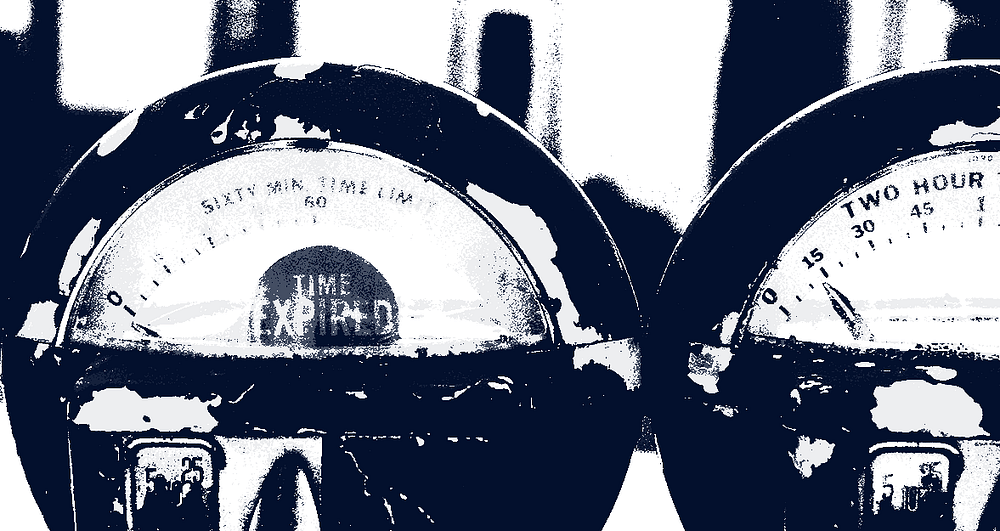
For example, in Chicago, a private investor group led by Morgan Stanley will collect $11 billion as part of its 75-year contract to run the city’s parking meters. Not only have they raised parking prices by as much as 800 percent in some neighborhoods but incredibly, the city has been forced to pay $31 million and counting to cover lost revenue whenever a street is temporarily closed for maintenance. Chicago is already struggling with high crime and unfunded teachers’ pensions, yet it is diverting resources to pad the bottom line of these investors.

In Indiana, tolls on a privatized road more than doubled this month as commuters wait in long lines and visit unsanitary rest stops. In Bayonne, New Jersey, many homeowners are at risk of foreclosure because they cannot afford water bills that have spiked dramatically after the water system was taken over by a private equity firm. In Atlanta, after taking over the water system in 1999, the new private operators fired 400 workers and cut training for those who remained. The result? More water main failures, and water quality declined.

In California, Texas, and South Carolina, privately-owned toll roads went bankrupt or were foreclosed because of exaggerated projections from investors. Time and again, these private companies who take over public infrastructure showed they do not represent the public’s best interests.

In addition to the obvious siphoning of public resources that Trump’s tax breaks and private equity financing entail, his Administration has been pushing “asset recycling,” i.e., selling off existing assets, like airports, bridges, and highway rest stops, to private investors and using the revenue (“recycling” it) to fund new facilities.

It is important to note, moreover, that weak investment in America’s infrastructure is not due to lack of access to financing, but because of constraints associated with insufficient state and local government revenue. Trump’s public-private partnership model does not address this problem, and in fact, exacerbates it by increasing overall costs to taxpayers. And because smaller-scale projects, like those in rural areas, may not be profitable enough to attract private equity investors, his model risks leaving many parts of the country behind.

But Donald Trump wants to hand over more critical public infrastructure to private investors who will squeeze profits from the American people by putting up new tolls and exorbitant users’ fees. That would be unacceptable. We shouldn’t be selling off public assets to billionaires to make huge profits on the backs of working people.

Trump’s plan is the exact opposite of what we should be doing as a nation. Instead of creating more tax giveaways to corporate America and Wall Street, we should be eliminating tax loopholes that allow profitable corporations to stash their cash in offshore tax havens around the world. And we should be using this revenue to directly invest $1 trillion to modernize our nation’s infrastructure — a plan that would put 15 million Americans back to work in good-paying jobs.

Today, the United States spends less on infrastructure, as a percent of GDP, than at any time in the past twenty years. The reality is that every day, Americans drive to work on potholed roads and rundown bridges. They ride in overcrowded buses and subways, and journey through shabby airports. Children struggle to concentrate in dark, overcrowded classrooms; and in some parts of the country, their schools lack adequate heat and basic cleanliness. The structures that most Americans don’t see are also in disrepair — from spotty broadband and an outdated electric grid, to toxic drinking water and dilapidated levees and dams. This is what happens when a nation underfunds the physical infrastructure on which its people and economy depend. We need to be spending more on infrastructure, not less. And we should not be providing more tax breaks to fund risky privatization schemes. 

The failure of privatization plans — transferring control of public infrastructure to private interests — that Trump would double down on can be seen across the country.


TOP 10 FAILED PUBLIC-PRIVATE PARTNERSHIPS

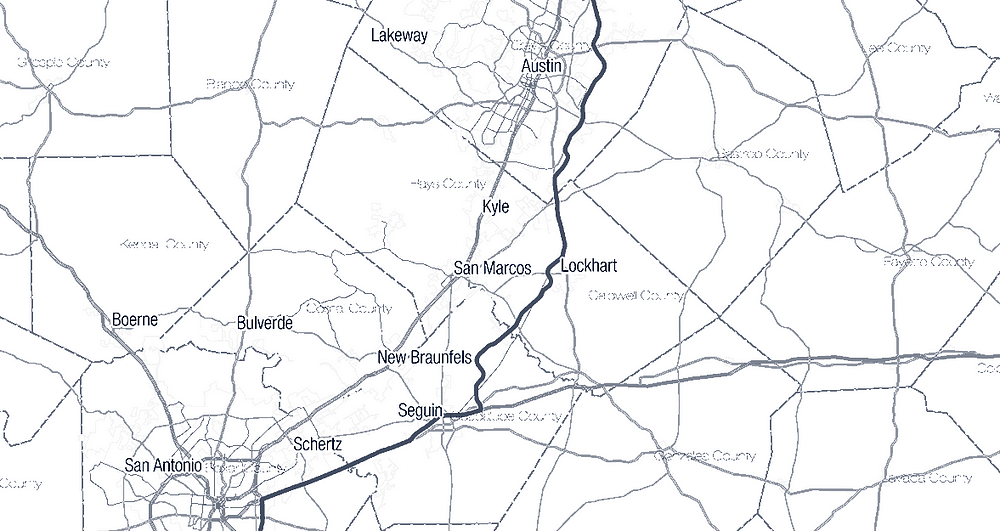
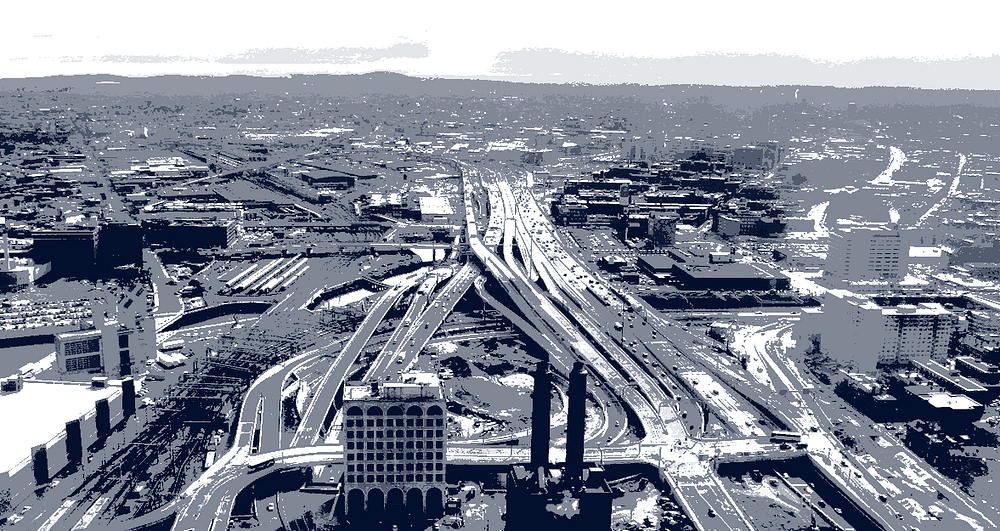
1. Chicago Parking Meters

1*231-xM6ME-9xvhOf3qadbQ.png

 In 2008, the city of Chicago sold the right to manage the city’s parking meters for 75 years to Morgan Stanley and its financial partners for $1.15 billion.

From 2009 to 2013, parking rates in Chicago increased by as much as 800 percent.

While working people in Chicago are paying more for parking, the Wall Street and foreign investors that own the parking meters are making enormous profits. Morgan Stanley and its investors will likely collect $11 billion from Chicago as part of this deal, all on the backs of its residents.

Even as Chicago runs yearly budget deficits over $100 million, they have been forced to pay Morgan Stanley $31 million to cover their lost revenue every time streets are closed in the city.

Because of this public-private partnership, not only are Chicagoans paying more to get to work, but taxpayers are on the hook for a bad deal that Wall Street will profit off of for decades.


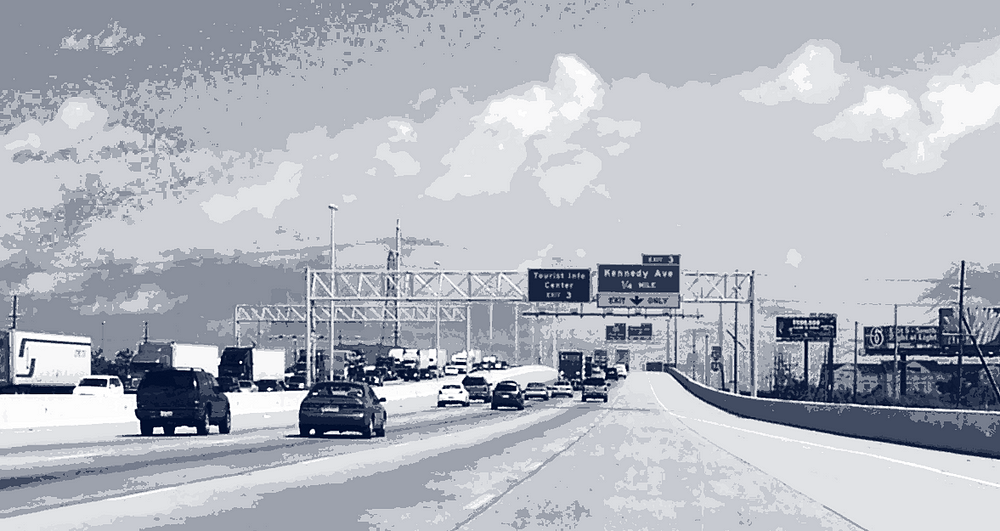
2. Indiana Toll Road

1*1wbwVcLkXvP7_USnqvLOzw.png

In 2006, Indiana signed a 75-year lease for a 175-mile highway for $3.8 billion with investors from Spain and Australia.

That company went bankrupt in 2014 partly because its risky financial deals left investors debt-ridden. That lease was then sold to Australian investors after the original investors went bankrupt in 2014.

While the debt held by this project increased by $2 billion before the bankruptcy, the Australian parent company is doing extraordinarily well. They reported record profits for the last fiscal year, and their CEO is among the highest paid in Australia.

This month, E-Z Pass drivers on the toll road saw their rates double when a state rebate program from the privatization deal expired. Since the road was privatized in 2006, all drivers of two-axle vehicles have seen the maximum toll rise from $4.65 to $9.70.

Today, the toll road is deteriorating, and travelers often wait in long lines at toll plazas, and use rest stops that are unsanitary.

 (INSERT:  please go to the URL at top if you wish links to more of the source docs below.  I have not copied them.)

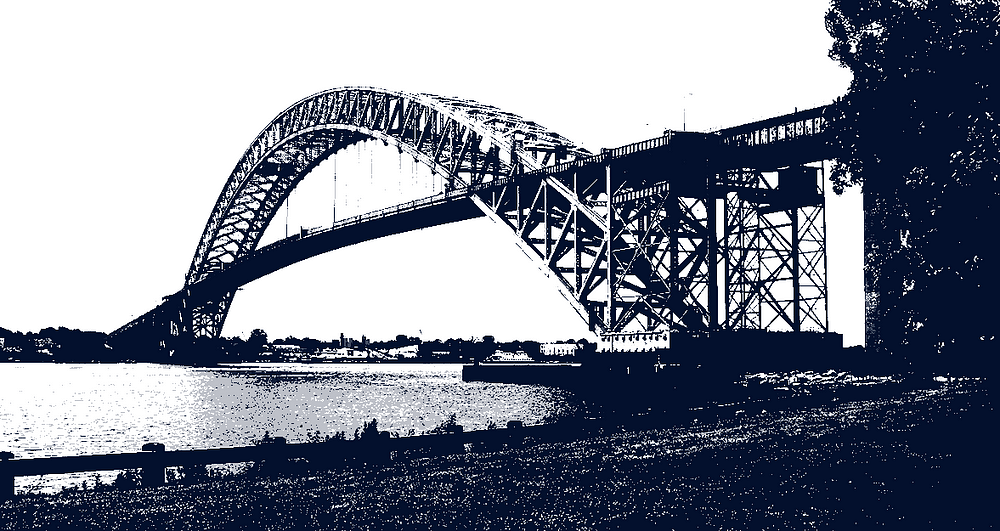
3. Bayonne, NJ Water Deal

1*nVJZDEDU4LGvGKGUnOXHZQ.png

In 2012, Bayonne, NJ leased its municipal system to a multinational corporation and private equity firm in exchange for an up-front payment of $150 million.

For the residents of Bayonne, this deal has come with a significant cost. Water rates have skyrocketed nearly 28 percent since the system was leased to private interests. This is after the city told residents when negotiating the deal that rates would stay frozen for four years.

Bayonne residents are not able to afford these high rate increases, and the amount of government liens against properties increased from 200 in 2012 to 465 in 2015. People should not be at risk of losing their homes because a private company’s profits were more important than the needs of consumers.


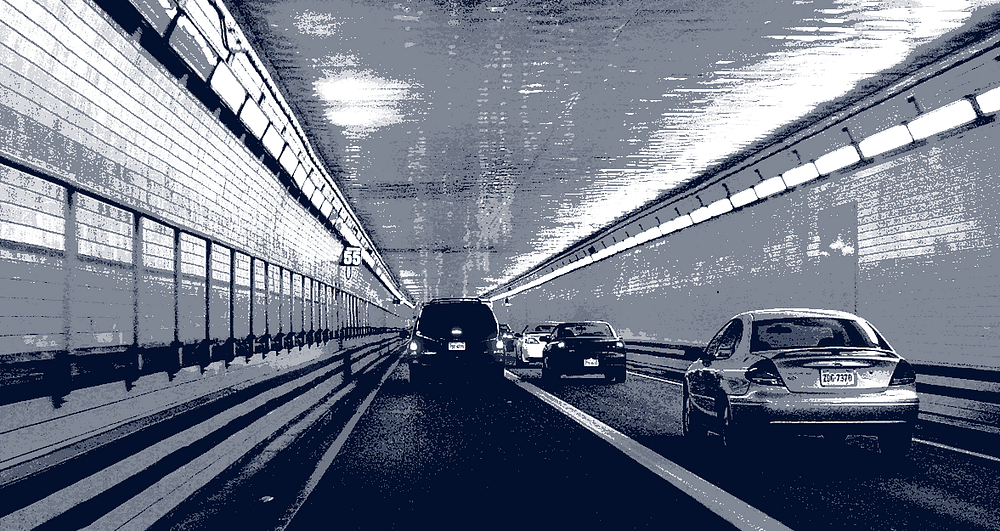
4. Norfolk, Virginia Midtown Tunnel

1*QtuGUOfnY5ny5zmPeXToNg.png

In 2011, Virginia signed a contact with a private consortium to expand and extend the Norfolk, Virginia Midtown Tunnel. In exchange, they allowed the private investors to receive toll profits from the tunnel for 58 years.

In addition to instituting new tolls on a road that had been free to use since the 1980s, the private operator created a predatory pricing scheme that caused some low-income drivers to rack up debts as high as $18,000 from the tolls. The pricing scheme charges higher rates and fees to non-E-Z Pass drivers, who are more likely to be low-income people who cannot afford to fill an E-Z Pass account.

Like similar P3 agreements, Virginia’s contains *a non-compete clause that will make it more difficult for the state to improve the tunnel and freeway, and ensures that the private investors make a healthy profit at the expense of working families.

* (INSERT:  The Hazards of Non-Compete Clauses in Public-Private Partnerships  https://www.americanprogress.org/issues/economy/reports/2016/07/27/141873/the-hazards-of-noncompete-clauses-in-public-private-partnership-deals/    

5. Atlanta Water

1*Z56Na_f77cvUWHeUkYm6qg.png

In 1998 the city of Atlanta signed an agreement for United Water, part of a French conglomerate, to operate their water system for twenty years.

After taking control of the system, United Water fired nearly 400 workers and dramatically reduced job training for its remaining employees tasked with keeping water safe for the people of Atlanta.

Water service in Atlanta suffered as United Water could not keep up with the system’s maintenance needs. After United Water took over water-main breaks increased and the city needed to issue occasional “boil only” alerts when water wasn’t drinkable out of the tap.

United Water is another example of a company that poorly managed our critical infrastructure, harming both taxpayers and workers in the process.


6. Chicago Skyway

1*W7D6P3YoC3fH6Bx4oXzr3g.png

A Spanish and Australian investment consortium paid Chicago $1.83 billion to operated and collect tolls on the Chicago Skyway.

To cut costs, the private entity cut wages for its Skyway jobs from at least $20 an hour to as low as $12 an hour.

The agreement to operate the Skyway included ballooning interest rates, like many of the risky mortgages that caused the great recession.

After cutting ages for working people, these investors cashed out to another private entity less than 10 years into the 99-year lease, showing yet again that private entities running public infrastructure projects are only interested in their profits, not serving the public and treating their workers fairly. The majority owners of the Skyway project, the Spanish company Ferrovial, pocketed $269 million from the sale.


7. State Highway 130

 1*gS4XcKkxpafxqnv1P0S_cA.png

Texas contracted out the construction and operations of toll road State Highway 130 to a private company for $245 million in toll revenue.

During their ownership of the road, the private company was cited by the Texas Department of Transportation for poor road maintenance. In addition to problems resulting from the deteriorating road, the area around the toll road began to flood following its construction.

The private consortium that owned the project declared bankruptcy last year, while still owing the federal government $430 million from an infrastructure loan program. The toll road was taking in much lower revenue than expected because traffic was 70 percent lower than expected.


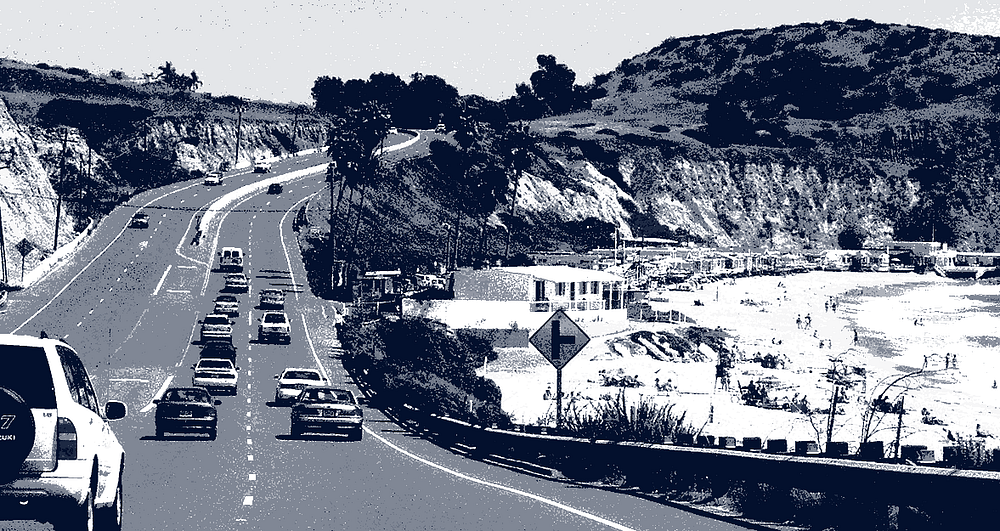
8. SR-91 Express Lanes in Orange County

1*kgKrN63c_0uEPh1BNkVdaQ.png

In 1995 California built express lanes on SR-91 in Orange County through mostly private dollars from three corporations.

Because of a non-compete clause in the agreement, California was unable to expand the roads to better serve commuters. Instead of looking out in the best interest of Orange Country residents, this deal made sure these corporations profited at their expense.


9. South Bay Expressway1*Er1N_k8q2wr8vHyCqCsJIA.png

In 2003, a toll road owned by an Australian investment firm opened in Southern California. The project was touted as a successful TIFIA loan that demonstrated the benefit of public private partnerships.

However, seven years later the firm went bankrupt and imposed a 42% loss on the taxpayers from the TIFIA loan. Taxpayer dollars should not be put at risk so that private investment firms have a chance to profit on public infrastructure.


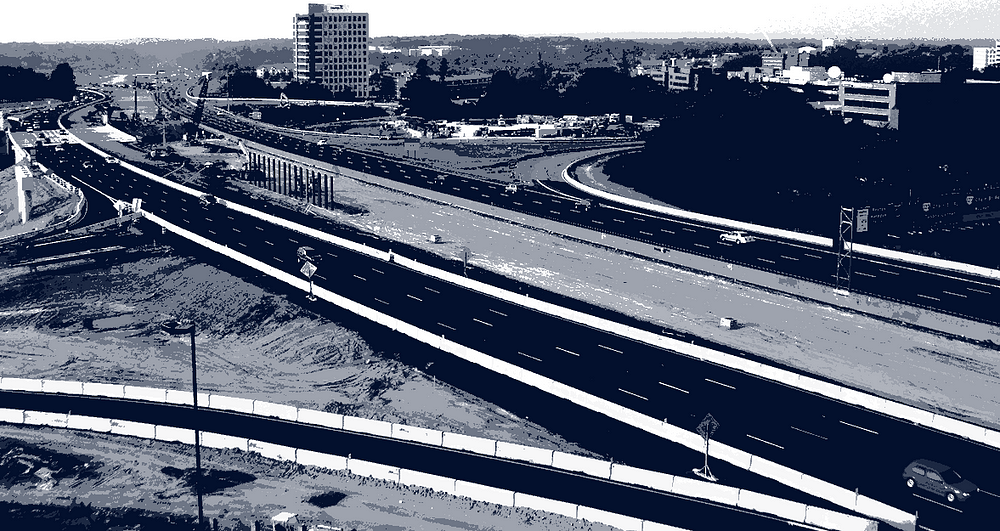
10. Capital Beltway Hot Lanes

1*aGvTJmlZsodlz3EVOX1_vA.png

In Virginia, a private consortium constructed new High Occupancy Traffic lanes on Interstate 495 in exchange for toll revenue for the next 80 years

While reducing congestion and encouraging carpooling are worthy goals for this project, under the partnership Virginia taxpayers could pay this private consortium millions of dollars anytime carpoolers are over a quarter of the drivers on the road. This deal values the bottom line of its investors over the environment and the commute times of Virginia workers.

© 2017 Bernie Sanders


Bernie Sanders (I-Vt.) was elected to the U.S. Senate in 2006 after serving 16 years in the House of Representatives. He is the longest serving independent member of Congress in American history. Elected Mayor of Burlington, Vt., by 10 votes in 1981, he served four terms. Before his 1990 election as Vermont’s at-large member in Congress, Sanders lectured at the John F. Kennedy School of Government at Harvard and at Hamilton College in upstate New York. Read more at his website. Follow him on Twitter: @SenSanders or @BernieSanders


Jun 062017
 

With thanks to Janet M:

https://www.youtube.com/watch?v=WsLuR3X6cpg&list=PLJpPObXpZncOfT0bG2ghgkVb2Nxjd_bNe&t=1&cn=ZmxleGlibGVfcmVjcw%3D%3D&iid=ff9365e1b7de44fd91f8179410bc17cc&uid=1463540293&nid=244+293670920 

++++++  another very helpful (& short) item on the science being “settled.” 

https://www.youtube.com/watch?v=uww4H3QdZ2E

http://www.cnn.com/videos/health/2014/07/01/ath-cohen-vaccine-study.cnn 

Jun 052017


‘She Let Go’ a Poem by Rev. Safire Rose

– – – – – – – – – – – – –

‘She Let Go’  

She let go

Without a thought or a word, she let go.

She let go of the fear.

She let go of the judgments.

She let go of the confluence of opinions swarming around her head.

She let go of the committee of indecision within her.

She let go of all the ‘right’ reasons.

Wholly and completely, without hesitation or worry, she just let go.

She didn’t ask anyone for advice.

She didn’t read a book on how to let go.

She didn’t search the scriptures.

She just let go.

She let go of all of the memories that held her back.

She let go of all of the anxiety that kept her from moving forward.

She let go of the planning and all of the calculations about how to do it just right.

She didn’t promise to let go.

She didn’t journal about it.

She didn’t write the projected date in her Day-Timer.

She made no public announcement and put no ad in the paper.

She didn’t check the weather report or read her daily horoscope.

She just let go.

She didn’t analyze whether she should let go.

She didn’t call her friends to discuss the matter.

She didn’t do a five-step Spiritual Mind Treatment.

She didn’t call the prayer line.

She didn’t utter one word.

She just let go.

No one was around when it happened.

There was no applause or congratulations.

No one thanked her or praised her.

No one noticed a thing.

Like a leaf falling from a tree, she just let go.

There was no effort.

There was no struggle.

It wasn’t good and it wasn’t bad.

It was what it was, and it is just that.

In the space of letting go, she let it all be.

A small smile came over her face.

A light breeze blew through her.

And the sun and the moon shone forevermore.

– – – – – – – – –

“Everything will change when your desire to move on exceeds

your desire to hold on.”  ~ Alan H. Cohen


Jun 052017
 

I did a google search on “Monsanto Papers”.    I have never seen so many articles come up that are in French.   Comparatively few in English. 

Nothing from Canadian English sources, at least not in the first few pages of search results.   NY Times article (U.S.), March 14th comes up on page 1 of listings. 

Very troubling that there’s nothing on the “Monsanto Papers” in English language Canadian mainstream media.   Or if there is, it’s so far down I didn’t encounter it.

This is a serious public issue.   Unless you don’t mind the cancers that surround us.

/Sandra

= = = = = = = =  = = = = = = = = = =

re Monsanto,  with thanks to U.S. Right to Know.

 https://usrtk.org/tag/monsanto-papers/  

June 2:   59 lawsuits against Monsanto Co. are pending in U.S. District Court in San Francisco . . 

June 1:    Documents obtained by USRTK offer a rare look into the secrets of food and chemical corporations

Since 2015, U.S. Right to Know, a nonprofit consumer and public health watchdog group, has obtained thousands of pages of documents revealing – for the first time – hidden industry payments and secret collaborations that undermine our nation’s scientific, academic, political and regulatory institutions.

The USRTK investigations have unearthed important documents about Monsanto and the agrichemical industry and Coca-Cola and the beverage industry — along with the PR operatives, front groups and third-party allies that assist these industries. Together, these documents demonstrate the strategies and tactics these organizations employ to maximize industry profits at the expense of public health.

Here are some of key findings and articles from the USRTK investigations so far.

Undisclosed collaborations between academics and the agrichemical industry: 

New York Times: Food Industry Enlisted Academics in G.M.O. Lobbying War, Emails Show, by Eric Lipton (9.5.2015) and see email archive


Corporate influence on journalists, science and regulatory institutions:

Breaking news about chemicals in our food:

This fall, Island Press will publish Carey Gillam’s book on glyphosate, titled Whitewash: The Story of a Weed Killer, Cancer and the Corruption of Science.

USRTK is also posting the “Monsanto Papers on our website, including court documents, news and analysis of the litigation against Monsanto by people alleging that exposure to Roundup herbicide caused them or their loved ones to develop non-Hodgkin lymphoma.

Third-party messengers and front groups the food and chemical industries rely on for propaganda and lobbying:

To receive updates on the US Right to Know investigation, you can sign up to receive our newsletter. Please also consider making a donation to keep our investigation cooking.

= = = = = =  = = = = =

The Monsanto Papers: MDL Glyphosate Cancer Case

Key Documents & Analysis   

Please go to   https://usrtk.org/pesticides/mdl-monsanto-glyphosate-cancer-case-key-documents-analysis/  

An interesting list of documents.

I took time to look at this one:   Letter on glyphosate from Members of the European Parliament to European Commission President Jean-Claude Junker   (3.24.17)


Jun 052017
 

Banksters: Index

National Post View | Last Updated: Jun 4

Morneau Sohi

Photo by Shaughn Butts / Postmedia Keith Gerein story

Federal Finance Minister Bill Morneau along with the Honourable Amarjeet Sohi, Minister of Infrastructure and Communities.


As the Liberal government moves closer to making the Canada Infrastructure Bank a $35 billion reality, you would think Canadians would be getting more clarity about the bank, not less. Instead, alarming new questions about the bank surface almost daily. And the Liberals — who are rushing to get implementing legislation passed before the summer — seem uninterested in addressing critics’ key concerns, including those relating to the bank’s independence and potential subsidization of private-sector investments.

Many will recall that the bank got off to a rosy start. The Liberals’ sexy new economic growth council pitched the idea for the bank back in the fall, and the proposal was embraced widely across the spectrum. As former Bank of Canada governor David Dodge noted in a November 2016 letter to the finance minister, Ottawa deserved praise for focusing on “‘revenue generating projects’… which generate real productivity enhancements.”

Indeed, the idea had widespread appeal because it twinned the goals of productivity-boosting infrastructure with efficiency and cost-effectiveness. Specifically, the council proposed using the bank to harness private money and expertise for large infrastructure projects that would have traditionally fallen to government to fund, with some too unaffordable for that.

The party that criticized Harper for burying important legislation in voluminous omnibus bills has squeezed its blueprint for the bank into a more than 300-page omnibus bill

The carrot? Investors would have an incentive to invest, because the bank would screen projects for their ability to generate future revenue streams. That is, users (as opposed to taxpayers at large) would pay for things like subways, bridges and roads through tolls or user fees over long periods of time. As economists have long argued, the user-pay model is frequently ideal, as it ensures projects only get built where there’s a need for them, and that they’re used efficiently once built.

But all that early reputational capital amassed for the bank has been depreciating rapidly. For one, there are concerns over how the Liberals have approached implementing its founding legislation, Bill C-44. The party that repeatedly criticized Harper’s Conservatives for burying important legislation in voluminous omnibus bills has squeezed its blueprint for the bank into Division 18 of Part 4 of a more than 300-page omnibus bill. Naturally, the Liberals are also now ignoring calls for standalone legislation.

This concern might have been mitigated if the parliamentary committee scrutinizing the bill had done a proper job. Alas, on the very day the committee began studying the bill, Liberal MP Jennifer O’Connell said the Liberal-majority committee would not be suggesting changes to the bill’s infrastructure provisions — making it unclear why they are bothering to review it at all. The bill’s best hope of receiving scrutiny now rests with the Senate — which is, we suppose, better than nothing.

The bank’s structure runs contrary to the council’s express recommendation that the bank have an ‘independent governance structure’

There’s also the matter of the bank’s design. This week, François Beaudoin, the former president of the Business Development Bank of Canada (BDC), contacted The Globe and Mail to express his worry that the bill fails to insulate the bank’s leadership from political pressure. Beaudoin knows a thing or two about the importance of institutional independence. It was during his tenure as president of that Crown bank that the BDC became involved in the “Shawinigate” affair, which concerned allegations that former prime minister Jean Chrétien had pushed Beaudoin to approve a loan application by a businessman from Chrétien’s riding, who allegedly owed Chrétien money. Beaudoin resigned after suggesting the loan be recalled, and subsequently won a wrongful dismissal suit for BDC’s treatment of him.

As written, Bill C-44 fails to protect the bank’s leadership from the kind of pressure Beaudoin faced. Cabinet is empowered to appoint the bank’s directors and approve the board’s choice of CEO, and to remove them for any reason — including, say, failing to endorse projects that cabinet wants built. This structure runs contrary to the council’s express recommendation that the bank have an “independent governance structure,” including a “highly independent board of governors and CEO.” Such independence is critical to ensuring the bank attracts capital and talent. Just as troubling, the bill requires the finance minister to approve all loan guarantees provided to investors. This power further heightens the risk of loan decisions being influenced by politics.

Finally, there are financial concerns. As a number of economists have observed, it’s unclear why the government is contributing capital at all. Any infrastructure project that is likely to generate profits should attract private capital easily enough. The Liberals have not explained why the public must pony up additional billions. While the council did recommend that the bank be capitalized by taxpayer dollars, it added that the “bank should be mandated to attract four dollars of institutional capital for every government dollar invested upfront.” Bill C-44 includes no such obligation.

Most worryingly, there are signs that Ottawa intends to privilege investors’ interests over taxpayers’

Most worryingly, there are signs that Ottawa intends to privilege investors’ interests over taxpayers’. iPolitics reported this week that government officials have apparently been promising investors they will get satisfactory returns even if revenues fall below estimates. If true, taxpayers will effectively be guaranteeing a revenue floor for investors. This would distort investors’ risk analysis of whether to invest, and would increase the likelihood of taxpayers picking up tabs for poor performance.

There is a role for government in promoting private-sector infrastructure development, albeit a limited one. Many of Ottawa’s valuable functions are already spelled out in the bill — such as receiving proposals, structuring agreements across project proponents, collecting data and providing advice. As Jack Mintz argued in the Financial Post, government might also need to regulate user fees where projects have quasi-monopolistic characteristics.

But the Liberals have not explained why public funds are needed to get these profit-oriented projects off the ground, or why taxpayers should be assuming most of the downside risk, while guaranteeing investors the upside.

On their own, concerns about the bank’s independence and design would be worrying enough. Taken together, they make a strong case for putting the brakes on this plan — if not parking it altogether.

National Post

= = = = = = = = =

MY COMMENT

Larry Summers was hired by the Liberals to advise them on economic policy prior to the 2015 Election. The guy sounds good, he has “credentials”.

He was part of the 2007-08 financial fiasco in the U.S., see the documentary Inside Job.

He was a civil servant, advising Clinton and later Obama. Under Clinton he helped de-regulate the financial system in the U.S.   Under Obama he assisted the Wall Street fraudsters further. He himself became rich.

He was President of Harvard for 5 years – – BUT he was booted out. For good reason, but apologists come to his rescue.

Canadian Foreign Affairs Minister Chrystia Freeland was a student at Harvard. Later she worked in a variety of editorial positions at the Financial Times. One report credits her with getting Summers a column at the Times. Summers is listed among her “friends in high places”.

So then we come to the Liberals’ Advisory Committee on Economic Growth. Dominic Barton appointed by Finance Minister Bill Morneau to head it up. Barton co-founded the “Inclusive Capitalism Initiative“.  And has had Summers come to confer with the Advisory Committee. Barton is head of McKinsey Co., currently from London UK.  McKinsey has 25,000 employees around the globe “advising” Governments and others.

His “inclusive capitalism” is a response to the success of the Occupy movement and the growing Anti-Capitalism in the wake of the corruption among the international “banksters”.  Barton is key in re-branding of capitalism, to save the elites from getting crucified.

The Canada Infrastructure Bank (CIB) and $188,000 000 000 in infrastructure spending over 12 years will do exactly what the “banksters” have been doing to developing countries for decades – someone gets rich but it isn’t the public.

Last, re bailout of Canadian banks:  economist David Macdonald – “he revealed in 2012 that there had been “secret bank bailouts” of Canada’s top six banks amounting to at least $108 billion and likely as much as $114 billion between September 2008 and July 2010.”

As I see it – – Conservatives, Liberals, the potential for betrayal of Canada is equal. There are both good and bad in both parties. Maybe the biggest problem is how susceptible we all are to “spin”.

The little book, Beyond Banksters is well worth taking the time to read.  (Not all the preceding is from it.)


Jun 022017
 

One tries to keep Beyond Banksters  and the $180,000,000,000 in Infrastructure spending simple.

A problem:  I’ve helped fight down two large infrastructure projects for water.  I am committed to the value of information.  Of what value is relevant information, if it’s not shared?!

Jake (from the U.S.) observed:

Big Pharma and Big Agriculture have taken control of most of the governmental bodies of the USA.

MY REPLY:

That is true here in Canada, too.   And add “most of the universities.”

Also true here:

The Financial and Banking Industry has just about been taken over by foreign transnationals, working with the Collaborators, as usual.

If a country doesn’t control who is in charge of the money and financial structure, seems to me it’s game over – – pretty well the final nail in the democracy coffin.

We are hard at it – – have to rally the troops fast, to stop the Canada Infrastructure Bank.  If we can. Between it and clauses in the trade deals, the international Banksters take over.

One by one the sectors have, or are falling. Taken over by Transnational Corporate Interests and values – –

  • Agriculture (heavy chemical loads poisoning land, water, and food; gmo monoculture causes loss of bio-diversity among other things; an industrial food supply that gives the opposite of health)
  • Governance (we’ve lost our regulatory capacity – the industries have “friends” in place in the structure. And THEIR money calls the tunes.)
  • Energy
  • Health
  • Education (universities). And speaking for Saskatchewan, industry interests supply some of the course material for the schools. Uranium/nuclear, for example.
  • Natural Resources
  • Money and Banking  (the takeover is documented in Beyond Banksters)
  • There’s been a huge and long battle to stop Water from going.


(May 18, 2017, Trump announces NAFTA is to be changed by the end of the year.)

Canadians need to know the history of NAFTA.   The Exemption for Water disappeared from the final text of the Agreement.

There is currently a looming renewed threat. The Corporates want to make big money by privatization around water, make it a commodity like oil. They’ve made inroads since the original FTA and NAFTA.

I don’t think we can trust The Liberals, or The Conservatives to defend our Water supply – – not without big pressure from voters. Both have dirty hands on the issue.

After reading  To the Last Drop, I contacted the author, Michael Keating, when we were fighting to stop boondoggle dams in Saskatchewan (at first, oblivious of their role in the plans for water diversion to the U.S.).

The Canadian Establishment and the Corporate interests south of the 49th, were salivating over the “blue gold” freed up by NAFTA (the disappearance of the Exemption for Water in the final text of the Agreement).

Four big international engineering companies (Bechtel,  UMA . . . ) had formed a consortium because the engineering requirements for the water diversions were enough to keep them all rolling in money.  The outrageously expensive infrastructure (large dams, canals, etc.) to deliver the water for “equity interests” and exploitation will be paid for by citizens.   Privatize the benefits, and hand-off the costs.

With his book, Keating spoiled the party.  They retaliated.  I think the attacks had an effect on Keating’s health.   I won’t say more – – I just think of their decades of assassinations, “plane crashes” of Presidents who resisted the exploitations,  the thuggery.

It was the Liberals with Finance Minister Ralph Goodale who set up clever entities in Saskatchewan with access to Federal funding, to begin the development of the Highgate Dam.

They are close to getting the Site C Dam in place at the head of the Rocky Mountain Trench (Columbia River system). The Trench has long been designated for water diversion to the U.S.   Step-by-step, a few setbacks, but there’s always a front on which progress can be made.

And beware the “tweaking” of NAFTA.   The very best news was when Trump promised to end NAFTA.   NOW, the Canadian “negotiators” can REALLY claim that they had to give away the farm in order to get a deal.

  • Beware the Canada Infrastructure Bank.
  • Had we not had the experience of fighting and stopping the Meridian Dam on the South Saskatchewan River, and been networked with Canadians over protection of water, we would not likely have stopped the boondoggle Highgate.  (“Boondoggle” downplays its significance.)
  • Re Goodale and the Liberals; The Highgate Dam on the North Saskatchewan River near North Battleford is part of the Infrastructure for diversion of water south from Lake Athabasca to the United States (L. Athabasca empties into the Arctic Ocean via the MacKenzie River).
  • I am reminded of John Perkins’ The New Confessions of an Economic Hit Man (2016). Canadians are real dupes if they believe that the American Empire won’t / doesn’t do to us what they have done for decades in developing countries.  They get rid of people who won’t play ball with them.   As Perkins documents – – hell, they’ve circled around to include the USA in their line of fire, now.
  • Keating did not say these words. It is what I constructed from attempted conversation with him: Keating suffered outrageous attacks.  Why would that be?   . .  plausible – –  because he revealed Reisman’s (the Government’s) servicing of “The Old Boys”.   Reisman’s address to the Club, which he did not see being recorded in a book that remains to this day an internationally-recognized reference book on water, spelt out a gross conflict-of-interest, and the betrayal of Reisman’s duty to Canadians.
  • In summary:  Simon Reisman was the chief negotiator for Canada under Mulroney, the man responsible for giving away the free trade Exemption on Water (with his boss’ signature).  On the other hand, Reisman addressed the Old Boys’ Club in central Canada, telling them of the riches to be had by selling water to the U.S.   His words were recorded in the book, “To the Last Drop”, 1986, by Michael Keating.  Keating was a Globe & Mail reporter with an international reputation for the quality of his work.

I wonder if this will go down in history as the “fifty years war”?!   And who will the winner be?

Jun 012017
 

Banksters: Index

This article by Professor Cleveland is an application of John Perkins’ work.

Perkins talks of voodoo economics.   Michael Hudson has written a book on Junk Economics.  Years ago, Robert F. Kennedy Jr started challenging economics that don’t account for the externalization of environmental costs;  the public pays the very serious health and environmental costs of pollution dumped by corporates.   King Jigme IV of Bhutan has been a leader in challenging the soundness of the economic model imposed by the West on nations of the world.   Through serendipity I was fortunate to travel to Bhutan;  I wanted to see, first hand if I could,  what and how a different (sane) economic model might work.  A friend, Dianne, and I attended a conference of people who are working to change what is taught in economics courses in Universities.   Just the tip of the iceberg – – there’s lots happening!

TODAYthe immediate challenge is for Canadians to boot  “Economic Advisors” to the Federal Government, ones associated with the 2007-08 Wall Street Heist, the hell out of Government and out of Canada.  We are to “purchase”  $180,000,000,000 worth of Infrastructure.  In a context of corruption, see Banksters: Index.)


= = = = =  = = = = = = = = = = =

by Mary Manning Cleveland

Adjunct Professor of Environmental Economics, Columbia University

In 1946, when I was a year old, my father hung up his Navy uniform and joined the U.S. Foreign Service. He could have returned to a well-paid position at Borden Cheese, but he wanted to continue serving his country after World War II. First we went to Bucharest Romania (‘47-49), then Paris (‘49-52), then Sydney Australia (‘53-56), then Bangkok Thailand (‘56-58), with in between stays in Washington D.C. While I was in college, my dad served as chief economic officer in Belgrade Yugoslavia (‘62-65). He then worked for the State Department until his retirement in 1970; his job included speaking on college campuses to defend the war in Vietnam. If he was disillusioned, he never openly let on—though he did mutter about how anti-Communist “know-nothings” in Congress made his job harder in Yugoslavia. Years later he commented on Ronald Reagan’s 1983 invasion of Grenada (remember that, anyone?), “They must have found a couple of Communists under a bed.”


On reading John Perkin’s New Confessions of an Economic Hit Man, I kept thinking what stories my father could have told. Perkins began in 1971 as an economic consultant— “economic hit man”— with the engineering firm, MAIN, travelling to Indonesia, Panama, Colombia, Iran, Saudi Arabia and elsewhere. His job was to convince leaders to undertake wildly overambitious infrastructure projects that would enrich them and big U.S. engineering firms like Bechtel. In most cases, the projects would fail and leave nations beholden to US banks or the World Bank. Saudi Arabia was a special case; the flood of dollars from the new OPEC cartel would purchase both sophisticated infrastructure like desalinization plants and U.S. military protection against insurgents. Leaders who refused to cooperate with such plans would be picked off by CIA-supported “jackals”. Thus the overthrow of Mohammad Mosaddegh in Iran (1953); the Jacobo Árbenz coup in Guatemala (1954); the Salvador Allende coup and murder in Chile (1973); the mysterious airplane explosions that killed Jaime Roldós in Ecuador and Omar Torrijos in Panama (1981); the overthrow and murder of Maurice Bishop in Grenada (1983); the bloody invasion and capture of Manuel Noriega in Panama (1989). Somehow Fidel Castro in Cuba successfully dodged dozens of assassination attempts.


The economic hit man/ jackal strategy of debt and fear was a deliberate US policy to counter influence of the Soviet Union. Perkins relates a story from a 1975 dam-building project he directed in Colombia. Guerillas confronted a Colombian engineer at the dam site, firing AK-47s into the air and at his feet, and handing him a letter. The letter read: “We, who work every day just to survive, swear on the blood of our ancestors that we will never allow dams across our rivers. We are simple Indians and mestizos, but we would rather die than stand by as our land is flooded. We warn our Colombian brothers: stop working for the construction companies.” Perkins lectured the terrified engineer; did that sound like a letter a farmer would write? He slammed his fist on the desk; did farmers with AK-47s make sense? And who invented the AK-47?


In a fit of conscience, Perkins quit MAIN in 1980. But he continued as an energy entrepreneur and consultant for another twenty years, while becoming increasingly involved in projects to help embattled natives in the Amazon. In 2005 he published Confessions of an Economic Hit Man, an immediate bestseller. In the new updated version, he focuses on how the debt-and-fear strategy is now at work all over the world, in developed as well as less-developed countries. For example, many local governments in the U.S. have been suckered into building public-private toll roads (see here and here and here), all of which eventually failed, sticking the governments with poorly constructed roads and piles of debt.


My father died in 2008, sharp to the end. What did he know and live with? I once asked him did he know how the CIA collaborated with drug traffickers in Thailand and Central America. “Of course!”, he said, “You can’t be choosy about your friends in a dirty business.” In retirement he called the Vietnam war a terrible mistake, but did he consider resigning when the students booed his pro-war speeches? I never thought to ask him about U.S. support for right-wing ethnic nationalists in former Yugoslavia, surely a major factor in the break-up and civil wars starting 1991. I wonder what he would think of Venezuela today. Despite the country’s vast oil reserves, the socialist government established by Hugo Chávez seems to be collapsing, surely heading for a right-wing coup. Are the food riots and blackouts just due to mismanagement and the drop in oil prices, or have the jackals arrived to look for communists under beds?

= = = = = = = = = = =

The link below is to the Professor’s site.  The article is also on Huffington Post.

June 1, 2017.   I spoke with Professor Manning Cleveland.  She is fine with my copying of her article here, which I appreciate.  Many thanks to her for her work, which I stumbled across today.  Have marked my calendar to look into more of what she has written.

John Perkins’ New Confessions of an Economic Hit Man