Sandra Finley

Nov 282019
 

Brian Eno's Assange-themed Christmas card


At 3pm on 3 December, Brian Enos will pull the sheets off an oversized digital Christmas card (pictured) outside the Home Office’s Westminster premises, featuring a snap of white-haired WikiLeaks founder Julian Assange and emblazoned with the cheery message: “This Christmas journalism is on trial.”   . . .

At the event, Joe Public will be able to add a personalised message to general pleas not to hand Assange over to the US justice system, which will then flood Priti Patel’s inbox.

An electronic version will pummel Home Office email accounts on 19 December, the date of Assange’s next court appearance.

Jules is currently serving 11 months in HMP Belmarsh for skipping bail in June 2012

The rape allegations were last week dropped due to “weakened evidence”, according to the Swedish Prosecution Authority, meaning the US could book him on a one-way flight across the Pond.

Assange’s extradition hearing is set to take place 24 February, which he tried and failed to delay.

Nov 282019
 

No fines for misusing information in political campaigns,

because privacy commissioners don’t have power to impose penalties.

Andrew MacLeod

Andrew MacLeod is The Tyee’s Legislative Bureau Chief in Victoria and the author of All Together Healthy (Douglas & McIntyre, 2018). Find him on Twitter or reach him at amacleod@thetyee.ca


Federal privacy commissioner Daniel Therrien worked on the joint investigation with BC’s commissioner. Their offices need the power to make orders and levy fines, he said Tuesday. Photo by Sean Kilpatrick, the Canadian Press.

Privacy watchdogs for Canada and British Columbia have found that Victoria company AggregateIQ broke federal and provincial privacy laws in its work on political campaigns in the United Kingdom, the United States and Canada.

But the company will not face any fines or penalties despite misusing the personal information of millions of people, according to a joint report released today by Daniel Therrien, the federal privacy commissioner, and Michael McEvoy, B.C.’s information and privacy commissioner.


Neither B.C. nor Canada’s laws allow for such penalties.

There were “no fines because we do not have the ability to levy fines,” McEvoy said in a news conference.

“The deterrents are not strong enough,” he said, noting that B.C. and Canadian law were written before Facebook existed. “The world has changed dramatically since that time and the laws need to keep up, including in the need for penalties in cases like this.”

AggregateIQ Data Services, Ltd. develops advertising to be used on sites including Facebook, Twitter and YouTube and then targets messages to audiences who are likely to be receptive, a practice known as “micro targeting.”

The Canadian and B.C. commissioners’ joint investigation began after Facebook revealed the personal information of 87 million people, most of them in the United States, had been improperly shared with Cambridge Analytica, a digital advertising company alleged to have close connections with AIQ. About 600,000 Canadians were affected.

There had already been questions about AggregateIQ’s role in the Brexit vote, which saw Britons narrowly vote to leave the European Union. Campaign disclosures showed that Vote Leave campaigners had spent £3.5 million — about $5.75 million Canadian — with the Victoria company. That was more than the Leave side paid any other company or individual during the referendum campaign and about 40 per cent of its total spending.

The Tyee reported in 2017 on the links between AggregateIQ and SCL Group, whose website says it has worked to influence election outcomes in 19 countries. Cambridge Analytica, SCL’s associated company in the U.S., had worked on a wide range of campaigns, including Donald Trump’s presidential bid.

The commissioners’ report released found that in some campaigns AggregateIQ was aware of the level of consent people had provided for use of personal information and stayed within bounds.

But frequently that wasn’t the case.

“For most campaigns, the investigation finds that: (i) the consent relied on by AIQ did not address all of the work performed by AIQ; or (ii) AIQ was unaware of how, or whether, individuals had consented to the use of their personal information,” it said.

They also found that AggregateIQ had not done enough ahead of a 2018 data breach to secure people’s personal information.

The company’s files covered millions of people and included sensitive information such as “psychographic profiles, ethnicity and religion, political donation history, birthdates, email addresses, magazine subscriptions, association memberships, inferred incomes, home ownership information, and vehicle ownership details.”

The report noted that data easily crosses borders, thus raising questions around which jurisdiction’s privacy laws apply. The commissioners looked at whether AggregateIQ took measures to ensure it had the legal authority to use and disclose information it had about voters in the United Kingdom and the United States.

“We have found that, in the context of certain of its work related to the Brexit referendum, it did not,” they wrote. “We reach the same conclusion regarding AIQ’s work in support of a United States political campaign.”

It’s widely known that AIQ used psychographic profile information that Cambridge Analytica and SCL Elections got through a third-party app on Facebook, they wrote.

“Even where the information was collected in a different jurisdiction, whether that be the U.K. or the U.S., AIQ is still required to meet its obligations under Canadian law with respect to its handling of that information in Canada,” they said.

The commissioners made two recommendations for changes at AIQ.

One was that AIQ take steps to make sure its collection and use of people’s personal information on behalf of its clients is consistent with federal and provincial privacy laws. “Where the information is sensitive, as with political opinions, AIQ should ensure there is express consent, rather than implied,” they said.

They also recommended “AIQ adopt and maintain reasonable security measures to protect personal information, and that it delete personal information that is no longer necessary for business or legal purposes.”


Aggregate IQ’s Jeff Silvester said in an email that the company was happy to cooperate fully with the investigation and help the commissioners and their staff members understand the “real-world” application of privacy laws.

“While this investigation imposed a tremendous burden on a small company, and took a very long time to complete, the privacy issues engaged by a new and internationally-connected economy are important,” Silvester said.

“This is why we have been sharing our experience of navigating the complexities of cross-jurisdictional information and privacy laws with other organizations through private meetings and public speaking opportunities.”


AIQ has already implemented the recommendations the commissioners made, he said.

In a previous investigation into Facebook released in April, the commissioners found that Facebook had committed serious contraventions of Canadian privacy laws and had failed to take responsibility for protecting Canadians’ personal information.

Facebook had publicly acknowledged the Cambridge Analytica scandal was a major breach of trust, but refused to implement the recommendations the commissioners made to address the deficiencies, they said.

Federal commissioner Therrien said his office is preparing to take Facebook to court to enforce orders against the company.


Talking about the report on AIQ, McEvoy said, “Companies that operate on a global scale cannot simply pick and choose the rules they wish to follow.”

Both he and Therrien called on politicians to pass stronger laws to protect people’s personal information.

Therrien said privacy laws need to apply to political parties across Canada.

Commissioners’ offices need the power to make orders and levy fines, he said, and to inspect organizations to make sure they are complying with privacy laws.

A spokesperson for the B.C. citizen’s services ministry said staff are reviewing the report and that “all feedback from the Commissioners would be considered as part of any future reviews of the Act.” [Tyee]

Nov 112019
 
Less than 6% of groundwater is replenished within 50 years

Last Updated: November 18, 2015

AFGHANISTAN-DAILYLIFE/
Internally displaced Afghans collect water from a public water pump next to their tents at a refugee camp in Kabul in January. Billions of people around the world rely on groundwater for drinking, washing and farming. (Omar Sobhani/Reuters)


The water that supplies aquifers and wells that billions of people rely on around the world is, from a practical perspective, mostly a non-renewable resource that could run out in many places, a new Canadian-led study has found.

While many people may think groundwater is replenished by rain and melting snow the way lakes and rivers are, underground water is actually renewed much more slowly.

In fact, just six per cent of the groundwater around the world is replenished and renewed within a “human lifetime” of 50 years, reports University of Victoria hydrogeologist Tom Gleeson and his collaborators in a new study published in the journal Nature Geoscience today.

That water tends to be mainly found within a few hundred metres of the surface, where it is most vulnerable to being contaminated by pollution or depleted by higher temperatures and reduced rainfall as a result of climate change, the researchers found.

tap water
More than a third of the Canadian population relies on groundwater, including the entire population of P.E.I. and some fairly large urban centres such as Kitchener-Waterloo, Cambridge and Guelph in Ontario. (iStock.com)

“Groundwater is a super-important resource,” Gleeson said in an interview with CBC News. “It’s used by more than a third of the world’s population every day for their drinking water and it’s used by agriculture and industry.”

More than a third of the Canadian population relies on groundwater, including the entire population of P.E.I. and some fairly large urban centres such as Kitchener-Waterloo, Cambridge and Guelph in Ontario, Gleeson added.

Because groundwater is so important to billions of people around the world, Gleeson and colleagues at the University of Texas at Austin, the University of Calgary, and the University Gottingen were interested in finding out how much groundwater there is in the world and to get an idea of when it will run out.

Nuclear clues

Scientists had previously made a rough estimate of the amount of groundwater in the world, but no one knew how much is renewable and how quickly it’s replenished.

Gleeson and his colleagues came up with a way to figure out what groundwater was less than 50 years old. In the 1960s, during the Cold War, a number of countries were doing above-ground nuclear testing. This introduced a radioactive form of hydrogen, called tritium, into the world’s water supply.

Groundwater map
The researchers found that the world’s groundwater wasn’t evenly distributed. There was less groundwater, especially younger groundwater, in more arid regions. (Gleeson et. al/University of Victoria)

The researchers figured that groundwater with high levels of tritium was renewed since the 1960s. Groundwater with negligible levels was older.

By looking at 3,500 measurements of tritium in groundwater from 55 countries and using computer models to trace the flow of groundwater around the world, they were able to estimate how much groundwater was young and renewable and how much was older.

They also confirmed the total quantity of groundwater around the world using a variety of data like the permeability of rock to the flow of water and how much water could be stored in different places, based on how porous the rock there was.

A look at previous estimates of total groundwater showed the crude calculations were not far off.

“When we actually went back and traced what the actual calculation, it was literally two lines of text that someone could do at a bar,” Gleeson said. “But the amazing thing was that they were right.”

His team came up with almost exactly the same number.

Plentiful but finite

They estimated that the total amount of groundwater in the world was 22.6 million cubic kilometres — enough to cover all the land on Earth to a depth of 180 metres. The amount that was renewable was no more than 1.3 million cubic kilometres or less than six per cent. But the researchers said that was likely an overestimate due to the types of rock in the areas where most of the measurements were taken. Correcting for that suggested that the actual amount of groundwater renewable within 50 years was likely only 0.35 million cubic kilometres, or enough to cover all the land on Earth to a depth of three metres.

Tom Gleeson
‘Groundwater is a super-important resource,’ says Tom Gleeson, the University of Victoria hydrogeologist who led the study. ‘It’s used by more than a third of the world’s population every day for their drinking water.’ (University of Victoria)

The good news is that the amount of renewable groundwater on Earth is quite large —- three times larger than all other fresh water contained in lakes and rivers on Earth, the researchers reported.

But it isn’t evenly distributed. There was less groundwater, especially younger groundwater, in more arid regions.

Gleeson said in places like California and the U.S. Midwest, people are already using “non-renewable” water that is thousands of years old and in places such as Egypt, they’re tapping into water that may have last been renewed a million years ago. Such old water isn’t just non-renewable on human timescales — it tends to be saltier and more contaminated than younger groundwater.

In addition, overusing groundwater, either old or young, can lower subsurface water levels and dry up streams, which could have a huge effect on ecosystems on the surface, Gleeson added.

He hopes the study will help remind and motivate people to manage their groundwater resources better. “And realize that it’s finite and a limited resource that we need to respect and manage properly.”

Clarifications
  • An earlier version of this story referred to most groundwater as being non-renewable, but didn’t specify clearly enough that it was non-renewable on the scale of a human lifetime, rather than on a geological timescale. In addition, it stated that groundwater could run out, but didn’t initially clarify that that was on a human timescale and only in some locations, not worldwide.
    Nov 18, 2015 11:11 AM ET
Nov 052019
 
Image: SumOfUs/Flickr

Ontario’s environment minister, Jeff Yurek, plans to announce the provincial government’s decision on water bottling permits by mid-December. The announcement comes after the government’s extension of a moratorium on new and expanded permits, put in place by the Liberal government in 2017. Doug Ford’s government extended the moratorium until January 1, 2020.

Doreen Nicoll


Ontario’s environment minister, Jeff Yurek, plans to announce the provincial government’s decision on water bottling permits by mid-December. The announcement comes after the government’s extension of a moratorium on new and expanded permits, put in place by the Liberal government in 2017. Doug Ford’s government extended the moratorium until January 1, 2020.

Activist groups like Guelph-based Wellington Water Watchers (WWW) want Yurek to require all permits to take water for bottling to undergo an environmental assessment process. According to WWW, the current review process for water bottling permits is inadequate.

WWW also believes the scope of the current review process utilized by the Ministry of the Environment is too narrow and fails to recognize water as a public trust; does not guarantee Indigenous consent consistent with the United Nations Declaration on the Rights of Indigenous Peoples (UNDRIP); disregards the increasing threat of climate change; inadequately assesses the cumulative impact of water taking on groundwater; ignores the environmental impact of discarded plastic bottles; and neglects the health risks of microplastics in drinking water.

In addition, the Environmental Registry of Ontario limits public participation to a 90-day online consultation. This process prevents face-to-face discussion between members of the public and political representatives.

WWW is calling on the Ontario government to suspend the current review process for applications to renew water bottling permits to allow for a full public debate on the social and environmental impacts of water bottling and to ensure the government requires environmental assessments of all applications to renew permits to take water for bottling.

WWW is hosting four information sessions in November to focus “all eyes on Nestlé” and its corporate mandate. Representatives from groups affected by Nestlé water extraction in France, Brazil and the United States will speak about their experience protecting water from bottling in their communities.

Speakers at all four events include Bernhard and Renee-Lise Schmitt, founders of Collectif Eau 88 in Vittel, France, and Franklin Frederick, Brazilian political and environmental activist now living in Switzerland.

Collectif Eau 88 has been fighting for the agricultural life of Vittel since Nestlé corporation began purchasing land surrounding the town’s wells to establish rights to the water. The price of land increased to levels that put it out of reach for young farming families.

Nestlé eventually offered the land back to farmers free of charge, but required farmers to follow complex rules that prevented their accessing water beneath the land. Farmers were expected to truck in water to irrigate their crops and keep livestock alive.

Lax local laws in Vittel meant Nestlé has been able to draw 800 million litres of water annually for the past 30 years. The aquifer has been unable to replace the 3.5 centimetres of water removed annually, and both locals and Nestlé agree that the groundwater will be drained from Vittel’s aquifer within the next 20 years.

Initially, the French government considered building a pipeline from a neighbouring community to bring water to the citizens of Vittel. That plan would have allowed Nestlé to continue draining the aquifer. However, on October 1, the French government announced it would limit Nestlé’s water extraction in Vittel and plans to cancel the water pipeline. The French government also imposed a moratorium on all pending applications by Nestlé.

The persistent opposition of Collectif Eau 88 is responsible for this partial victory. The government has signalled it will prioritize drinking water for residents. Water currently withdrawn from the aquifer will be reduced by at least one trillion litres per year, which means Nestlé will have to reduce its water mining. Ongoing consultations between the French government and Collectif Eau 88 will result in a strategy to ensure the aquifer remains sustainable.

Nestlé’s global plan involves buying land and building bottling plants in economically depressed areas. These are typically rural communities where the potential for jobs incentivizes communities to overlook environmental consequences. In the end, many of the jobs created are temporary, as the extraction process is mechanized.

Brazilian water activist Franklin Frederick arrived in Switzerland several years ago as part of an assignment by the Catholic Church in Sao Paulo to secure the support of Catholic and Protestant churches in Switzerland in a campaign against Nestlé water bottling operations back home. Frederick discovered Nestlé and the Swiss government were collaborating and working against non-profits opposed to Nestlé’s water extraction and bottling operations.

To learn more about the impacts of Nestlé’s privatization of water attend one of the following WWW information sessions:

  • Monday, November 11, Waterloo, The Atrium, Renison University College, 240 Westmount Rd. N., 7 to 9 p.m. (RSVP here)
  • Tuesday, November 12, Toronto, Wilson Hall Lounge, 2nd Floor Wilson Hall at New College, 40 Willcocks St., Toronto, 7 to 9 p.m. (RSVP here)
  • Wednesday November 13, Hamilton, St. Joseph’s Church Hall, 280 Herkimer St., 7 to 9 p.m.  (RSVP here)
  • Thursday, November 14, Guelph, Trinity United Church, 400 Stevenson St. N., 7 to 9 p.m. Additional international speakers will present at this event only. (RSVP Here)

All four events will be live-streamed on Facebook. For more information email: wellingtonwaterwatchers@gmail.com

Doreen Nicoll is a freelance writer, teacher, social activist and member of several community organizations working diligently to end poverty, hunger and gendered violence.


Sep 152019


I do not understand why the people of Saskatchewan continue to put up with this very long-standing, well-documented corruption.

Re: From D’Arcy Hande, retired archivist

Here is an article that I wrote and published online this weekend.  I have shared it to facebook and twitter and also with my media contacts.

https://www.pinehouse.info/the-house-that-rosalena-built-how-a-social-housing-program-went-awry-in-pinehouse/

From: Sandra Finley

Good grief.

The Grief comes from your article, but also from running through other headlines (context) on www.pinehouse.info 

Followed by a quick internet search on Cabinet Minister Harpauer,  among other sources https://en.wikipedia.org/wiki/Donna_Harpauer).

It seems to me some people should be in the clink along with Natomagan et al.

You have done relentless and well-documented exposure for a long time.

And been supported by the right Government officials.

Where are the police in all this?

I will do what I can, sharing your article further.

/Sandra


Sep 132019
 

Wikileaks co-founder Julian Assange is to remain in prison when his jail term ends because of his “history of absconding”, a judge has ruled.

He was due to be released on 22 September after serving his sentence for breaching bail conditions.

But Westminster Magistrates’ Court heard there were “substantial grounds” for believing he would abscond again.

The Australian, 48, is fighting extradition to the US over allegations of leaking government secrets.

He will face a full extradition hearing next year, starting on 25 February, after an extradition request was signed by the then home secretary Sajid Javid in June.


Assange received a 50-week sentence in Belmarsh Prison, south-east London, after being found guilty of breaching the Bail Act in April.

He was arrested at the Ecuadorian Embassy, where he took refuge in 2012 to avoid extradition to Sweden over sexual assault allegations – which he has denied.

District judge Vanessa Baraitser on Friday told Assange, who appeared by video-link: “You have been produced today because your sentence of imprisonment is about to come to an end.

“When that happens your remand status changes from a serving prisoner to a person facing extradition.”

She said that his lawyer had declined to make an application for bail on his behalf, adding “perhaps not surprisingly in light of your history of absconding in these proceedings”.

“In my view I have substantial ground for believing if I release you, you will abscond again.”


He faces 18 charges in the US, including computer misuse and the unauthorised disclosure of national defence information.

He is accused of working with former US army intelligence analyst Chelsea Manning in “unlawfully obtaining and disclosing classified documents related to the national defence”, according to the US Justice Department.

He spent seven years inside the Ecuadorian embassy in London before being handed over to British authorities by Ecuador in April.

In May, Swedish prosecutors reopened their investigation into an allegation of rape against Assange.

Sep 122019
 

Robt F Kennedey Jr, press conference, video.  Tells it the way it is.

Click on the little square on RFK’s chest.  It takes you to “Children’s Health Defence

Go down a little to press conference Sept 9, 2019, RFK.   Click on the button there,  NOT the video on top right.

CA SB 276 & SB 714 Signed Into Law by Gov. Newsom

= = = = = = = = = = =

RELATED, you may be interested:

Vanessa left a question on the page  Heavy metals in vaccinations, Mercury in dental amalgams.

HOW DO WE JOIN A CLASS-ACTION LAWSUIT AGAINST MERCURY FILLINGS?
IS THERE AN ACTIVE LAWSUIT I CAN JOIN? I have multiple fillings and numerous health conditions.

Reply: September 12

Hello Vanessa,

I am not aware of any class action lawsuits that are currently in the works.

There is information about attempt at class action on mercury fillings:
2016-08 The attempted class action lawsuit against mercury fillings, 1998, Canada. 8,000 signatories.

Scroll-down to inquiries made to a couple of Canadian law firms. 2016. Decision: unwise to proceed.

I can’t find where I might have posted the experience of the fellow (Toronto) who initiated the 1998 class action. The group “Canadians for Mercury Relief” was formed in 1996 for that purpose. The time to contact people, the amount of fund-raising you have to do while simultaneously doing everything else, including looking after your family, literally broke the fellow. He mortgaged his home to raise money, he lost his home and a whole lot more. A tragic story.

Mainstream media steers a wide path around you, minimal help there.

My take-away is to pitch in wherever the struggle against the poisoning is strong at the moment, and has potential for significant advance.

There are a number of “fronts”. I suspect you have learned a lot about mercury poisoning, one of the fronts.

We learn successful strategies by trying different ones. Class action lawsuits? . . . no.

A direct Court Case by a single plaintiff? . . . yes, VERY successful against Monsanto and its agricultural chemicals.

Here’s a new video that originates in the vaccine issue, a Court Case against the Govt of California. A win there will be a big win here, a pitched battle at the moment.

https://childrenshealthdefense.org/news/ca-sb-276-sb-714-signed-into-law-by-gov-newsom/
GO TO: not the video top right. Go down a little to press conference Sept 9, 2019, RFK.

The video speaks to:  we are poisoning ourselves. And why might that be? Everywhere, the answer is the same. . . . the video tells it very well, along with “how to” get the win.

Awareness of the poisoning from the mercury in dental amalgams has not gone away. It will re-surface. In the meantime, build our strength and numbers.  Connect and share information.

What the polluters (the poisoners) are getting away with is criminal.  You will know that, better than most of us.

Sandra


Sep 092019
 

Source: Xinhua

Editor: yan


STOCKHOLM


Swedish prosecutors had interviewed two new witnesses over the summer as part of the ongoing investigation into Wikileaks founder Julian Assange, the Swedish Prosecution Authority said Monday in a statement.

They had also re-interviewed five individuals who were interviewed in 2010, the statement said.

“During the summer, we have conducted interviews intended to verify the evidence, as nine years have passed since the suspected crime. We have concentrated on the inquiries possible to conduct here in Sweden. We have mainly re-interviewed those individuals who were interviewed in 2010, although two of the persons interviewed have not previously been interviewed,” Deputy Director of Public Prosecution Eva-Marie Persson said in the statement.

The investigation dates back to 2010, when Assange was accused of sexual molestation, coercion and rape. At the time, Assange denied the accusations but refused to be questioned in Sweden, fearing that Sweden would then extradite him to the U.S. to face conspiracy charges.

The Swedish Prosecution Authority reopened the investigation in April 2019 after Assange lost diplomatic immunity and was arrested by the British authorities.

Persson had planned to have Assange brought to Sweden for questioning, but in June the Swedish authority decided not to pursue extradition, meaning that Assange would have to be questioned in Britain.

The seven witness interviews are now being transcribed and analyzed.

“Once we have analyzed the interviews, I will decide how to proceed with the case,” Persson said.

“The investigation may then be discontinued or I may decide to conduct further inquiries. If I make the assessment that the next step is to interview Julian Assange, I will issue a European Investigation Order, in which case I shall write to the British authorities with a request to conduct an interview,” said Persson.

The limitation period expires on Aug. 20, 2020, after which the investigation would normally have to be discontinued. If a prosecution is commenced before that date and Assange is served with a summons, then the period of limitation will be extended.

Currently, Assange is imprisoned in Britain, where he is serving 50 weeks after being convicted of violating British bail rules.

The United States has requested that he be extradited there, where he is allegedly suspected of violating the country’s laws on espionage.

Sep 092019
 

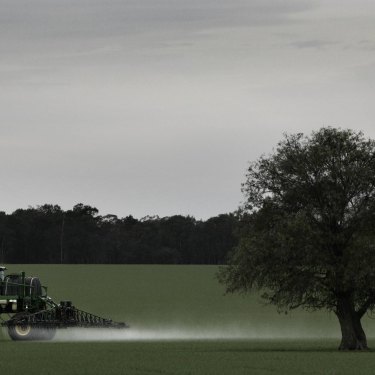
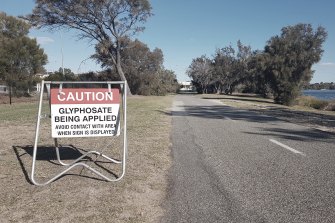
The plan also promises to phase out all use of glyphosate, the world’s most common weed killer, by December 2023.

The broad-spectrum herbicide often ends up killing the native plants insects rely on.

My feelings won’t be hurt if you scroll past my feedback, to the article!

Hopefully the “research” won’t be headed up by co-opted universities: 

From: Sandra Finley
Sent: September 9
To: Gretchen Vogel  (the journalist)
Subject: re €100 million German insect protection plan will protect . . .

Hi Gretchen,

Thank-you for your report in Science Mag on the insect protection plan for Germany.

I am circulating your article further into my networks.

Here in North America, given the influence of the ag-chem-biotech transnationals on Universities,  I would greet news of Government funding for “research” with a heavy dose of skepticism.

Government funding of research would go to the Universities (e.g. University of Saskatchewan’s claimed “Global” Institute for Food Security and/or to the U of S College of Agriculture).  The research and teaching done by scientists (professors) is heavily compromised.  Bayer-Monsanto and other ag-chemical-biotech transnationals are infiltrated into the political-economic system here.  The bending of the “knowledge base” of democracy to shape it into a tool of the corporations began in the early 1980’s.

(Also, we don’t need “more research”.  We know what needs to be done, and the consequences of not doing it.  “More research” is a delay-and-they’ll-forget-it tactic.  But in the immediate moment it offers hope – – it puts people back to sleep.  Aaah.  Someone is looking after it for us!)

I don’t know the extent to which the German company Bayer is infiltrated into the scientific community in Germany and into the Government-behind-the-scenes – – the people who write the legislation, those whose job is to regulate, and those who are supposed to enforce the laws and regulations.  In this instance, the specific is the “Crop Science” branch of Bayer.  Bayer-Monsanto (both companies)  have been entrenched at universities here for a long time, steering the teaching and the research.

The analysis from the Wall Street Journal (link below) points to the fact that the largest market for Bayer’s chemicals is on this side of the Atlantic, not in Europe; in other words, Bayer will survive.  (Well maybe it won’t.  Resistance is huge, it’s what drove Monsanto into the arms of Bayer.)

2019-09-04  Bayer’s Roundup Woes Deepen as Germany Bans Key Chemical, Wall Street Journal  

Thank-you again for your article, we’ll put it to good use.

Sandra Finley  (contact info)

= = = = = = = = = = = = =

€100 million German insect protection plan will protect habitats, restrict weed killers, and boost research, Science Magazine

https://www.sciencemag.org/news/2019/09/100-million-german-insect-protection-plan-will-protect-habitats-restrict-weed-killers

By Gretchen Vogel

BERLINSave the whales, sure. But save the dung beetles? In 2017, researchers reported a dramatic loss of insects in Germany’s nature reserves: 76% less biomass over 3 decades. Spurred by wide public concern about the findings, the federal government announced on 4 September a €100 million “action plan for insect protection,” which includes at least €25 million a year for research and monitoring of insect populations.

“This takes several steps in the right direction,” says Lars Krogmann, an entomologist at the State Museum of Natural History in Stuttgart, Germany, who with colleagues last year published a nine-point plan with recommendations for reversing insect population declines.

The government plan includes some of those recommendations, such as protecting insect habitats like meadows and hedges. “The insect decline is closely tied to a decline of habitats,” he says. For example, many traditional hay meadows—important habitats for native plants, insects, and other animals—have disappeared as farmers convert them to fields of fast-growing grass for animal feed, adding fertilizer and mowing every few weeks instead of once or twice a year. Farmers have also expanded their fields, plowing former hedgerows and verges. The plan, which is expected to become law in the coming months, proposes that several insect-rich habitats be granted protected status, including semiwild fruit orchards and stone walls in the countryside.

The plan also promises to phase out all use of glyphosate, the world’s most common weed killer, by December 2023. The broad-spectrum herbicide often ends up killing the native plants insects rely on. Use by government agencies—and the government-owned Deutsche Bahn railway company—will be phased out sooner. (Glyphosate has been a hot political issue in Germany, with the agriculture ministry opposing a ban and the environmental ministry pushing for one.) The plan would set tighter regulations on all pesticide use in nature reserves and other protected areas. Approval of new pesticides will have to take into account effects on biodiversity. Even drugs used in veterinary medicine will be reviewed for their effects on insects: Some antiparasite treatments in cattle can harm dung beetles, for example.

The government also says it will take several steps to decrease light pollution, which can disrupt nocturnal insects’ behavior, preventing them from finding food or mates. The plan encourages the use of insect-friendly lights of certain wavelengths, along with motion detectors that turn on outdoor lights only when they are needed. It also will support public education efforts in preschools, schools, and a nationwide “insect-friendly garden” campaign.

One-quarter of the money in the €100 million plan is slated for research and monitoring. It calls for development of a nationwide insect monitoring network—part of a larger biodiversity monitoring program—and increased research into possible causes for the observed declines and the most promising ways to reverse them. It also promises more support for taxonomy research and training—a hugely important step, Krogmann says. Taxonomists qualified to identify the thousands of insect species in Germany “are an endangered species,” he says, with training programs disappearing from universities. “Once your numbers get so low, you can’t reproduce yourselves.”

Wolfgang Wägele, former director of the Leibniz Institute for Animal Biodiversity in Bonn, Germany, says it’s “remarkable” for insects to get such positive attention. The funding actually goes beyond the €100 million mentioned in the insect protection plan, he says, because money for insect biodiversity protection is included in the research ministry’s €200 million program for research on biodiversity. “This really never happened before.”